A blast from the past
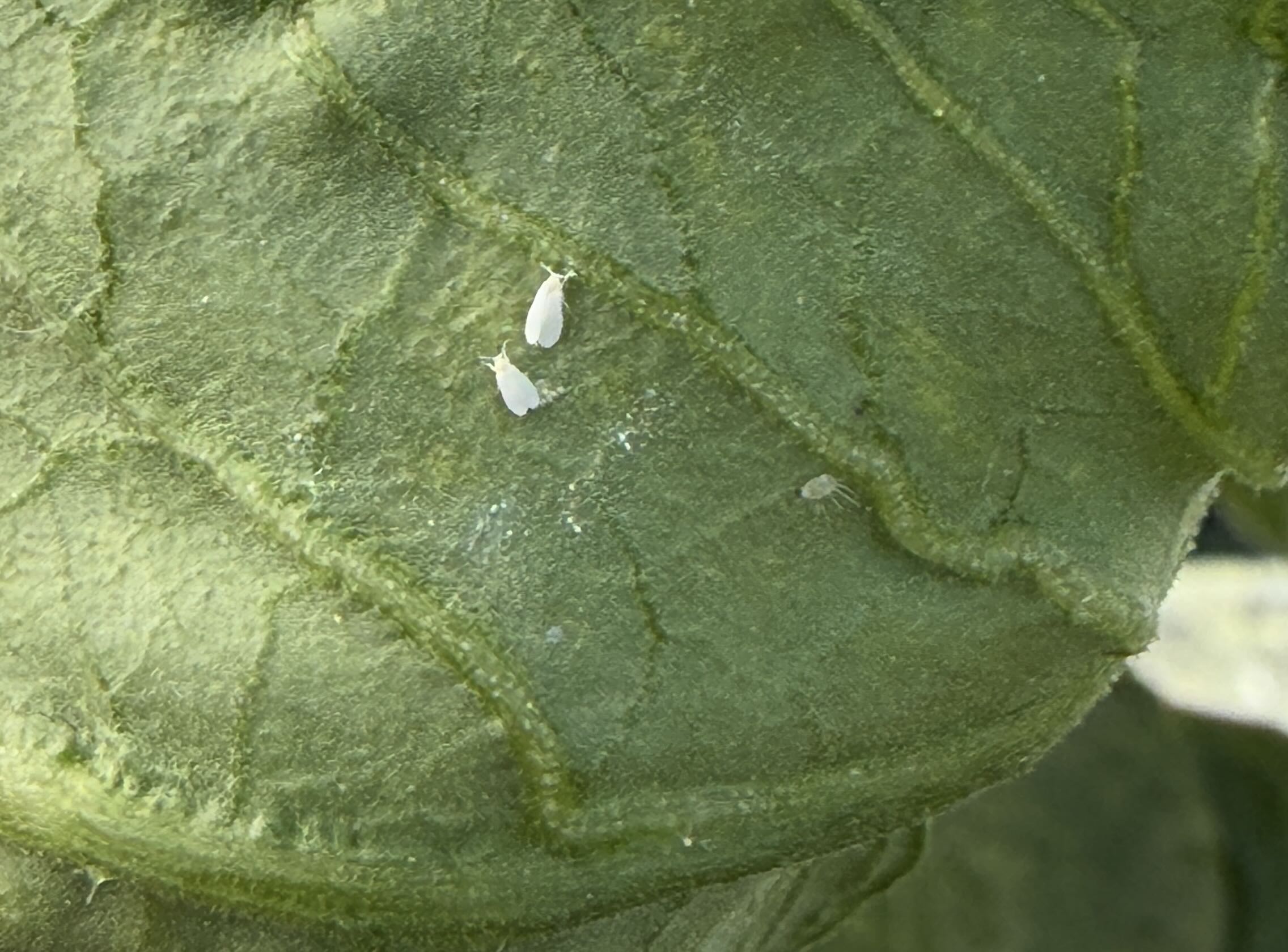
As if this summer has not been enough of a trial with high temperatures and lack of water, a pest that I have not had to worry about for more than a decade, has appeared in the greenhouse.
In my youth, glasshouse whitefly (Trialeurodes vaporariorum) was a common and ever-present pest. It was difficult to control, despite the fact that there was a wider range of pesticides available and the bottle of malathion (long since banned) sat in the greenhouse ready for regular use. But it has been less common in recent years and I am pleased to say that I have not encountered it at all in the past decade.
So it was with horror that I discovered it last week. The first hint that something was wrong was when I was picking some tomatoes and a few had small patches of sooty mould on the skin. Sooty mould is a fungus that grows on the honeydew secreted by sap-sucking insects and is a common symptom of scale insects on hardy evergreens. But tomatoes do not get scale so I knew that something else was to blame. So I had a good look and there, higher up the plant, were the tiny white adults. And, looking more closely, there were the nymphs too.
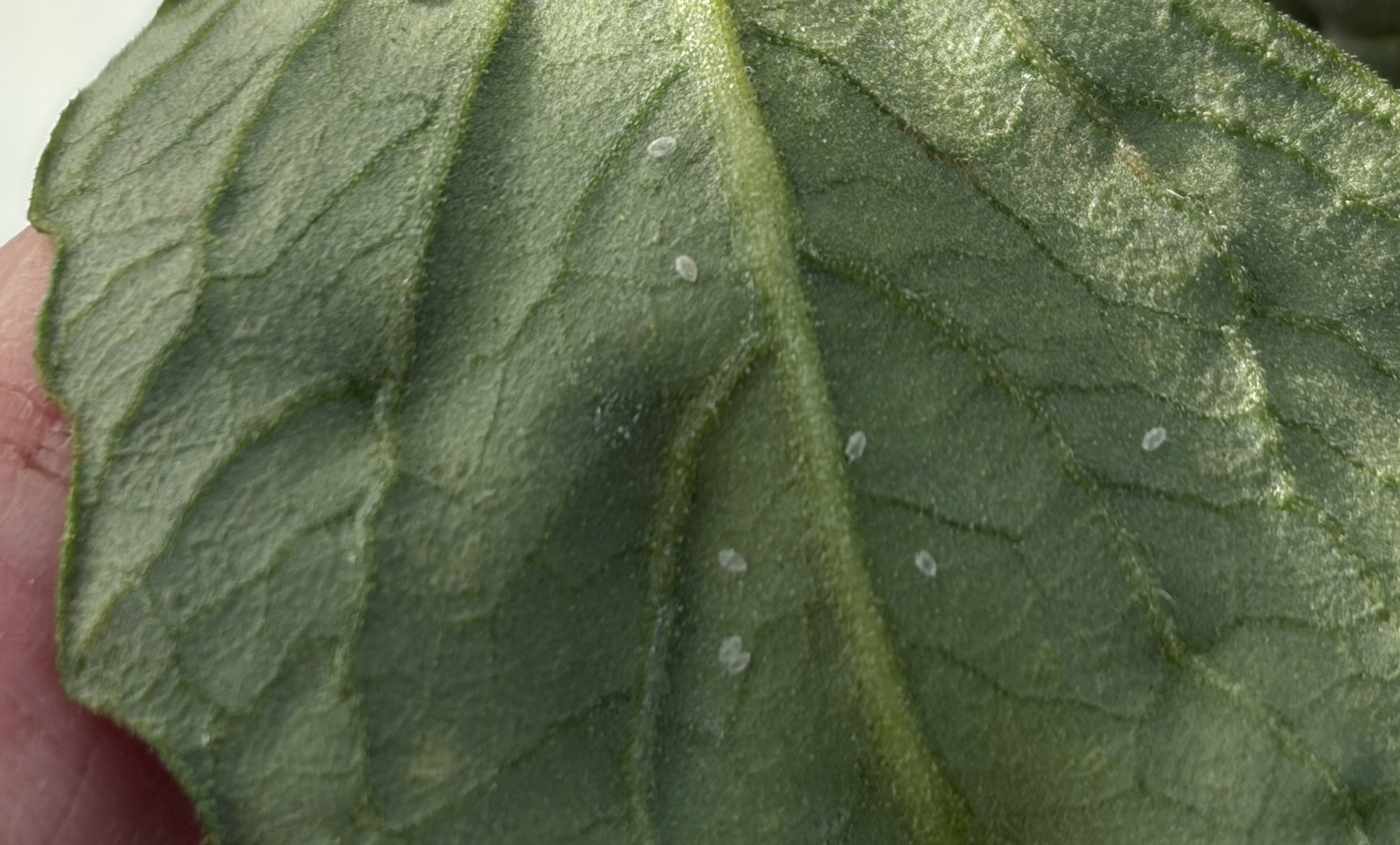
Glasshouse whitefly cannot survive outside here. The rate of breeding depends on temperature, and they like warmth. In hot conditions the eggs can become adults in just three weeks and an adult can lay 200 eggs. So you can see that one adult (they do not need to mate to lay fertile eggs) can become a problem very quickly. In addition, most insecticides kill the adults and not the eggs or nymphs so frequent spraying is necessary to control them.
What worries me is ‘where did these come from?’ I have had no whitefly before. I have added plants to the greenhouse this year but not since April. And I always check new plants carefully. It is possible that there was an egg on one of the plants but, at present, only two of the new plants is in the greenhouse and there is no sign of the pest on those. One is an abutilon which is a classic ‘whitefly plant’ but it has no whitefly on it.
It is not credible that a whitefly just passed by and found the greenhouse.
So I am at a loss as to where my little outbreak came from. But I am very concerned. It is a really nasty pest. At present I am removing leaves that are hosting scales. It is impossible to catch the adults although, in the old days, we used to joke that a vacuum cleaner was the best way to catch them! Yellow ‘sticky traps’ can also be used and are most effective if the plants are also frequently ‘brushed’ to make the adults fly, but I am not at that stage yet and these traps are also indescriminate and catch and kill a wide range of insects including hoverflies and bees so I am not keen on them.
At present the whitefly seem restricted to two tomato plants so the affected plants will be removed soon. When we get to late September and the greenhouse is emptied to clean it, I will use an insecticide to wash down the glass and all the plants that will be returned will also be sprayed. I avoid insecticides (I can’t remember the last time I used one) but this is one case when I will use them and it will not affect wildlife in the garden. Then the plants will be put back along with plants that have been outside but need winter protection. I will also cut back plants to remove growing tips that may be infested, but my best defence will be my eyes so everything will get a close inspection.
This is one blast from the past that I could do without.


A blasted nuisance but, fortunately, not one we have seen in years.
Indeed. I had almost forgotten all about it.