Size isn’t everything – but it helps
I like hardy euphorbias and have added a few more to the garden this year because most of the few I have planted in the past have coped well and provide some spectacular colour, most in shades of citrus yellow and green. Of course some euphorbias are weedy annuals and biennials but there is a lot to explore in the genus.
I don’t want to go on about the heat and drought this summer but I am surprised, and upset, that my E. characias has died in the drought – not something I expected from a Mediterranean native.
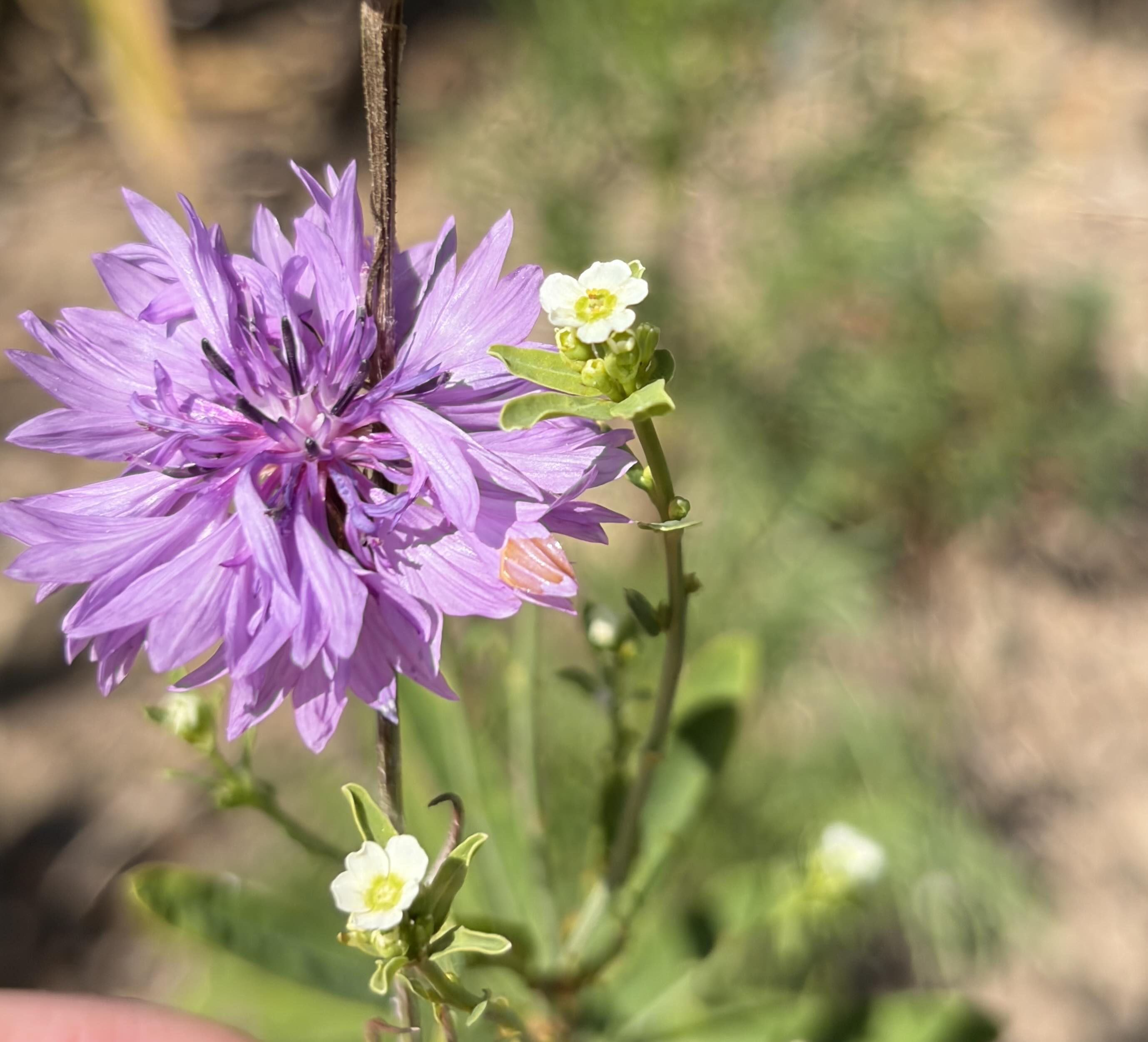
One euphorbia that has intrigued me for years has been E. corollata. It is a hardy perennial that is native to much of the USA and is a tall, thin plant with unusual ‘flowers’ that comprise the usual euphorbia structure with five white ‘bracts’ around each female flower. The flowers are small but apparently good for pollinators and they are produced in profusion and are usually compared with gypsophila. A bonus is that the plant survives in dry soils and the foliage is often orange in autumn.
I first tried to grow it from seed but none germinated. Last autumn I ordered a plant and the pot arrived and contained rather loose compost and nothing that looked very optimistic. In fact I had a rummage and found nothing that looked alive. I put it down to another failure but kept the pot in a ‘plunge bed’ and watched it every few weeks. In spring there was a thin shoot so, filled with hope, I planted it in a sloping, raised bed and kept watching. Of course it has been hot and dry but for a plant native to Texas I thought it would cope. I did water about once a week but the smallest of the two shoots died. But the main one grew, though it was weak and almost leafless. But now the first flowers have opened.
I am not quite what I was expecting of a plant with flowers 5mm across but I think it was a bit more than this. It is wrong to judge it yet and when it is a cloud of tiny flowers I may think it is the best thing since sliced bread. The decision will be made when it spreads into a neat clump or dies or runs across the garden! I hope it proves a valuable part of the garden community. I don’t need it to be a substitute for a poinsettia but I do hope it makes a bit more effort after all the effort I made to get it!


I grow one here in Iowa.It is a slow but steady grower-stays in a clump.Nice height,gives the effect of a tall gypsophila late in the summer.
That is reassuring. It has a few more flowers now but is still not showy. I will persevere.