Gomphrena: good for butterflies
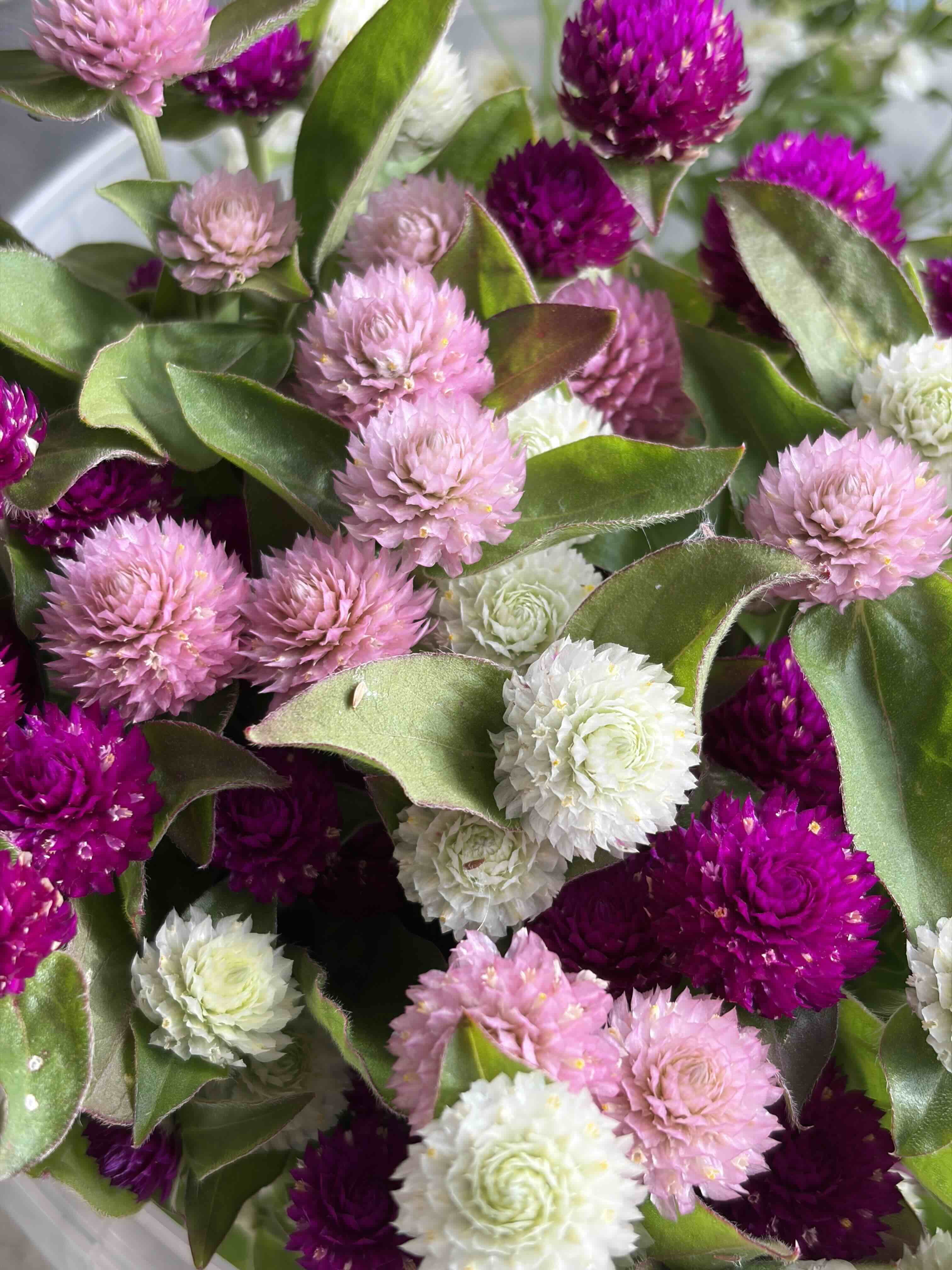
Each year I try to grow something new or to revisit something I have not grown for a while. With so much emphasis on growing cut flowers for sale at the gate, these now include things suitable for cutting. (By the way we have stopped sales for the year and I am glad to say that we beat last year’s total and raised just over 2000 euro for Hope Cancer Care in Enniscorthy. All the money from the flower sales goes to them which means that, at 3 and 5 euro a bunch it was about 500 bunches)
Anyway, I grew some gomphrena this year. In the past people have liked bunches of lavender, statice and helichrysum and I thought some gomphrena would be a nice addition.
Gomphrena globosa is a tender annual from Central America that is widely grown around the world. It is known for its tolerance of heat and drought so I was not sure how it would cope with an Irish summer outside. The seeds germinated quickly and easily and the seedlings were not tricky. They took a while to get going after transplanting but then grew away well once light levels improved in late April. Because I did not want them to be chilled I did not plant them out till early June. But then they grew away quite well.
Apparently the plants are edible but the bristly flowerheads are not very appetising and the opposite leaves are also bristly. The flowerheads are easy to dry and the bristly bracts are usually purple, with pink and white included in mixtures. The actual flowers are tiny and really insignicant, to you and me at least. Butterflies know better though and the plants were always studded with, predominantly, painted ladies. It made me reluctant to cut the flowers as I did not want to disturb them!
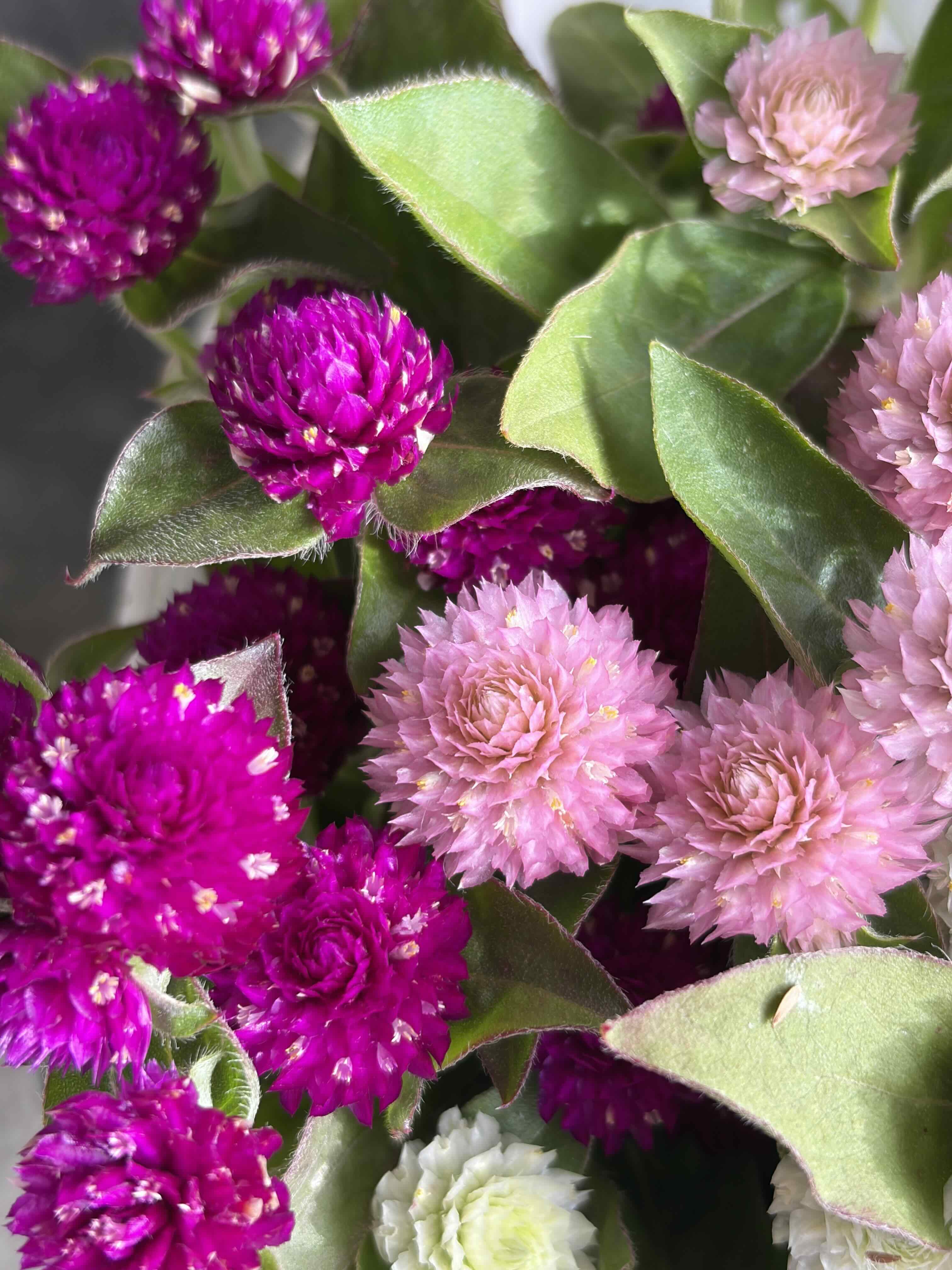
As cut flowers, Gomphrena have a few issues. The plants branch well, low down and the stems are short and stocky. This habit makes them ideal as bedding plants and for pots. I might grow them again for containers in a hot, sunny spot. Although these are supposed to be drought-resistant they did struggle a bit in our summer and I did water them quite often. But they are too leafy, and too stocky to make a good cut flower. I did try on numerous occasions but by the time I had stripped off leaves and underdeveloped flowers there was a lot of waste. In the end I used them to make up rather short-stalked, small, 3 euro bunches.
Now the cut flowers are over I am picking the individual heads off the plants to dry and if I get a dull moment I will put them in a glass bowl, together with helichrysum, sprinkled with fragrant oil as potpourri. I have some seeds left to sow next year and I may try them in the garden beds for display rather than cutting. Or I will see if there are taller kinds that may be better to cut.
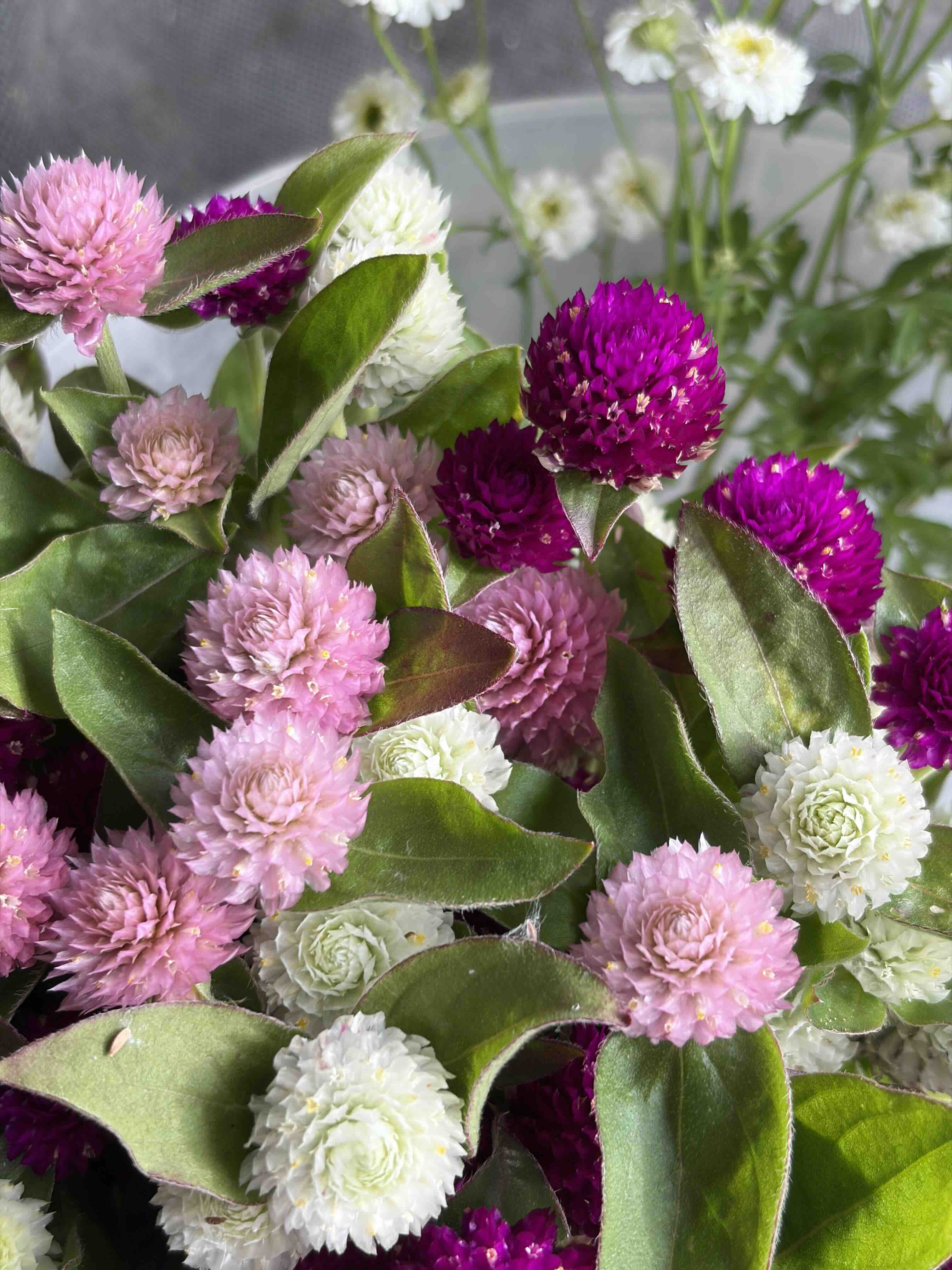


The flowers are quite pretty. They look like they would be ideal for cutting; too bad they’re awkward. The earnings from selling cut flowers are quite impressive, and for a good cause.
The flowers are pretty and I will see how well they dry when picked individually. I think I might get creative with a hot glue gun later
A new one to me. Very pretty.