Likeable leycesteria
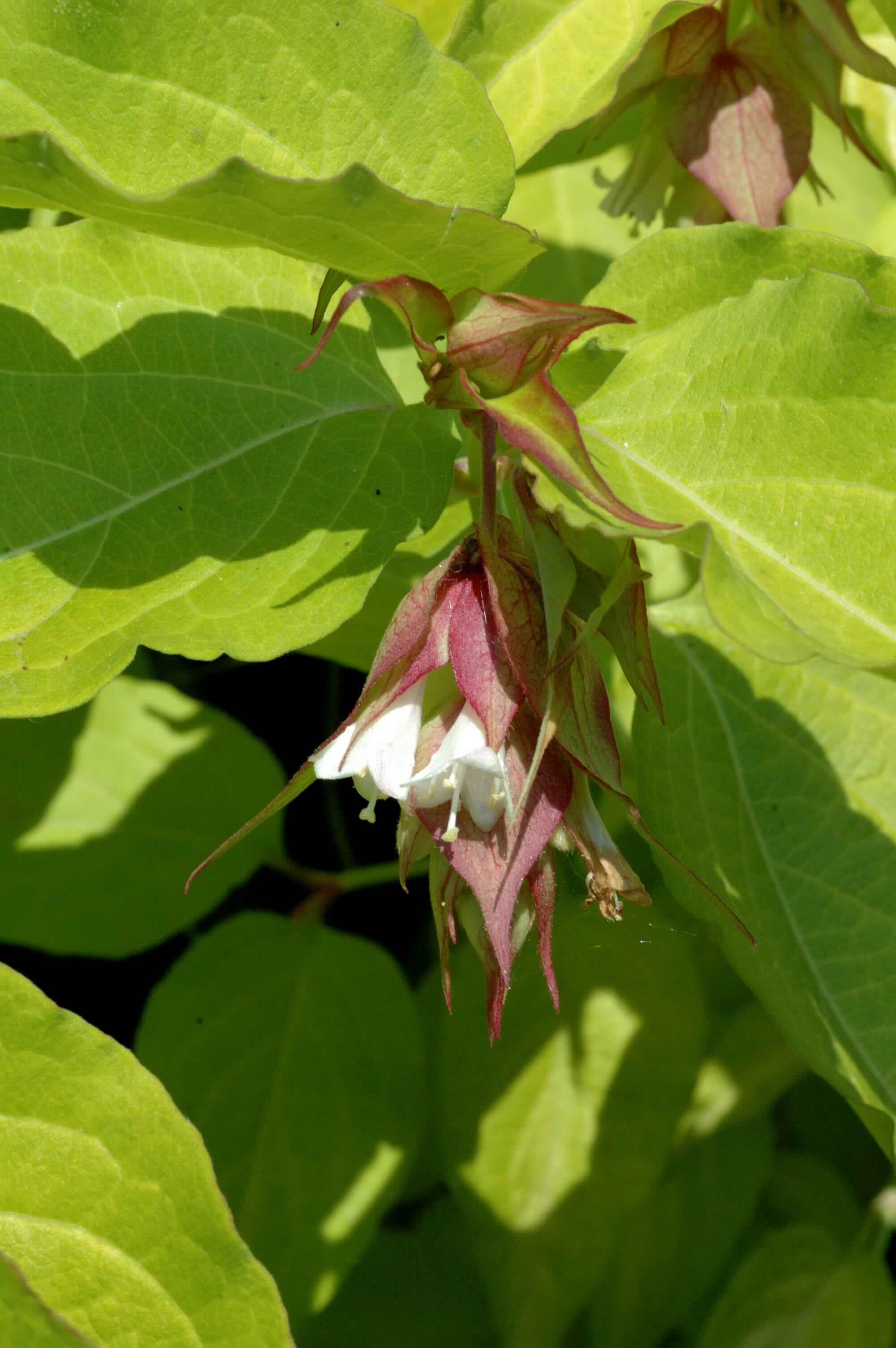
This post is really about an unusual plant and one that is new to me but I need to start with the basics. Leycesteria is a small genus of 7 species in the honeysuckle family from the Himalayas. Only one has made much impact on our (Northern European) gardens and that is Leycesteria formosa. It is native to much of the Himalayas and China. It was introduced to the UK in 1824 and the epithet ‘formosa’ means ‘beautiful’.
It is such a common shrub now that not many people would add it to their plot unless they had many acres. But it is really quite a nice shrub reaching about 2m high. It is not fussy about soil, although it struggles in wet clay, and it will grow in full sun or part shade. The foliage is OK and flushed with purple when young, the drooping clusters of white flowers, emerging from burgundy bracts, are nice enough and the flowers are followed by beetroot-coloured berries.
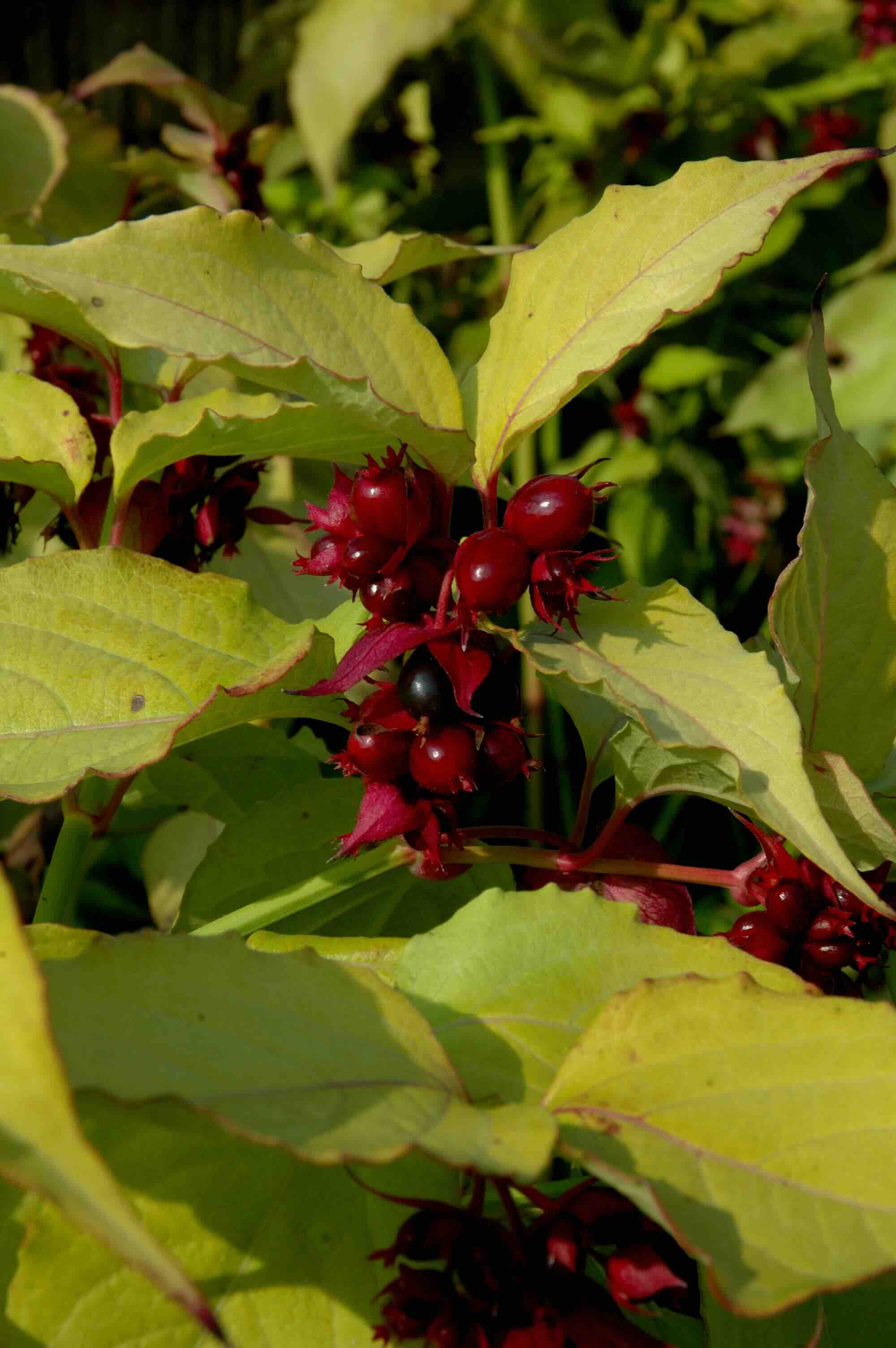
Legend has it that it was planted for game coverts and that pheasants relish the berries. This might make sense since pheasants come from the same areas as the Leycesteria. The berries are freely produced and in some parts of the world this shrub can be a weed. In fact there is woodland by the coast not far from here where it forms a substantial part of the understorey. The fact that birds like the berries is proved by the fact that I get many questions to answer from people who discover the plant in their garden and wonder if it is a ‘gift from the birds’. And it is.
The habit is stiffly upright at first but as the hollow shoots branch, it gets broader. Sideshoots emerge for several years from the nodes on the upright shoots. In time the shoots get old and it is sensible to prune out, at the base, stems older than three years. New growth will be produced from the base.
But I have to admit that it is just a bit dull and it is a shame there is no variegated selection. But then the yellow-leaved selections come to the rescue. There are a few, although Golden Lanterns (‘Notbruce’), which is what I have, is the most common. It looks good all year although, like the species, it is deciduous. The greenish young stems are attractive in winter. and the foliage is in various yellow and lime shades depending on whether it is in sun or shade. It copes with sun well for a yellow-leaved shrub but can look miserable in hot, dry soils.
Other CVs are listed but I have never seen them.
Which is why I had to buy Leycesteria crocothyrsos when I saw it and I added it to the garden.
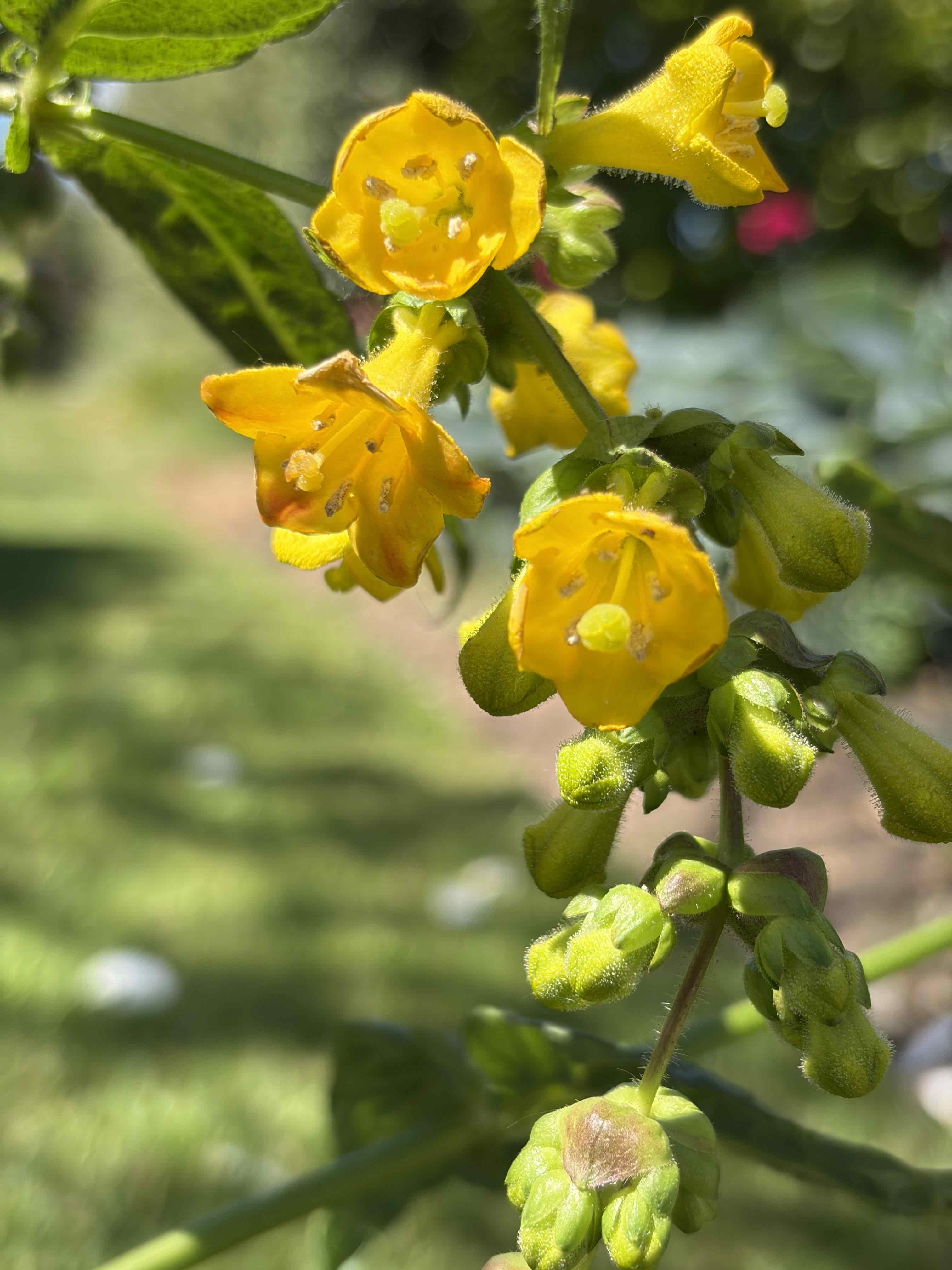
This is a much less common species, from Assam, discovered by Frank Kingdon Ward in 1928. The early introductions did not prove very hardy in the UK and it probably died out of cultivation and it was re-introduced by Roy Lancaster and the plants available today may be from his introduction.
It has two very striking qualities: the bright yellow flowers and the huge stipules at the base of the leaves and around the stem.
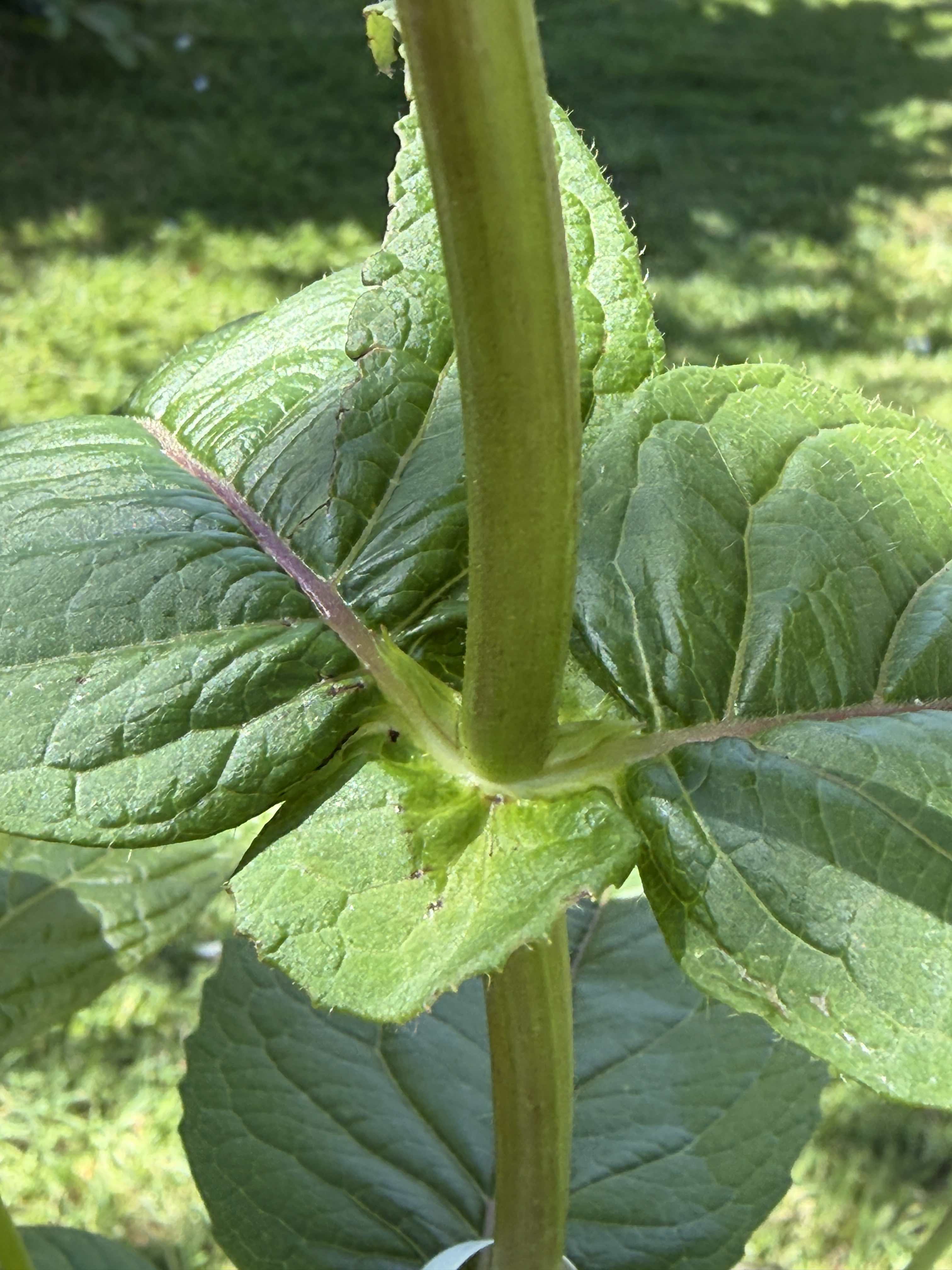
This means the foliage is quite striking. The flowers, as well as being bright, are also showy. My plant is growing quite well but the real test will be winter cold. It is said that even if the top growth is killed by cold it will sprout from the base but it has to get established first. Plus, the flowers are produced on short new growths from the one year old stems to annual pruning, but cold or my stupidity, will prevent flowering. The fruits are green and they do not colour up much as they ripen.
The great plant breeder, Peter Dummer, made a hybrid of the two species (‘Smouldering Embers’ 1994) but it is believed to be extinct.
 The Biking Gardener
Oh, I just got my first, from Tangly Cottage Gardening. It has green foliage, which is just as well, since I am not so keen on yellow foliage. It is not a weed here. In fact, this one is the only one I have ever seen here. It is not blooming yet, but it grew like a weed this summer.
Tangly cottage gardening sounds cute! I am surprised I is not more common there and I am sure it will feed the birds and that seedlings will appear in your climate. The flowers will appear on side shoots on all those strong green canes next year
So, I need to wait a few more months for bloom. That is fine. It is not in the ground yet. I may plant it at work, since I do not want potentially invasive plants in my home garden in the forests. You can find Tangly Cottage Gardening here. https://tanglycottage.wordpress.com/