Beetle boudoir
The warm spell of weather seems to be great for invertebrates. The horseflies are out in force and even if I summon up energy to push a barrow (I had to do so when I had a delivery of spent strawberry bags at the weekend) my route is dangerously erratic as I suddenly drop the handles and attempt to squash one savagely biting through my shirt. Mowing the lawn was dangerous for anything nearby as I let it go as I slapped my arms, legs and face, my glasses often flung across the lawn as I accidentally flicked them. If there really is a god why did she invent horseflies?
Damselflies and dragonflies are zipping across the pond and although the butterflies seem totally uninterested in my mass of Verbena bonariense, they are about here and there and the bumblebees are addicted to the lavender and heliotrope.
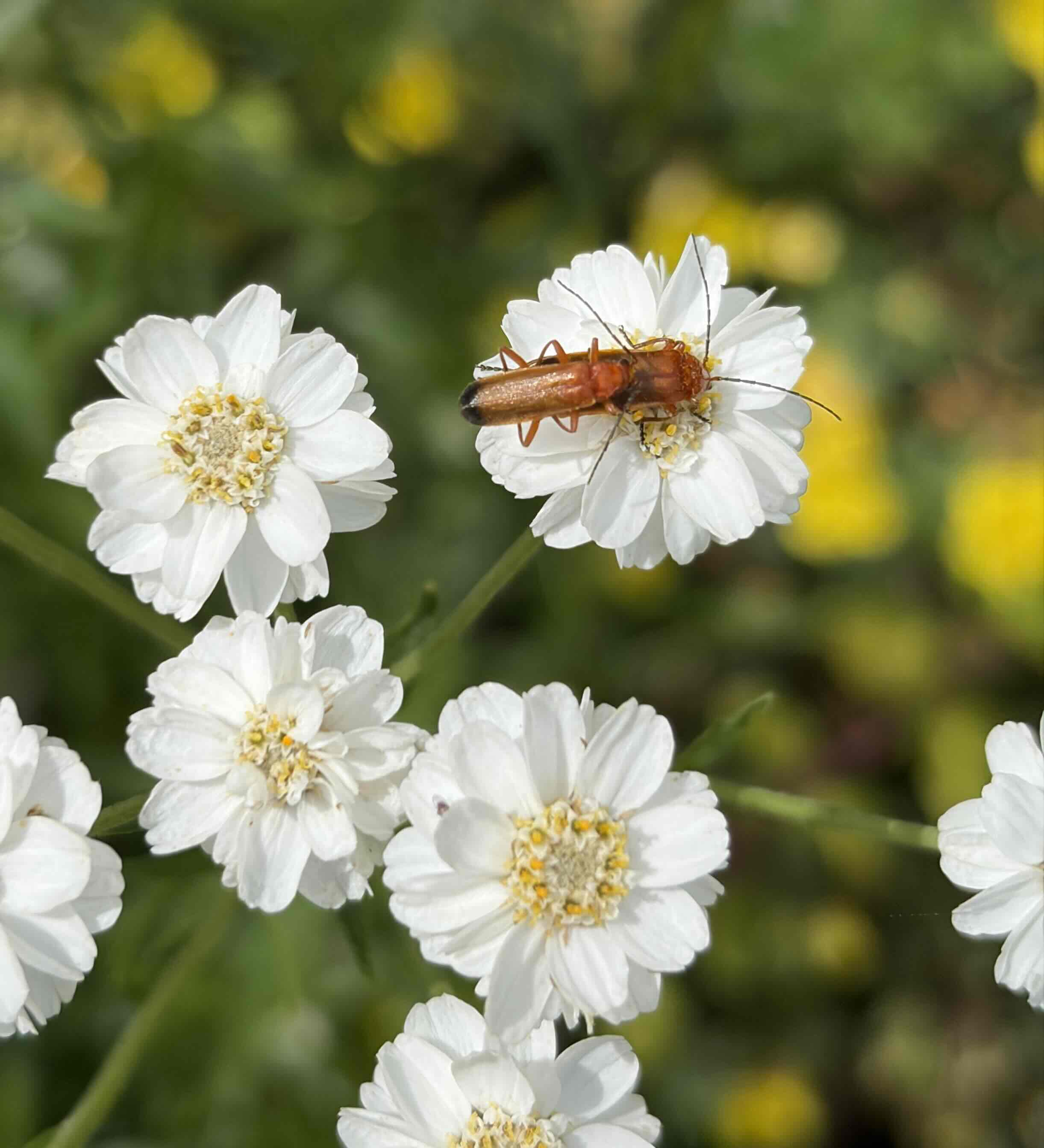
But, more than I have noticed before, we have armies of red soldier beetles (Rhagonycha fulva). These slim beetles, which are often in flight, are what I used to call ‘bloodsuckers’, though, unlike the horseflies, they are harmless and do not suck blood. They are everywhere and seem to like the cornflowers but especially the achillea ‘The Pearl’.
Despite their bloody colouration, these are garden friends. The adult beetles feed on nectar and pollen but also aphids. I suspect that is why they like the achillea which is frequently dotted with blackfly so provides all they require as far as diet is concerned and the flowers make perfect lacy beds for their amorous activities, which seem endless! They are almost always seen in pairs.
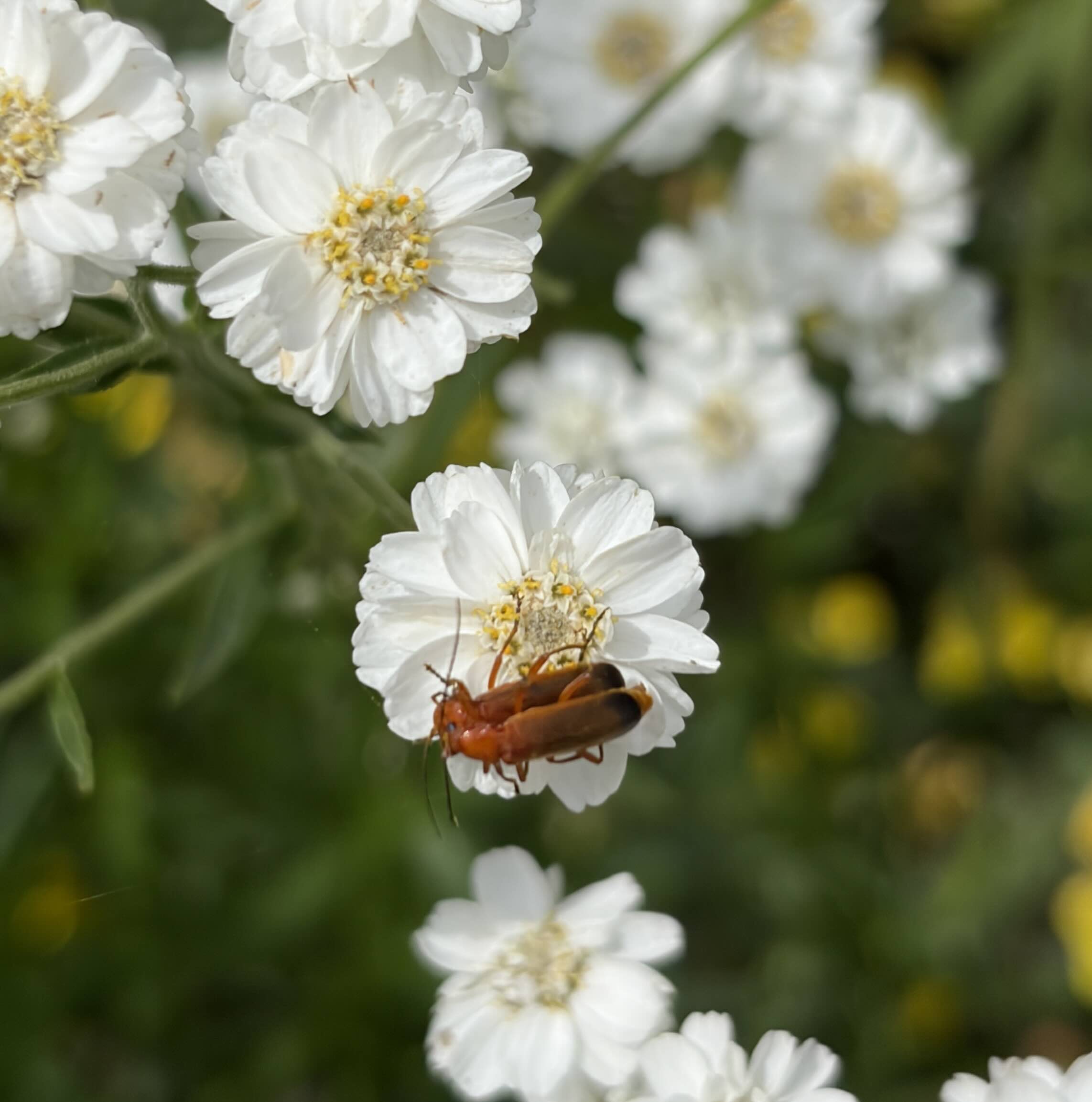
The beneficial nature of these little creatures does not end there and their larvae, which like to live in long grass, eat slugs and snails. I hope that the long areas of grass I allow under the hedges are helping them to thrive. And it is another example of the futility of ‘no-mow May’ – one month of not mowing grass will do nothing for them.
As ever, I always tend to focus on individual plants and rarely show the garden with a wider lens. It is mainly because I am never happy with it. I am not quite ashamed but it hardly merits the spotlight.
So here are a few views.
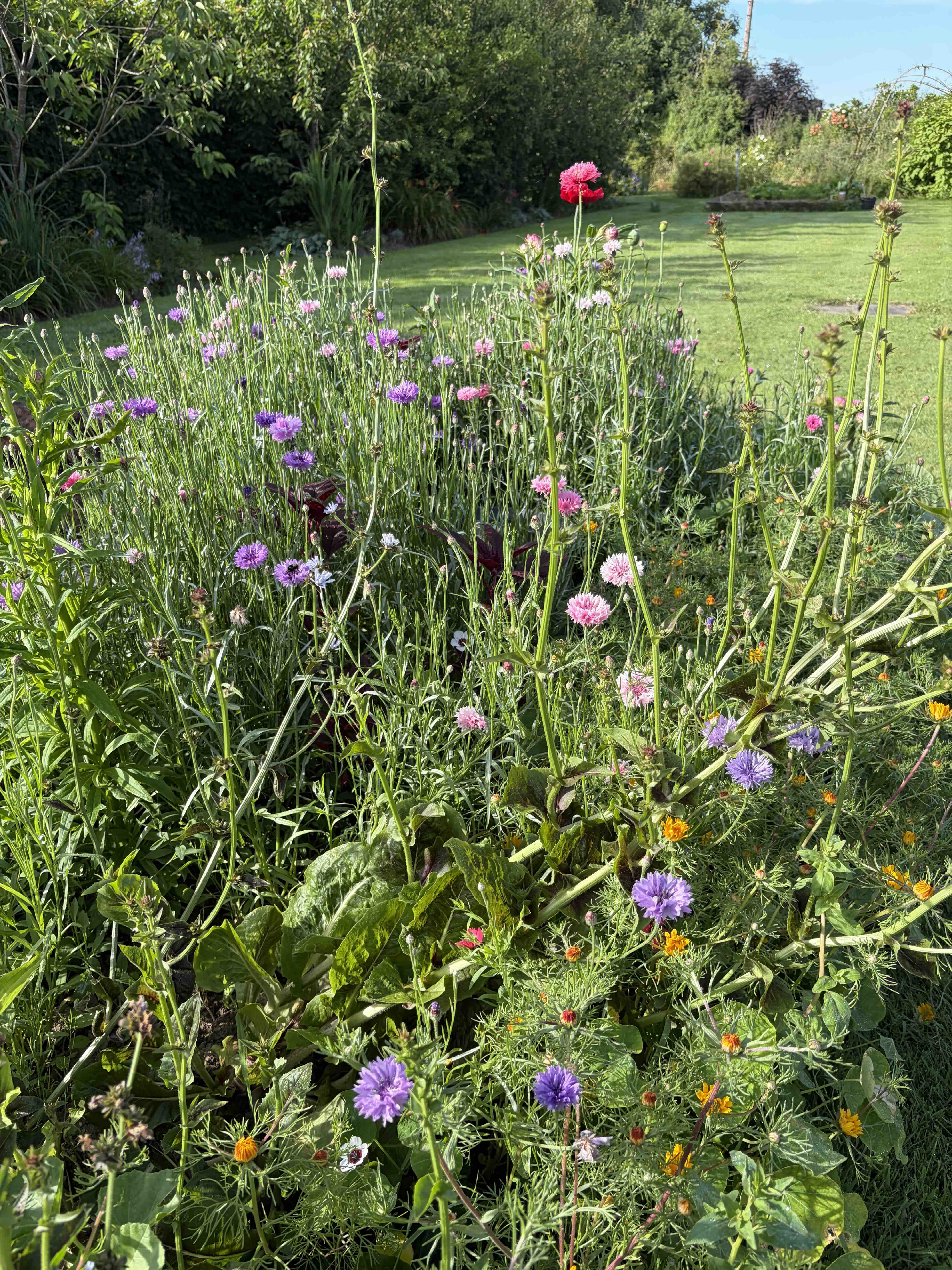
The bee bed is planted with annuals with simple flowers. The cornflowers, which are valuable because they have particularly rich nectar, are pink and mauve this year. Slugs demolished the early plantings so I have topped up with extras and it should provide plenty for bees for many months.
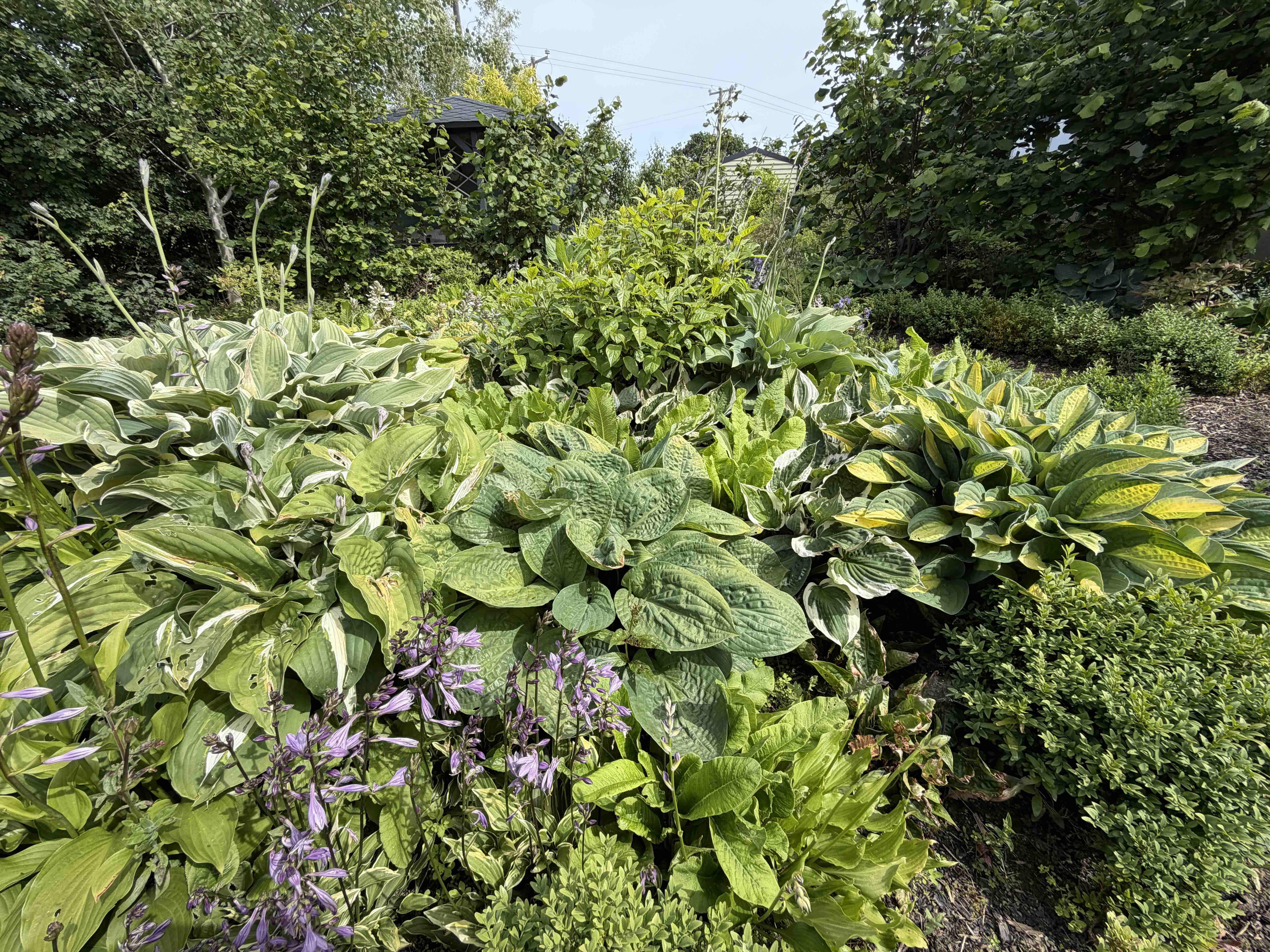
The hosta garden is holding up well in the heat so far but there is some scorching.

Tom’s terrace is named after the donor of the large sink, given as a house-warming gift. I have added some new lavenders to the gravel this spring and there are pots of brugmansias out of shot on the right.
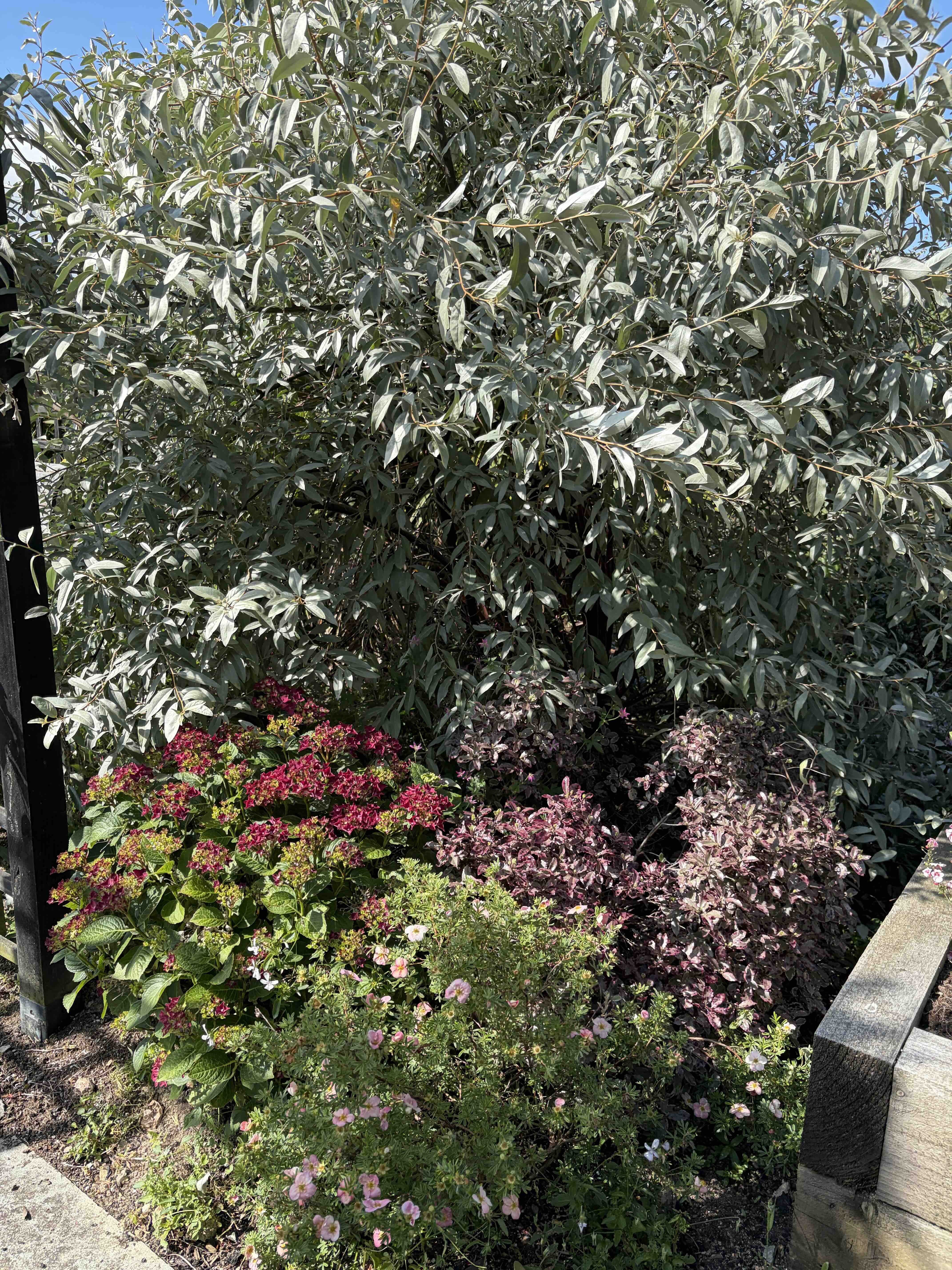
The elaeagnus ‘Quicksilver’ is such a wonderful shrub and the small, yellow flowers in spring are a fragrant delight. It is unusually metallic in colour but, after about five years, it is starting to do what it does – sucker! The soil is not disturbed too much underneath so the roots are not being ‘nicked’ by cultivation but it is time to be aware that it might soon be a problem.

And in the adjacent raised bed, used for temporary bedding, I have turned back the clock 50 years. When I was a Kew student, one of the many things I did was to plant the bedding along the Broad Walk. Under the supervision of Brian Halliwell, it was always unusual and interesting. One scheme was Festuca glauca and Diascia ‘Ruby Fields’, about the only discia that was common then. Now diascias are commonplace and they are wonderful plants. I keep one plant of each in the greenhouse in winter and take tiny softwood cuttings in spring and they rapidly develop into flowering plants – as seen above. In fact the mature plants usually survive the winter outside here. I grew the festuca (‘Varna’) from seed sown in March. I must admit that I was very suspicious of the young seedlings which were green at first. But, now planted out, they are a good ‘blue’ and the bed is a tribute to Brian Halliwell and his adventurous approach to bedding.
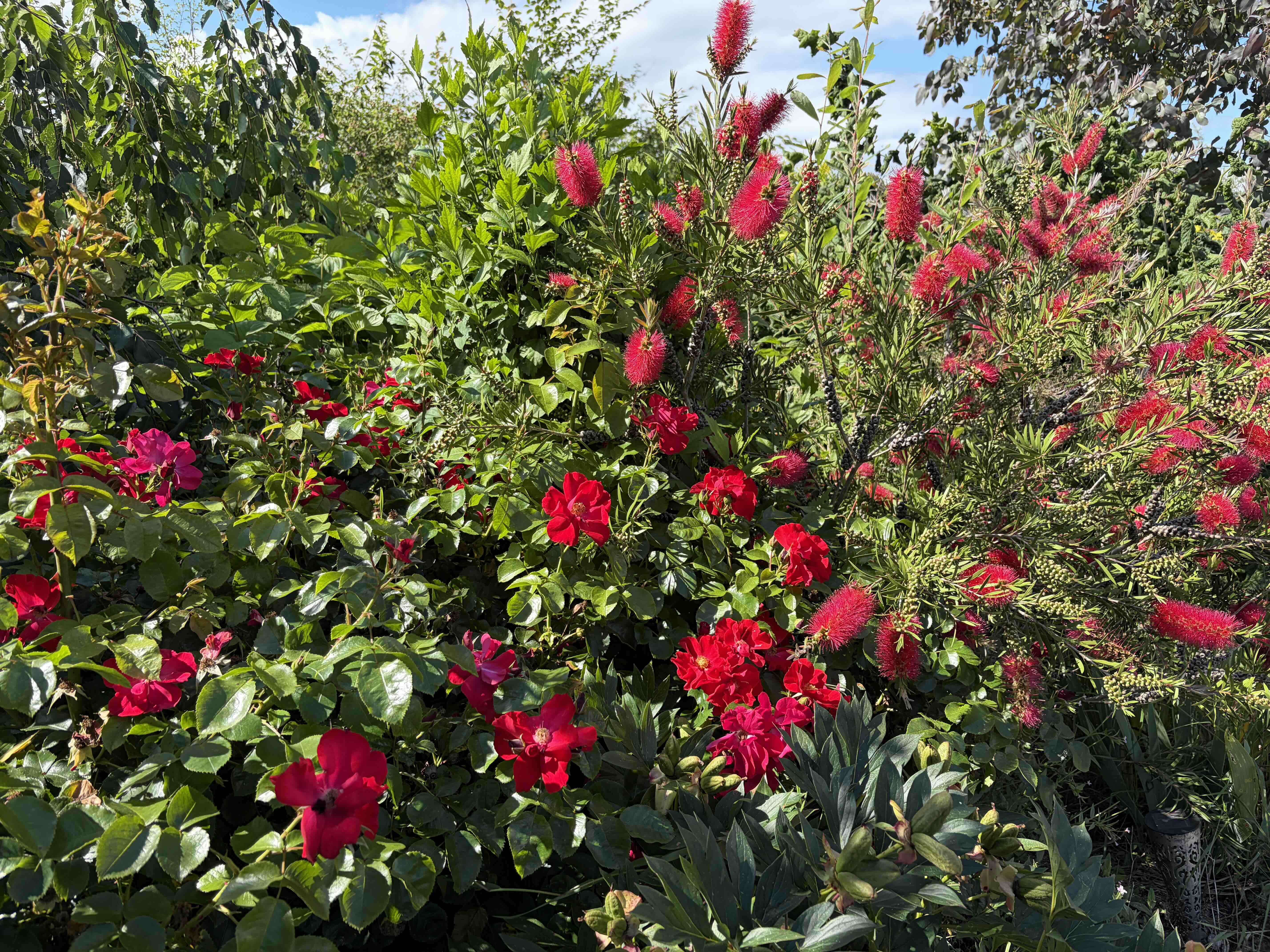
Beside the pond rose ‘WB Yeats’ vies for attention beside a red bottlebrush. I was not sure the latter would survive but it is perfectly happy and blooms abundantly. In the centre is a pink’ hibiscus which will spoil the effect but the bottle brush will be over by then.
 The Biking Gardener
OMG horseflies! I feel your pain! Your garden looks wonderful – I really like the gravel terrace and the red rose is really great!
Thank you. I was interested to read that physocarpus self seeds with you. I have quite a few – they are so easy and useful – but have not found a seedling yet.
I discover my seedlings (and small shrubs!) after not mowing a section (or two) of the back garden areas one year (or two)…
Your garden seems to be full of delightful plants. I especially like the festuca and diascia combination. You mention that the elaeagnus is starting to sucker. How would you deal with that? I have some suckering shrubs here and have wondered how best to manage them.
Thank you. I will have to pull off the suckers or remove them from the root as low as possible – just cutting them off will just make it worse. I might dig a couple up because I have a bank where it would look good and could do what it wants – but by cutting the root I may actually cause it to sucker more. I have a clump of aspen and they are suckering this year for some reason and, of course, the plums are sending up suckers in the lawn now!
Is red bottlebrush Callistemon citrinus, or another species? Why were you not sure that it would survive?
Yes it is C. citrinus. It is hardy in most areas around here but winter cold, combined with rather wet, heavy soil in winter is not ideal for it. As it turns out it sails through winter and is growing ell so I need not have worried.
It is one of the toughest ‘showy’ plants that I know of. (Some tough plants are not so pretty.) However, its toughness is in regard to desert heat and aridity. I forget that it dislikes poor drainage. I never figured out how much frost it tolerates because it does not get too cool for it here.