We are family: Euphorbias
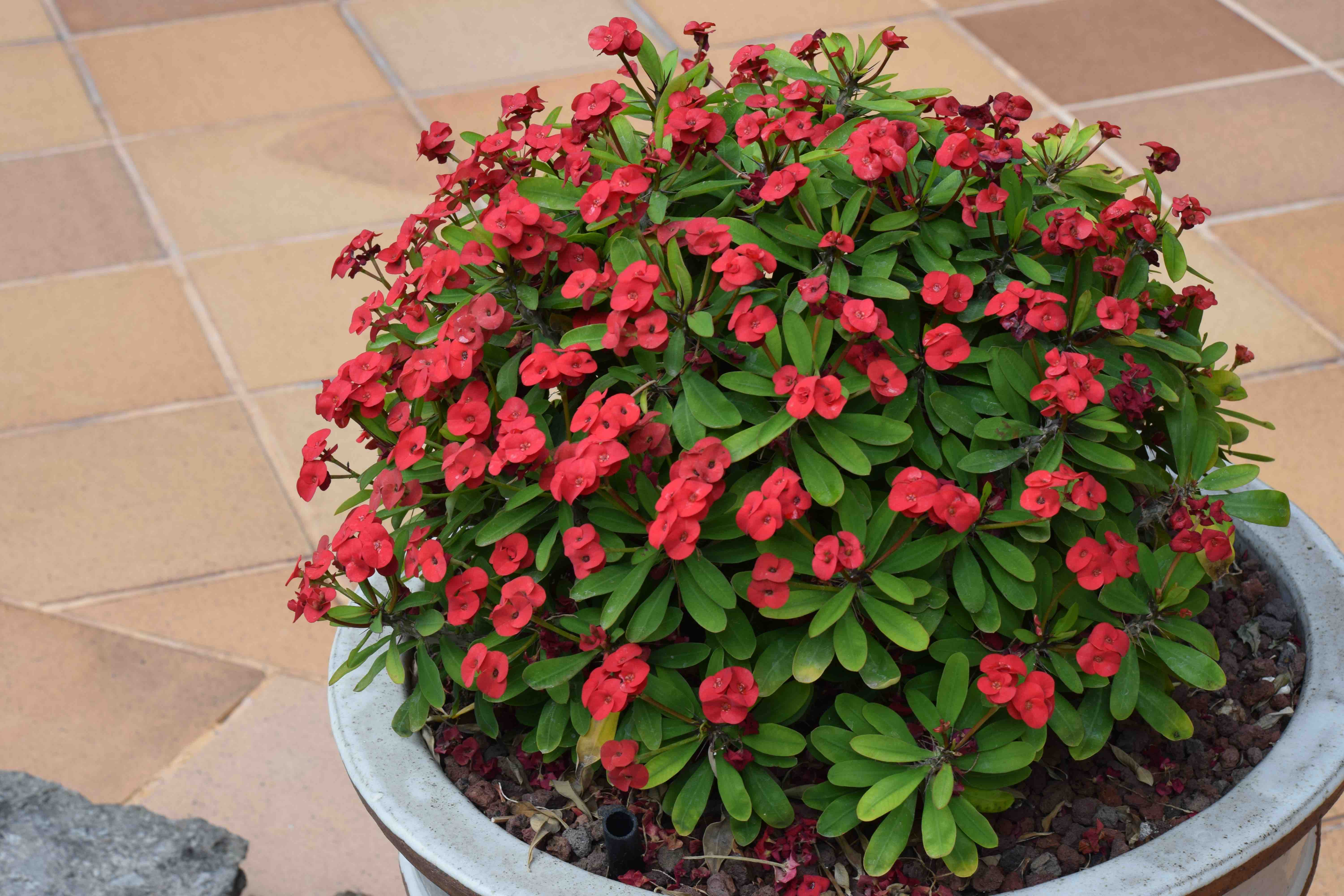
In the early days of this blog I frequently posted about vaguely botanical matters. Other posts were dedicated to more practical subjects. Since then (it has been 12 years!) I have acquired or continued work writing ‘how to do it’ posts for a garden centre blog and I also write about practical matters for Garden News every week. As this blog is something of a recreational activity for me I feel freed to write about what I want so I was pondering about writing about plant families.
It is fraught with problems. Plant families usually consist of many genera and those that can be grown in our gardens (by which I mean temperate and particularly gardens in north west Europe and similar climates) may not be representative of the family. What families to choose? But knowing the way plants are related is useful and, I think, fascinating, so I will plough on until I am exhausted or few ‘hits’ convinces me of the futility of the idea. And I will pick families that I like most. I won’t mention families with which I am not familiar.
Of course, anything to do with botany is going to be littered with technical terms and even this first attempt could easily become a glossary. Most people are familiar with the concept of a species, which are plants (or animals) that can breed true to type, athough there are variabilities within the population. In plants (and most animals) there are barriers to prevent hybridisation, to keep the species ‘true’, either by internal mechanisms or simply geographical (when the two, separated species are brought together by humans they may then hybridise). I believe that animal hybrids are relatively rare though Tigrons and Ligers ( lion/tiger hybrids) (and mules) are the most obvious, and, as is sometimes the case in plants, are sterile (male ligers are sterile, females are not). In fact, Mia is a true hybrid.
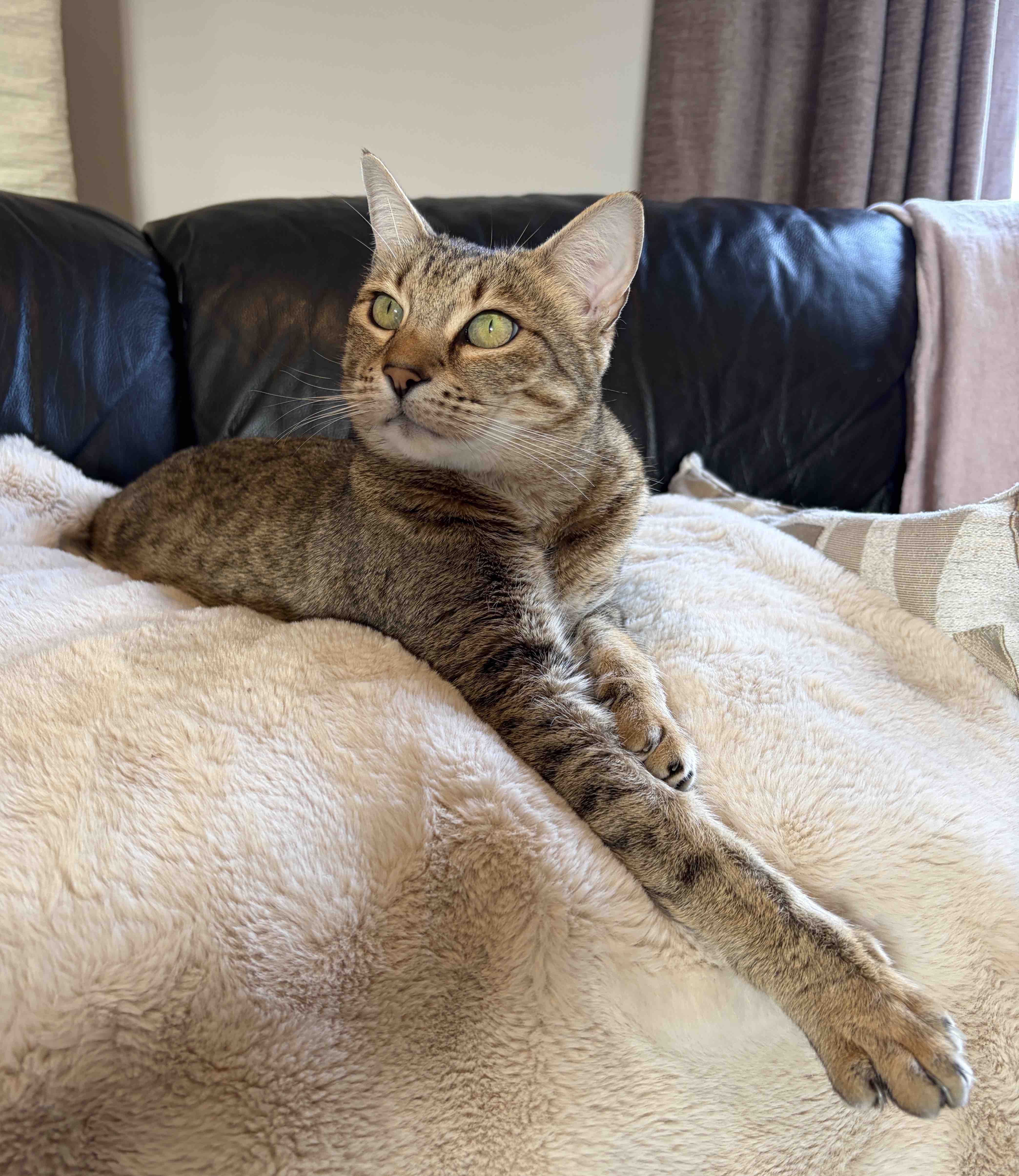
Being a Savannah cat (the first born in 1986) she is a hybrid of a Serval (Leptailurus serval) and Felis domesticus (domestic cat). The first generations show poor fertility but by the sixth generation (which is Mia) fertility is restored (except that Mia is spayed!)
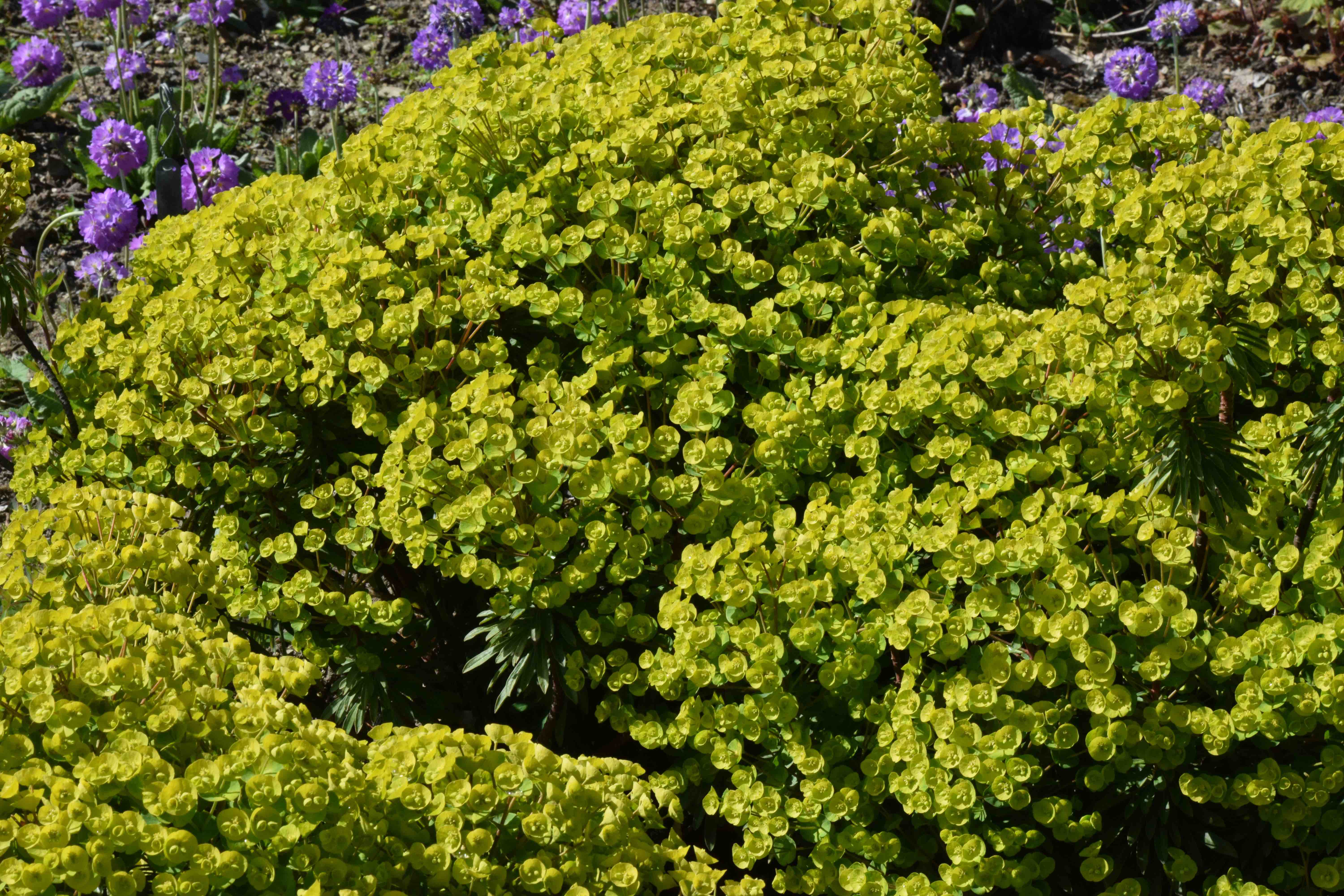
Usually many species are grouped in a genus, all sharing a wider range of characteristics, based primarily on floral features, though modern techniques may reinforce these conclusions or challenge them. And the various genera are grouped in a family, all sharing a wider range of characteristics. In each family there is a ‘type genus’ from which the family gets its name. It is for this reason that some common families have had their names changed.
The easily understood Umbelliferae that I grew up with is now Apiaceae because there is no genus ‘Umbellus’ (Apium is celery) and the same is true of the equally descriptive Compositae which is now Asteraceae (although the genus Aster has been reduced with North American asters annoyingly assigned to Symphyotrichum) . Some genera are bouncing around different families these days with Alliums and other monocots as well as the large families of Scrophulariaceae and Caprifoliaceae being particularly fluid.
I was recently asked to write a piece about certain euphorbias for LandScape magazine so, with the idea fresh in my mind I will start with Euphorbiaceae, the sixth largest plant family. And the type genus is euphorbia – easy.
The Euphorbiaceae is huge with 300 genera encompassing 7500 species. The tropics is the centre of distribution. The flowers are constant in form (I will deal with that in the next post) but the species are incredibly variable. The family includes edible Manihot (cassava, the third most important source of carbohydrates for humans worldwide despite being poisonous when raw. It is scarcely known to Europeans except as tapioca). The common woodland plant wood mercury (mercurialis) is probably unnoticed by most people but is profuse. A common feature in the family is often toxicity and the most famous plant is ricinus (castor oil plant), the source of deadly ricin.
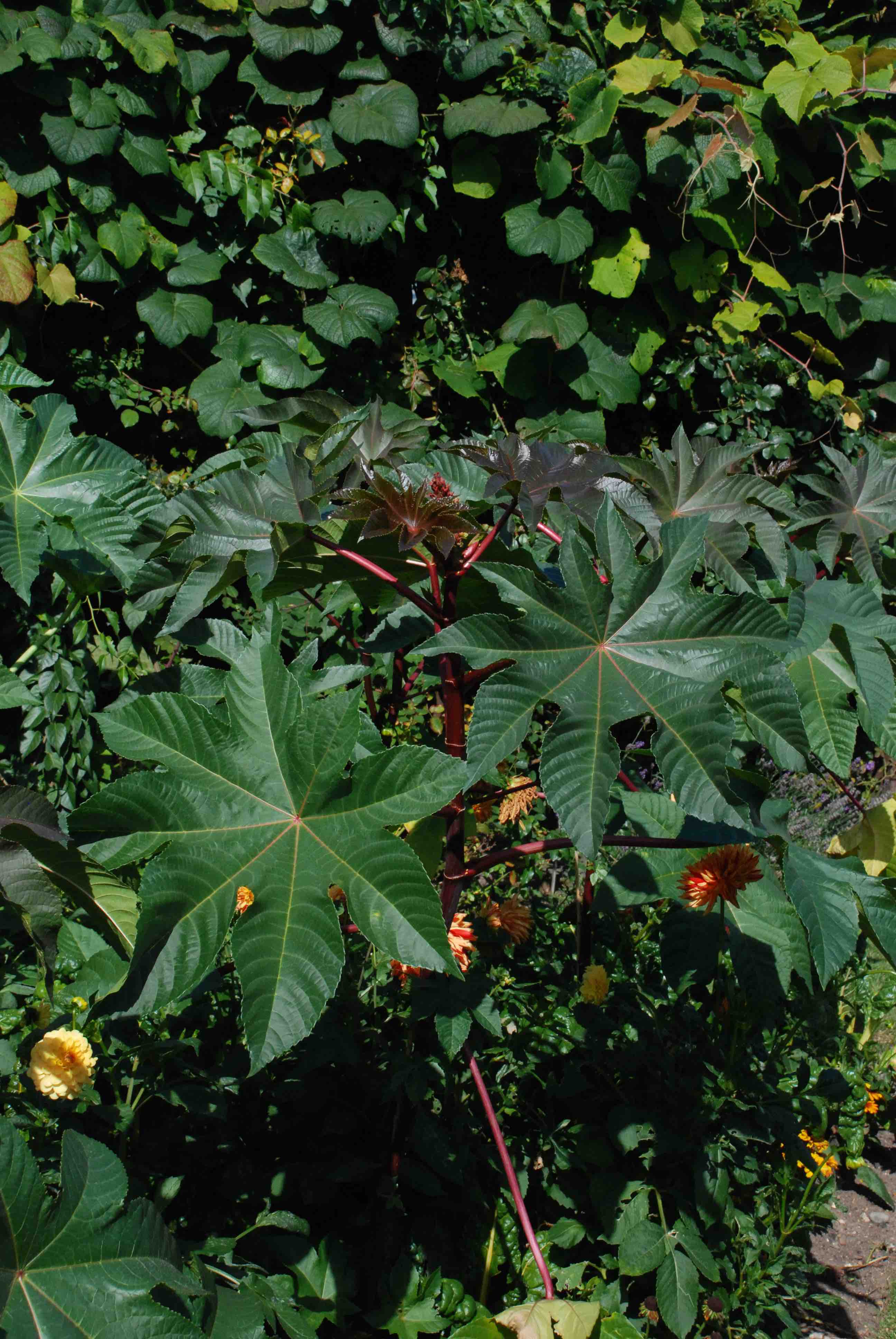
Plants in the Euphorbiaceae generally have simple leaves – usually not divided into leaflets – but they can be palmate (jatropha and ricinus) – but never pinnate. The leaves have stipules (small leaflike structures at the base) but these may be converted into spines, and the leaves are frequently short-lived. Most have milky sap containing latex, a characteristic of the euphorbias, and most famously in Hevea brasiliensis, the commercial rubber plant, not to be confused with Ficus elastica of house plant fame. The flowers are usually small and hardly visually significant but they are not without beauty, especially when surrounded by bracts or floral leaves. Years ago I grew the amazing Dalechampia with flowers surrounded by two floral bracts. I have spent as long looking for my images, which I know I have, as I have spent writing this and must give up now.
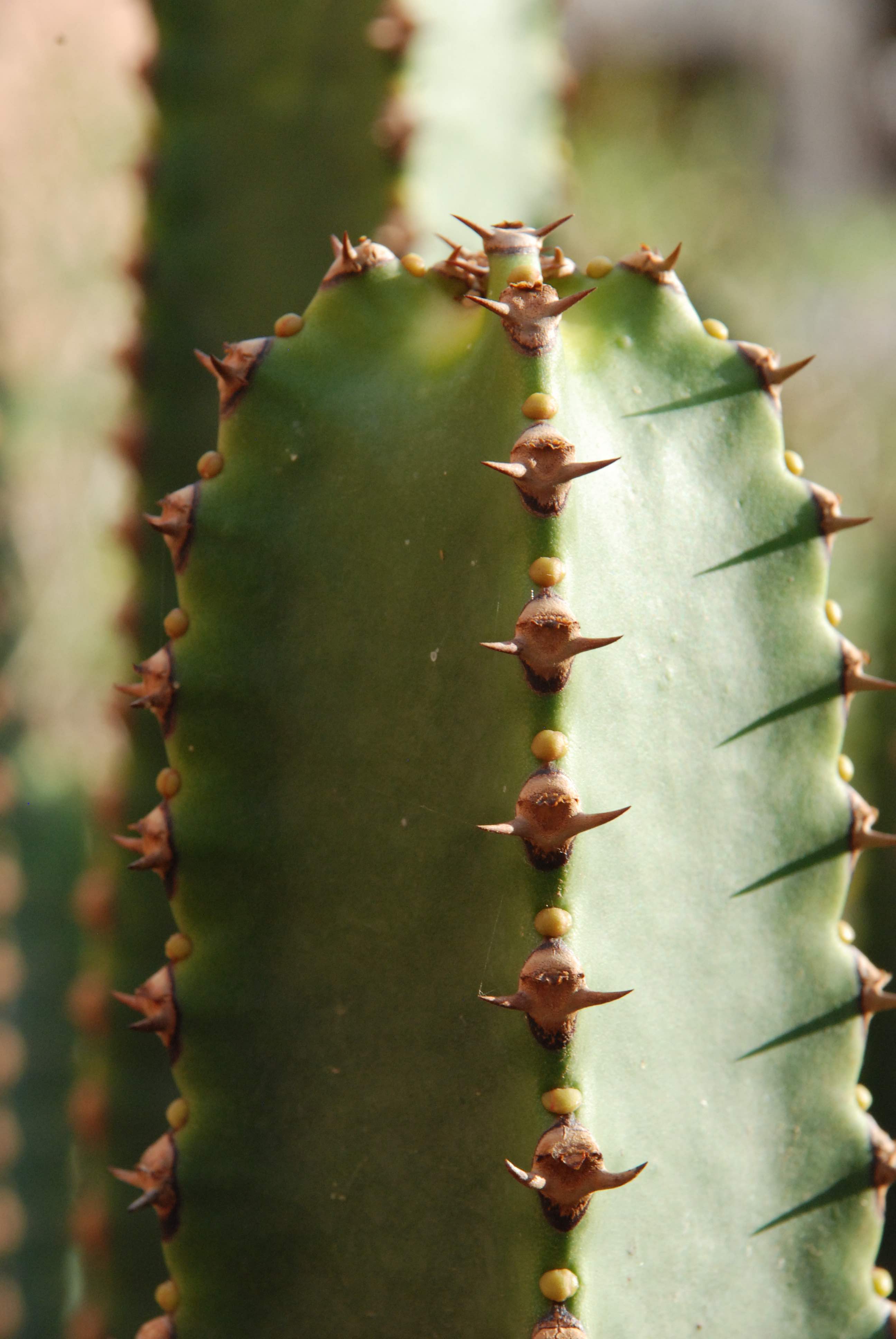
Back to the Euphorbias where generalisations are easier though not exactly easy. They range from annuals, herbaceous plants and shrubs to succulents. There are about 2000 species. They are commonly called spurges, derived from the use of the plants as purgatives. The name Euphorbia is from Euphorbus, a Greek physician who used the plant E. obtusifolius as a laxative in around 1AD (very approximate).
Few annual euphorbias are of much importance to us gardeners. The exceptions tend to be weeds such as the ubiquitous E. peplus. This small, quick growing plant, which frequently suffers from rust wherever I have gardened, is quite dainty and the lime green floral leaves would almost be welcome if it were not so intent on seeding. Like the infernal hairy bittercress, it can set seed as tiny plants in poor, dry soil or mature into lush bushes 30cm or more high in fertile soil. I have known people who use it to cure warts and skin blemishes but as most people have some sensitivity to euphorbia sap, and it can often be irritant, I can’t recommend it.
Two other annuals tempt me to try them from time to time. The fact that they are not common garden plants is telling. The annual poinsettia (E. heterophylla) sounds like a winner but it is really a bit of a dud. At least the leaves are of different shapes as the species name suggests. The upper leaves around the flowers so have red patches but the plant is tall, lanky and does not have much impact. Lankiness is also the problem with E. marginata or snow-on-the-mountain. The flowers are surrounded by florall leaves heavily edged with white. It is showy and often grown commercially as a cut flower but the stems do not branch much low down and I can’t bring myself to give it garden space very often.
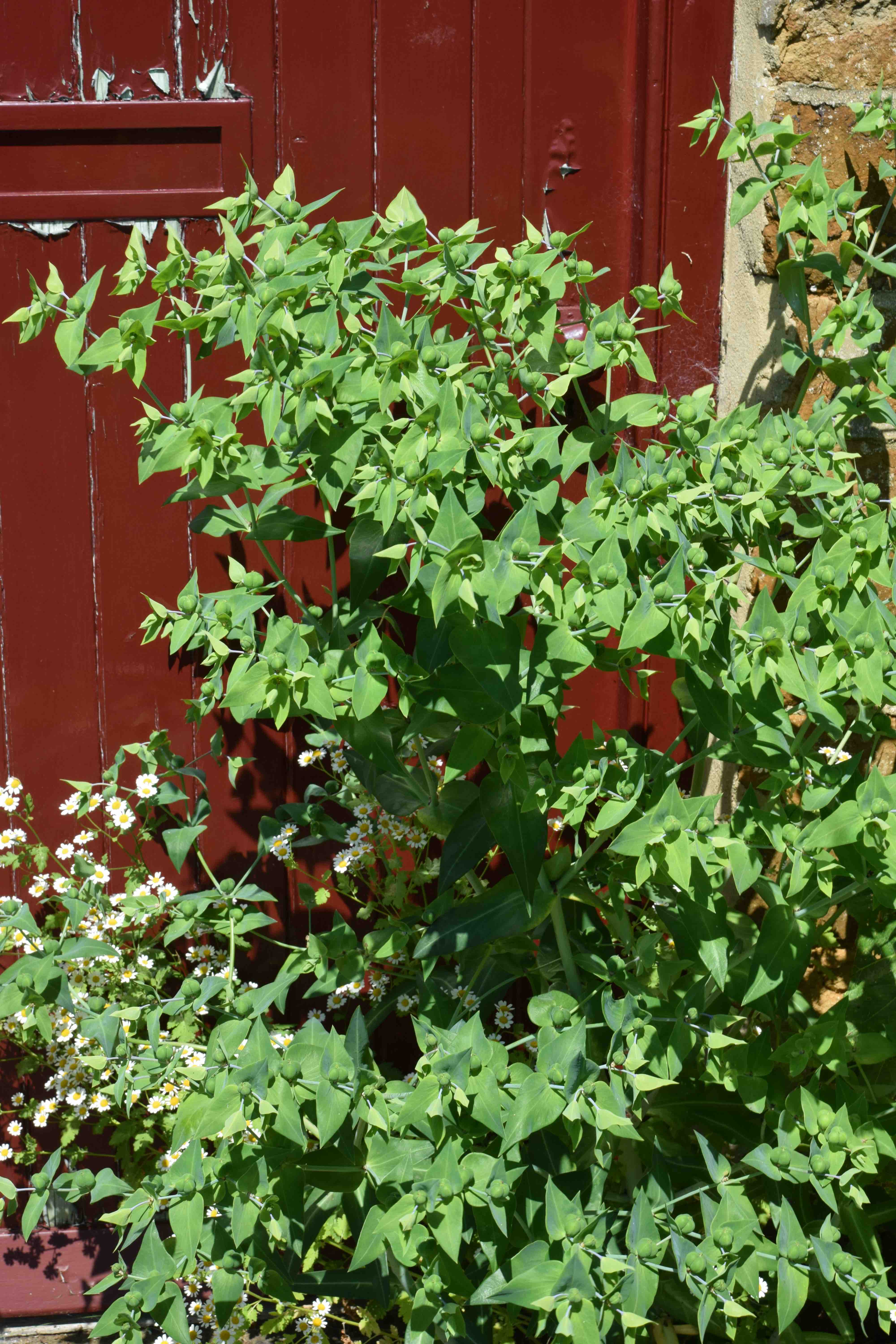
One other species is a notable weed in many gardens although it is a biennial and not an annual. Often promoted as ‘the mole plant’ E. lathyrus is a really rather beautiful scoundrel. In the first year it has a really striking habit with two ranks of opposite, steely grey leaves (unusual since most euphorbias have alternate leaves) set at right angles. The thick, upright stems are unmistakable. In the second year the top of the plant branches to create a great head of lime green ‘flowers’. I find it remarkable that no effort seems to have been made to ‘improve’ the common kind. As the last flowers are opening the large, three-sectioned capsules (typical of the genus) are popping seeds around the garden and then the plant turns brown and has to be pulled up. Garden legend has it that the plant secretes something that dispels moles (not an issue in Ireland) but I don’t think there is any justification to this.
This is, as I feared, becoming verbose so I will continue with more practical species next post.
 The Biking Gardener
That must be the weirdest family!
I think there are weirder ones!
That Euphorbia lathyrus is a pest!
It certainly can be! And the post after next will include another!