A litte ‘Irish Mist’
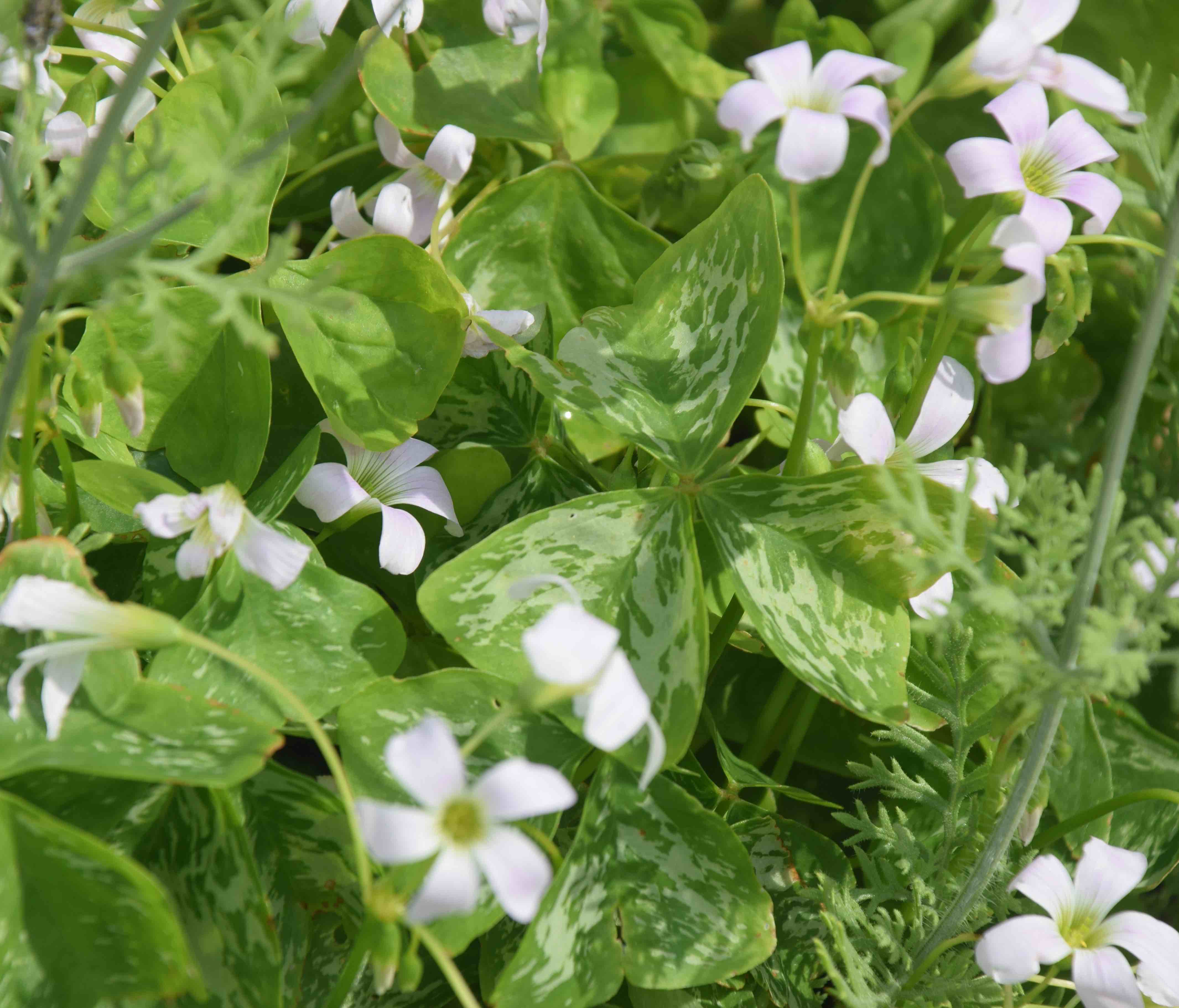
In the last decade or so the purple-leaved forms of Oxalis triangularis have become popular as houseplants or, more accurately, windowsill plants. They are easy to grow and easy to increase and the foliage is attractive, augmented by pretty, if not earth-shattering, flowers.
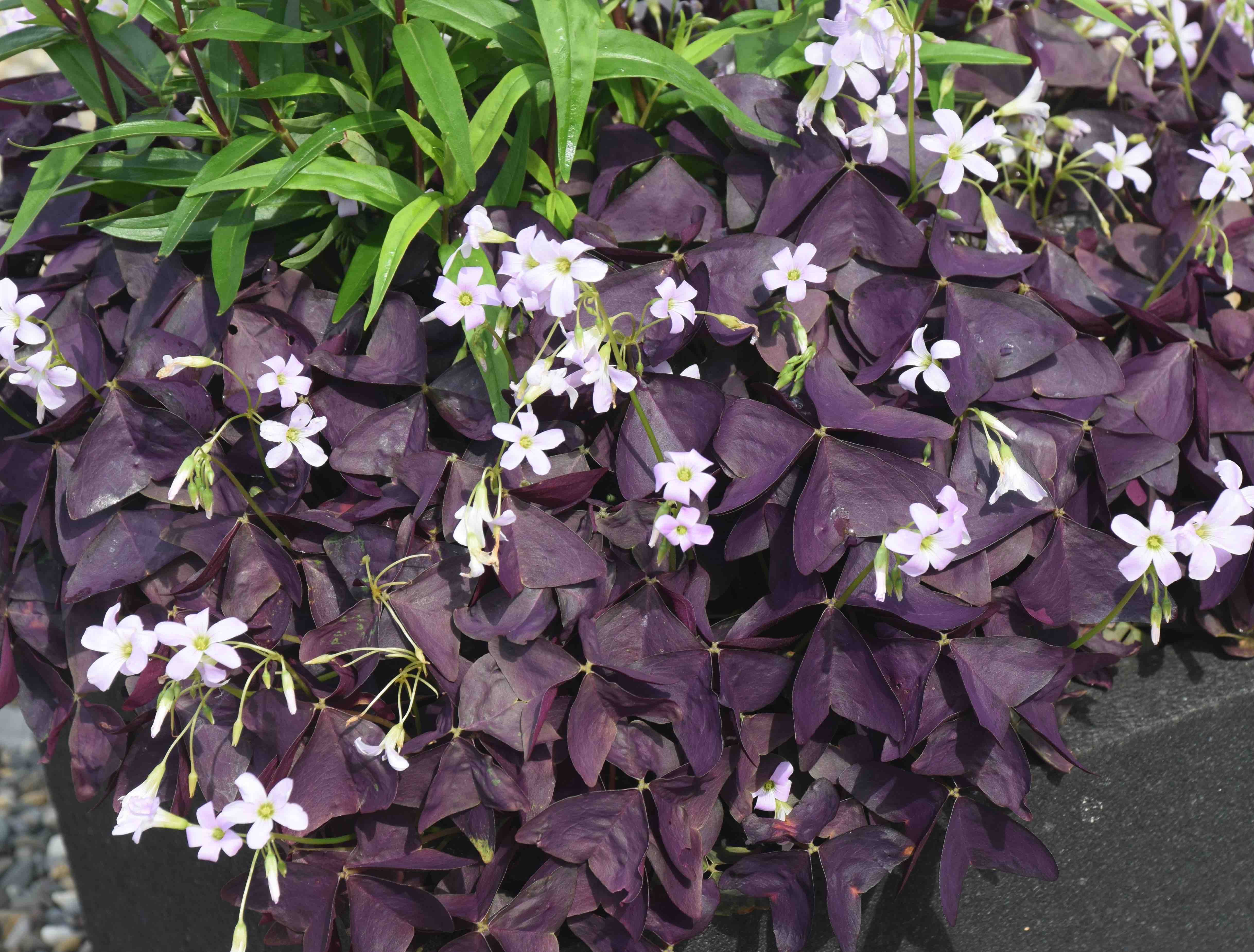
The wild species is native to much of South America though the naming is a bit ‘iffy’ and the plants are often called O. regnellii. Even the common names are a bit too abundant. The plants grow from fleshy rhizomes which increase over the growing season under the surface though there are usually several glassy, brittle, taproots that seem to do most of the ‘work’. By the end of a season one or two rhizomes will become 20 or more.
It is not really hardy and is evergreen in mild climates and in the home but I use them outside, digging them up in autumn, drying them off and repotting in spring, starting them off in pots in February again. I put two or three rhizomes in each pot just under the surface and keep them in a cold greenhouse to start them into growth.
Even so, I have the remnants of previous plantings all over the garden and they are popping up all over the place – but they are not a nuisance, unlike many others of its kin.
Although it makes a good enough windowsill plant, I think it always looks a bit straggly in such poor light and the pale pink flowers drop and I don’t like messy houseplants!
So I use them outside in the garden in borders or in patio pots and even in the ‘mild’ Irish climate they do very well.
The only problem I have encountered is rust that can ruin the foliage, especially in wet weather. My purple-leaved plants in the garden are suffering right now but those just 10m away, in a pot, are unaffected. I think this is that the plants are lifted and have better air circulation.
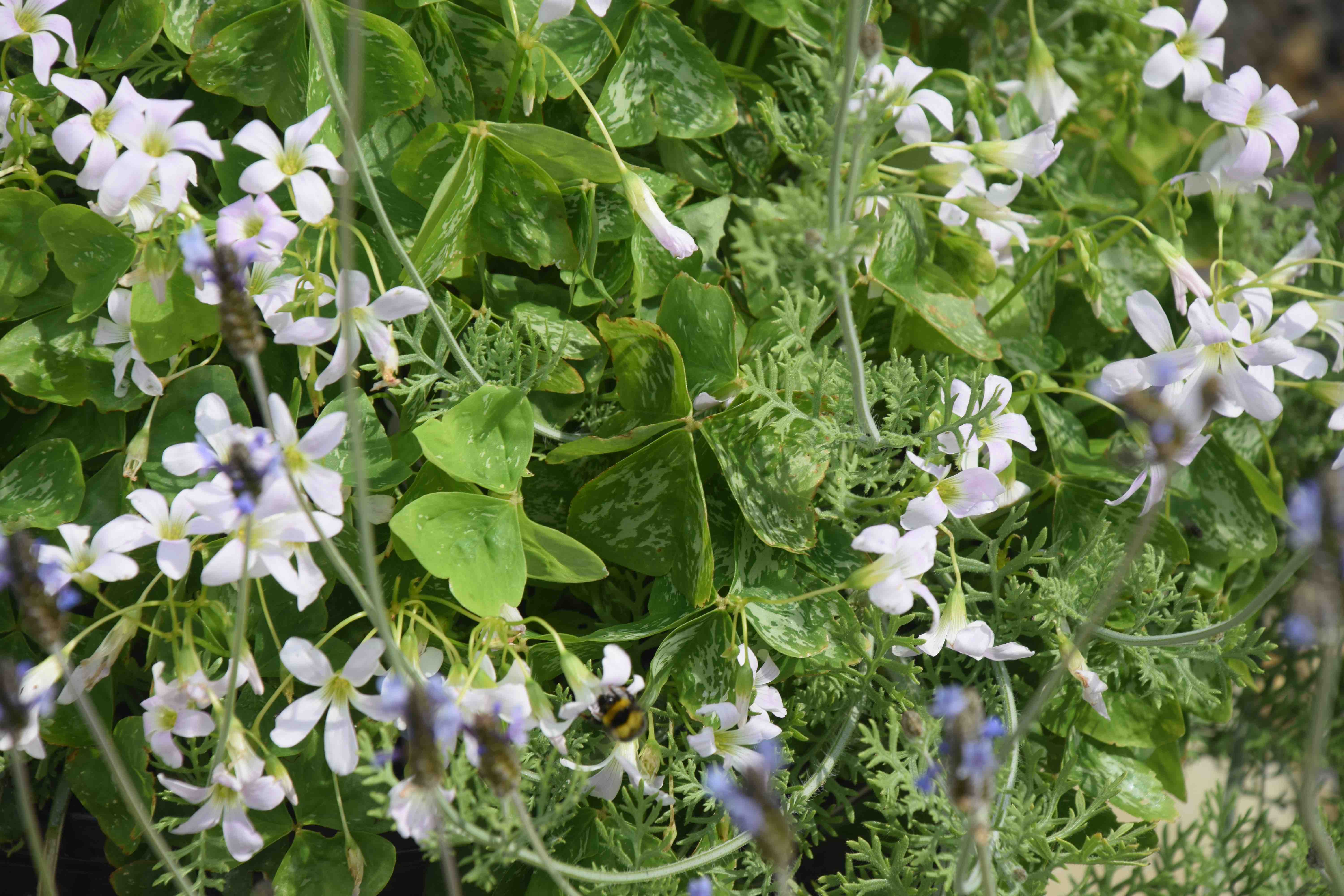
I am not 100% sure of the name of my purple-leaved plant but it usually has paler, purple triangles in the leaves and the flowers are a decent pale pink. I keep wanting to get more, different kinds but can’t see how they would be better. So this year I added ‘Irish Mist’ to the collection. The foliage have no hint of purple and have green leaves with various splashing or marbling with ‘silver’ and have white flowers, tinged with pink in warm weather (HAHA).
The ten rhizomes were planted in six pots (about 10cm) and I gave three away and the other three were put in this pot in May. This gives you an idea of how the plant grows. There were no more than five little rhizomes put in this pot and now it is packed with foliage and flowers.
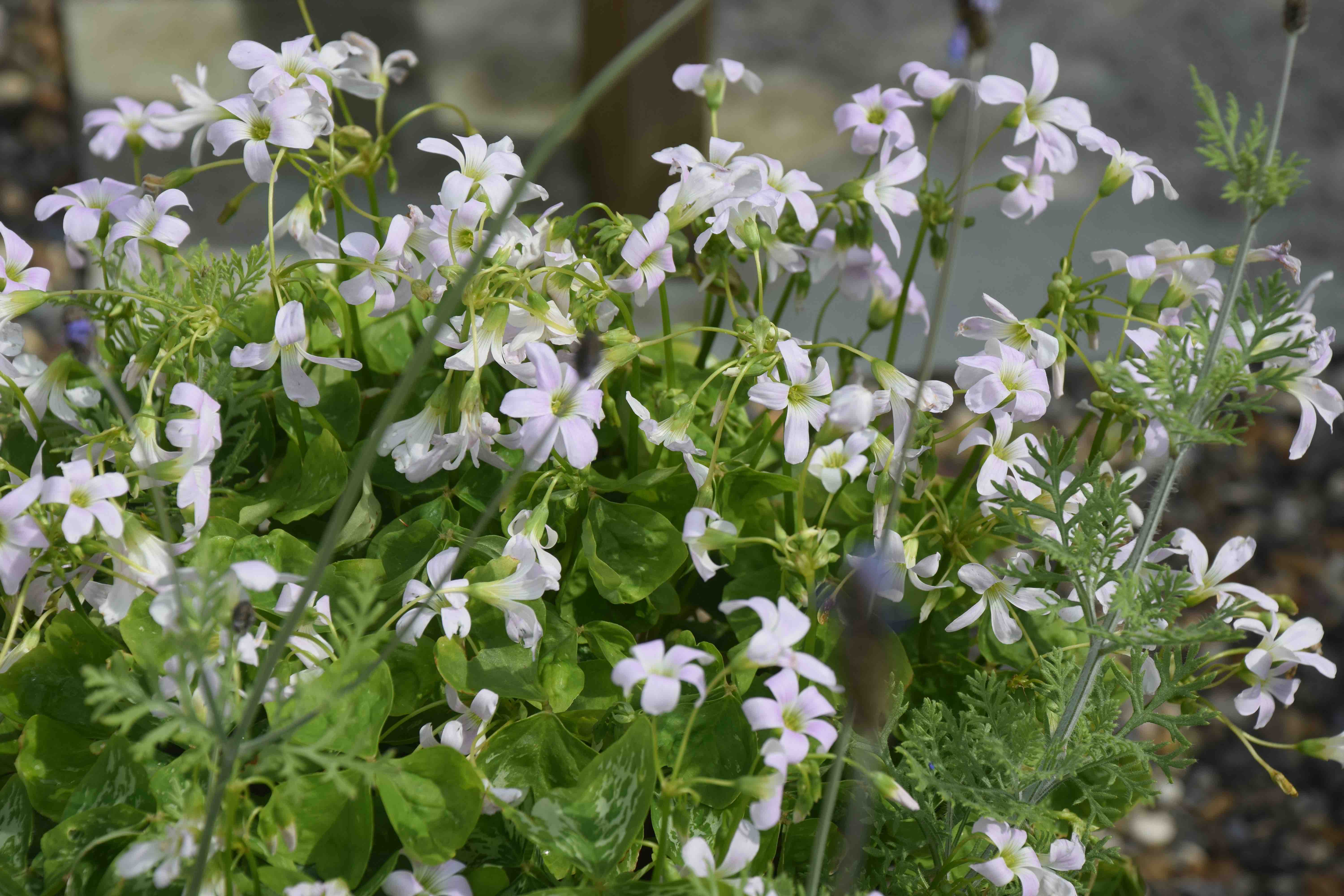
While I would not say with certainty that the plant does not set seed in ‘my climate’ I have never noticed it over the many years I have grown the purple forms. The plants bloom for many months and do not seem to be affected by day length.
Outside the plants deteriorate by October and then I dig them up, still in leaf and just dry them off. In early spring I pull them apart and repot the healthy rhizomes.
In the house the plants can be kept growing all year but, to repot them, I think it is better to ‘rest them’ every now and then.
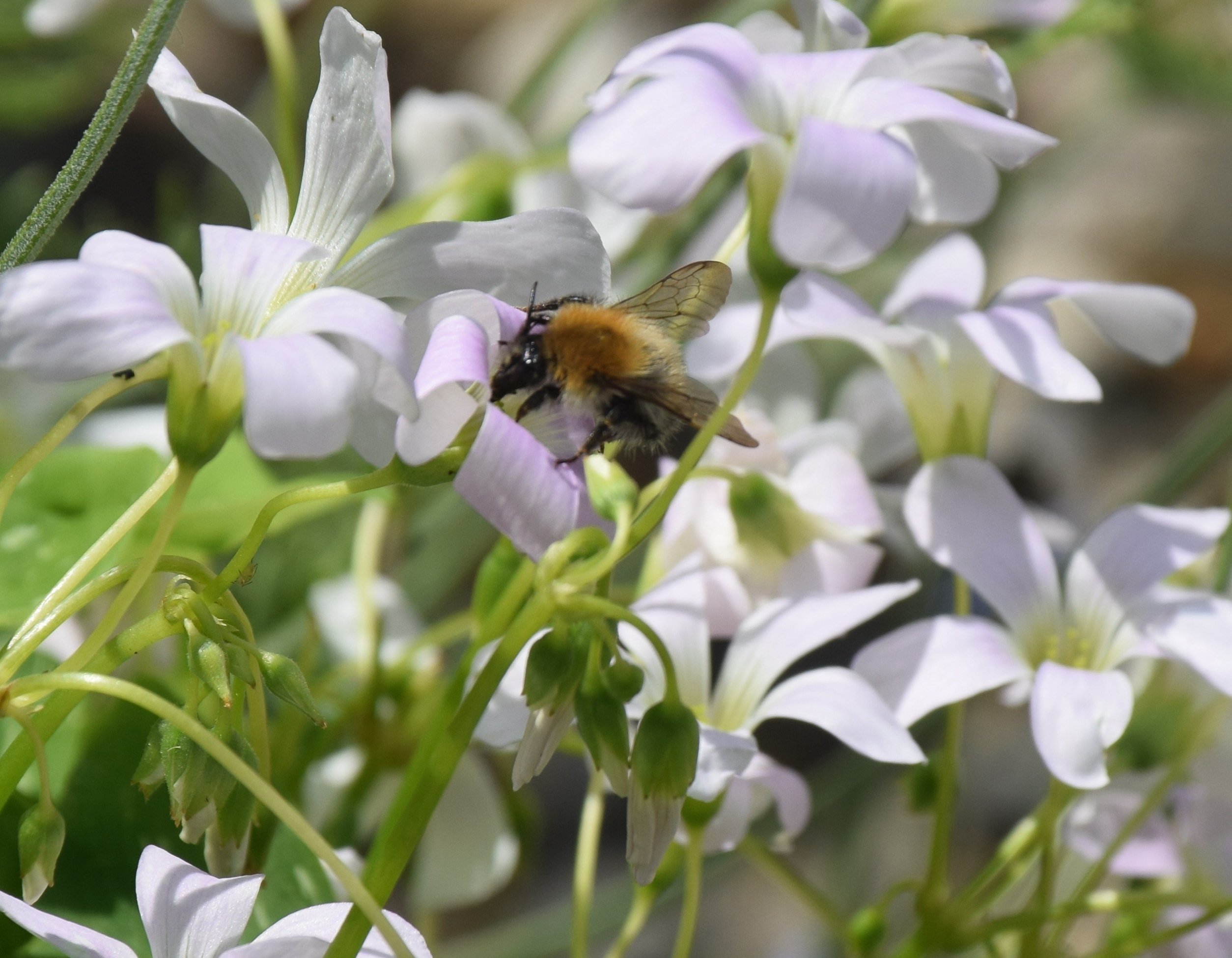
The flowers seem to be attractive to bees. I planted ‘Irish Mist’ with a few Lavendula multifida, a tender lavender that is easily grown from seed and flowers quickly. The grey foliage and pale flowers look nice with the oxalis though the bees don’t seem as find of this as the ‘usual’ lavenders, perhaps because the long flower stems are not as strong and the bumble bees tend to cause the stems to bend abruptly, which may be disconcerting for the insects!
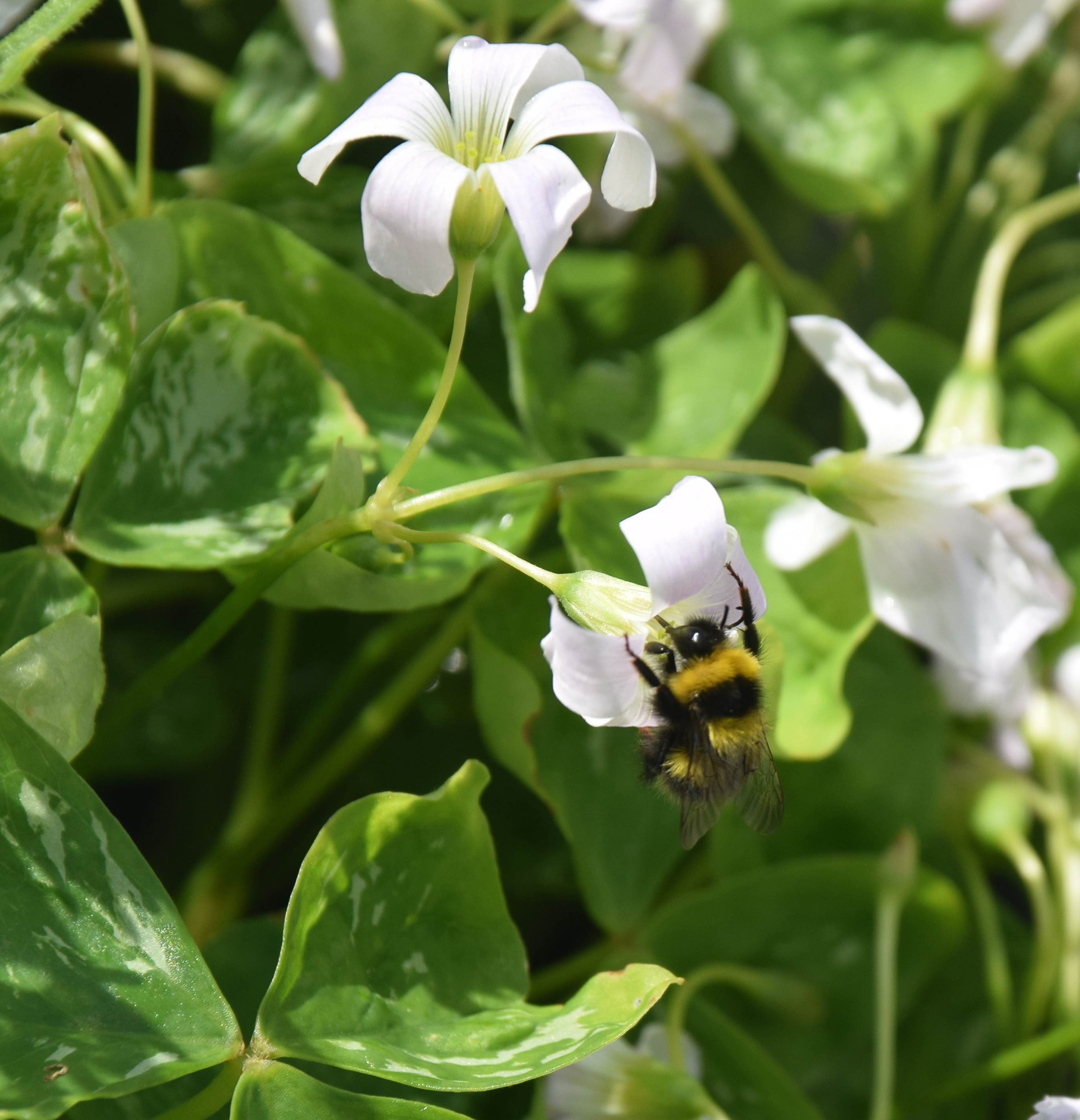
‘Irish Mist’ is not as showy as the purple-leaved forms and the ‘marbling’ is a bit variable but I am won over and it makes an attractive pot and should be easy to keep and propagate so I will be keeping it! As an aside, the plants seem remarkably free from slugs and snails, though the rhizomes in winter will get nibbled if you are not careful. Maybe it is the oxalic acid in the leaves? The flowers and leaves can be added to salads if you like to do such things. What is there not to like?
 The Biking Gardener
‘Irish Mist’ is an attractive addition to the garden!
It certainly is – and the garden was very misty this morning at 5 when I had to let out the cat – burning off well now though
I had a few of the purple leaved ones for many years, as an indoor plant. Your description of them multiplying so quickly brought a smile! I wonder how they’d do with slugs and earwigs if I tried your method of having them outdoors for the summer, and storing the little bulbs on winter…
Outside they do seem to be almost unaffected by slugs and snails that have ruined so many other plants this year so while I would not dare call them slug proof they are certainly a lot more resistant than a lot of other plants. Even those ‘volunteers’ left from previous years seem to be doing well without any protection with pellets while careful protection of sunflowers and dahlias resulted in no surviving plants. I would give oxalis a try, based on my experience.
That’s both shocking (given their delicate appearance) and encouraging – thanks!