Keep It Simple Sunday: repotting
One of the questions I get asked a lot is when is the best time to pot on shrubs, especially Japanese maples (Acer palmatum). The frequency of the question is probably down to the popularity of the plants and their cultivation in pots. They are ‘classic’ patio plants even though they are entirely unsuitable for a hot, sunny patio, intrinsically preferring a semi-shaded spot and moist atmosphere to prevent browning and shrivelling of the leaf tips, especially on those with finely divided foliage.
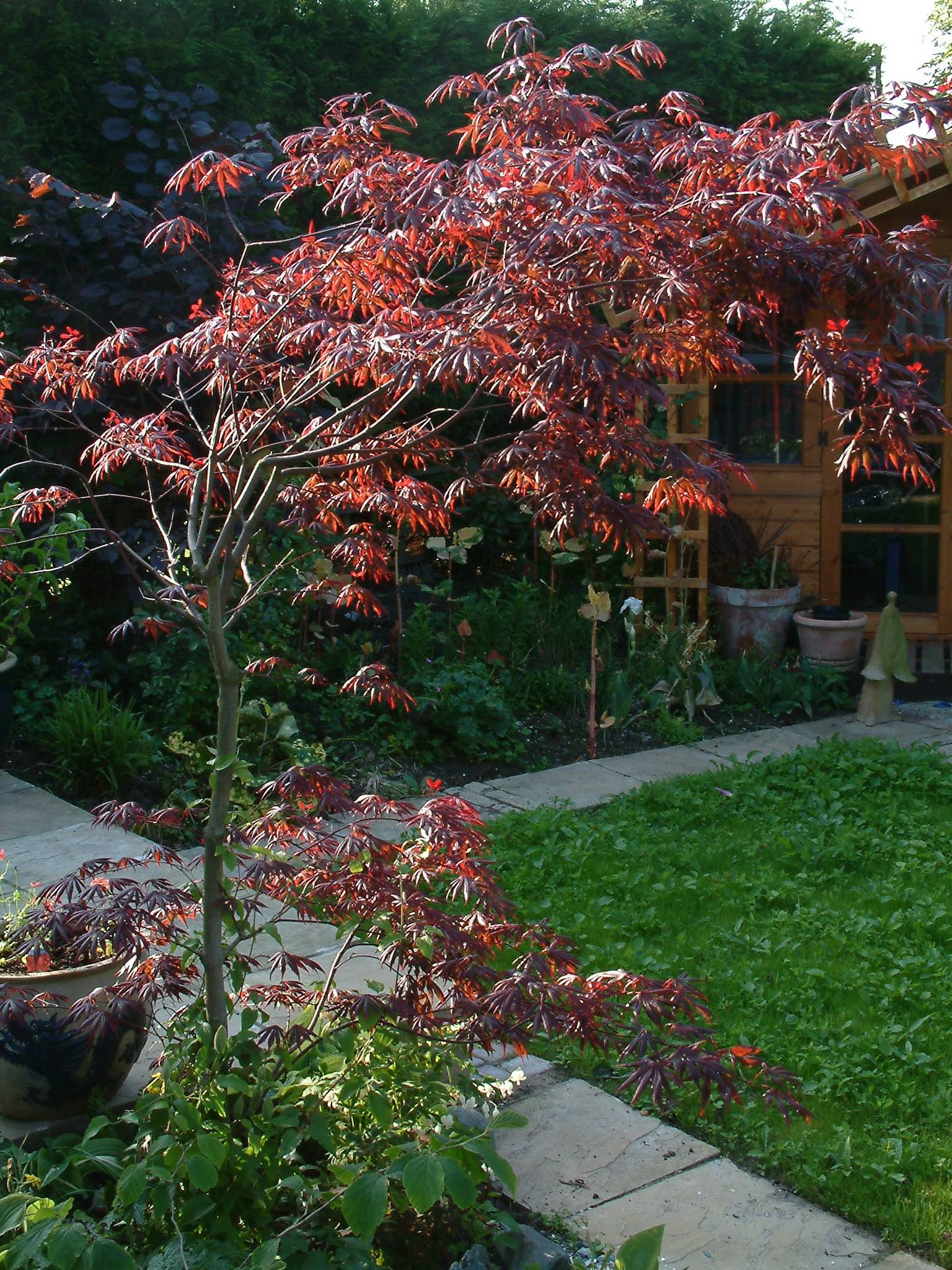
But when should you pot on (move to a bigger pot) your maple? The logic behind my answer will apply to most plants so I will explain those in detail later but first, the specific answer.
The best time to repot a Japanese maple is in spring. Use a pot that is slightly deeper and slightly wider – about 5-8cm wider. And use a loam-based compost such as John Innes No 3 compost and NOT a multipurpose compost.* Japanese Maples are slight lime-haters so use a lime-free John Innes compost if you can get it but it is not absolutely essential and you can always use a ‘acid’ plant food as it grows.

If you want, you can loosen the roots if they are very compacted. Make sure you water the plant well before you take it out of its pot and water again after replanting to make sure the new compost is in contact with the roots. If there are air pockets around the edge the roots can dry out and die.
So why is this the best time?
Well, if a plant is in a pot you can repot it at any time because, to do so will not disturb the roots. Root disturbance and damage is why you can’t just dig up a plant and move it when in leaf. The active, young roots are some distance from the trunk of a shrub in the soil and when you dig it up you inevitably chop all these off. The plant, deprived of the ability to take up water, will wilt and die. If you do it when it is dormant, it will produce new roots from the old roots as the new leaves are being produced and it will survive (as long as you were not too silly chopping off the old roots). But a potted plant will not suffer this damage so it can be repotted at any time. But if repotting in summer don’t tease out the roots too much because these will be all the new, active roots: around the edge of the rootball – the interior of the rootball will largely be devoid of active roots.
You could repot in autumn but for the next six months the shrub will not be growing or using nutrients in the pot so, by the time growth starts in spring, a lot of the nutrients in the new compost will be depleted by rain.
There is also the danger (though small in acers) that a mass of compost, around the rootball, will saturate the roots. Roots need oxygen to breath or they will rot. When there is a mass of compost with no roots it will just lay wet and this can cause root death. This is a bigger problem with houseplants, which often die of waterlogging and these should be repotted in spring or summer so they have all summer to fill the new compost with roots.
Plants often survive for a long time in relatively small pots if they are well fed.
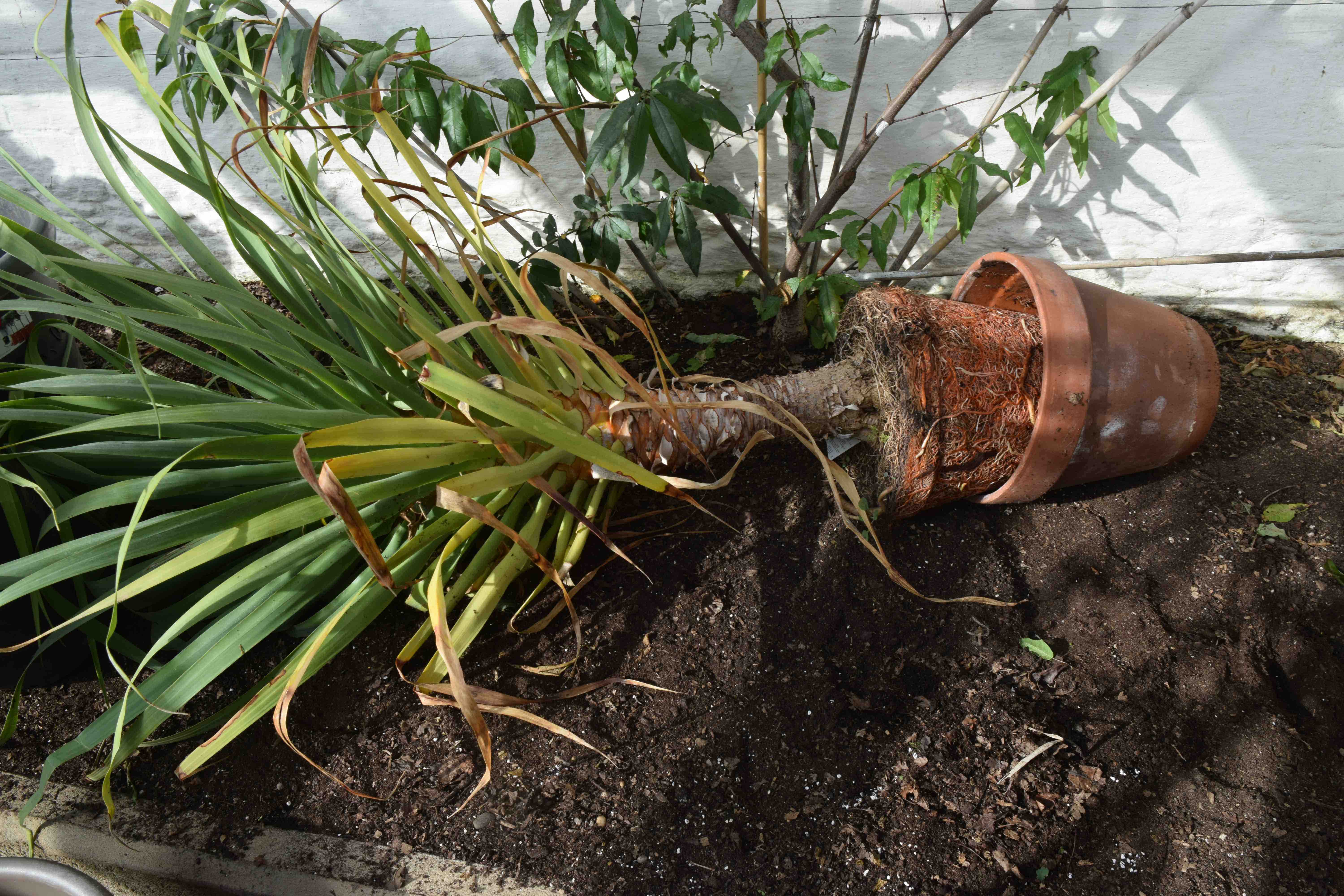
But there comes a time when this acer will be in the biggest pot you can afford or manage to handle. Eventually the plant will loose vigour and something has to be done. The compost will be packed with roots. When summer extension growth declines you have to take action. It may be possible to put the plant in the border. Do this when it is dormant and loosen the rootball before planting.
But you can keep it a few more years in the same pot. Pull it out of the pot, ideally on its side for convenience, and chop off the bottom quarter of the roots with a spade or old kitchen knife. Put fresh compost in the base of the pot and replace the plant. It will root into this fresh compost over the summer and you can do this once or twice to extend the life of the plant in the pot.
Chilly nights return
It is off topic but yesterday morning we had our first frost of the autumn. The thermometer recorded 1.9c but there was frost on the grass. I would say that this is unusual but the past few years we have had our first frost earlier than expected – I would usually expect the first frost in early November. It was not a ‘killer frost’ and tender plants were not badly damaged but it was a sign! I am not sure of what.
Not totally unrelated, this weekend was our last weekend selling bunches of flowers for charity. I knew it would be increasingly difficult to find enough to cut, especially as we seem to be selling more as word gets round. The recent wet weather has stopped the statice and zinnias in their tracks and the alstroemeria have slowed down so I can’t rely on them. So we have stopped till spring when we can start again with daffodils. I was not sure how we would get on when we started in May but we have raised 500 euro for local suicide prevention charity, Talk to Tom and (if we sell the last couple of bunches today) will have raised 500 for the local Hope cancer charity. All the money given for the flowers goes to charity. Bunches were sold at 3 and 5 euro. Importantly, we have made lots of new friends who have become regular customers and that has been an unexpected delight.

*next week I will explain why in more detail
 The Biking Gardener
Doing things at the right time couldn’t be more important when it comes to acers…
Repotting is preferably done in winter here because roots grow through the mild winter weather, while upper growth remains mostly dormant. Roots are more sensitive while growing more actively in spring, particularly while swelling buds and resuming vascular activity rely on them.
A related question, for reasons you will understand: Re Sinningia tubiflora – do you lift the tubers and store them dry for repotting in spring? And, re double nasturtiums: do you lift and bring into the glasshouse or take cuttings to do the same?
The double nasturtiums are killed by frost so you have to overwinter cuttings. They root easily from tip cuttings although you can also chop up the lower, woodier pieces of stem for cuttings too. But they won’t cope with cold. I leave the sinningia tubers in the pot, dry, after they die down. They are supposed to bloom best if crowded but I have to say that this does not seem to be critical. I repot when they seriously distort the pot. All the plants this year were divided and repotted this spring and they seemed to bloom fine. I keep the undisturbed, dry pots on the greenhouse floor and they get cold – I don’t heat the main part of the greenhouse so I doubt the tubers actually get down to 0c but they are not kept heated. I did plant some out and they survived last winter but didnt flower this summer – they appeared late in spring. I hope you are ready for the storm – I am dreading it.
The nasturtiums are still small and I may lift, pot up, and store that way. By the way, we saw fabulous big pots of double nasturtiums in Powis Castle recently.
Gorgeous bunches. I’m not surprised thy sold like hotcakes, though your gate seems to be on such an out of the way tiny road, I can’t imagine too many passers by! The
We are out of the way but Wheelocks strawberry farm is down the road! I think that attracts ladies who lunch because you can get a nice meal there!