Rare as hen’s teeth
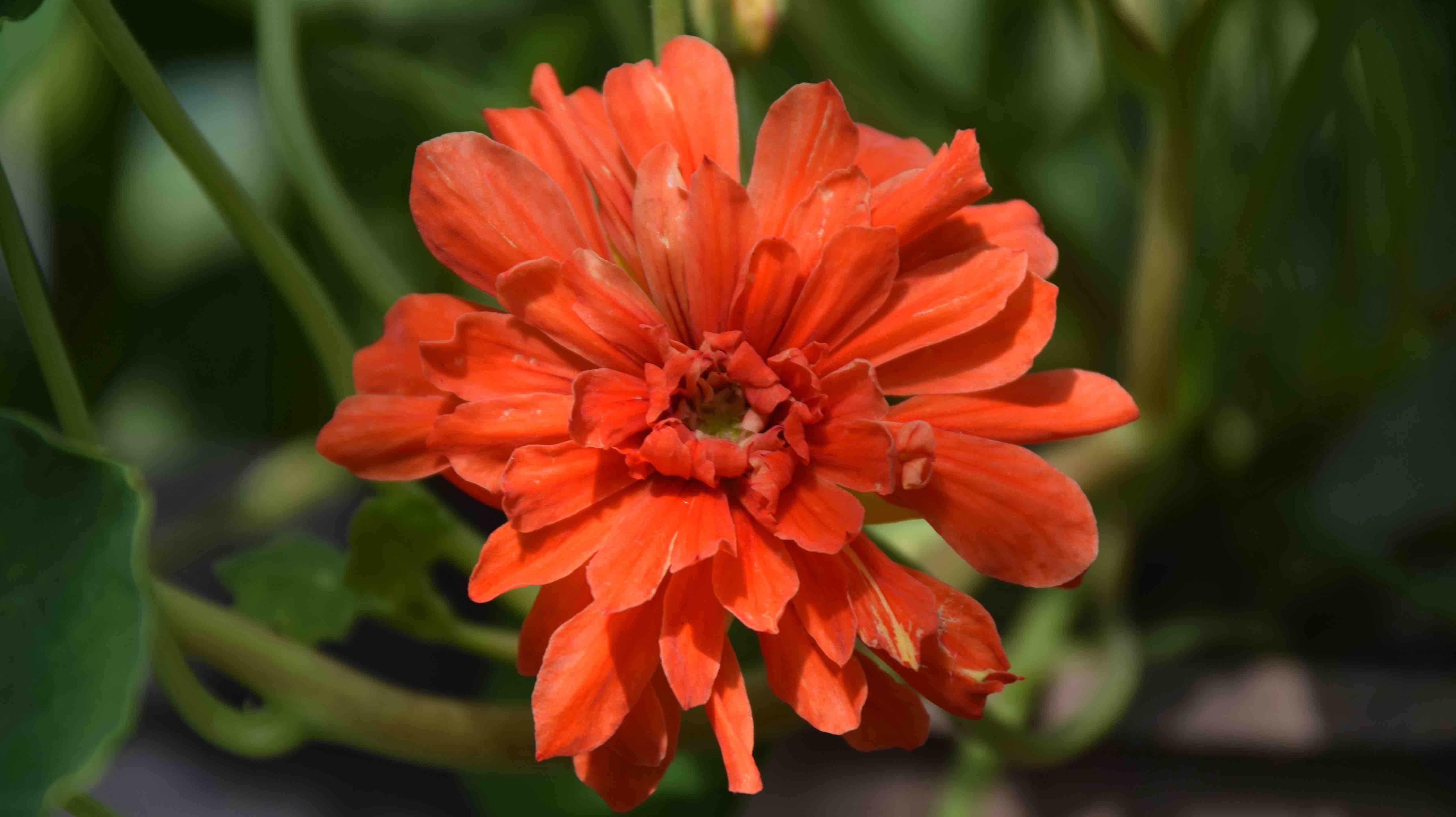
Rare as hen’s teeth: that was how tropaeolum ‘Hermine Grashoff’ was described by the late Stephen Taffler when he visited Myddelton House many years ago when I was Head Gardener there in the 1980s. He was renowned for his interest in and collection of variegated plants and he knew a thing or two about rare plants. This was the early days of what is now Plant Heritage (NCCPG) in the UK and I was Chairman of the London group. I got the plant from Kew. I was trying to collect plants for the garden and went back to Kew at the end of ‘bedding season’ and was lucky enough to come away with spares from the ‘Decorative Department’ having only fairly recently left the place as a student. So ‘Hermine Grashoff’ was included in my summer plantings, and the garden was open to the public, on a limited basis at the time, as restoration was in its early stages.
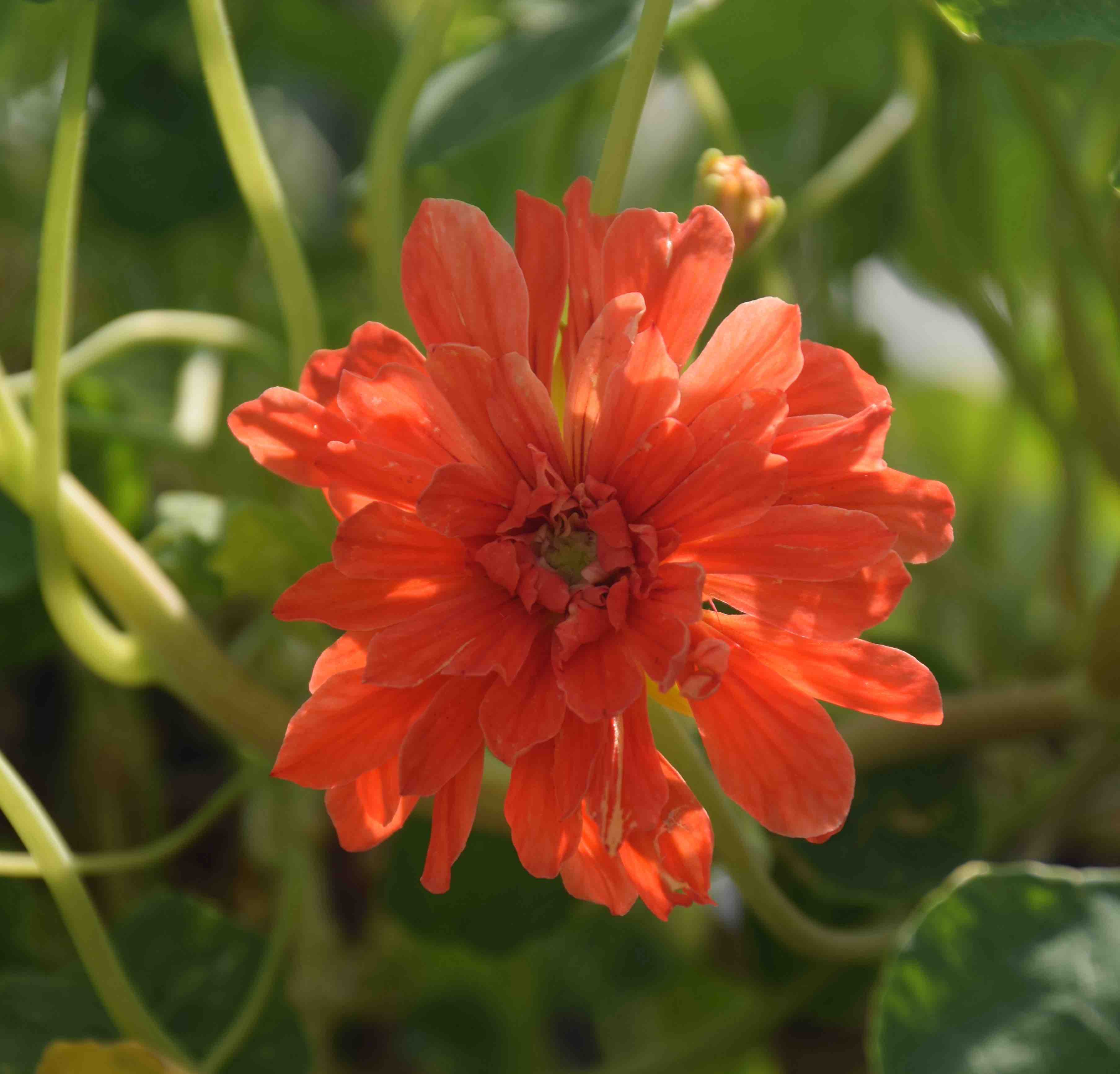
Although we treat nasturtiums as annuals (Tropaeolum majus) this double form is treated as a tender perennial is easy to root but needs overwintering in temperatures of no less than 10c for safety, and will not tolerate frost.
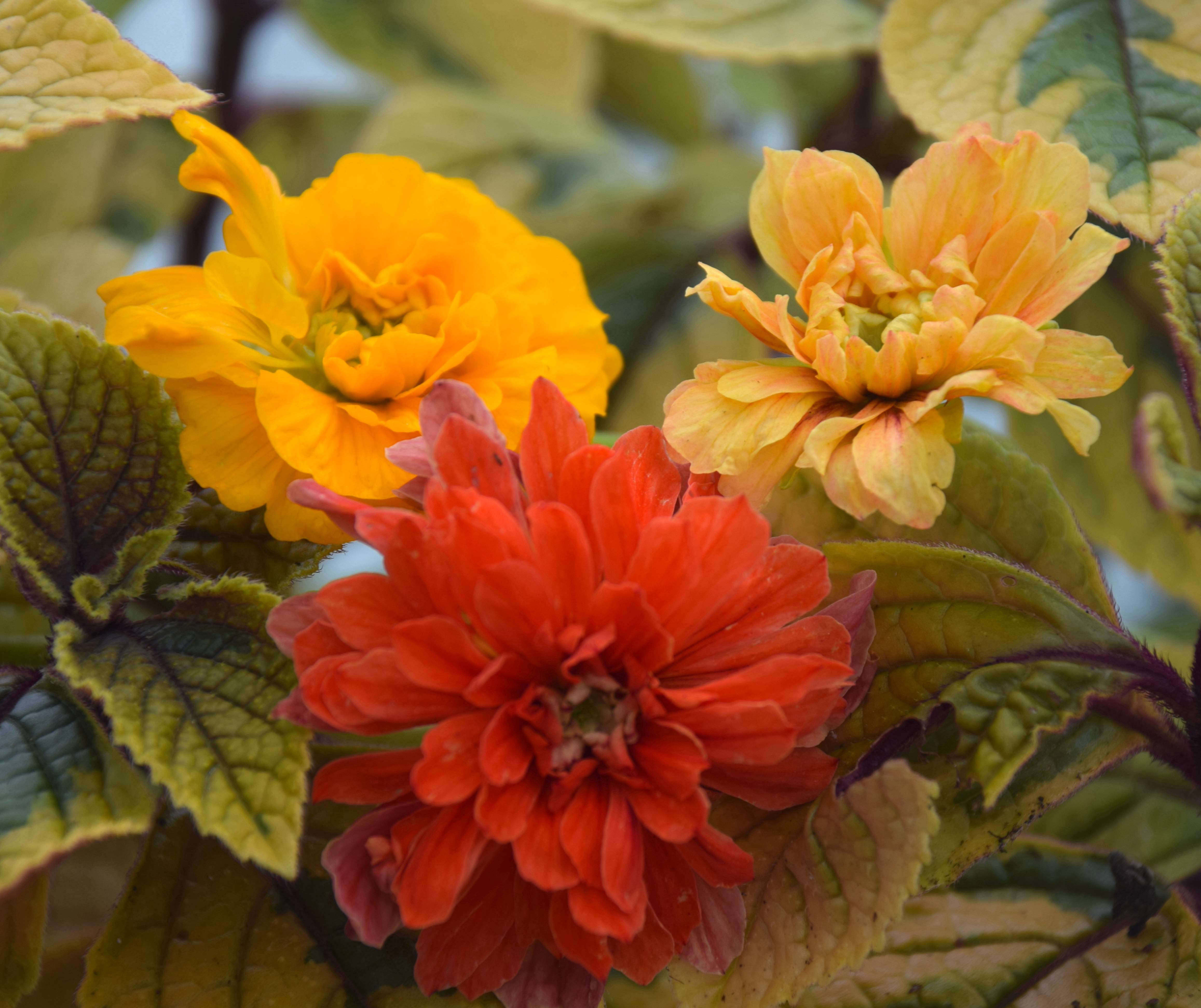
Because it does not set seed it flowers profusely for a long season. The flowers and leaves are much more compact than most seed-raised nasturtiums and you would be forgiven for thinking it is a different species (I would not be surprised).
‘Hermine Grashoff’ is an old plant and very desirable not just because it is unusual but it is a good garden plant. It is no longer as rare as it was, in part because of the success of Plant Heritage and the interest of gardeners in special plants.
Anyway, that was then. Now I have ‘Hermine Grashoff’ growing again and I feel a strange sense of content, mingled with huge responsibility! Even better, I am delighted to say, I now have what I believe are the only other two perennial doubles. Although these three plants have different countries of origin: Germany, Ireland and India, I got them from Belgium. They arrived in a package in the heat of June, held up by those lovely French air traffic people, and two were just tiny, barely rooted cuttings, but I showered them with love, and they not only survived but have flourished. My aim is to propagate them immediately and spread them around.
It is absolutely true that the best way to keep a plant is to give it away!

In ‘Notes and Gleanings of a meeting of the RHS in July 1880 ‘Hermine Grashoff’ was recorded as being obtained by Mr Fox of Banbury, UK, who got the plant from ‘Mons. Grashoff’ of Quedlingburg, Germany. It appears that Hermine Grashoff was the wife of a seed merchant called Martin Grashoff, presumably the ‘Mons Grashoff’, the company operating from 1771. It was admired by the Members of the RHS and described as ‘of considerable value for decorative purposes, and affording brilliant flowers for cutting for vase decoration.’’ (info from Plant Heritage)
But while I was growing this 100 year old double, things were happening in Ireland.
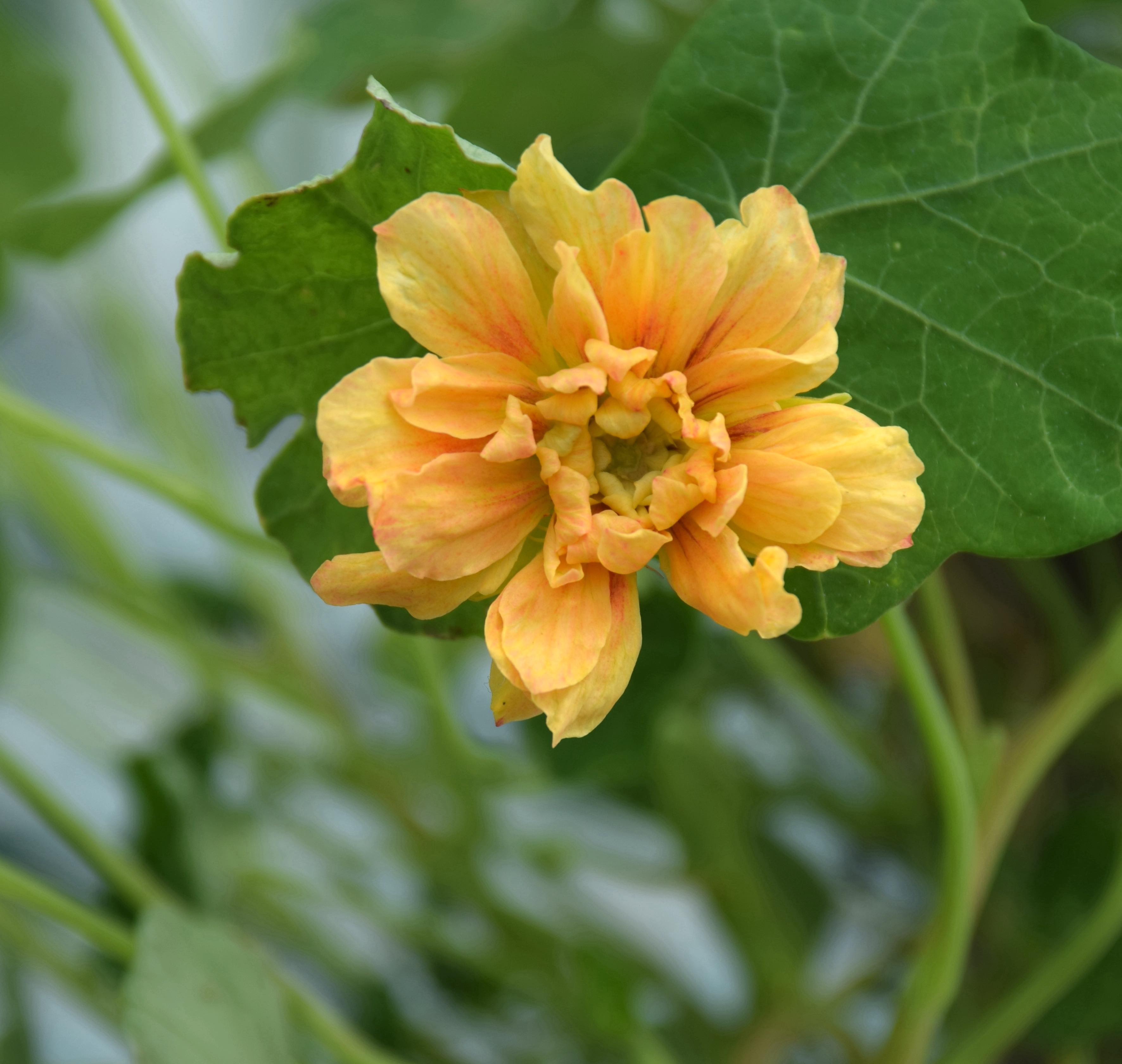
‘Margaret Long’ is a sport of ‘Hermine Grashoff’ as is suggested by the flower size and shape. There are many versions of how the plant arose but it is definitely an Irish plant and almost certainly from Dublin. It seems that a Miss Long noticed the sport when she was working at the Botanic Garden at Glasnevin, Dublin in the 1930s. She apparently grew it for decades before it was eventually noticed by Margaret Long (her daughter) in 1987. It is astonishing that the plant, which is not hardy and needs regular and constant propagation, survived for 60 years in the hands of one person! Anyway, it was then passed to Charles Nelson at Glasnevin presumably in 1987, and, I assume, named by him. Margaret Long died in 1991.
More recently a plant named ‘Apricot Twist’ has been sold by Thompson & Morgan but I have always had a feeling this is the same plant. More below.
Burrowing back into Dirk van der Werff’s Plants Magazine, of which I was an avid subscriber in the day (1998), more useful details appear: He says ‘Margaret Long’ ‘reappeared’ in the 1990s and was exhibited at Chelsea Flower Show in 1995 by the Irish Gardens Society. This would follow on from the 1987 ‘discovery’.
It appears that ‘Hermine Grashof’ produced the same sport again on Anglesey and was listed by Corrine and David Tremaine-Stevenson. This was spotted by Keith Sangster of T&M and was sold as ‘Apricot Twist’. So although it is the same plant as ‘Margaret Long’ it arose separately.
And then there is the bright gold ‘Darjeeling Double’.
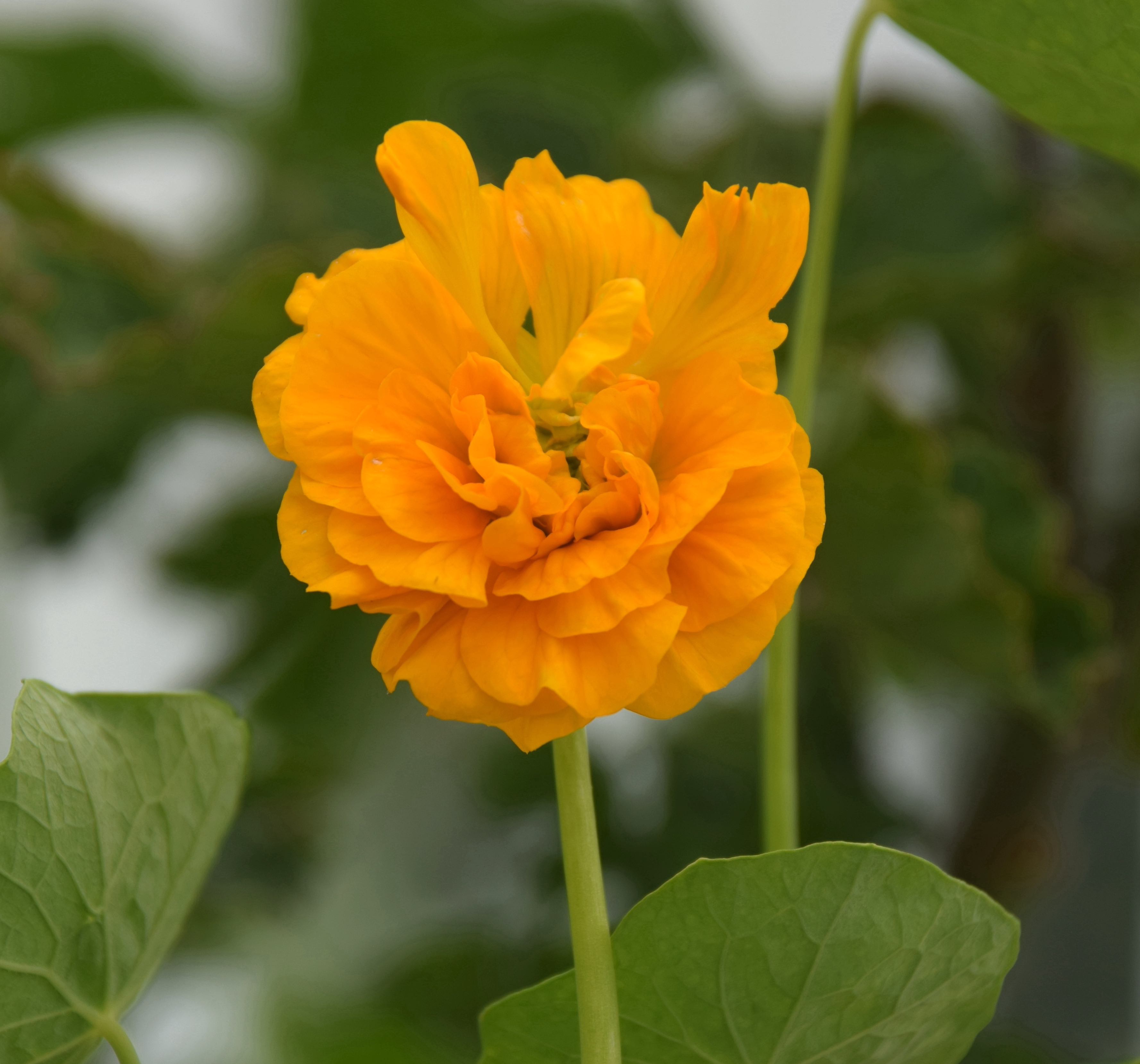
‘Darjeeling Double’ (‘Darjeeling Gold’) was discovered in India by Bleddwyn Jones of Grug Farm Plants. I do not know when it was introduced and I have not grown it before. It seems more vigorous than the other two but my plant always produces flowers with a couple of ‘long-stemmed’ petals that spoil the otherwise neat shape of the rosette flowers. Perhaps, as it grows, I can select cuttings of shoots that produce ‘perfect’ flowers, if they appear. Even with that slight defect, the charm of this plant is not just the bright colour but the lovely perfume of the blooms.
All three are charming plants that do need a bit of extra work but are worth the trouble, providing links with the Victorian past, an avid gardener in Dublin and great modern plant collectors. Yesterday was the first day I had open flowers on all three!
 The Biking Gardener
Now I know the origin of your interest and great knowledge of weird and wonderful unusual plants! Interesting! A shame they are very tender or I would be in the queue for them!
It is a shame they are tender.
Beautiful plants.
I was not aware that they are so rare. I had seen some sort of double nasturtium years ago, but ignored it because I prefer nasturtiums that look like nasturtiums. I thought that it was rather apricot colored, but I do not remember the name.