Don’t ignore the double entendres: Arum maculatum
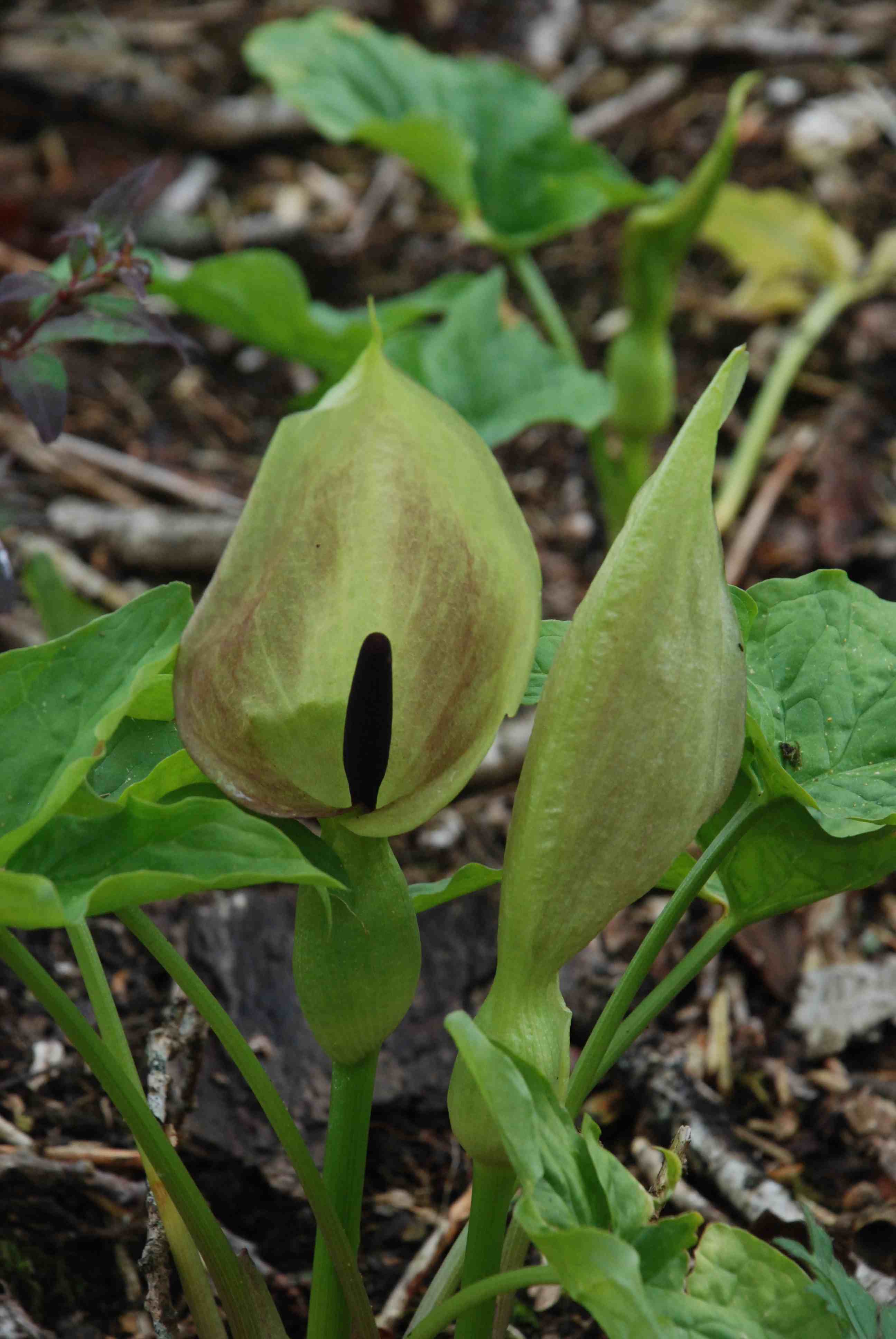
For most of my life my life I have been fascinated by the lowly, shade-loving Arum maculatum. It is a common wild flower in the UK and in Ireland and is unique in many ways. It is obvious by the appearance and botanical name that it is in the Araceae, the arum family, the most fascinating of all plant families. It is the family that includes the world’s biggest inflorescence (the titan arum) one of the world’s smallest flowering plants (duckweed – lemna) and a plethora of amazing houseplants from Swiss cheese plants to the the currently popular zamioculcas. It is a family that breaks most of the rules about what a monocotyledon should do and should look like. The one consistency is the flowers which always consist of a ring of tiny female flowers under a ring of tiny male flowers. These are held on a stem which terminates in a more or less swollen structure called a spadix which often gives off a (to us) unpleasant smell and also heat to attract pollinators. These are often gnats or flies. The whole thing is wrapped in a leaf-like spathe that can be attractive or simply structural.
In the case of Arum maculatum and many more the spathe opens at the top but is wrapped closely around the base and midges have to crawl down the spadix, past downward pointing hairs, to get to the flowers where they feed on the pollen. Here they are trapped overnight. At first the female flowers open and the midges bring pollen from another flower and run around the female flowers pollinating them. Then the male flowers shed the pollen and the midges get their reward and also get covered in pollen so that, when released as the hairs wither, they flit to the next ‘bloom’ and repeat the process.
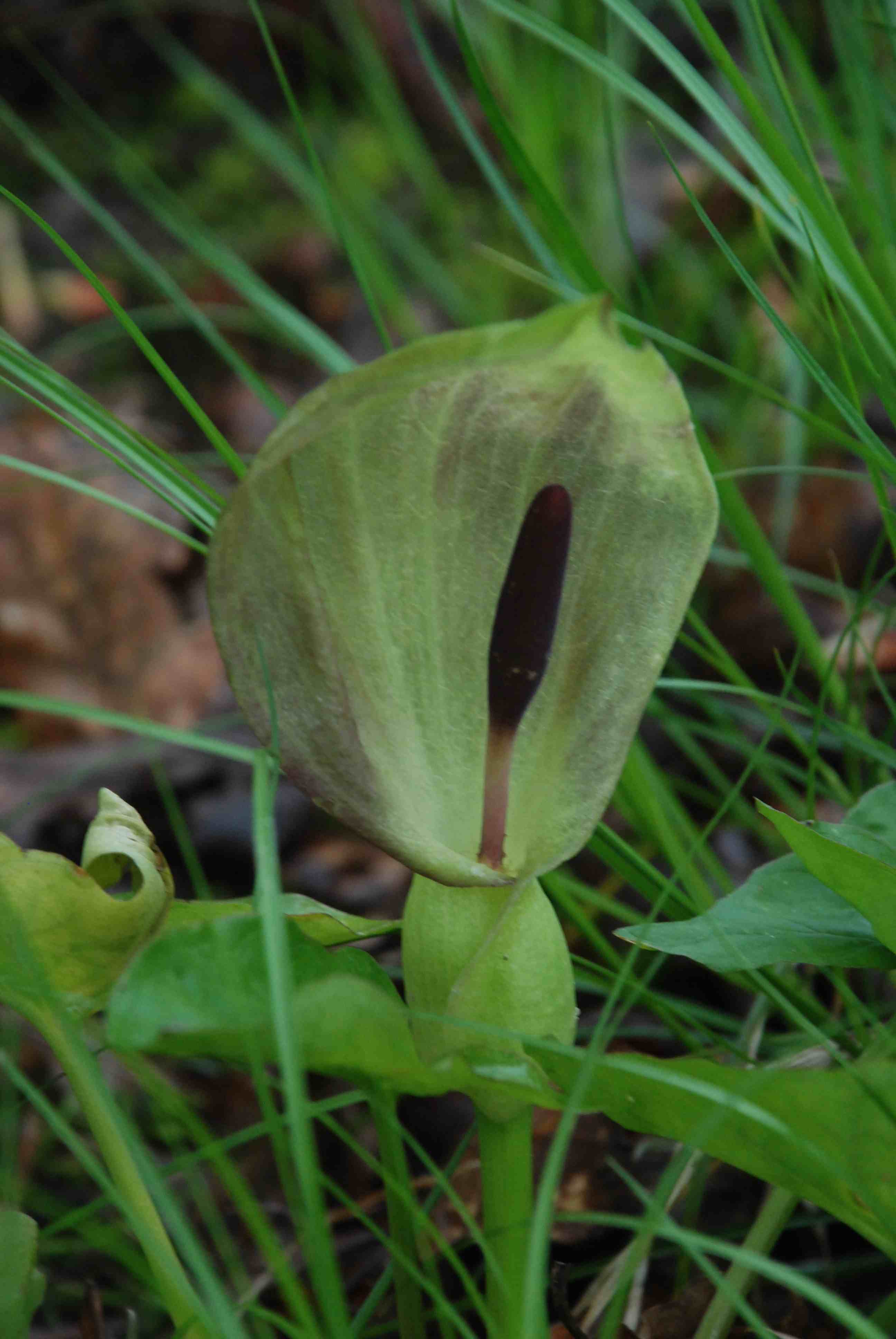
Arum maculatum usually has spotted leaves but not always. The spathe is usually green but can be tinted with purple. The spadix can be yellow or purple and the two colours may have given rise to the common name of lords and ladies but most of the other names are much ruder and refer to what you must have noticed unless you have a very pure mind – that the spadix has a rather penile shape or at least attitude!
Perhaps the most common is cuckoo pint. Pint (as in mint not pint) is short for pintle or penis and the plant flowers when the cuckoo arrives. Cuckoos were always associated with fertility as were robins so it is also called wake robin. Jack in the pulpit and priest’s pintle have a similar origin. In Ireland it was known as Cluas an gahbhair (or goat’s ear) with reference to the shape of the spathe – the Irish are much less bawdy than the English! In fact so obsessed were the English with the shape of the flowers that it was thought that all girls had to do was touch the flowers and they would fall pregnant.
The plant is poisonous in all its parts but the danger lies in calcium oxalate crystals, common to many aroids. The tubers are large and starchy and have been used in the past as a source of starch for laundering (portland starch) and may have been used for food after processing.
The flowers are followed by red berries that are readily devoured by birds but which do pose a poisoning risk to inquisitive children though they are rarely fatal – be careful just the same.

This is a truly unusual and fascinating plant with a long history in folklore. It is usually passed over as a garden plant in favour of the marbled foliage of Arum italicum.
 The Biking Gardener
Well, I found your site because I googled “ignored arums” which is an anagram of “ruined orgasm,” which is a particular fetish which frequently copresents with cuckoldry.
It’s interesting the plant is known as the cuckoo’s pint. From Wikipedia: “Cuckold derives from the cuckoo bird, alluding to the alleged habit of the female in changing its mate frequently and authentic (in some species) practice of laying its eggs in other nests within its community.”
Isn’t the internet strange?