Sowing vegetable seeds: carrots, beans and peas
I am pleased to say that we have had a largely dry week and the soil is now fit for sowing. Most seed packets state that most vegetables can be sown from March onwards but it is never a good idea to sow too early when the soil is wet and cold. So I managed to get most of the carrots in and some broad beans and peas.
The area where the carrots have been sown is where I had a crop of peas and beans last year, followed by a crop of cabbages. It is important that carrots are not grown in recently manured soil and, of course, you should not grow any crop on the same soil for two years running. Although the soil is heavy (clay) it had a lot of mushroom compost and sand dug in last spring. This plot was dug in winter, rotavated in early March to break up the surface and then ‘broken down’ with the Wolf soil miller last week. It was then raked but I did my best to avoid walking on it where possible. I worked across the plot from left to right so I did not walk on the soil before I sowed. The sowed areas have been walked on but the soil where the seeds have been sown have not been walked on to prevent soil compaction.

I marked out the rows with canes, which are a bit close at 30cm but they should be ok as I will be picking the carrots as they grow and thinning them out. Also the close spacing should, eventually, suppress weeds.
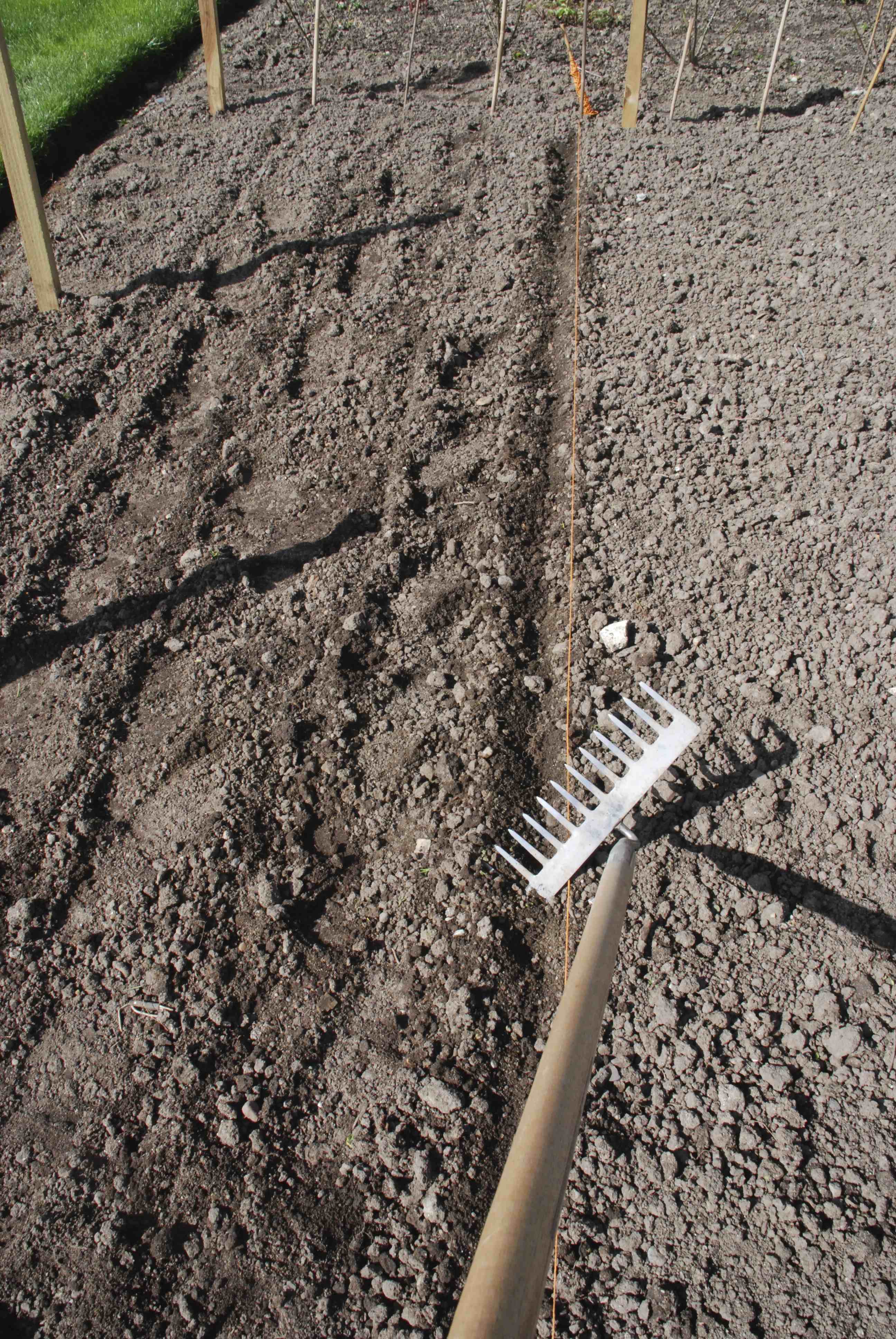 I tend to use a rake for most sowing – it is used to level the surface and remove large clods and stones before sowing and I use the ‘corner’ to make the drill (shallow trench) for sowing. If the soil is dry it is a good idea to water the drill before sowing to a) make sure the seeds have moisture and b) prevent the seeds blowing away before they are covered. You need to sow the seeds evenly and thinly. The carrots will need to be about 2-3cm apart but you need to sow thicker than that because not all the seeds will grow and pests will take a few of the seedlings. So sow thinly and then cover the seeds with soil so they are 5-10mm deep. I do this either by shuffling my feet as I sow along the row or with the rake. It is always best to sow seeds little and often but I have sowed 8 different varieties in this, the main carrot area, and because carrots can be harvested at all stages of growth I will not get a glut of carrots all ready at the same time.
I have found from experience that if I sow half rows, with labels set halfway along the rows I cannot find them. So it would be sensible to put the labels high, on canes. But because I am not pushed for space and because I like to mix flowers with all the veg I simply ended the rows, if there was not enough seed for a complete row with, in this case, calendulas. If the weather is dry it is important to water the rows regularly until the seedlings appear. If the germinating seeds dry out they will die.
The big stakes around this plot are to support fleece screens to keep out carrot fly. I discovered last year that the garden has carrot fly. This year I am growing the carrots in a different area of the garden and not in the raised beds as I had intended and where I grew them last year, to try to avoid this problem this year.
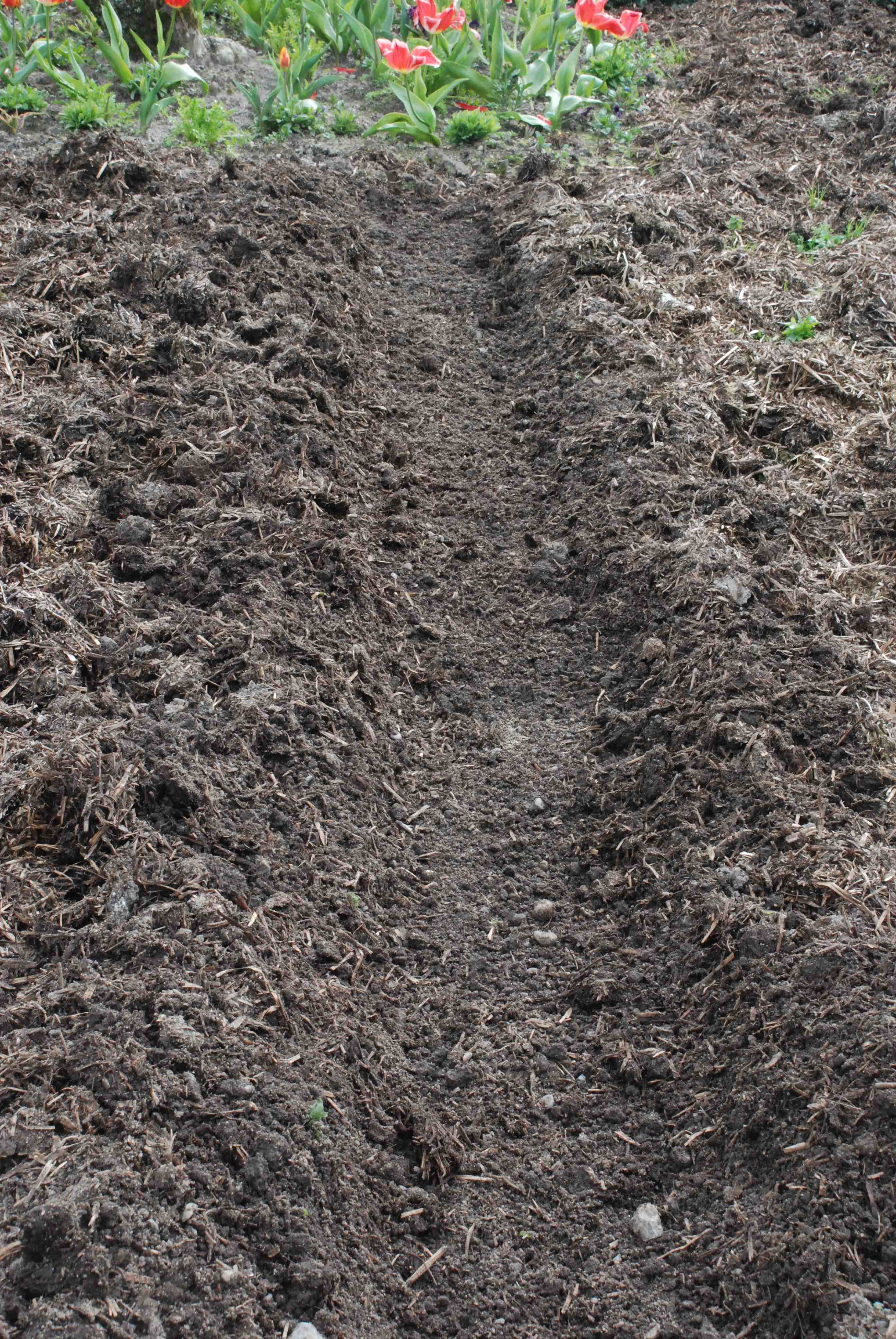
Broad beans are my favourite summer veg and they are easy to grow. I never bother sowing them in pots and always sow them direct where they are to grow. These are being sown in an area that had potatoes in last summer. It has been heavily mulched with mushroom compost and this is where the squashes will be planted in May. The idea is that the beans will be harvested and then removed by the time the squashes start to spread and the squashes will benefit from the nitrogen added to the soil by the beans. It is a twist on the ‘three sisters’ idea of growing beans, corn and squashes together.
Broad beans are sown in shallow trenches, about 5cm deep and 20cm wide. Sow the seeds in a double row about 20cm apart and then rake the soil back over them. Broad beans may need support as they grow.

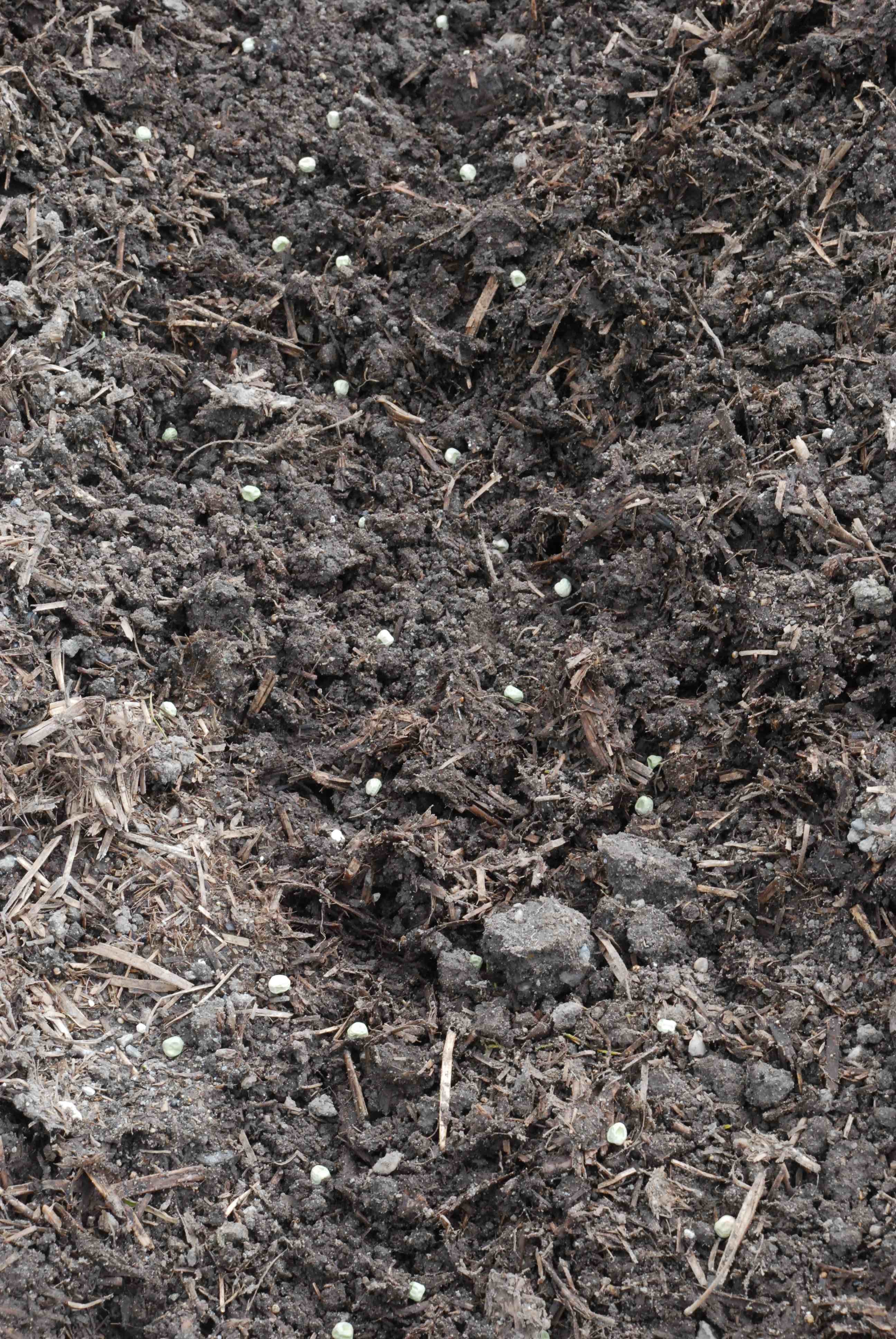
The peas are sown the same way, in wide, shallow trenches but the seeds are sown closer, about 8-10cm apart. The plants are thin and straggly and a wide row helps them support themselves although peas will need support. They will also need protection from slugs and pigeons when they appear.
 The Biking Gardener
i put my broad bean seeds in about three weeks ago and could not believe when I looked out of window our garden was covered in huge crows they was flying off with the seeds . they ate them all nothing left . I have grown more in potsand bought twenty plants . have put a few slug pellets down used sticks and string and tied bags to flap in the wind so fingers crossed now
Sorry to hear that! Rodents will take peas and beans but I have never had crows dig them up! But we are surrounded by crows here and they have been deadheading the white daffs just as they open for some reason. Gardening is full of surprises!
I spend my winter reading Seed catalogues and doing plant research …last summer in Northeast Pennsylvania we were plagued with woodchuck that devoured my cabbage patch dispite my husband using a varmit cage trap. Any suggestions would be appreciated. I have planted new Blueberry bushes in the fall in the devistated area. Only berry theives are the birds so far.
I have no tips for keeping woodchucks out! Good luck with the blueberries. We had a real rabbit problem but they seem less bad this year, maybe because we have moved in and they don’t like us. I hope so.