Plant of the week – Camellia sasanqua ‘Rainbow’
Camellia sasanqua ‘Rainbow’
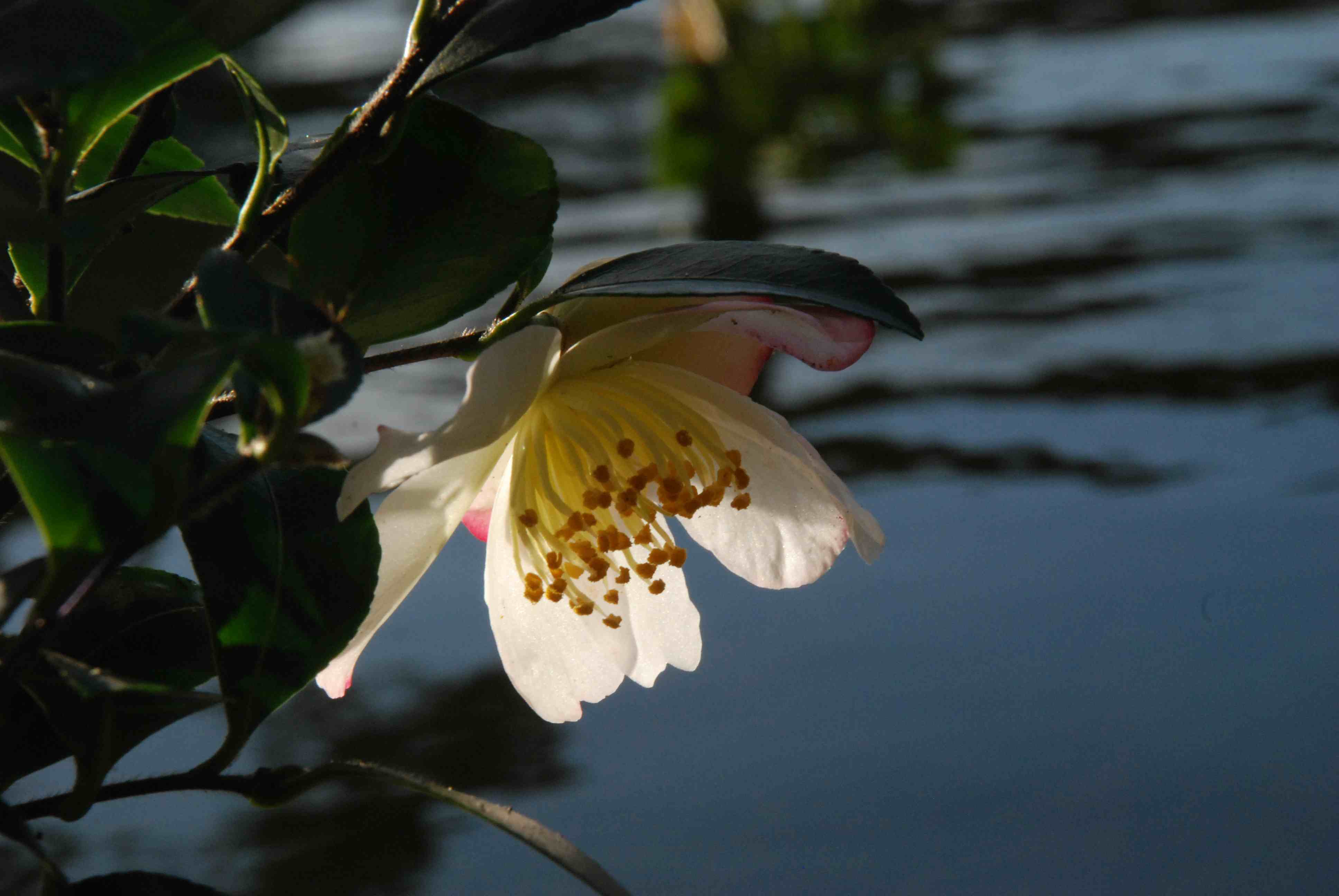
No, I am not living in some remarkable, halcyon land where spring lasts all year nor am I resident in the Southern Hemisphere. I am stuck in the middle of winter with alternating winds and wet and crisp, cold days. So what am I doing with a camellia as my plant of the week? I have not even planted all the tulips yet (more soon) and here I am with photos of camellias in bloom. Is this some freak of nature or a joke?
Well not really. There are 100 or more species of camellias, in the family Theaceae. I won’t apologise for slinging in a botanical family name so early because it gives a hint of the best known of all the species. Although most gardeners are familiar with the common, spring-flowering Camellia japonica and the ‘Williamsii’ hybrids typified by the ubiquitous ‘Donation’, even non gardeners come into contact with one camellia every day. Every time they pour boiling water onto those bags of crushed, brown, dry leaves and drink the liquor, with or without milk, they are drinking camellias. Tea (Camellia sinensis) is not the easiest shrub to grow in the UK or Ireland (I have grown it in a cool greenhouse successfully), but it is possible and garden centres sometimes sell small plants, usually grown from the large, oily seeds (camellia seed oil is –or was- used as a hair oil in Japan. The flowers of the tea plant are small (about 3cm across) and creamy white with those characteristic yellow stamens arranged in a stiff brush. They are nowhere near as showy as the more popular camellias but have their charm.
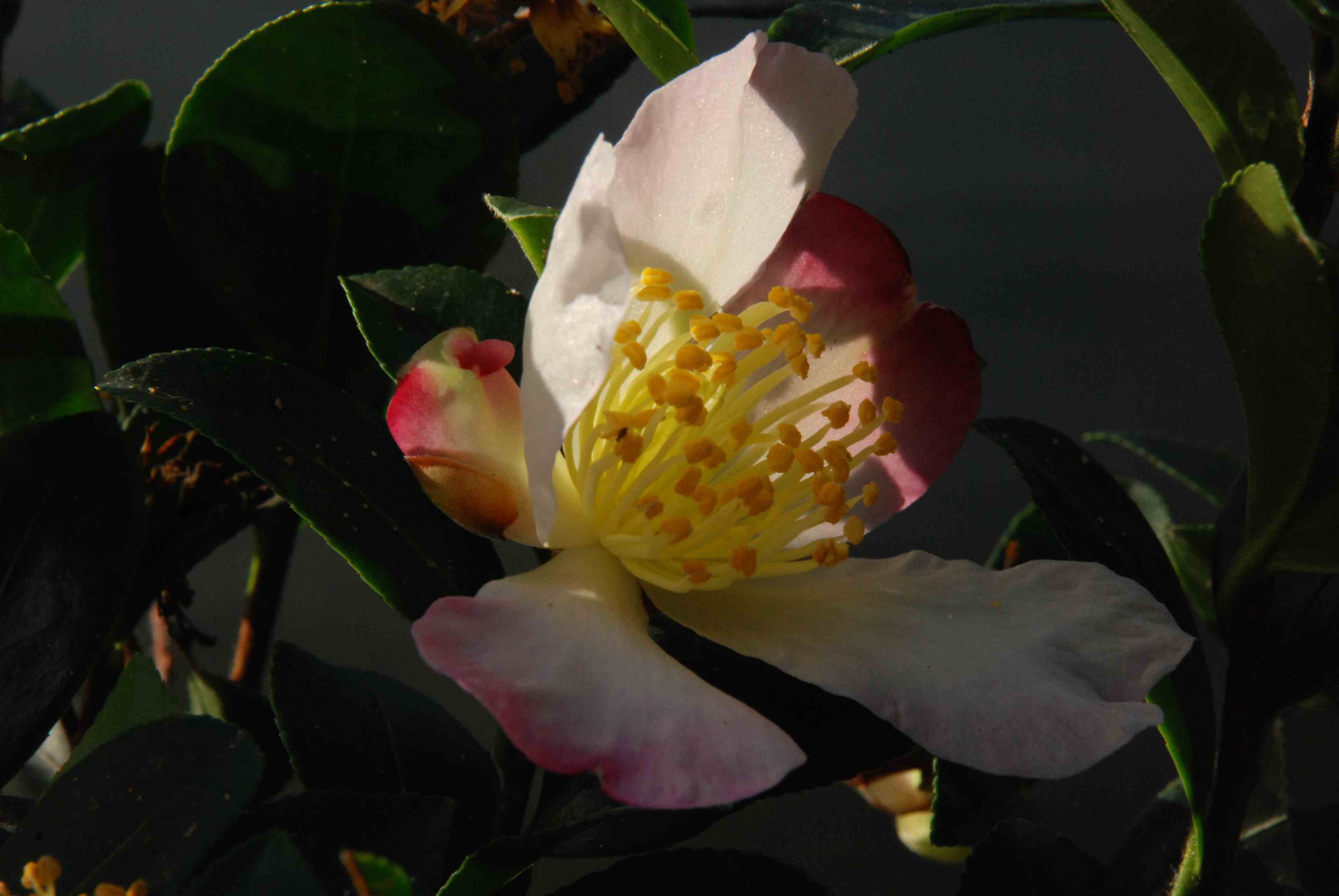
Charming is the perfect word to describe the flowers of the autumn blooming Camellia sasanqua. This is a native of China and Japan where it grows at an elevation of about 900 m and although it is often said to be less than completely hardy it is usually not harmed by the average UK or Irish winter. But some shelter is needed to protect the delicate-looking flowers from damage. Typically these shrubs have an open, spreading habit and they are more graceful than the better-known camellias. In Japan they are called sazanka, the origin of their botanical name and their leaves were used for tea and the seeds for oil. Camellias were introduced to Europe in 1739 but C. sasanqua did not reach Europe till 1869.
The delicate, dark green leaves make a perfect setting for the flowers which are usually in shades of white, pink or red. The flowers are usually less than 8cm in diameter and are usually single or semi-double, often nodding and slightly hidden by the leaves. The flowers open over a long period from October to December and some flowers are usually still open at Christmas. As if this was not enough reason to grow it, the flowers are lightly scented. It may not fill the air with perfume but ‘Rainbow’ is certainly worth leaning into the bush to sniff and the scent is sweet and more than pleasant.
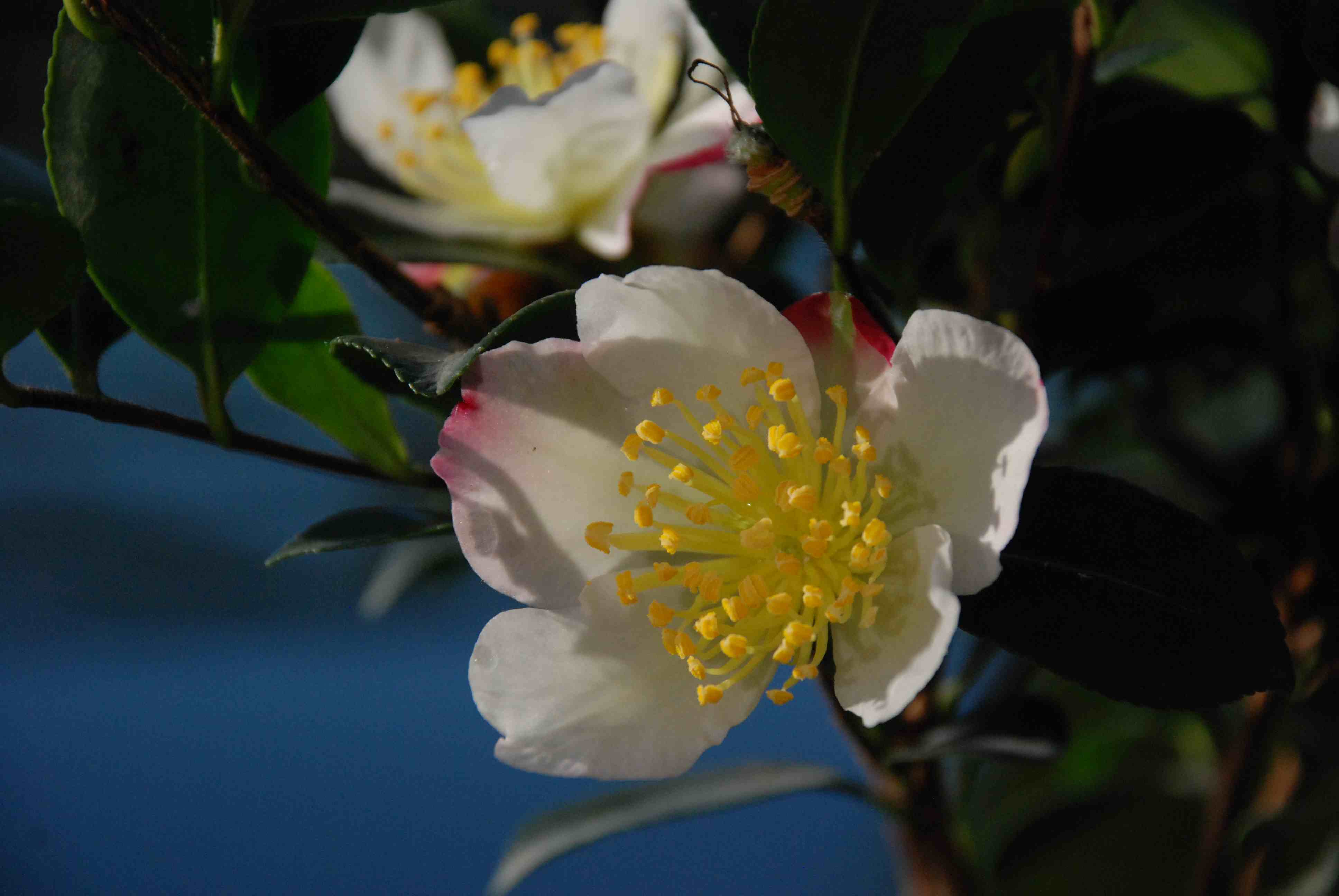
‘Rainbow’ is supposed to be a Japanese variety. The rather irregular flowers, with five to eight, barely overlapping petals certainly have an Oriental charm and do not have the ‘overfilled’ look of some others. The blooms open from white, deep rose-tinted buds and expand to showy, saucer-shaped, white flowers irregularly flushed with pink that have an ‘apple blossom’ look about them.
Like most camellias, this evergreen shrub requires acid or neutral soil and is best in a lightly shaded spot, out of cold winds. The exact position depends on where you live: in the sunny southeast (of the UK or Ireland) a semi-shaded spot is perfect but in wetter areas a more open site will suit it better and there will be less danger from harsh frosts in these milder climates.
If you do not have acid soil make the effort to grow this charmer in a pot. The choice of flowering shrubs in November and December is decidedly limited and this one is quite showy, elegant, attractive, evergreen and fragrant – that’s quite a CV!

Camellias are named after Georg Joseph Kamel
 The Biking Gardener
Trackbacks/Pingbacks
[…] Plant of the week – Camellia sasanqua ‘Rainbow’ […]