Plant of the week – Prunus subhirtella ‘Autumnalis Rosea’
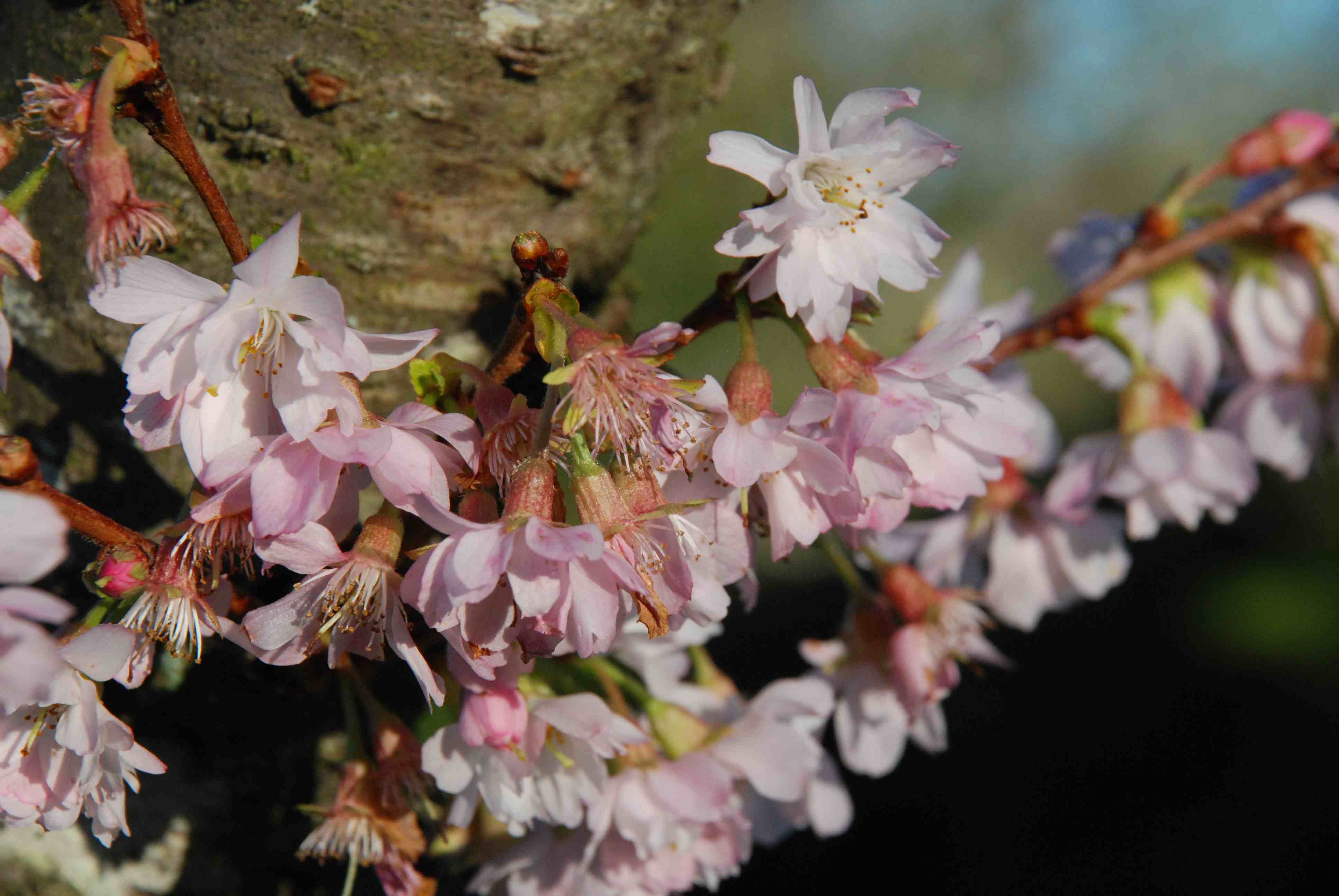
Winter and spring are dull months in the garden to most people. Even the most enthusiastic gardeners have to admit that, though you cam plant for winter colour, most of the flowers that open in winter are rather small and would hardly get a second glance if they bloomed in summer. But stripped of more showy competition, these winter bloomers inveigle their way into our affections. There are lots of yellow and whites and quite a few that are scented but few bloom for so long as Prunus subhirtella ‘Autumnalis Rosea’.
Why any plant should bother to bloom in winter when pollinators are absent is something of a mystery but don’t make the mistake of thinking that what we see now is the end of evolution – winter-flowering trees and shrubs may just be an evolutionary quirk that would eventually die out because it is not an advantage. Anyway, the spring-flowering Prunus subhirtella, most commonly seen in its weeping form ‘Pendula’ has produced this odd variety that starts blooming in November and continues to bloom, on and off, in mild periods, till March. If winter is cold there are lots of buds left to open in spring but this year lots of buds are opening now and it is putting on a good show. It is thought that this tree may be a natural hybrid but in any case it is from Japan and has a habit and charm that suggest that country. The leaves and flowers are delicate and autumn colour can be attractive before the leaves drop.
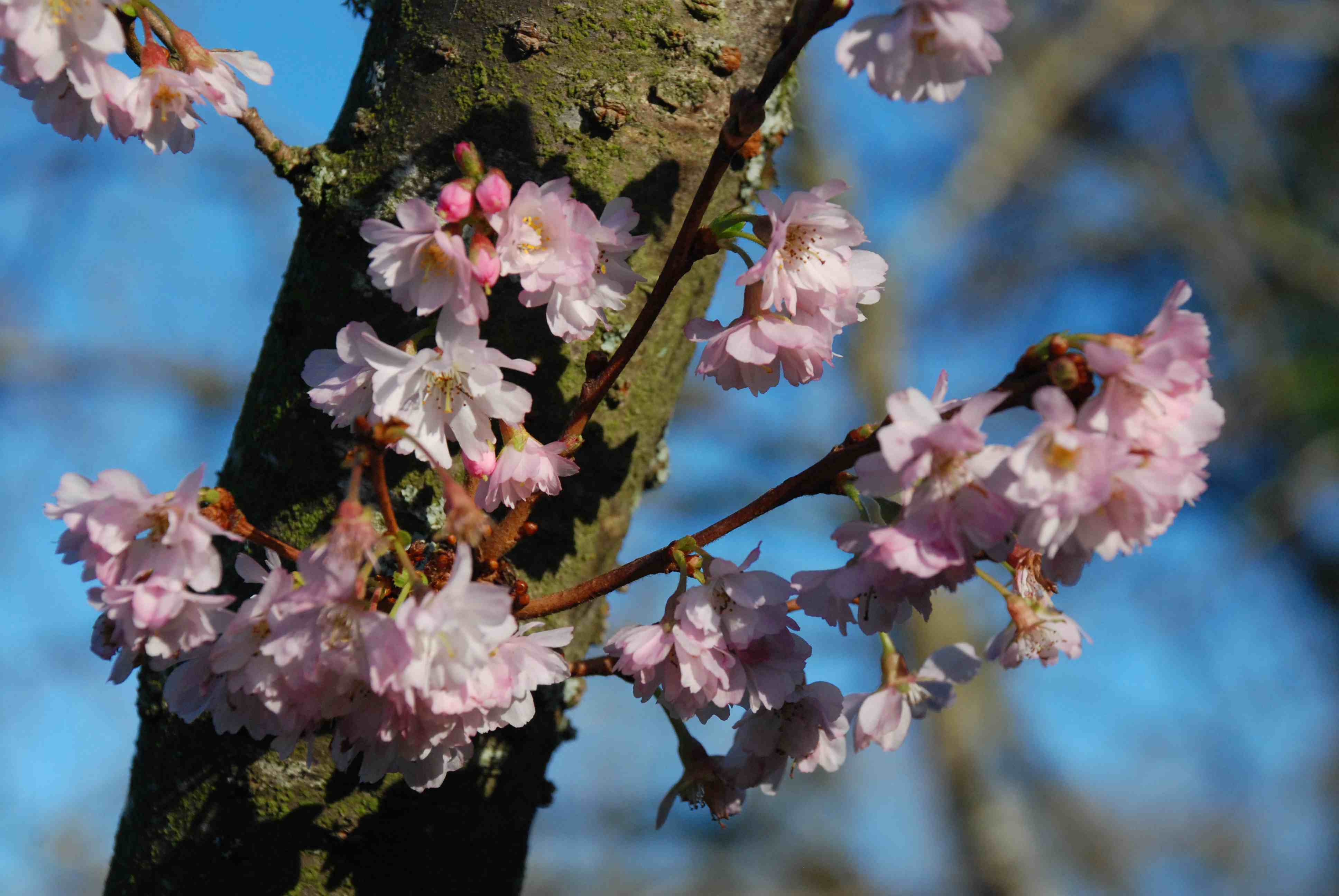
This is a small tree and although references suggest that it is longer-lived than large-flowered cherries, in my experience it is just as prone to shot hole (bacterial canker) and silver leaf as the rest so don’t plant this for your grandchildren. You can usually buy this as a standard tree with a long, single stem; if you can, buy multi-stemmed plants that are bushy down to the base and more attractive.
Like all cherries, this one has rather surface roots which can make it difficult to mow grass around it and if these roots are damaged they will produce suckers.

So this is not a perfect plant but it is pretty and long-flowering. If you have well-drained soil, preferably alkaline, in a sunny spot, plant this and wonder in awe at the pale pink blossom against a blue winter sky, maybe on Christmas day.


No comments yet.