Let the bells ring out for Christmas
I want to keep this blog ‘real’ and topical as much as possible, so I can’t put in photos of early snowdrops, beautiful hellebores or fragrant winter sweet because I don’t have them in this garden yet and its a bit early for them this season. But there is still plenty of colour in the garden.
In autumn, having filled the garden with annuals this summer, I bought some tender exotics to give the garden some ‘vavavoom’ next year. They were imported from Germany and include about 20 brugmansias and a dozen or so abutilons. One advantage of being in Ireland is that the rest of Europe seems closer than the UK. British Nurseries may consider Ireland a remote land where they could not possibly send plants but French and German nurseries will ship with no problem. And this despite the fact that Ireland is attached to a part of the UK! I won’t get involved in the politics, history or morals of that fact, just state what is the situation at the moment.
Anyway, I am seriously hooked on brugmansias; they have all the features that excite me in summer display plants. They are impractical, because they are tender, but they repay good cultivation, have stonkingly big flowers, are usually intensely fragrant and they grow like mad when you feed them as much as they want. And the clincher is that despite their beauty, they are poisonous with hallucinogenic properties. I love plants that have a surprise in store and the fact that brugmansias are so beautiful but can kill you (if you are silly enough to eat or smoke the leaves) gives them that femme fatale allure; something like a drug or a person you are in love with despite the fact you know they are not doing you good and you can’t pull away.
But enough of brugmansias – this is supposed to be about abutilons.
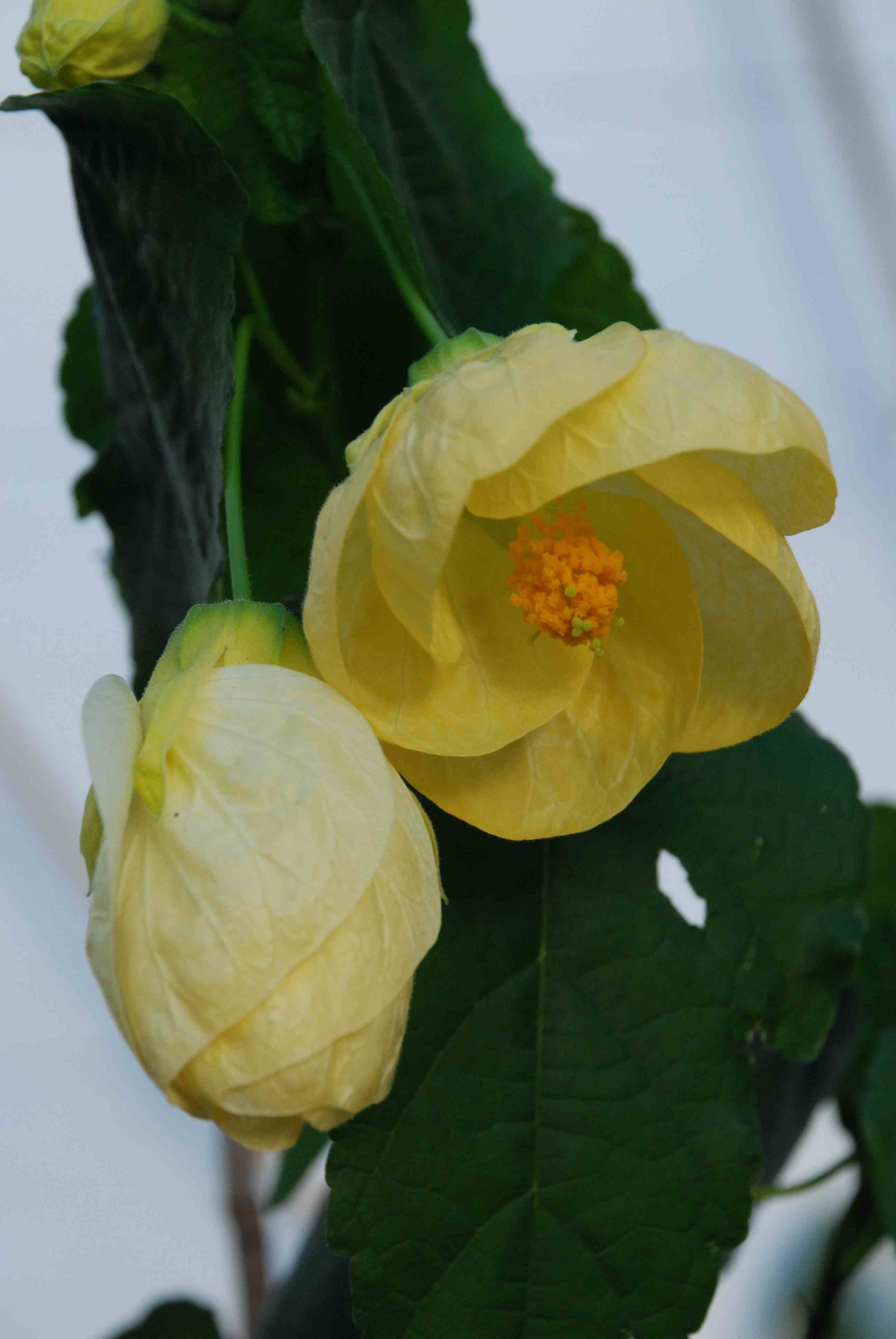
Soft yellow flowers of ‘Good Morning’
While abutilons don’t have quite the same excitement, and they please me rather than enslave me, they are good, colourful plants with a lot of good features. They are tender shrubs, though a few such as A. vitifolium and (if you are lucky) A. megapotamicum and a few hybrids such as ‘Kentish Belle’, are hardy. I have managed to keep some of the hybrids alive through the winter in a sunny, sheltered spot but they are so slow to recover in spring and summer that I think it is better to either take steps to keep them happy in winter or put them out of their misery; I hate it when plants just sit there looking pitiful – I have to do the right thing and despatch them humanely.
Abutilons are related to hibiscus and you can see that if you look at the flowers. Like most of this family (Malvaceae) the many stamens form a tube around the pistil so the stigmas poke out of the end, beyond the pollen-bearing stamens. In hibiscus the five stigmas are velvety and obvious but they are not so distinct in abutilons. While most hibiscus have flattish, saucer-like flowers they are usually bell-shaped in abutilons though it is quite fun to manipulate the flowers to open them up. Some abutilons have distinctly coloured, showy calyces, from which the flowers emerge, but in most of the large-flowered hybrids they are green.
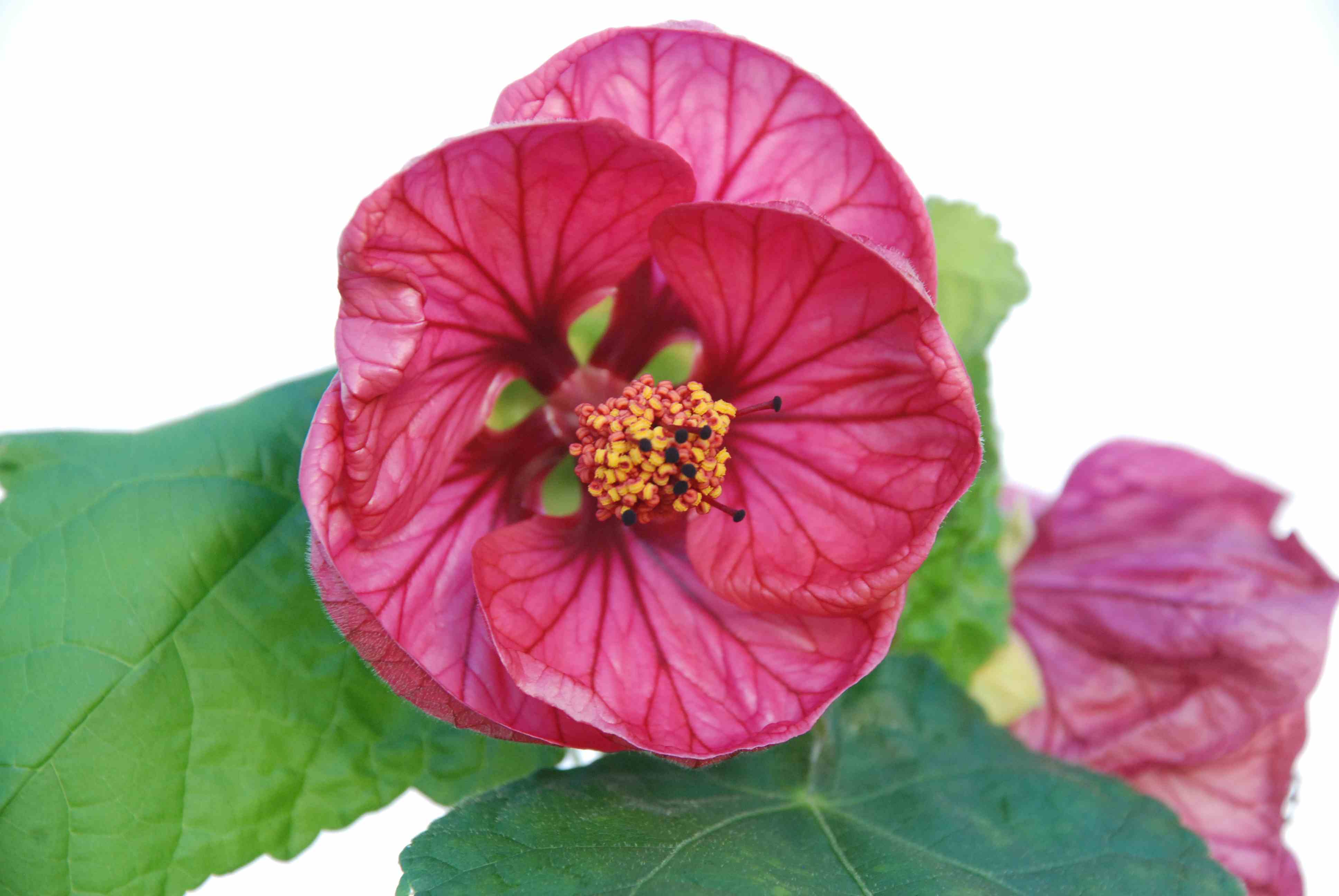
‘Magic Berry’
You can grow them from seed and the ‘Bella’ strain has massive flowers but it tends to produce many seed heads and stop flowering so I have this collection of named varieties that I will propagate from cuttings in spring.
I won’t go into too much detail yet but just to say that some are flowering away even though it is December. Feeding has stopped for now and they are being kept just moist and they are in a part of the greenhouse that has been partitioned off with bubble plastic. There is an electric heater in there that is set to 10c which is plenty warm enough for the abutilons and brugmansias – they could tolerate 5c but I have some brugmansias that bloom in winter and need a little more heat. At the 10c is cooler than the outside temperature which is 12c at night right now with some crazy southerly winds.
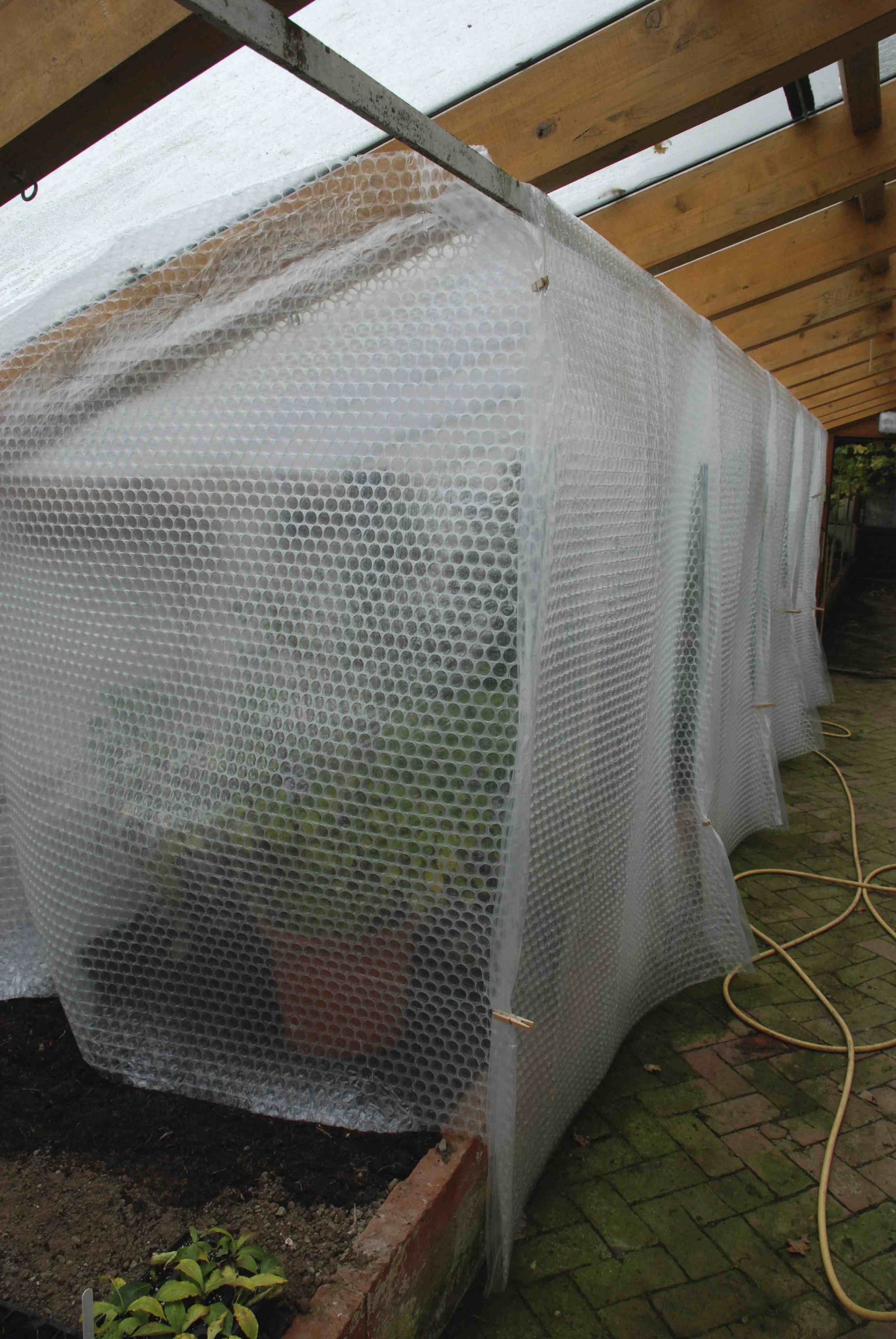
Bubble plastic used to section-off an area for tender plants
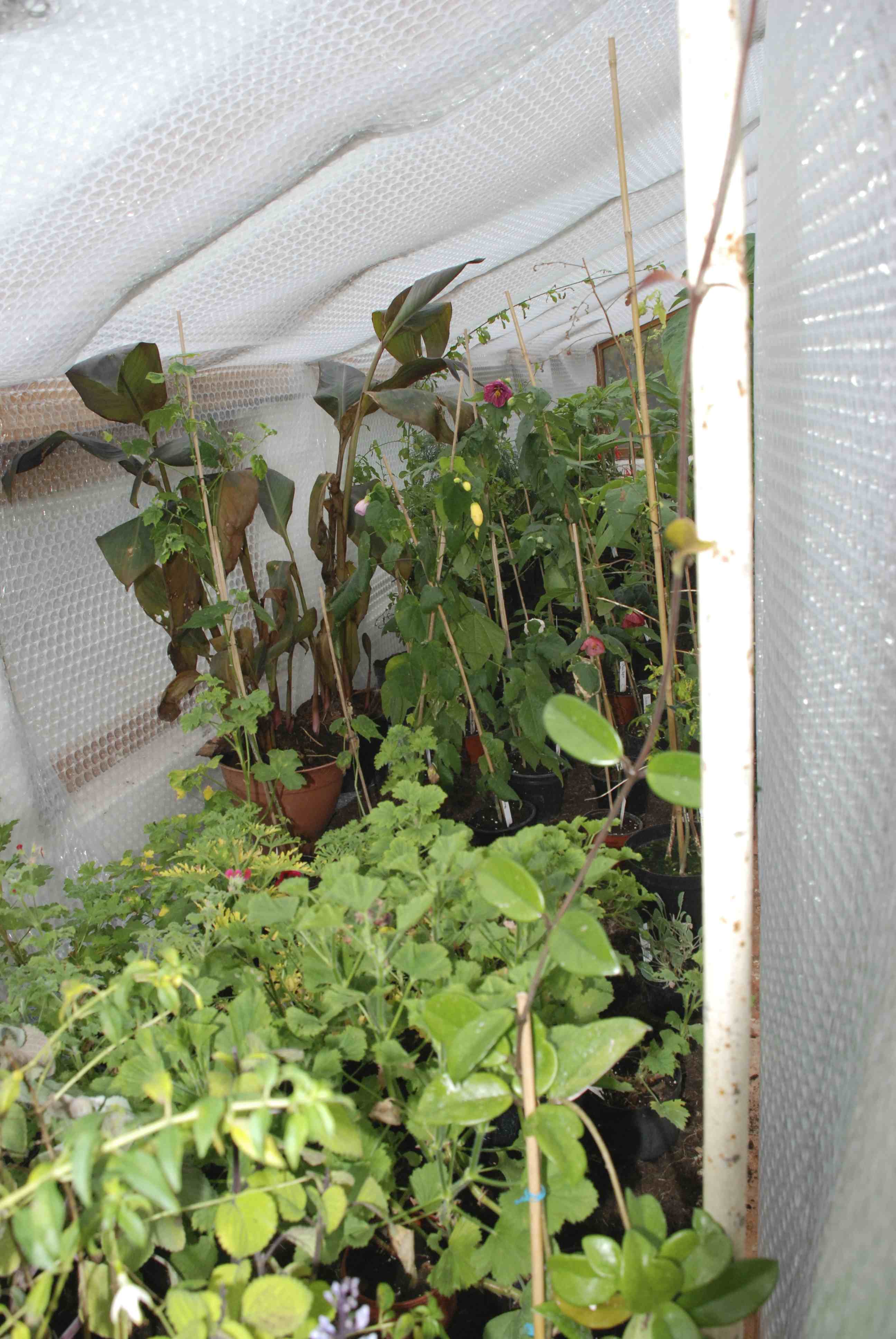
plants snug for the winter
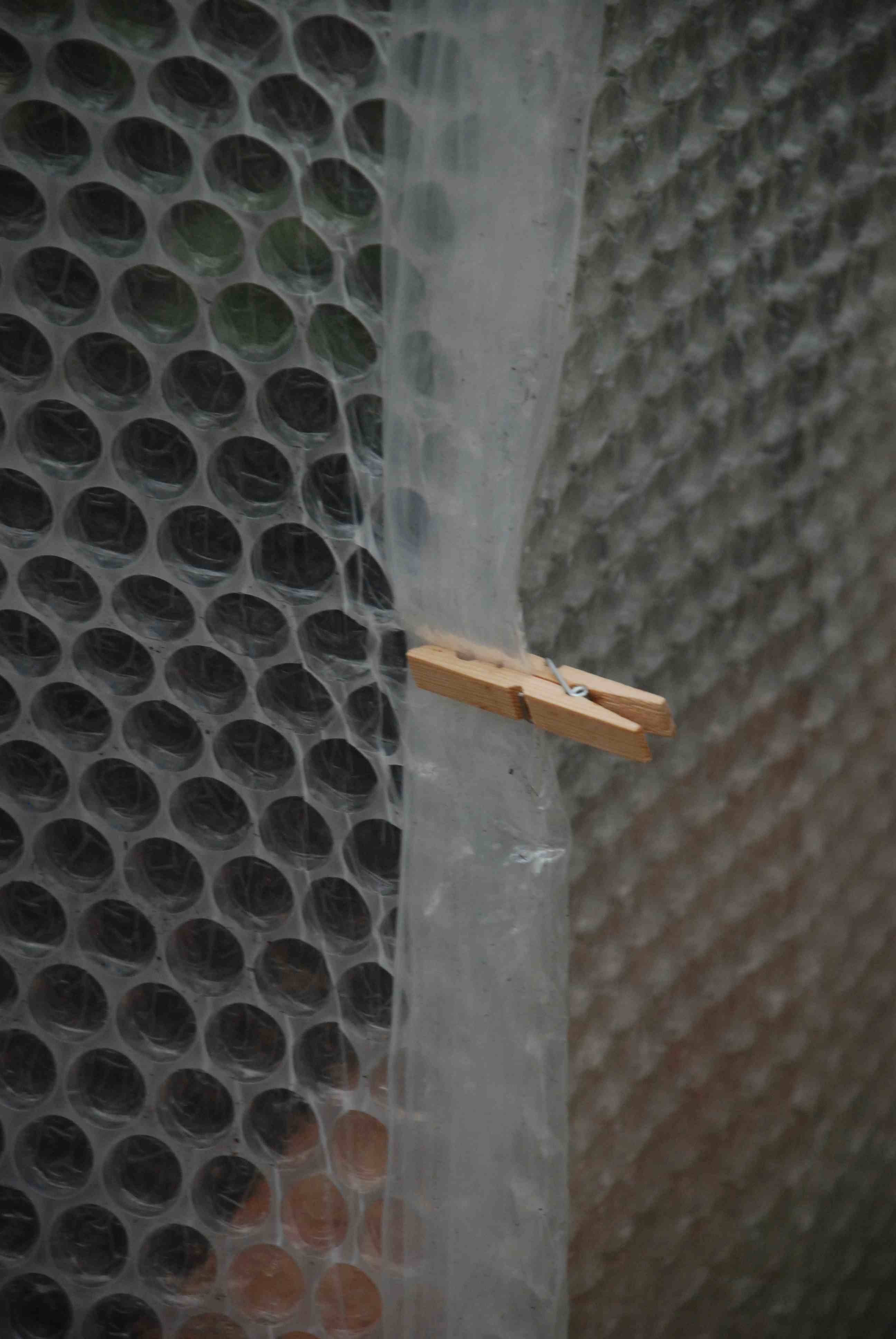
pegs to hold the sheets together
Perhaps the most interesting of those in flower right now is ‘Victorian Lady’ which is (I believe) the only fully double abutilon and is allegedly quite rare. Whether it is a thing of great beauty is up for debate I think but it seems a good grower and the colour is nice too so it gets the thumbs up for now.
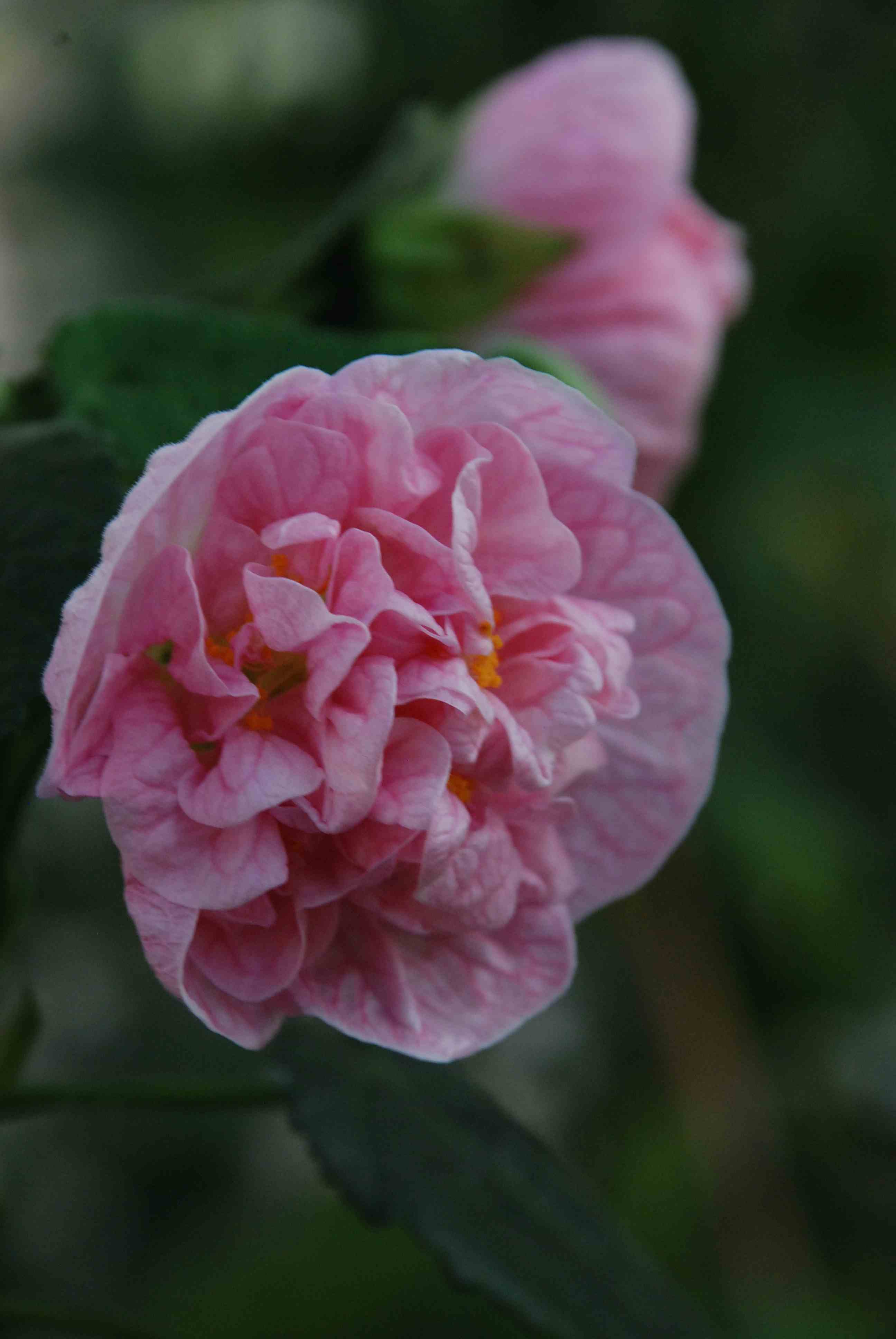
‘Victorian Lady’
‘Good Morning’ has large flowers in lemon yellow that seems to change shade as it ages. ‘Magic Berry’ has large, deep pink blooms and looks like a winner and ‘Flower Dream’ has medium-sized watermelon flowers. There will be more to follow as more bloom.
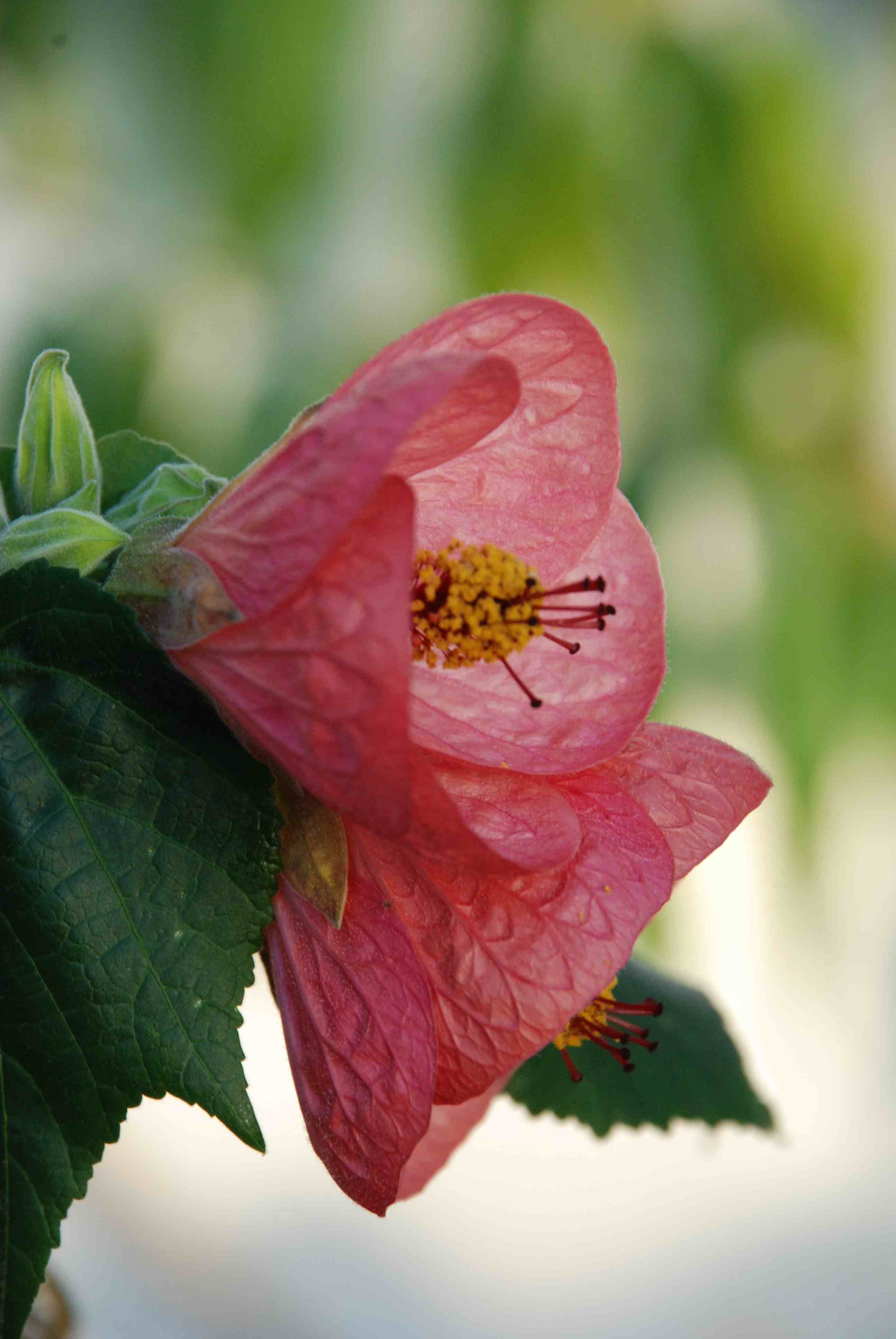
‘Flower Dream’


No comments yet.