Primula perfection
It is difficult to improve on perfection and when I see the first flowers of primroses (Primula vulgaris) opening along the country lanes here, the delicate flowers nestled among the freshly expanded leaves and a haze of young cow parsley foliage, I can’ think of a more beautiful flower. Suddenly the polished gold stars of the lesser celandines look brassy and vulgar.
And so it was hardly surprising that gardeners started to select unusual forms. For half a millennium gardeners have selected double forms, as well as plants with expanded, leaf-like sepals (Jack-in-the-greens) and others where the calyx has become petaloid (hose-in-hose), and many more.
In recent years most of the work seems to have been obsessed with size, and colours. Few plants offer such a broad range of colours and variations and these do not have to be sacrificed. But the larger the flowers have become, the less able they are to cope with the weather. I have moaned on about this before so I won’t expand too much. But I was working a garden centre last week and there were primulas with something to appeal to every taste.
In fact, pressure of work means I won’t do my posts about plant families this week. Plus we had to get the flower stall painted and put back up as we start the flowers sales this weekend for Mother’s Day. So it is all a bit mad. I will do a moany post next and then a plant family. It is all a good reason to forget that I need to phone the dentist!
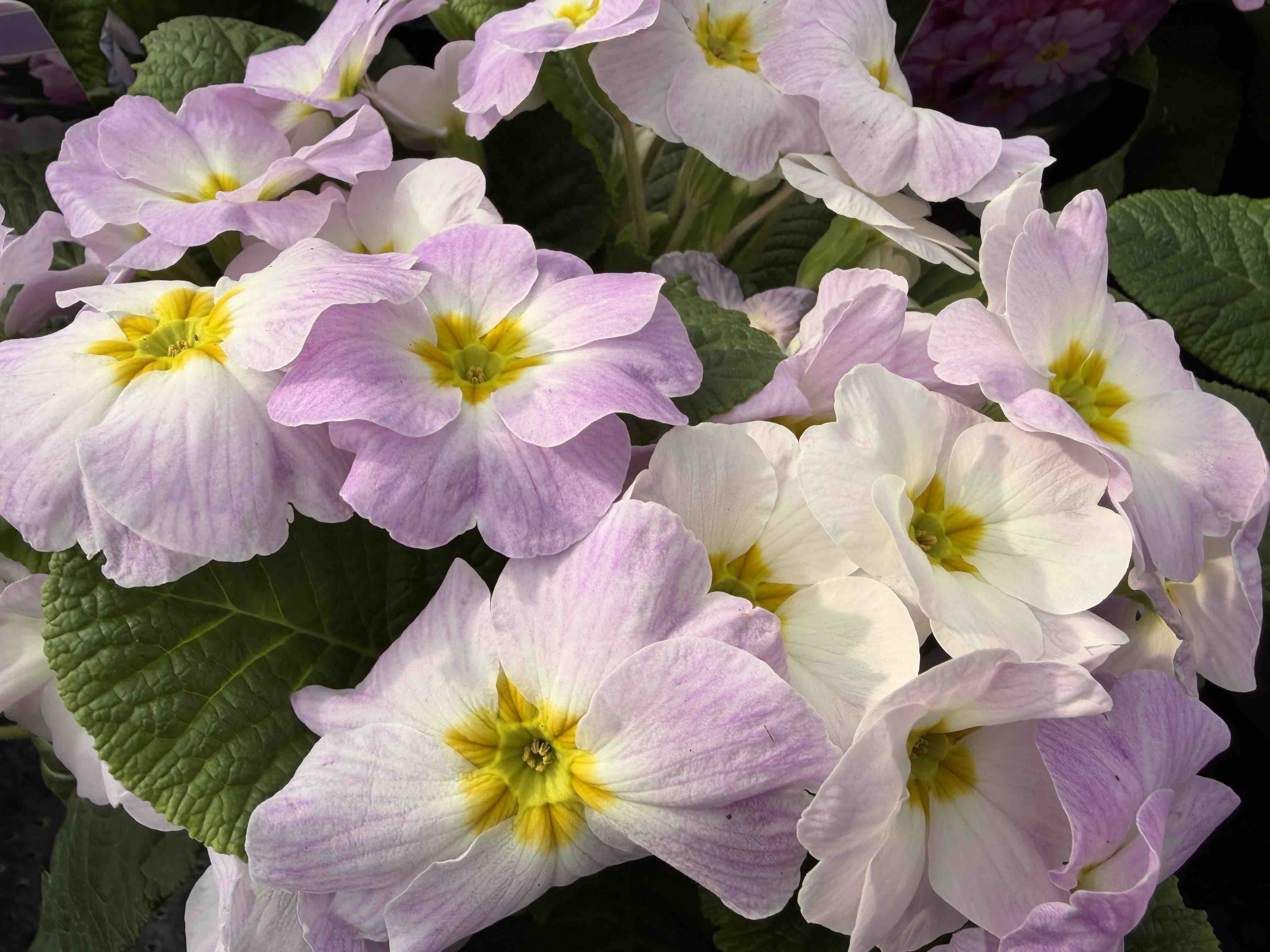
Back to those primulas. Unfortunately, some of the most remarkable, and I would include ‘Milkshake’ above, react to rain like Dracula reacts to sunlight. Even in the polytunnel, if a plant was under the occasional ‘drip’ the flowers were turning to mush. ‘Milkshake’ is sumptuously beautiful and the flowers are huge but they will last outside in the garden about as long as a dry spell in Ireland.


The same is true of these lovely ‘rosebud’ primroses. They look so cute but if a drop of water touched them the petals were rotting.

What is curious is that new varieties seem to encompass almost anything. Oakleaf polyanthus are not really new but it was interesting to see them for sale. They have always been on the fringes of popularity because the deeply incised leaves are interesting rather than really garden worthy and this trait seems linked to strange, small, usually gappy flowers with thin petals. If I had raised these from seed I might keep the pink one below but I would compost the monster above in case it infiltrated my stock of good plants and started to breed. ‘Delicate’ is the kindest thing one could say about it.
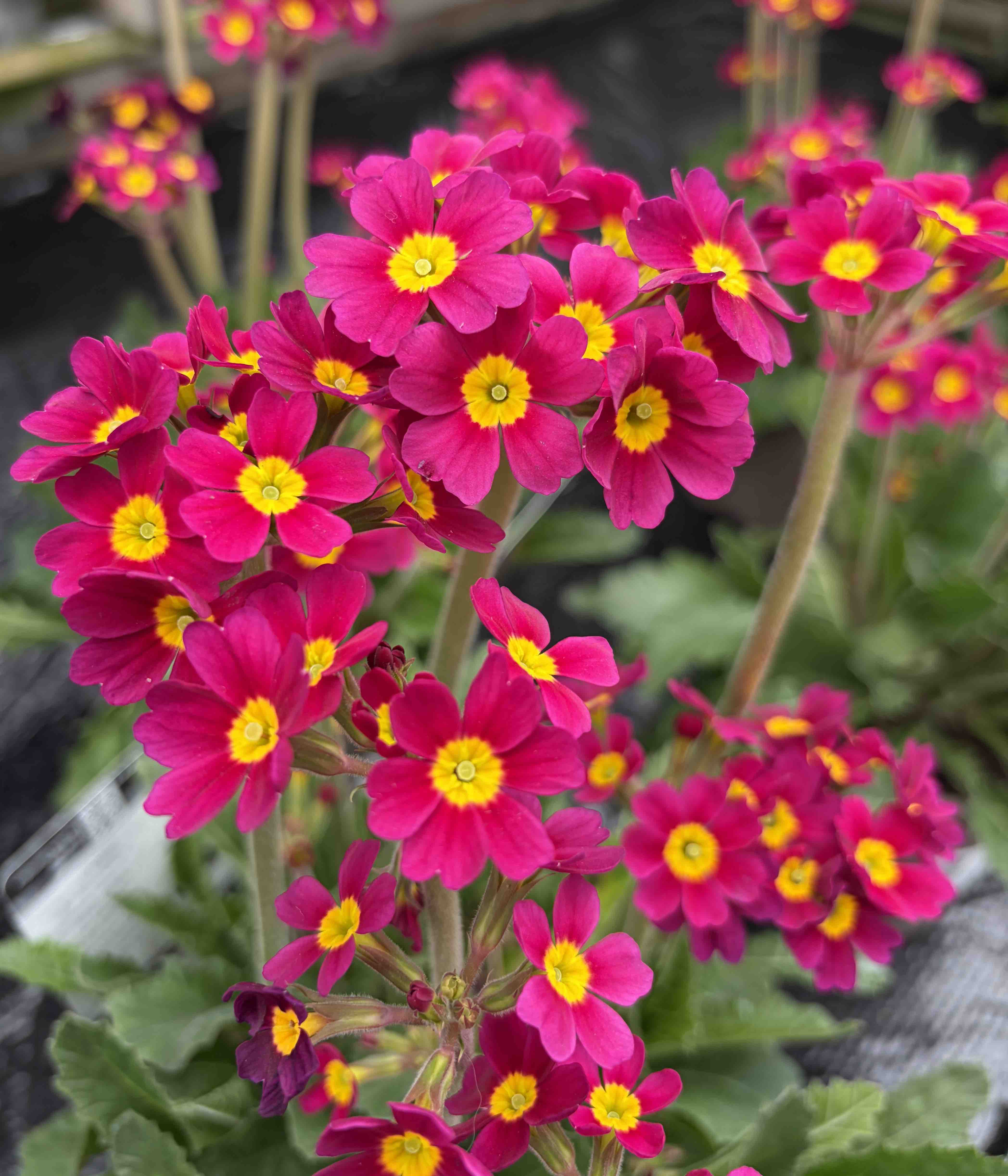
If you like bold flowers then there are plenty.


But not all of the primroses horrified me. I was immediately drawn to the Belarina primulas. These are bred by David Kerley and his family near Cambridge (UK), the people that also brought us Tumbelina petunias and many more. The Belarinas are one of several primula ranges and they have double flowers. Interestingly, some have ‘Jack-in-the-green’ flowers with a lovely green ruff. All are fully double and incredibly pretty.
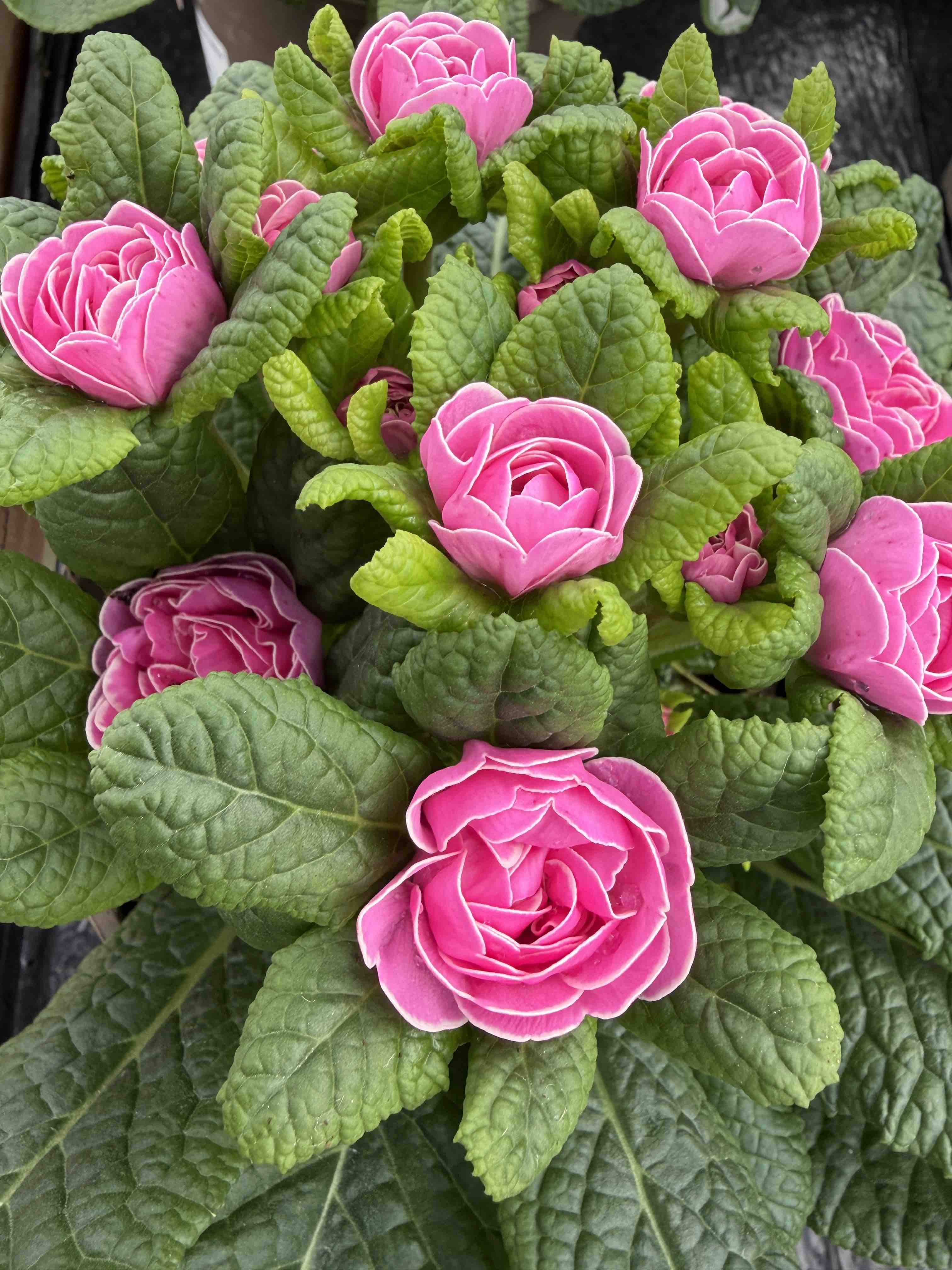
If I had a criticism, and that seems very mean, it would be that they are just too perfect and these last photos look like something AI would have produced. I assure you that they are not and have not been processed in any way. And yet they are just so cute! Even my jaded mind and pessimistic nature I can see them in a field under a rainbow, springing magically from unicorn droppings.
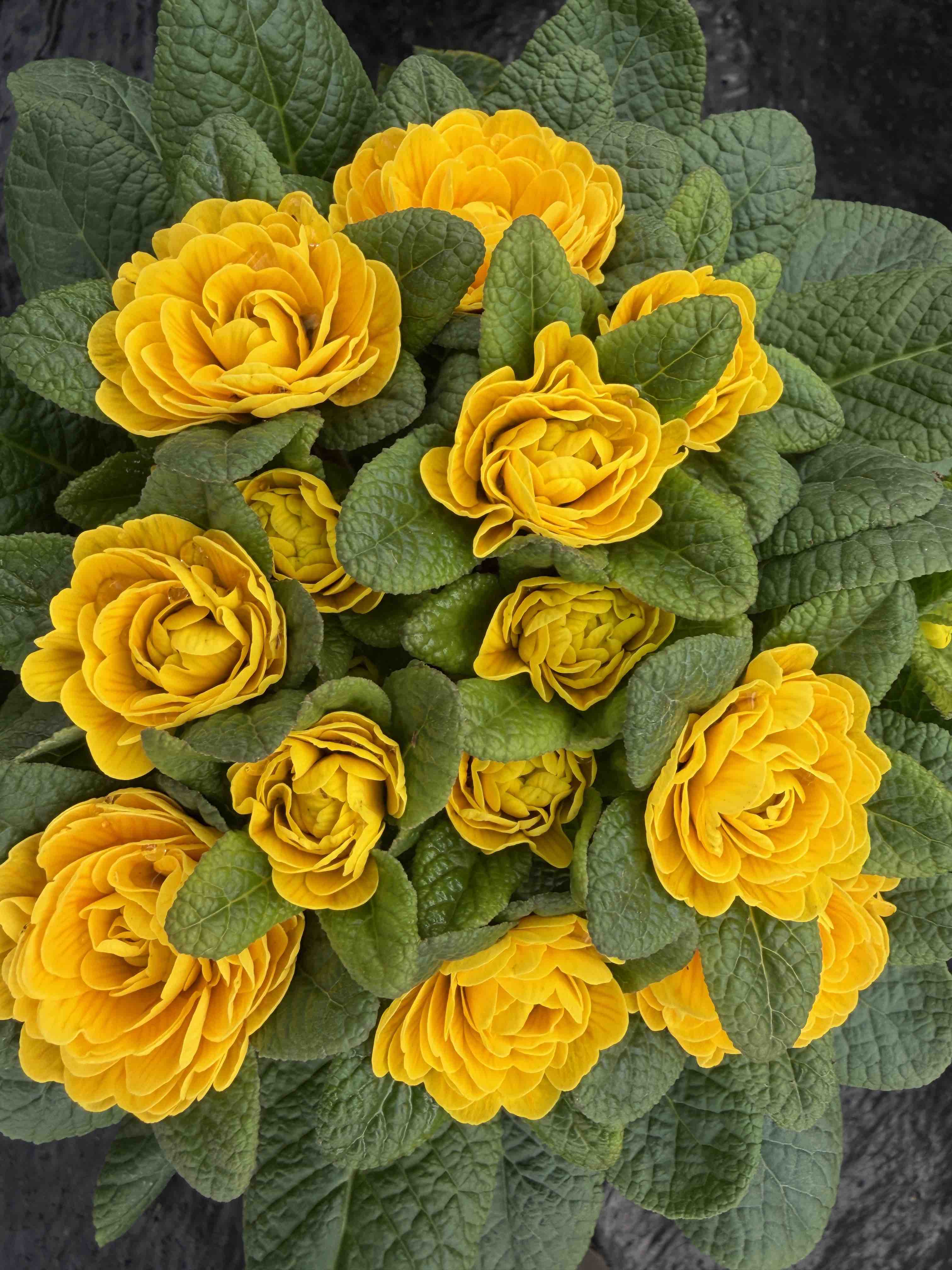

I am not going to fall out of love with wild primroses or turn my back on my Barnhaven primulas but by goodness, these Belarinas are pretty!
 The Biking Gardener
I’ll put the picture of the Unicorn droppings aside! I especially love the regular seedlings which appear in the garden. They are certainly not of commercial value but have local, very very local, importance!
I agree with you and have lots of seedlings which are originally Barnhaven stock that are all very welcome here
Those Belarinas do look impossibly pretty! Most of the plants in my garden (all kinds, not just primulas) are outmoded types. I suspect new varieties would find the conditions here (sandy soil full of tree roots) uncongenial, but it’s interesting to see trendy plants, even if I won’t be growing them.
I think that is what worries me – impossibly pretty! My plants are inadvertently selected to suit my conditions – those that survive prosper! The belarinas would look out of place in my (currently) scruffy garden but would like nice in pots on a prim and proper patio
I agree the colours are amazing. But there is something special about walking at this time of year and coming across a patch of primulas growing in a hedge.
I totally agree! I have lots of seed-raised polyanthus in lots of colours but it is the primrose yellow ones that mot only stand out better but that I admire most.