Araceae: 4
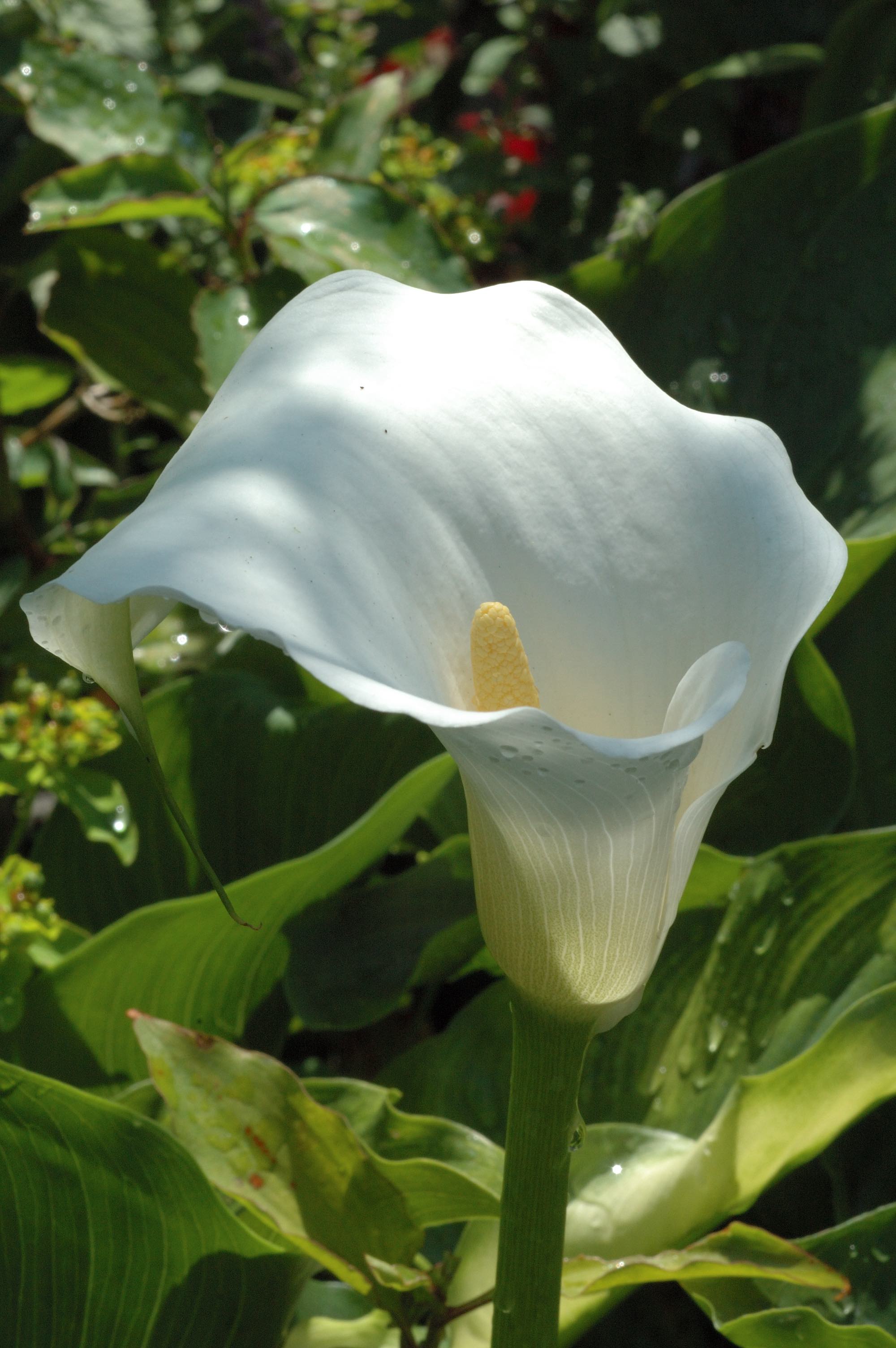
By far the best aroid for the (temperate) garden is the South African zantedeschia. Although there are eight species, only Z. aethiopica is hardy in this region. It is surprisingly tough and tolerates wet soil, and can even be planted in water where the tuberous rootstock is protected from freezing. It has bold, handsome, arrow-shaped foliage and tall scapes with large, white, often sweetly scented ‘flowers’. In winter here, frost collapses the plant but it appears again in spring and blooming is usually late spring and early summer. There are ‘pink’ forms which are only, in reality, pink-flushed in the centre and there are rare variegated forms which are probably uncommon because they revert too frequently. The tender kinds, usually with variously other-coloured spathes, often have spotted leaves. I grow ‘White Giant’ which is an especially large, hardy ‘aethiopica’ that also has spotted leaves. I love it. And there is ‘Green Goddess’ with spathes edged with bright green, a lovely thing that I will add to the garden when I find one.
The coloured zantedeschia are widely available now but are not hardy. I do not bother with them and confess that it is down to a bit of plant snobbery. They are so common in summer, sold in every supermarket as flowering plants for as little as five euro and I don’t see the point of struggling with something so easily bought.
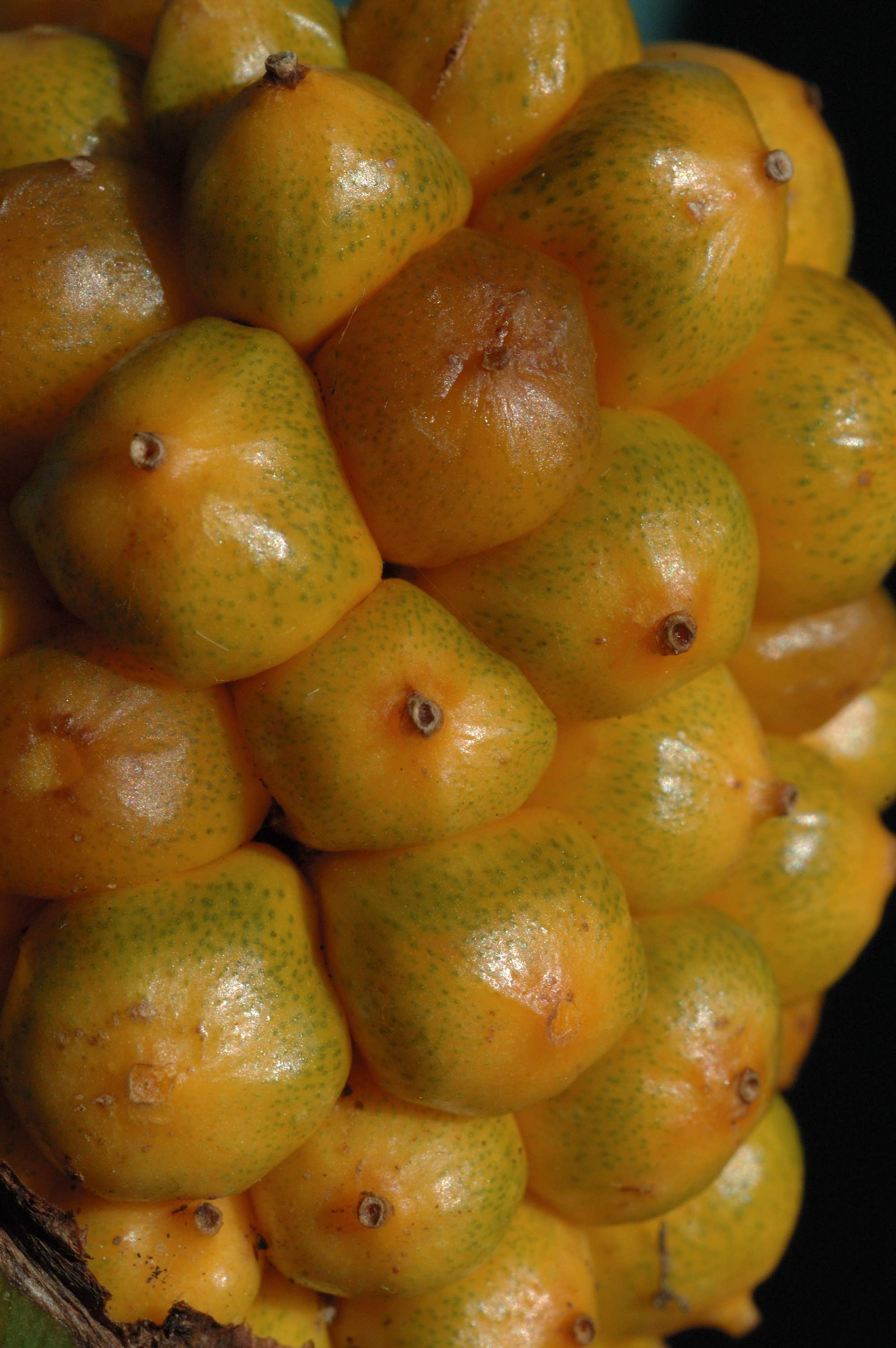
I have mentioned dracunculus before and it is definitely worth growing and, if you have a sunny spot you could try the white-spathed D. canariensis. I planted D. vulgaris in my allium bed in autumn 2024 and nothing appeared last spring. I know these things can take ‘years off’ so I did not panic and sure enough, a shoot is appearing now. It is not very strong and does not look of flowering size but there is life.
Arisaema are Asian and among the most seductive of the aroids, their tall stems, exotic foliage and often hooded spathes resulting in a common name of cobra lilies. Most are ‘growable’ in light shade and woodland soil and, where happy, set heads of red fruits and may seed around.
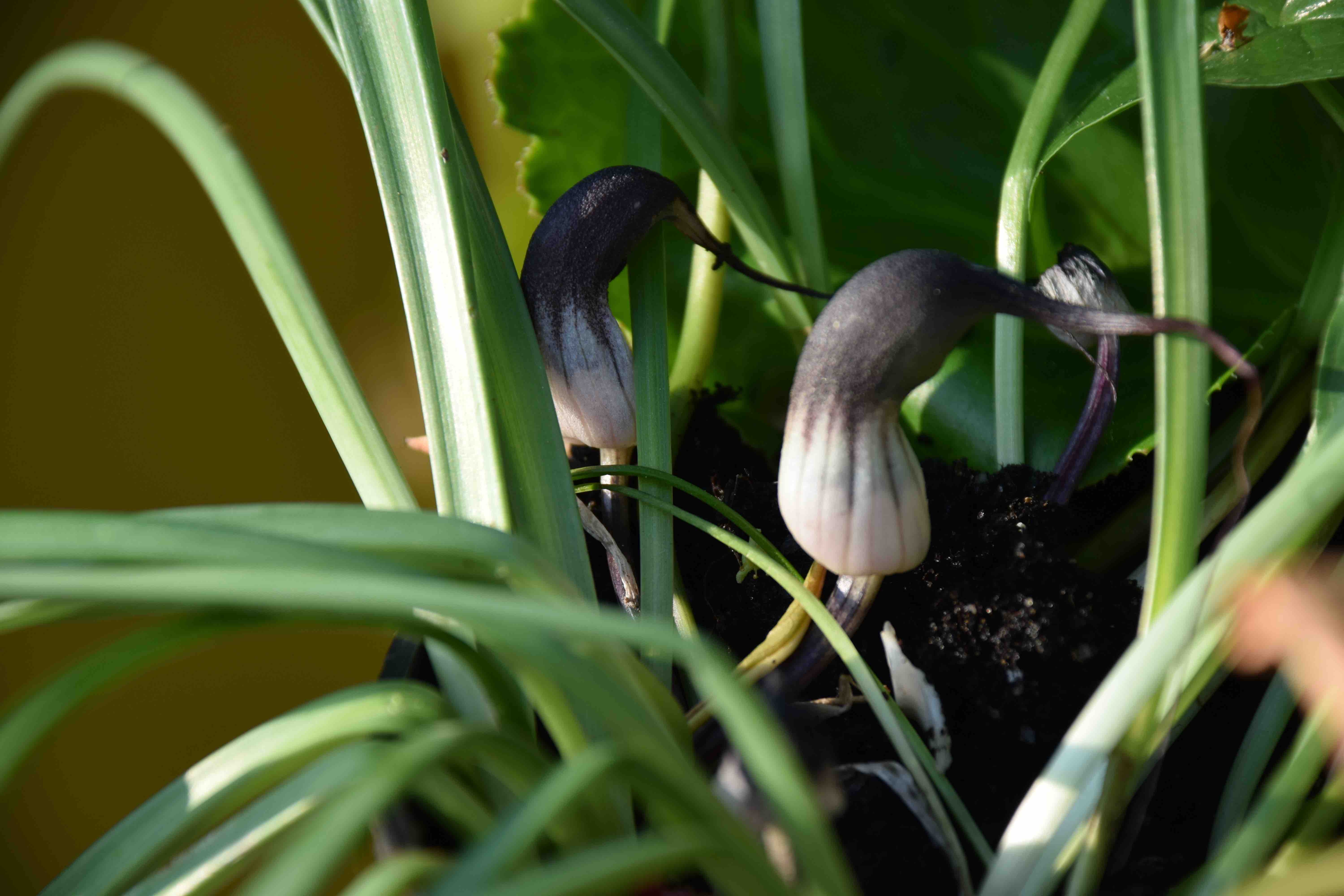
Arisarum proboscideum is native to SW Europe and commonly called the mouse plant. The low, neat clumps of glossy foliage almost completely hides the cowering, long-tailed spathes that really do look like the backsides of small rodents. It is an easy and cute plant that is easy to grow in part shade though a piece I brought here slowly faded away despite spreading healthily in a past garden (I think light, humus rich soil was more to its liking than the current heavy stodge).
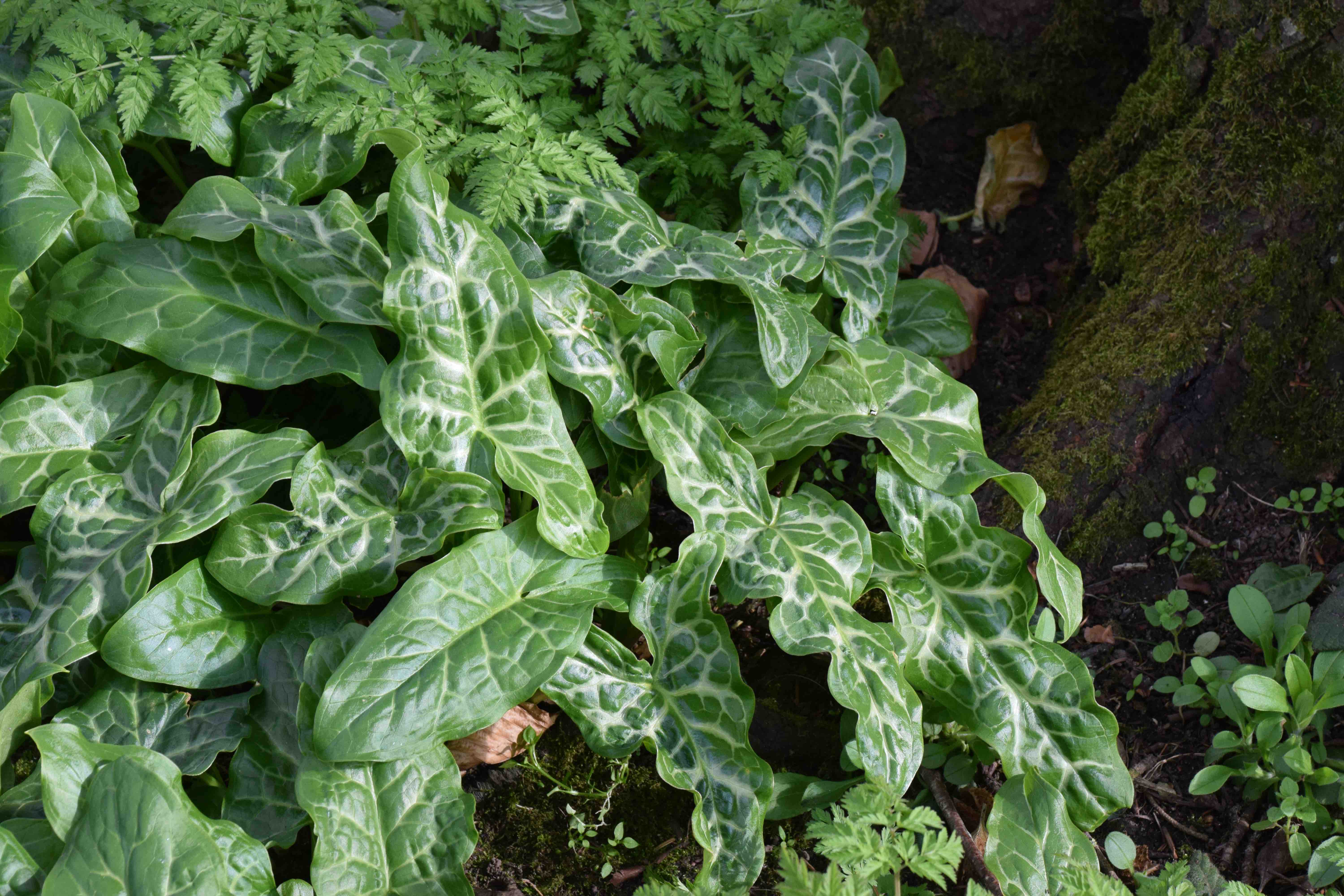
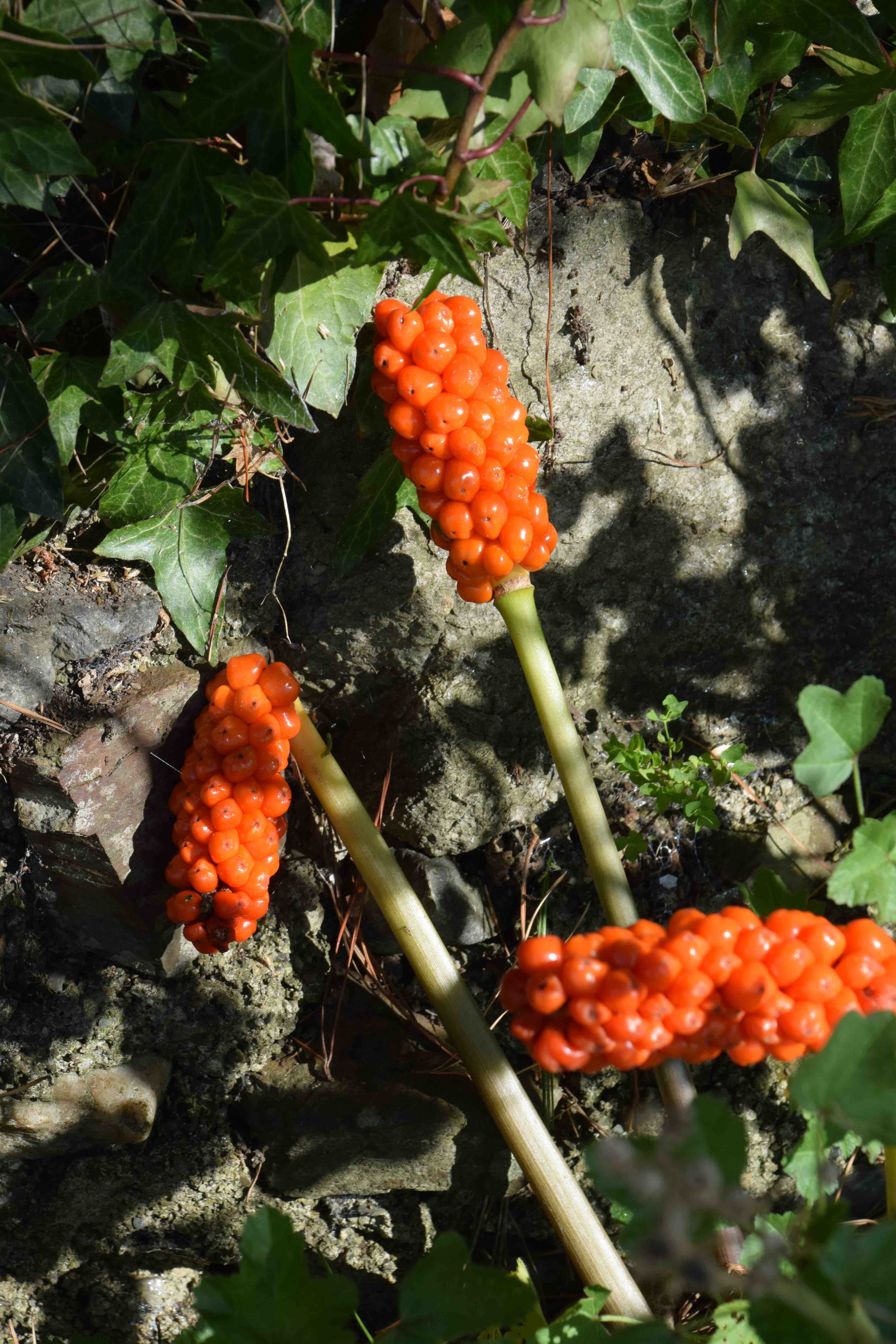
Although no one is likely to plant Arum maculatum in the garden, although there are numerous variegated forms, one of which I have but which struggles to make headway, Arum italicum is often sold. If you buy from a garden centre in a pack you will see an image of beautifully veined leaves and stems of scarlet berries. Make a note of that because it will never look like that in your garden. It has the same growth cycle as the native arum and the foliage appears in autumn, braving the weather, and the flowers open in late spring. The berries develop and by the time they are ripe, in late summer, the foliage has withered away. The berries are poisonous, of course, but birds eat them. It is a good plant for shade but can be invasive.
And so I must finish. What was intended to be logical and constrained became a frenetic panic, partly because it was a busy week and with distractions including having to take Tom (the stray cat) to the vet after he got beaten up and some last-minute urgent work and having to get ahead so I can do some talks in the UK later this week.
 The Biking Gardener
This has been an interesting series. Thanks! Hope Tom is OK.
Thank you and yes Tom is fine now