We are family: Araceae
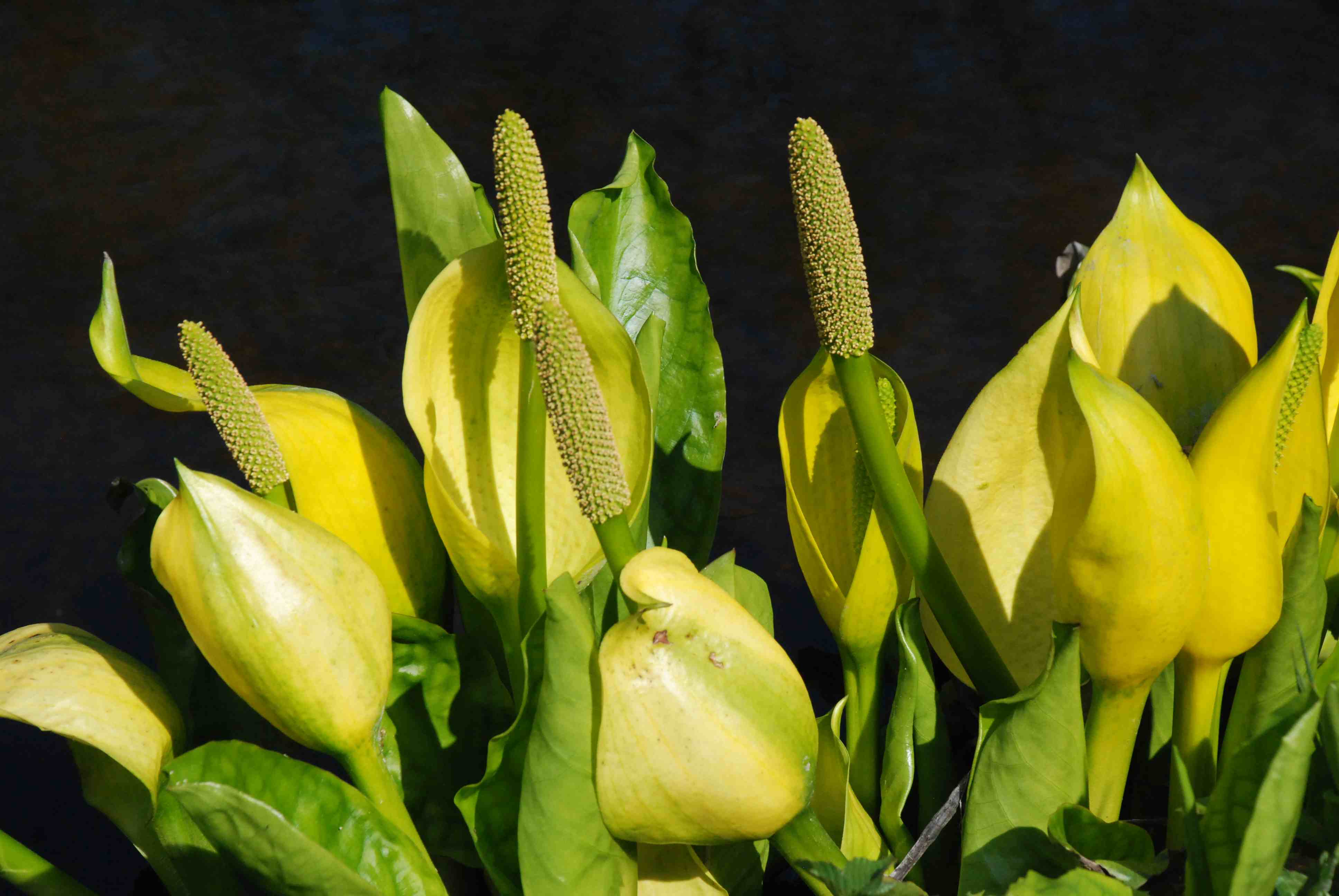
I am heading into new territory this week with my first foray into the monocots. Flowering plants (Angiosperms) are divided into plants with one seed leaf (cotyledon), the monocotyledons, and those with two seed leaves, the dicotyledons (though that is now a bit more complicated). The two groups are easy to determine and, as a rule, monocots have parallel and not ‘net’ veins in their leaves, the leaves are usually straplike and the flowers have parts in multiples of three, or just one.
As a child I used to puzzle over conifer seedlings with a tuft of narrow seed leaves until I eventually realised they are Gymnosperms and not Angiosperms. It obviously upset me so much that I was so stupid that it sticks in my mind so prominently!
So, back to our monocots which include lilies, crocus, grass and iris. But I am going to tackle Araceae (the aroids), head on, which bend all the rules I have just set. Araceae is just such an amazing family with so many useful plants. It is best represented in the tropics and that means it includes some of the best known of all houseplants. There are over 100 genera and 3,750 species. There is a lot to say and it has taken days to try and write something coherent between domestic and feline duties and work! I don’t think I have succeeded!
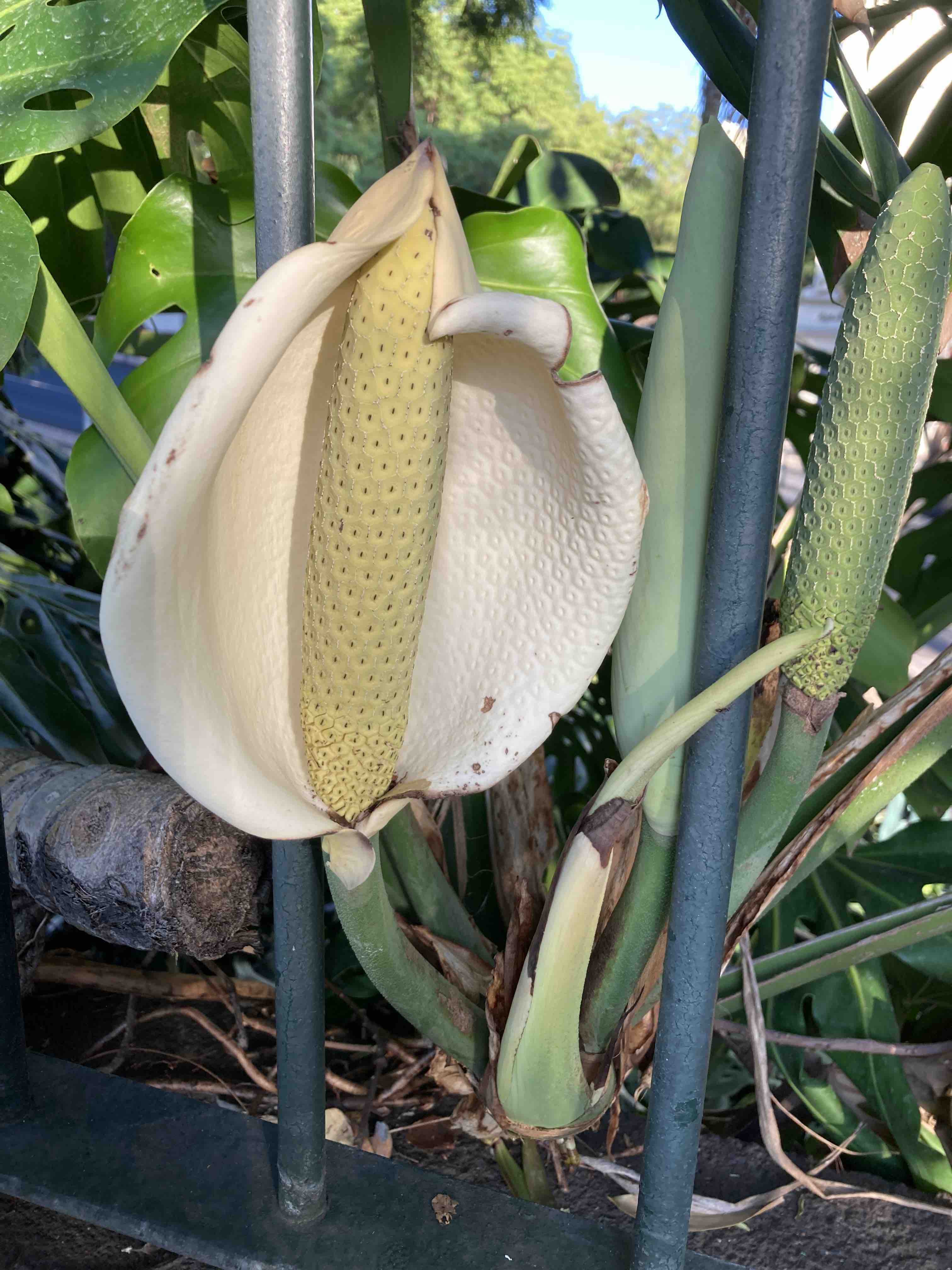
Dealing with the flowers first, these are fairly uniform. They are typically small and without petals. What makes them instantly recognisable is that they are arranged on a cylindrical ‘spadix’ which is enclosed in a leafy ‘spathe’ at first. The spathe may open and either not be important or it may be colourful and have some purpose in attracting pollinators or it may be highly modified and work in conjunction with the spadix to effect pollination.
In some genera the flowers are bisexual and are similar along the length of the spadix, as in the familiar anthurium and spathiphyllum which later develop irregular lumps along the spadix as fruits form.
In the genera that are possibly better known in temperate gardens, and among those that attract headlines, the base of the spadix tends to produce female flowers below and with male flowers above. And above that the spadix may be swollen and serve a different function. The spathe is usually intricately constructed to assist in pollination.
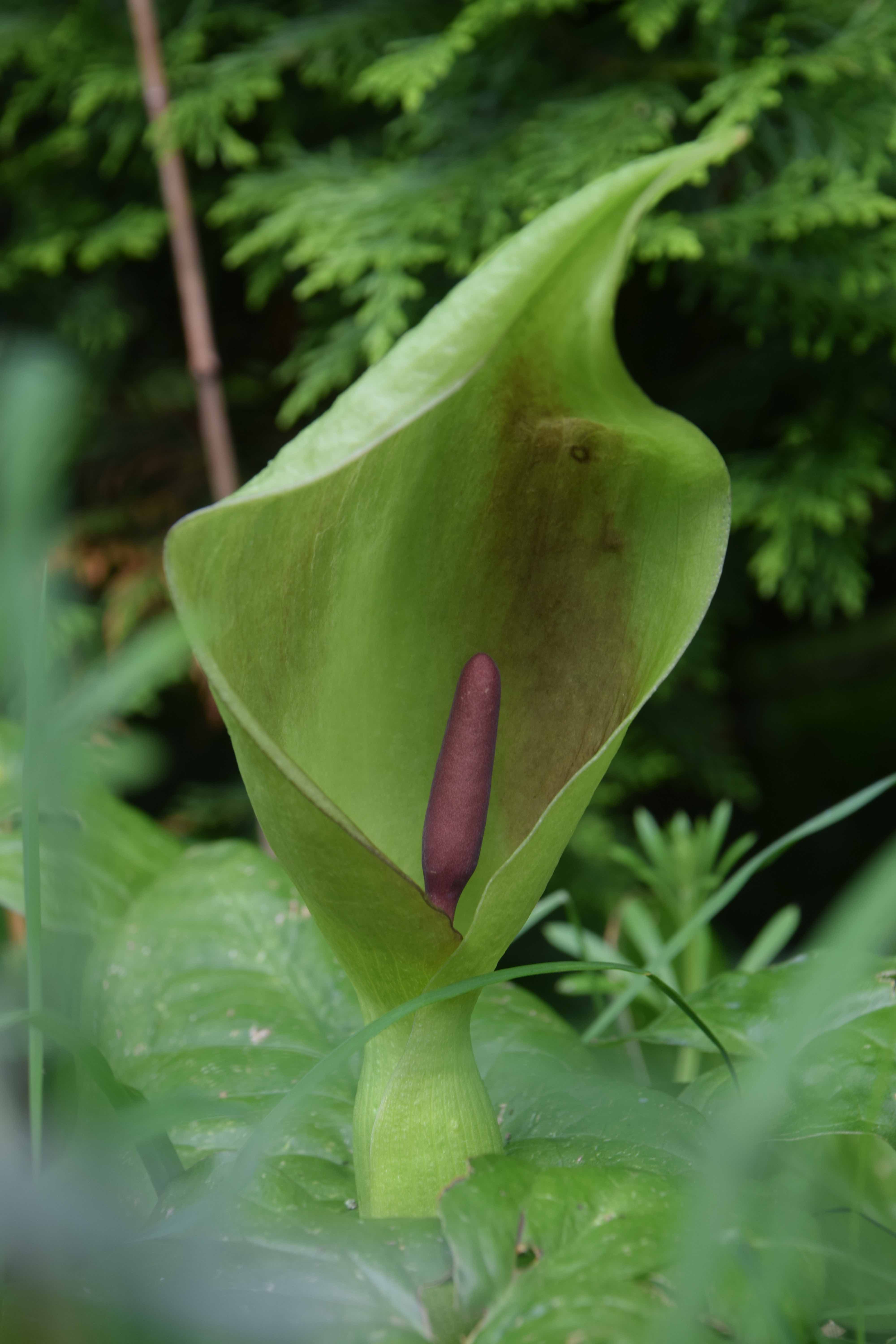
The upper part of the spadix is often capable of producing heat. This is thought to attract midges and beetles which seem to be more common pollinators than bees. Examples include symplocarpus, with liverish, small, hooded flowers, amorphophallus and the native Arum maculatum. I have written about this before
So we have very strange flowers (or inflorescences). In some cases this basic structure results in something attractive, to our eyes, as in zantedeschia and in some anthuriums, though my childish sense of humour cannot fail to see them as ‘rude’.
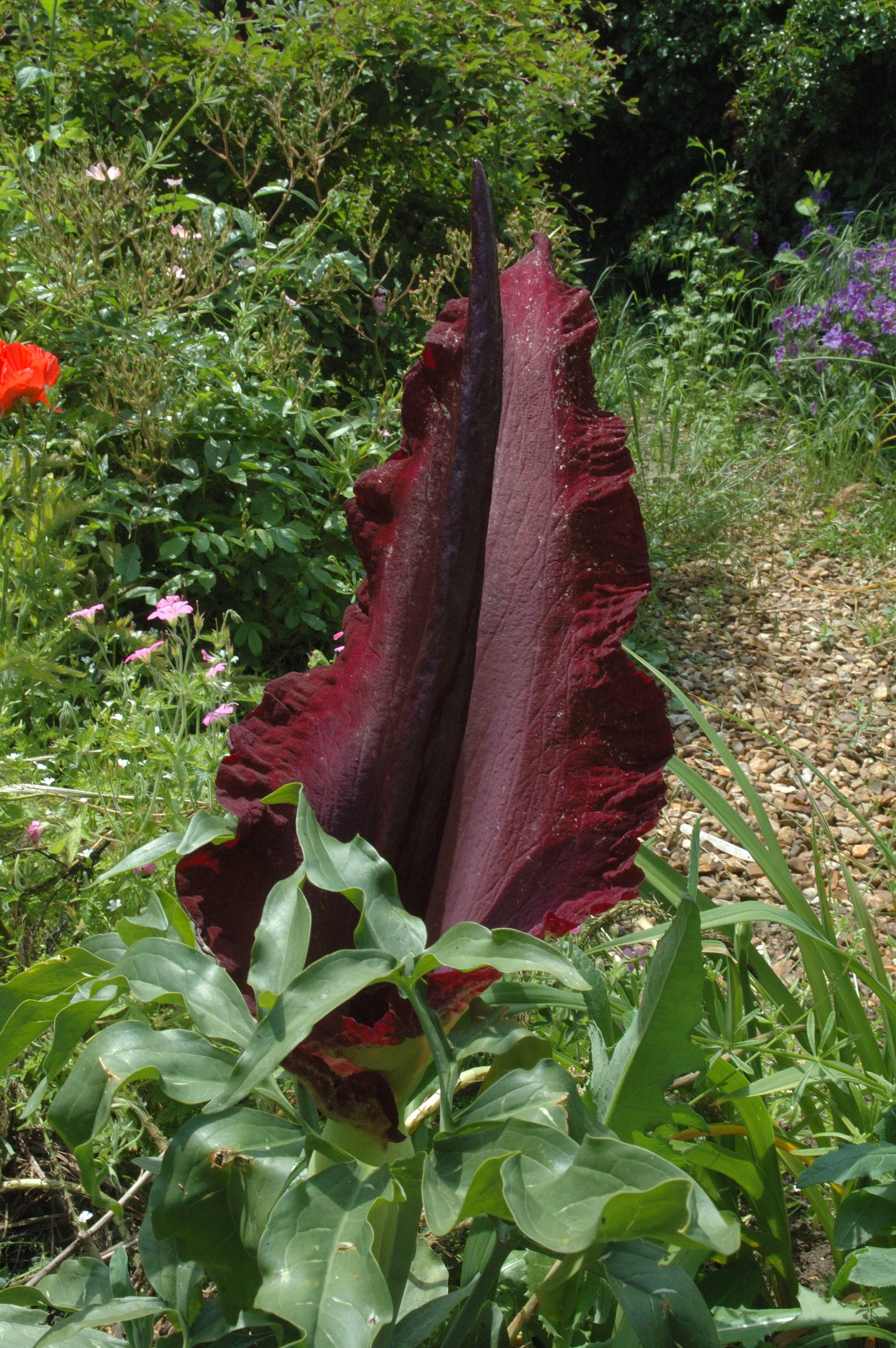
A few have scents that are pleasing to us (humans) but the majority are intent on attracting pollinators and that means producing smells that are irresistible to beetles, midges and flies. While TV crews line up to film and broadcast the increasingly common flowering of the Sumatran titan arum (Amorphophallus titanum – as more botanical gardens grow it, realising a flowering plant is more lucrative than being a Trump sycophant – in temperate climes we can easily grow dracunculus to terrify the neighbours – I used to grow it by the front gate – or the even more ridiculous Helicodiceros muscivorus, commonly called the dead horse arum which resembles, in appearance and smell, the decaying back end of an animal, though I would say pig rather than horse from when mine bloomed. I have not tried it in this garden.
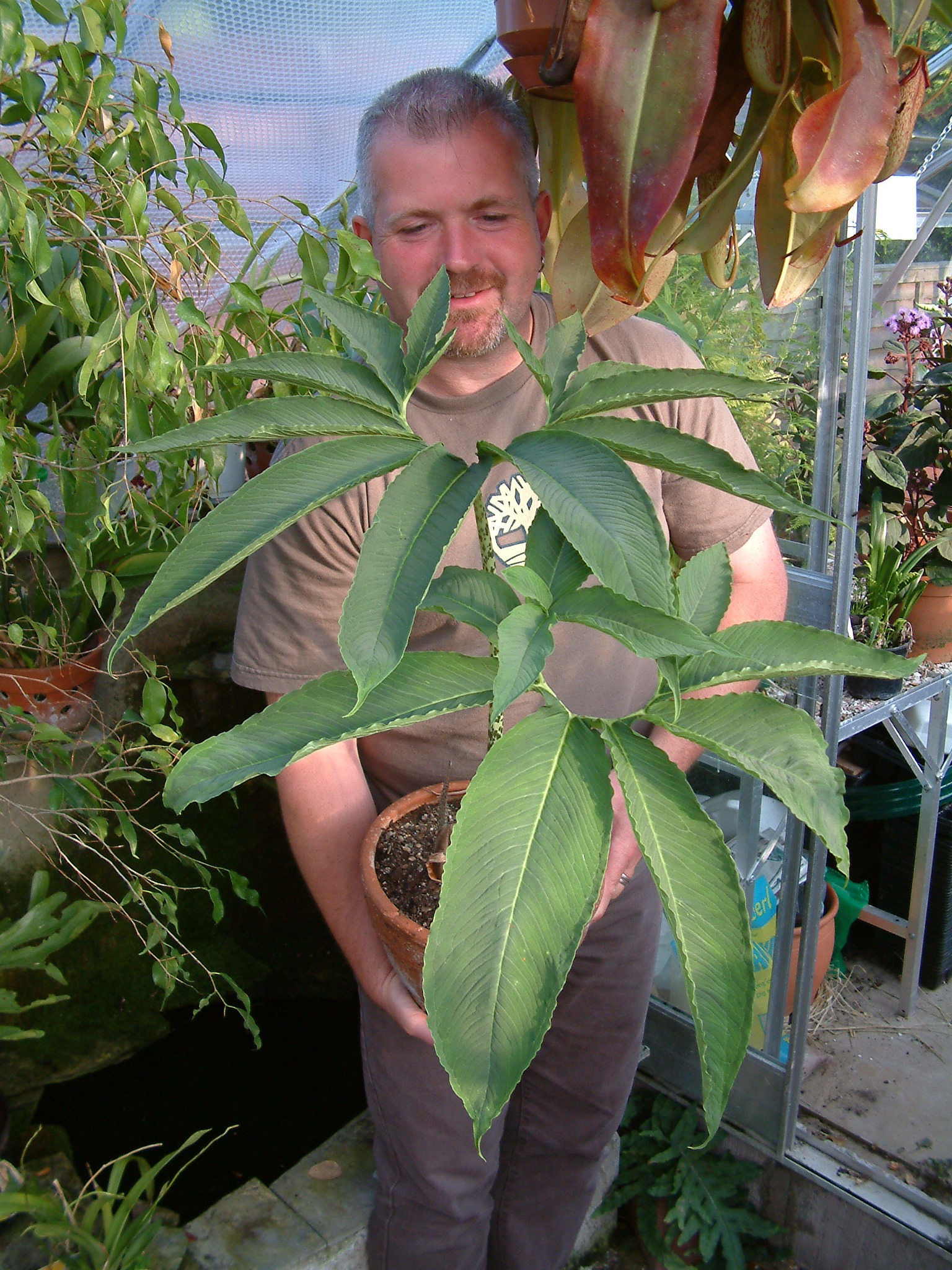
And of course there is the commonly available voodoo lily (sauromatum) which is sold to unsuspecting lovers of the curious, able to grow (well bloom) without soil from the round tuber, announcing the arrival of the open inflorescence with the acrid stench of rotten fish, fortunately, for just two days. If potted, it then produces very attractive foliage, a growth cycle it has in common with amorphophallus. I have always found that the leaves of this and others are very prone to red spider mite.
 The Biking Gardener
I have the rather weedy Italian arum here. The blooms aren’t all that impressive and quite smelly, but the leaves are attractive until they start to die down. The clusters of orange seeds are a curiousity but I diligently remove them before they shatter. I am now limiting the spread of this plant, which could take over the garden if allowed.
You have pre-empted the next posts. I have split it because it was getting so long. Arum italicum can be weedy and it amazes me that it is so widely available in packs in garden centres. I think your plan to prevent seeding is a good idea.
Now, this is one family that is at least as weird as the euphorbs.
I would totally agree with that