Apiaceae 2 Stars and spines
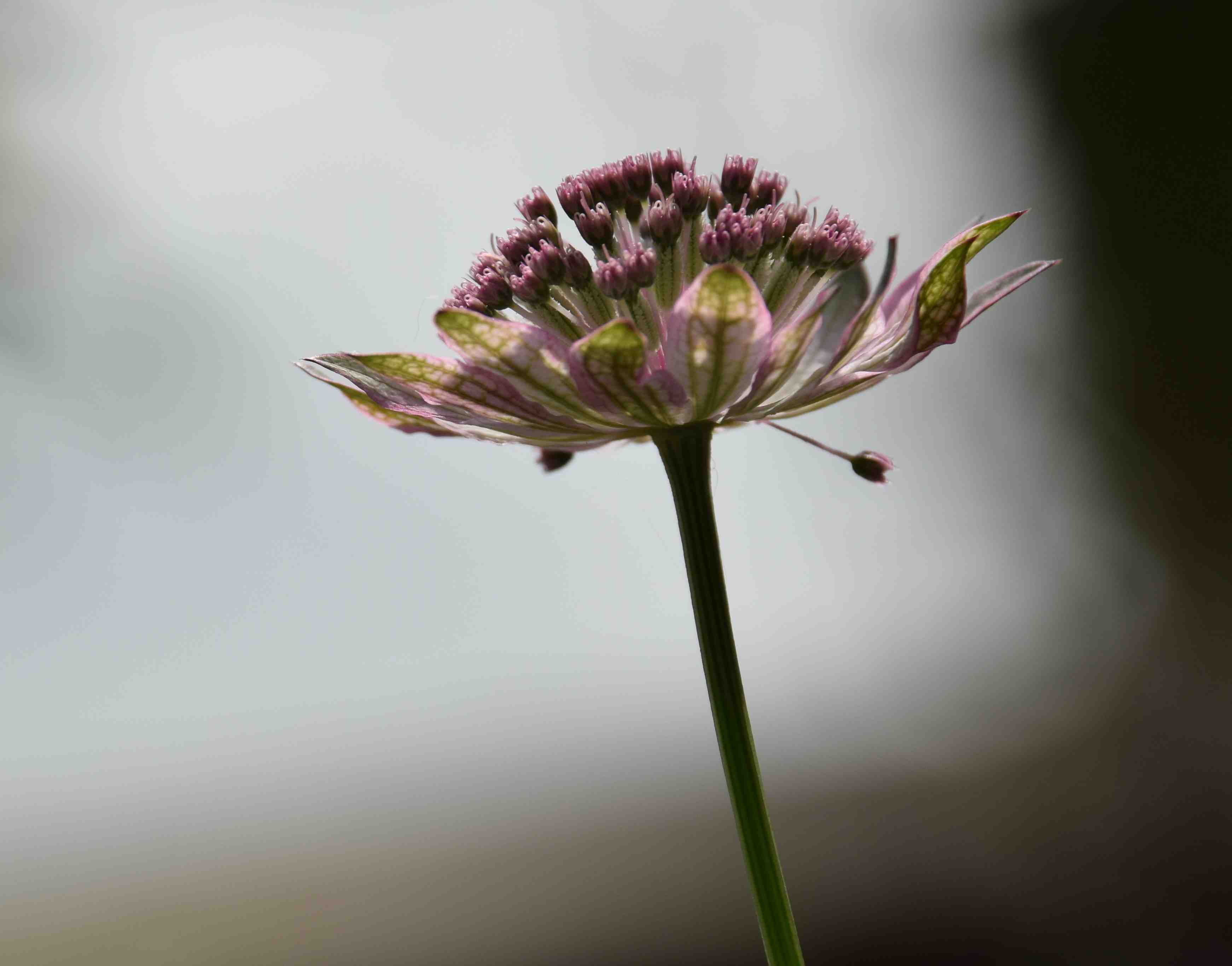
In a family that is so recognisable for the lacy flowers and foliage, it is a relief to find some exceptions when it comes to adding colour and form to the garden but retaining all the wildlife-friendly features.
Astrantias were ignored by most gardeners for decades but are now becoming deservedly popular. They are European plants that generally form low domes of attractively ‘cut’ foliage and branching stems of pink or white flowers. Their name refers to ‘star’ and the showy, small, narrow, bracts around the flowers do have a star-like appearance. The flowers are often described as like a pincushion and for those old enough to be able to imagine such a thing it is a good description.
I always associate them with Margery Fish whose writings were influential in my early interests in gardening. And, of course, ‘Shaggy’ or ‘Margery Fish’ is one of the most famous of varieties, though, I suspect, it has been raised from seed and is not the same as the plant she grew.
In ‘A Flower for Every Day’ (1965) she wrote (of A. maxima which she knew as A. helliborifolia) ‘It is certainly not as big as a major and not nearly as big as the giant form of major, which has large shaggy flowers, heavily shaded with green. This grows about 3’ (90cm) and so far no one has a name for it, and it is not in general cutivation.’ Well now we do have a name – in fact two – and it is widely cultivated.
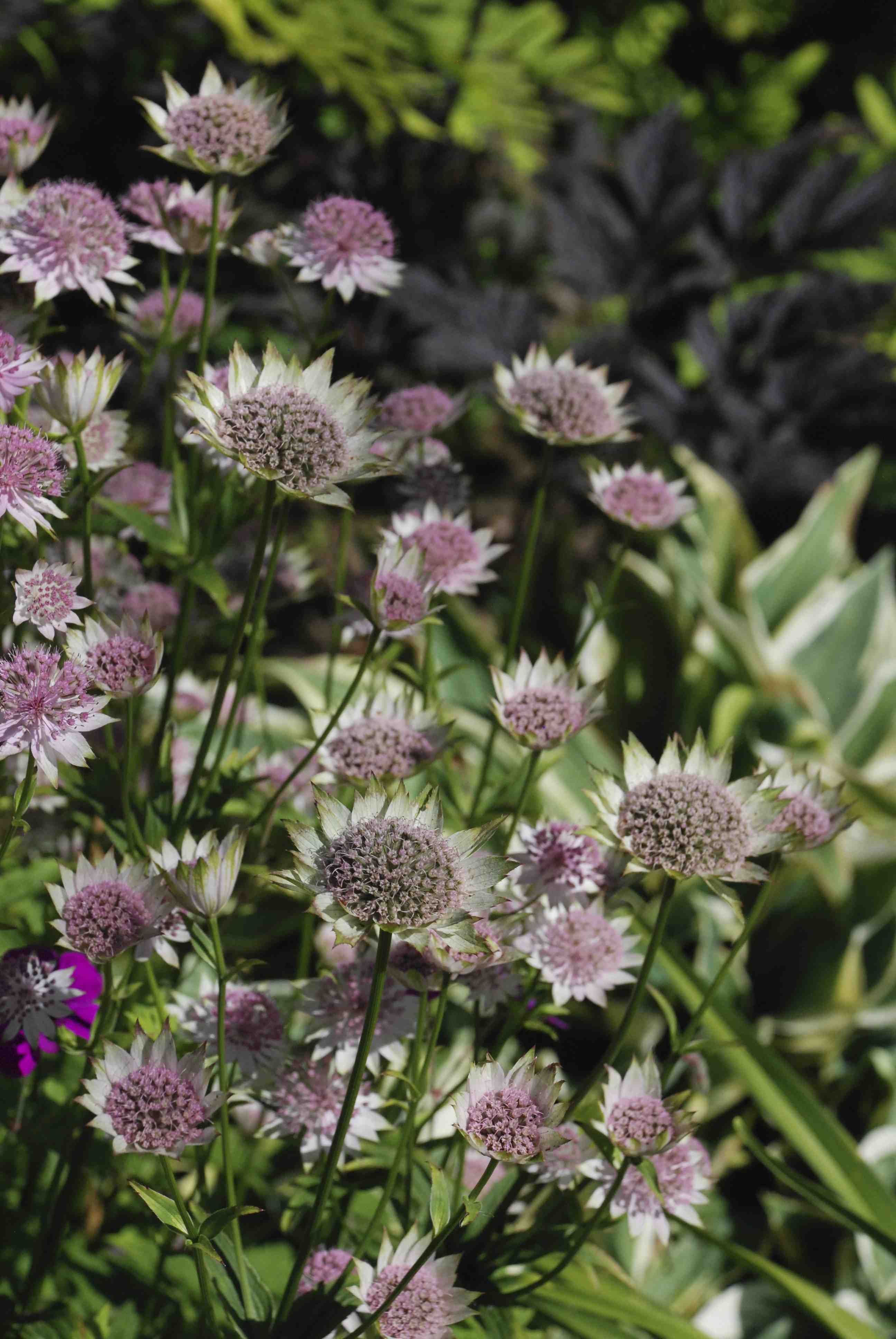
She continued ‘There are several green, white and pink astrantias so like A. major that it is difficult to tell them apart. Some have a little more green or a little more pink but they are all very much alike.’
We now have astrantias with very deep pink or reddish flowers but her view is still relevant. I like them all but it is difficult to say that any one is ‘best’. If you have them in the garden you will get seedlings, unless you deadhead them and one plant, that is very like ‘Shaggy’ has produced several young seedlings that are very similar. Astrantias are tough, well-behaved plants and cope with most soils and with drought. They are also great cut flowers.
Eryngium are a bit more complicated and are found in the wild in areas around the Mediterranean and then in South and Central America.
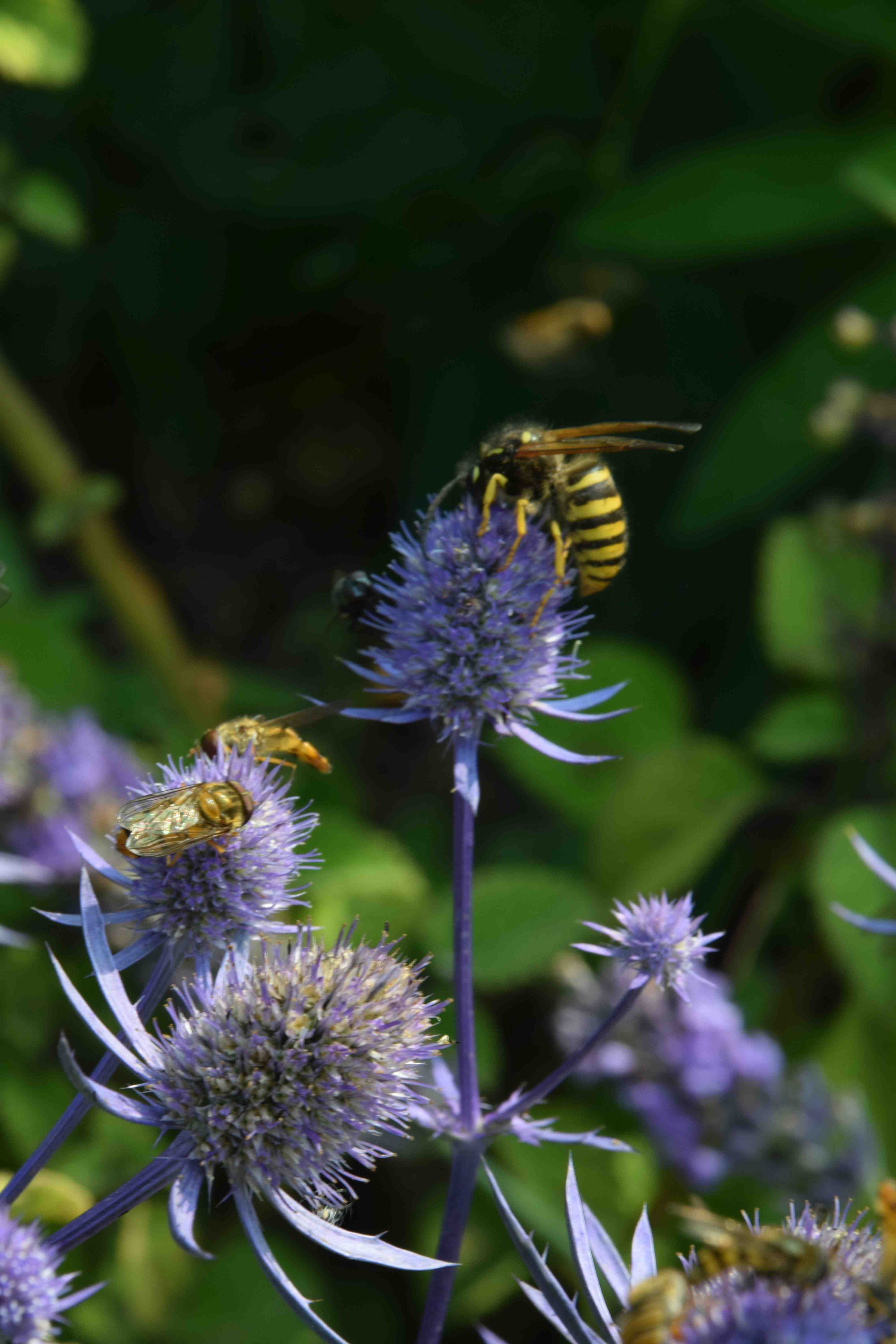
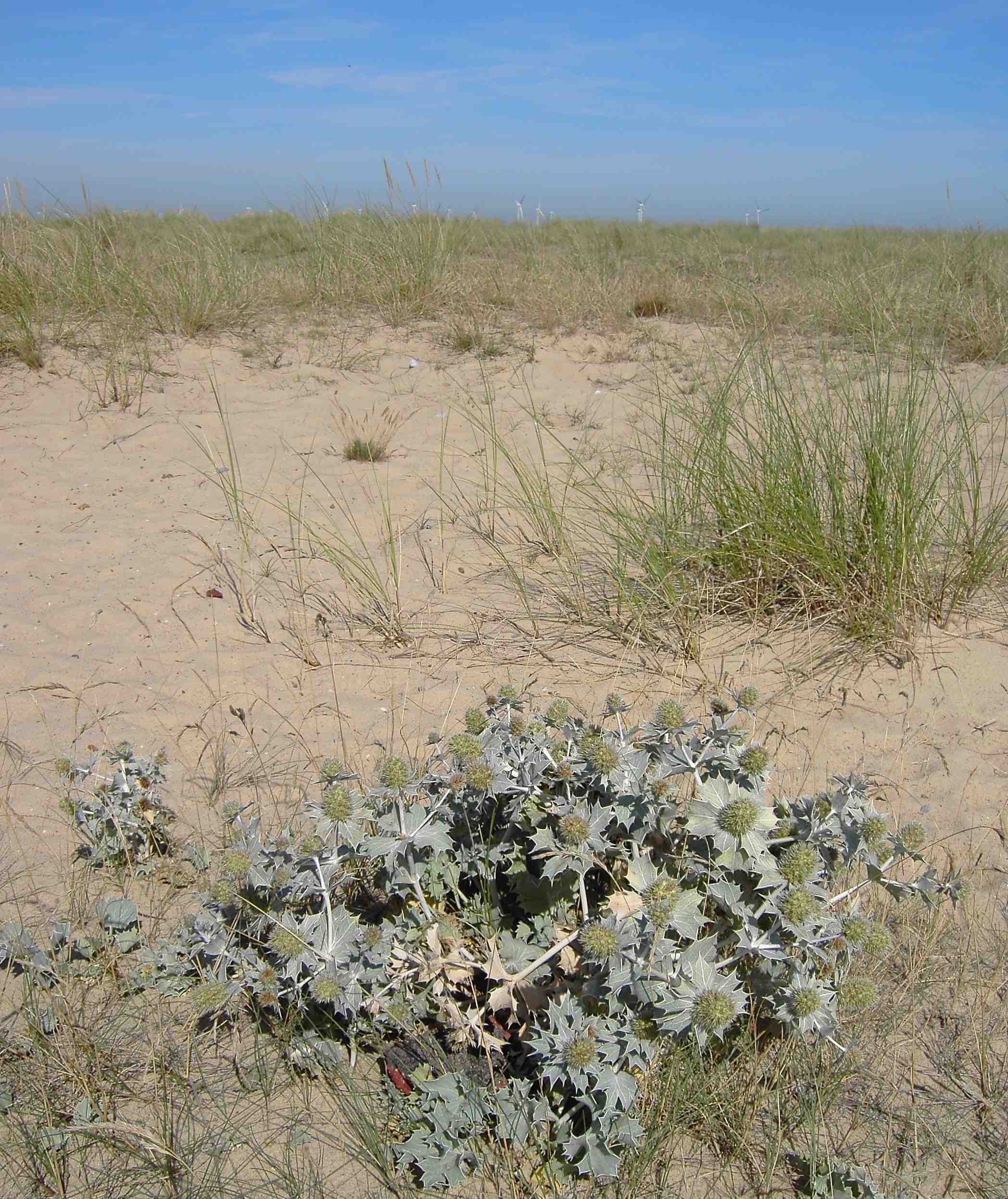
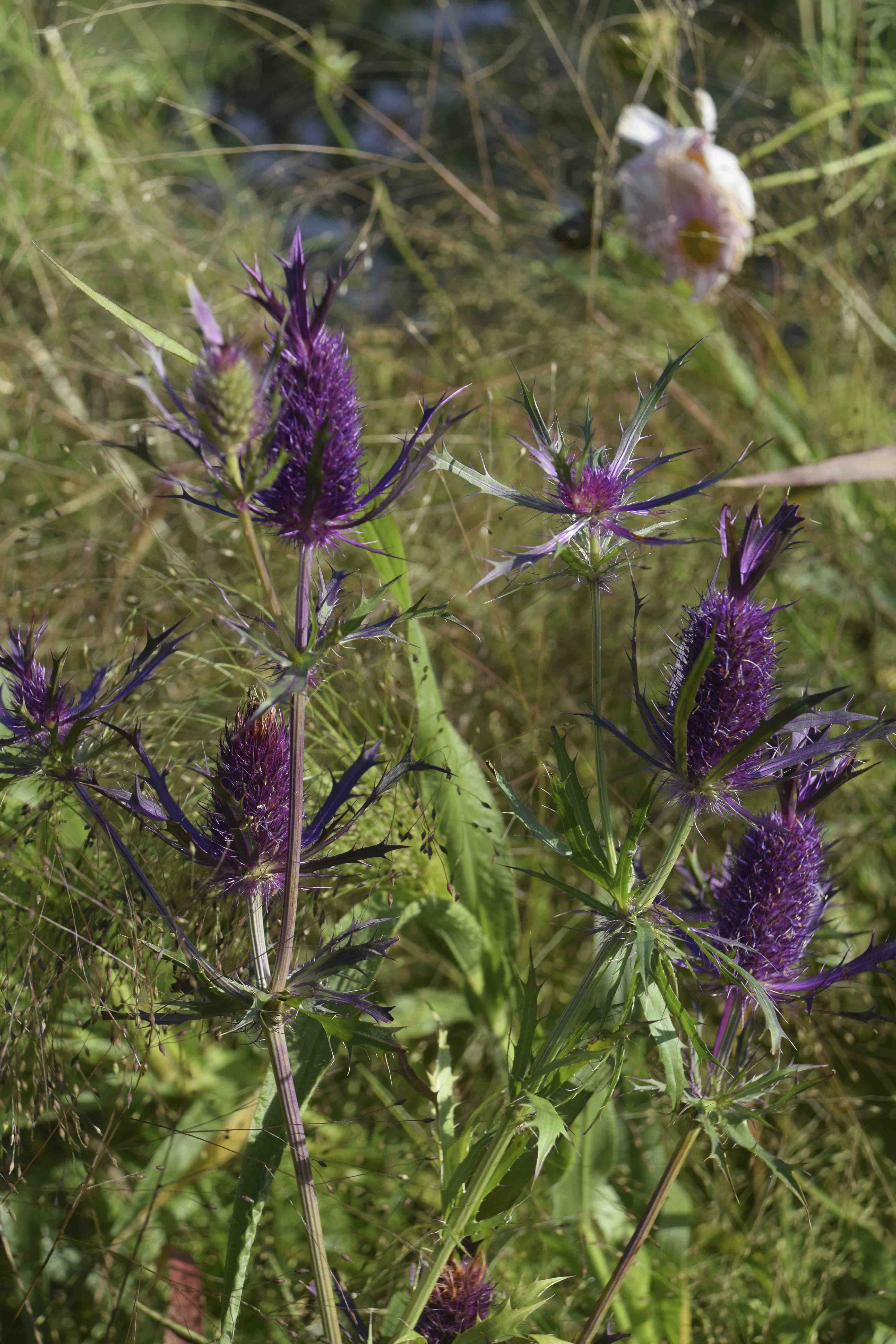
The European species tend to be the most attractive in flower and have basal leaves that may or may not be spiky. But the flowers, which are often blue in colour, are surrounded by showy and often blue-tinged bracts. They all need good drainage and full sun. The annual E. leavenworthii is a gorgeous thing with purple bracts but a bit of an outlier among the genus and the most famous, if you ignore the true sea holly (E. maritimum, which grows in sand dunes), is E. giganteum. More commonly known as Miss Willmott’s ghost after the Edwardian gardener who would scatter seeds as she visited gardens, it is biennial and in the first year is a rosette of soft green leaves giving no hint of the viciously spiky flowering stem that will appear in the second season.
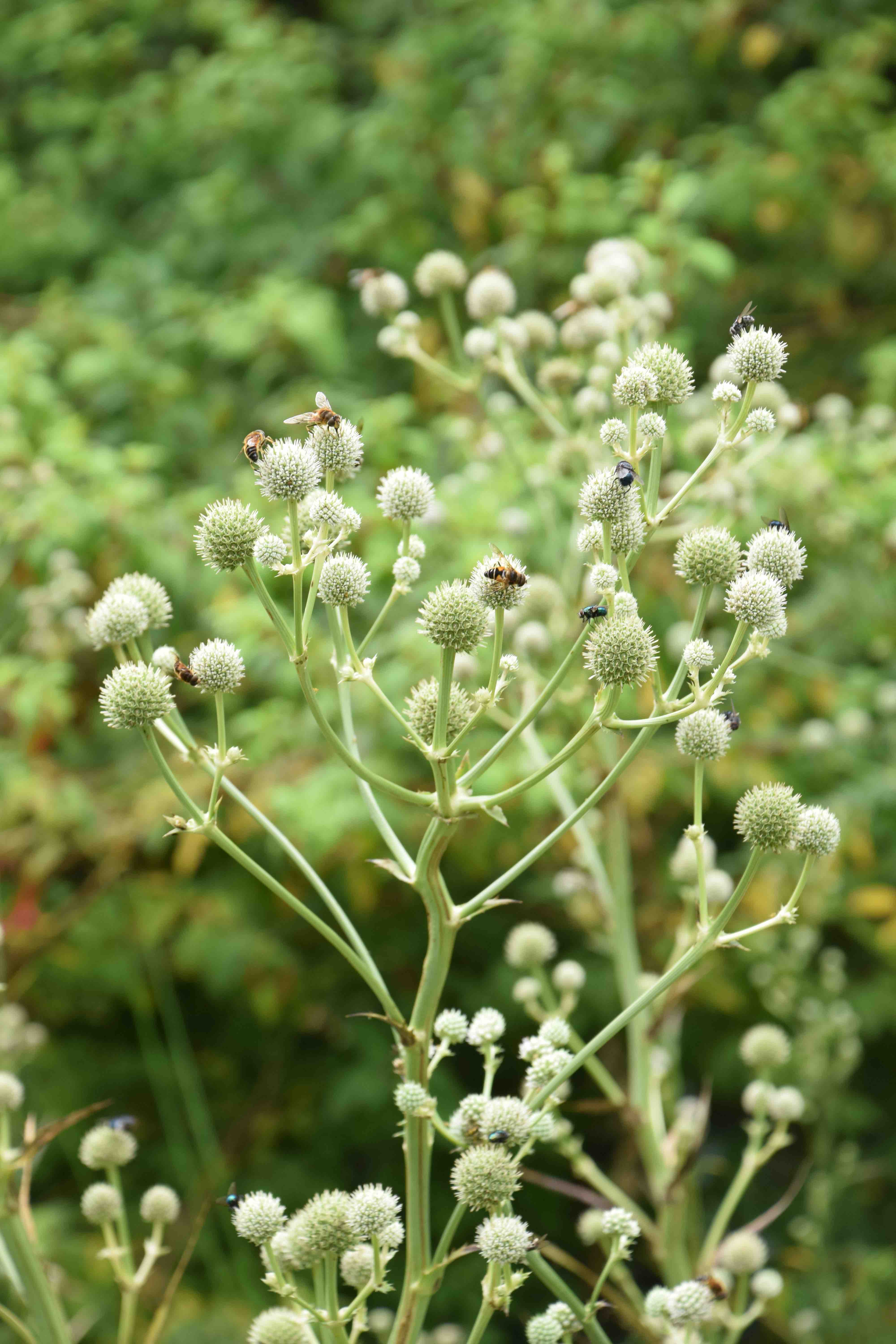
The ’New World’ species are very different and have rosettes of long, often spine-edged, evergreen leaves and tall, much-branched stems with tight heads of, usually, cream flowers. I find them less attractive. But all eryngiums are loved by bees. They make good cut flowers and, for most purposes, E. planum, which is a much-branched, easy perennial, is the best. The European eryngium are easy to propagate from root cuttings.
While on the subject of spiky I need to mention Aciphylla. Regrettably I can’t find a photo of one although I know I have some. These are plants from New Zealand that vary from very dwarf, almost cute hummocks of growth to monstrous plants that are basically piles of vicious needles. They are thought to have adapted to predation by Moas, now extinct, and other plants from the area have similar adaptations.
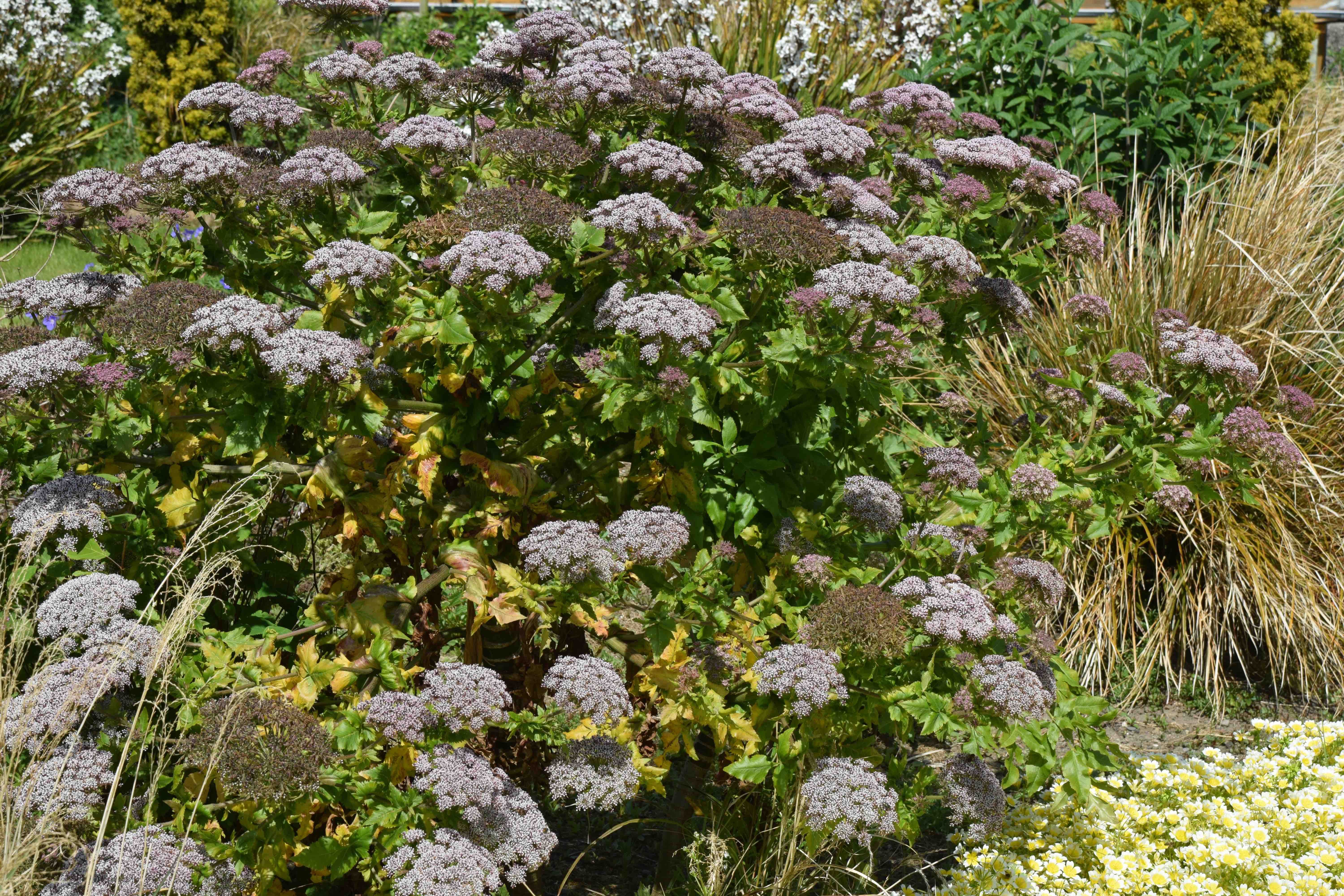
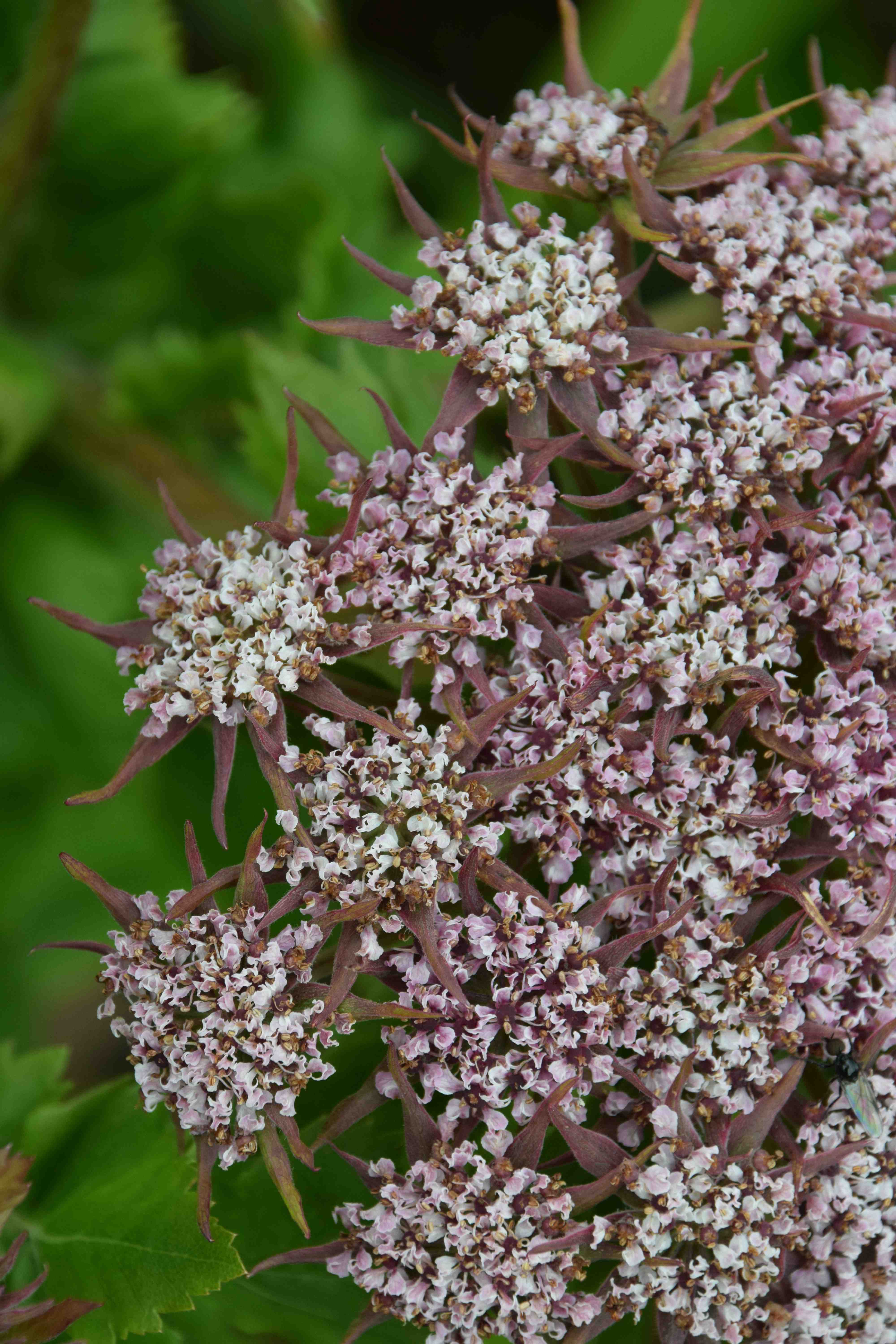
I need to just clear up a few other plants before I move to edibles. Most Apiaceae are not obviously woody but one that grew well here is Melanoselinum decipiens (Now, incredibly, Daucus decipiens, a carrot!) from Maderia. It is biennial or perennial, forming woody stems that are not branched in the first year but then become a large mound of bold foliage and masses of pink flowers. It is not hardy in cold areas but is is spectacular and usually self seeds.
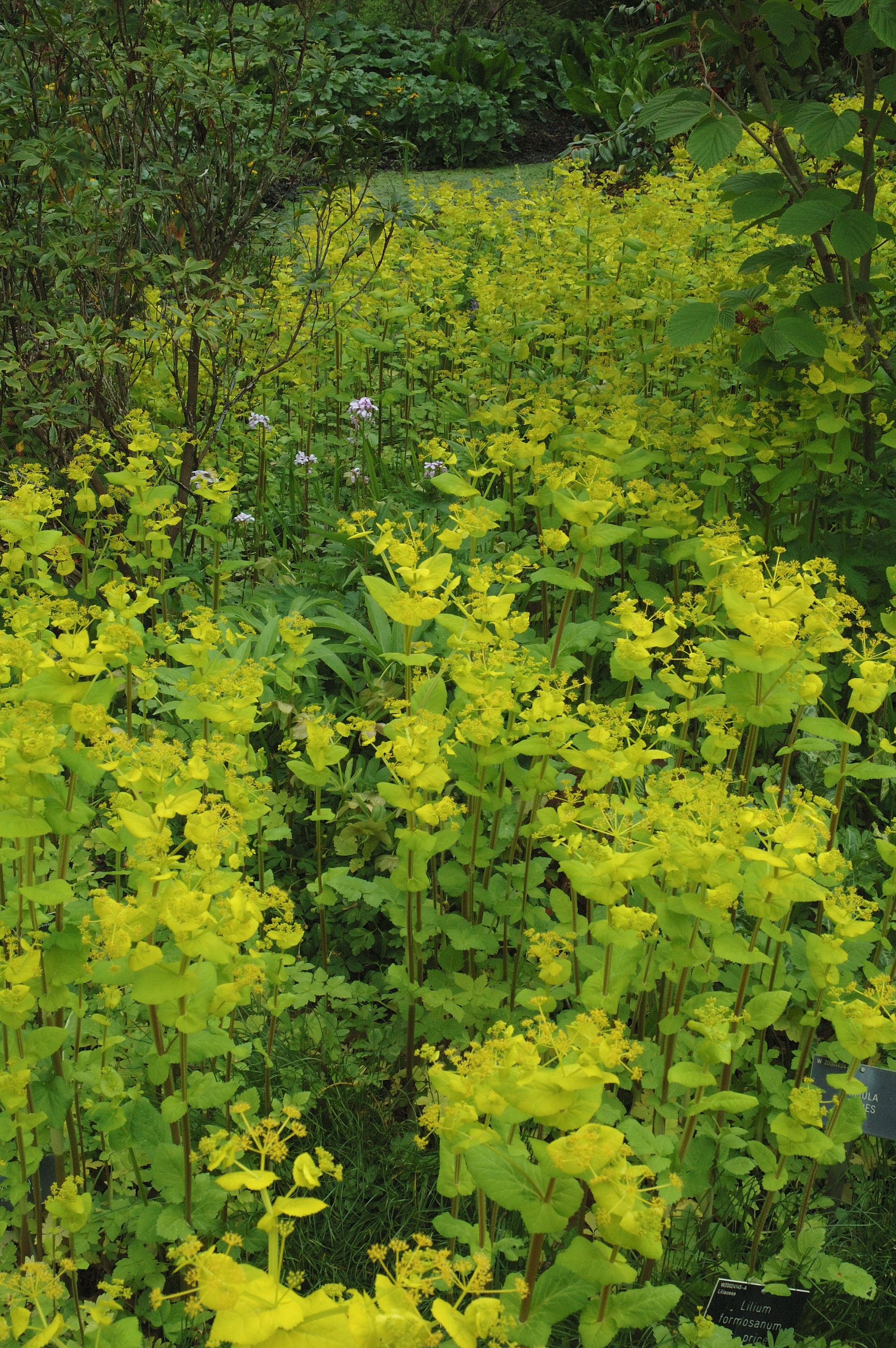
And I must mention one of my favourite biennials Smyrnium perfoliatum. I first knew it when looking after Myddelton House where it grew in the zillions. It is just a low rosette of glossy, deep green leaves the first year but then sends up a stem with wonderful, lemon, perfoliate bracts around the flowers of the same colour before it sheds the black seeds. I have tried to introduce it here but seedlings grow and bloom but have not seeded. I will keep trying. It is ironic because the other species S. olusatrum, which is sometimes used as a vegetable, is native and grows in profusion along the hedges here. It is very common in coastal areas but less common inland.
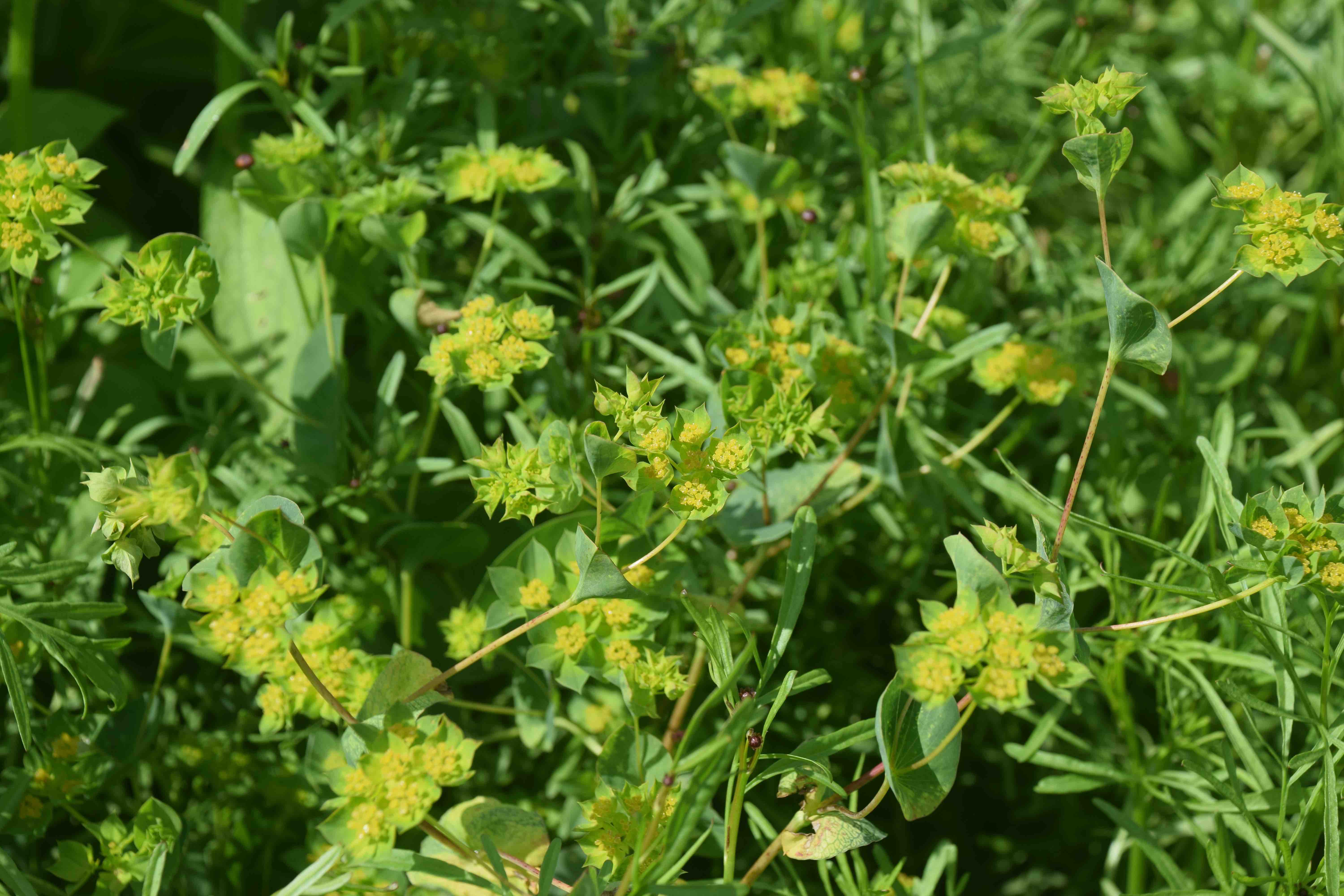
And then there is bupleurum (hare’s ear) which is most often seen as B. fruticosum, a low, rather weak shrub. It is unusual for the entire, not divided, leaves. I grow annual B. rotundifolium ‘Graffiti’ as a cut flower to put in bunches although if I put in too much those bunches tend not to sell so I suspect it is not loved by others as much as by me. Ammi is commonly grown as a cut flower too.
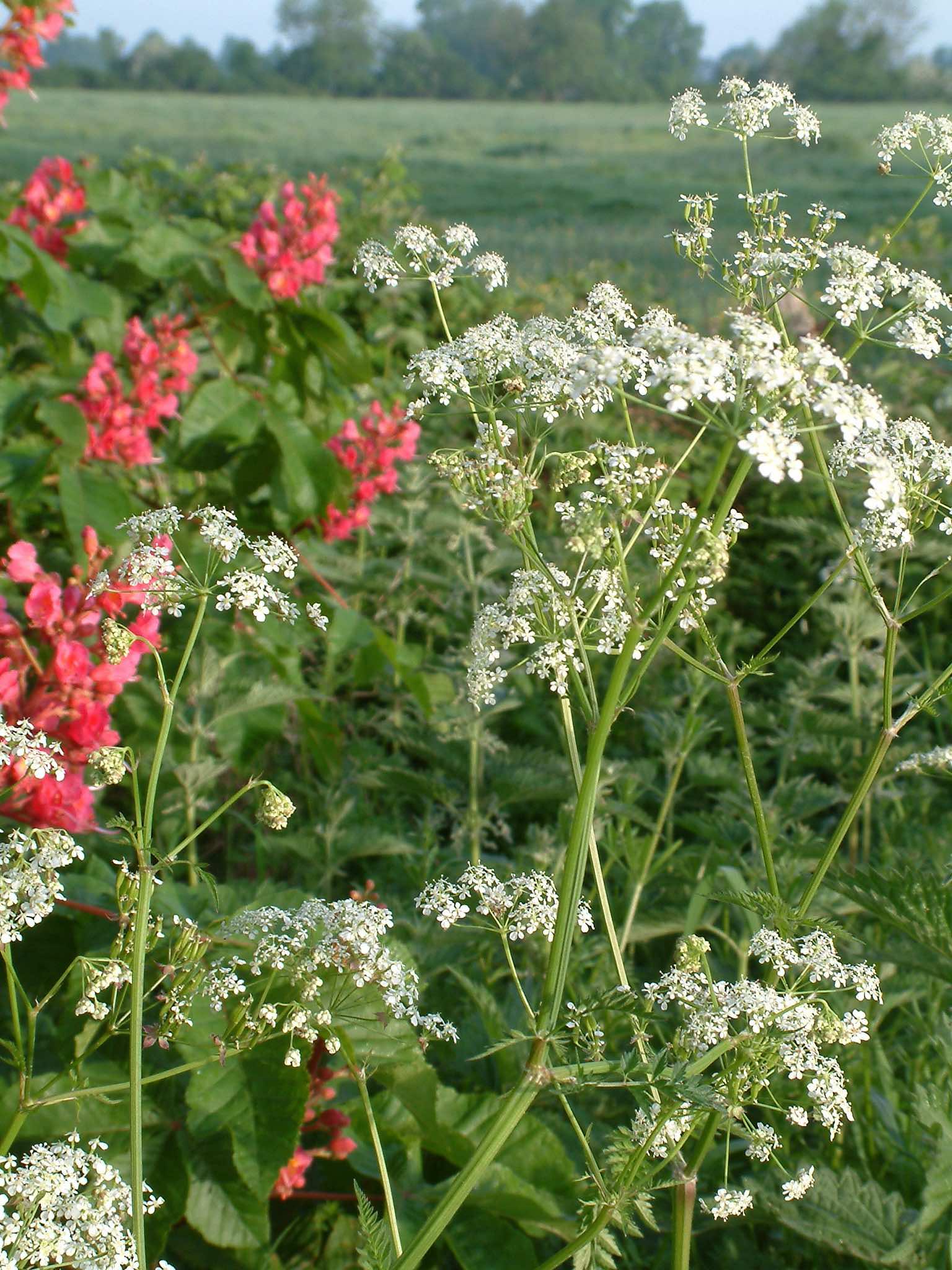
Obviously there are some omissions here and I ought to mention Pimpinella and various coloured-leaf forms of cow parsley (Anthriscus) but I won’t. However, cow parsley is a joy in the hedges here when in full flow in May. Blooming at the same time as the hawthorn it fills the countryside with beauty. Unfortunately it is also a host for carrot-root fly which brings us on to the edibles.
 The Biking Gardener
No comments yet.