Orchids 2
The first orchid I grew was a cattleya. At school I was friends with someone whose father was the head gardener at a large private estate. He had charge of ‘stove houses’, greenhouses kept no less than 18c all year. He had to produce a gardenia flower for the breakfast tray every day and the greenhouses were full of orchids for decorating the house and for corsages. I was amazed at the blooms of the cattleyas and came away with a plant. Of course it died. But it died slowly, over several years, and that is a feature of orchids – they (at least the epiphytic types) are incredibly tough.
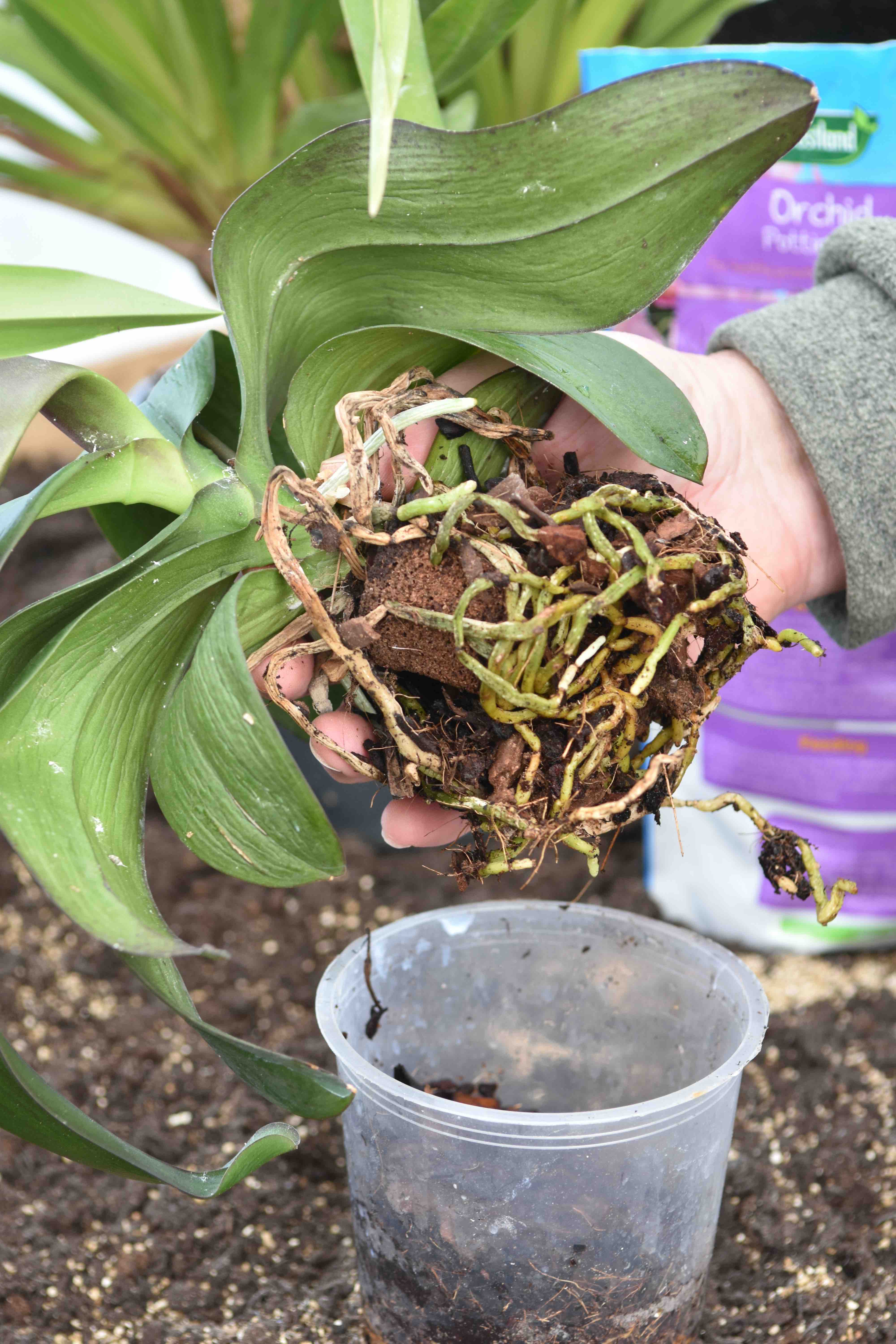
These orchids have evolved to live on the trunks and branches of trees where, in the wild, they get soaked when it rains but then have to withstand significant drought. They have thick roots that grip onto the bark and also accumulate plant debris which provides some nutrients. They perch in the trees to get light and if they lose their grip and fall to the forest floor they die of starvation because of lack of light under the dense tree canopy.
They can withstand drought but not waterlogging.
Anyone who has had a moth orchid (Phalaenopsis) will know that they are slow to die.
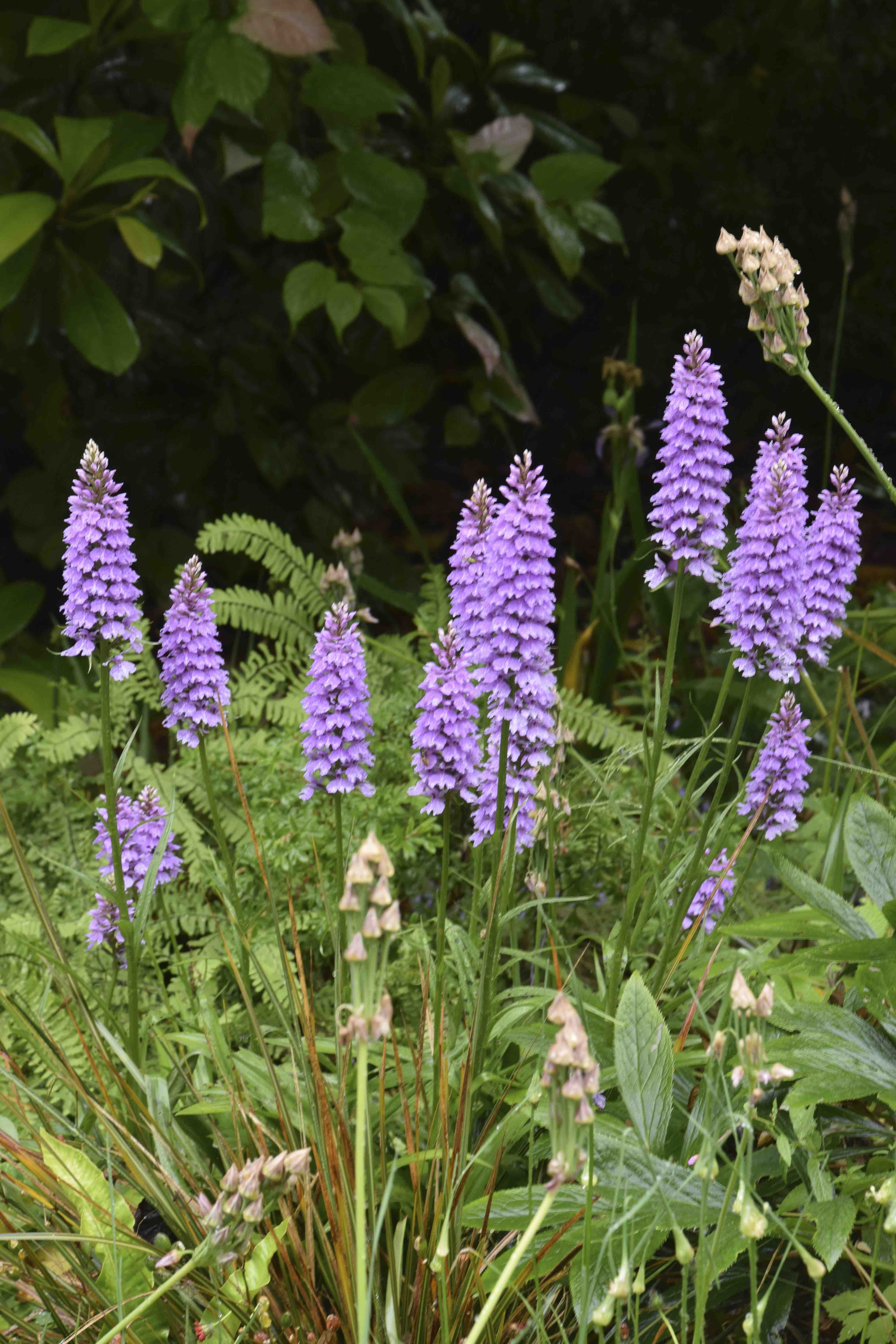
The other orchids I knew then, apart from moderately successful attempts to grow Bletilla, was the native orchids in the area, at the foot of the North Downs, an area of chalk. An abandoned chalk pit, which was strictly out of bounds but was too tempting no to crawl through the fences, was a wonderland of common spotted orchids (Dactylorhiza fuchsii). In the sun and light shade of common buddleias, which formed a delicate woodland, grew millions of these majestic plants in every shade of lilac, mauve and purple, from young seedlings with only a few flowers per spike to grand, majestic specimens with long heads set with hundreds of blooms. In nearby beech woods (a beech hanger) grew white helleborines (Cephalanthera damasonianum) and in the open grassland many others including bee orchids.
In hazel and birch woodland at the base of the hill, in rather squelchy old woods there were bluebells. But the purity of their caerulean display was smudged by masses of early purple orchids (Orchis mascula), the spotted leaves producing showy, magenta purple flowers in their thousands. It was heaven to explore the woods, avoiding the damp patches studded with marsh marigolds, admiring the blue spires of ajuga, looking for pink or white bluebells and the variations in colour and lip patterns on the orchids.
Sex
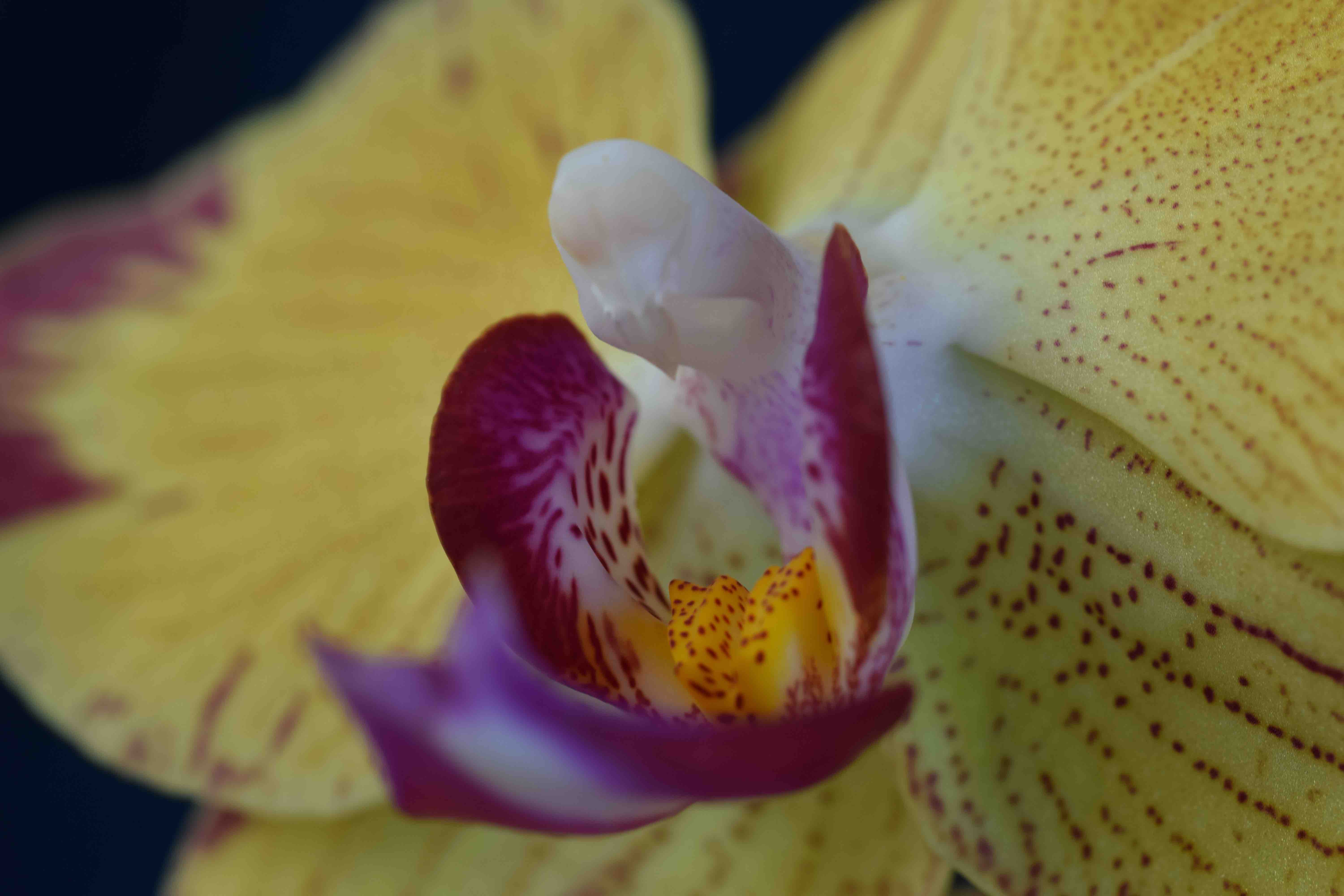
While orchids adopt a ‘couldn’t care less’ attitude to their offspring (seeds) they are obsessed with the sex that leads to their production. Birch trees and grasses scatter their pollen into the wind, hoping some will land on receptive female flowers. Most flowers rely on insects to transfer pollen from one bloom to another and often have elaborate systems to avoid self-pollination. But orchids take everything to sublime levels of sophistication. Most have a pair of pollinia, clumps of pollen, that have to be removed by a pollinating insect. They are usually attached with ‘glue’ to the thorax or head of the insect and may then contract to move the pollen so it is in just the right position to make contact with the female style when the insect visits the next bloom. Both parts are present on a special structure called the column which is usually vertically above the top of the lip (labellum).
When I had wild orchids on the doorstep I used to experiment with this, using a sharp pencil to flip off the ‘cover’ and the two pollinia would attach to the tip. Over a few minutes their position moved forward ready to be in just the right place to pollinate the next flower.
Charles Darwin spent a lot of time investigating the pollination of orchids after he moved to Downe House. He even wrote a book about it (published in 1862). Among the many conclusions he made from his observations was about the Madagascan orchid Angraecum sesquipedale which has white flowers with a nectar spur 290mm long. He speculated that it must be pollinated by a moth with a proboscis long enough to reach the nectar. Like many of his theories on evolution, reception to his ideas was mixed, especially from theologians. But, in 1903 the debate was resolved when a moth, subsequently named Xanthopan morganii preaedicta was discovered in Madagascar with a proboscis 300mm long attracted to the flowers by scent and rewarded with nectar, a fairly common situation among insect pollination. But orchids are not always so ‘vanilla’.
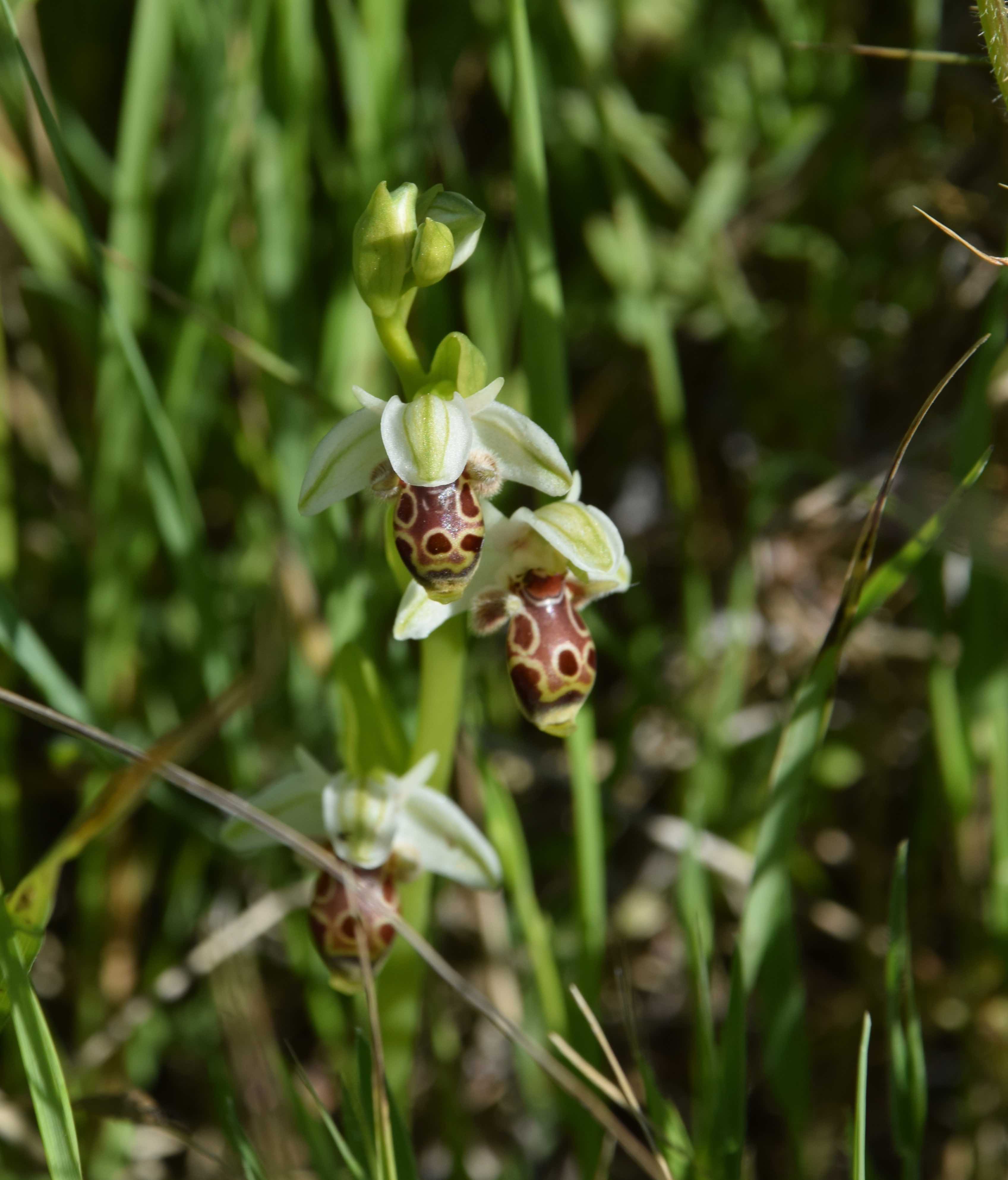
The lip is usually much larger than the other petals and is often very intricately shaped and patterned. It is ‘bucket-like’ in cypripedium, paphiopedilum and the closely related phragmipedilum. Most famously they often resemble insects to trick male insects to attempt pseudocopulation, often in combination with the production of pheromones. Although Europeans will be most familiar with bee and spider orchids, the same tactics are used around the world by orchids. Famously the flying duck orchids of Australia (they look a bit like flying ducks to humans and not to the desired pollinators) mimic sawflies to the extent that males fly down, grab the hinged lip and attempt to fly off on honeymoon, constantly banging into the column to pollinate the flowers.
Many South and Central American orchids such as Stanhopea produce a variety of fragrances that are collected and blended by brightly colured male euglossine bees to attract females. Few other plants have such specific associations with insects. Some orchids smell wonderful to our senses but other less so, such a bulbophyllum species which often smell ‘musty’ and are frequently visited by various fruit flies, tricked by false pheromones.
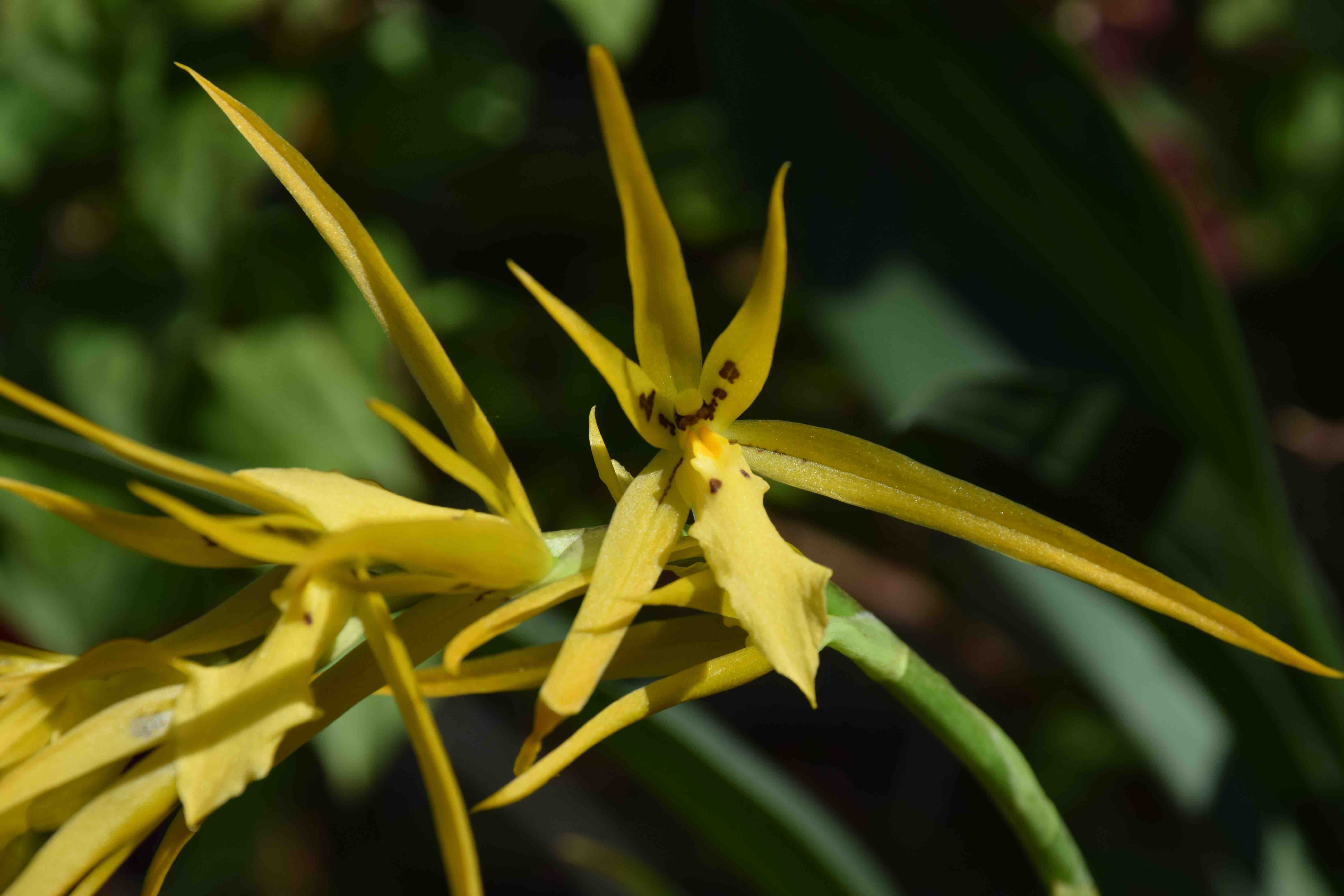
Brassias, which are often seen in houseplant collections, have pale, spidery flowers which, it is speculated, are visited by parasitic wasps that attempt to capture and lay eggs in spiders.
 The Biking Gardener
I find the native orchids particularly fascinating. Unfortunately, our corner of the country is not the richest in species but there are some about which is a treat.
On casual walks I have seen lots by the coast in places. The trouble with these posts is that I am having great trouble finding images. It exposes how badly I have named them and put them into folders! Otherwise it would include some from ‘down the road’! At least it is a reasonably practical activity during this awful weather.
South Wexford has some very good spots
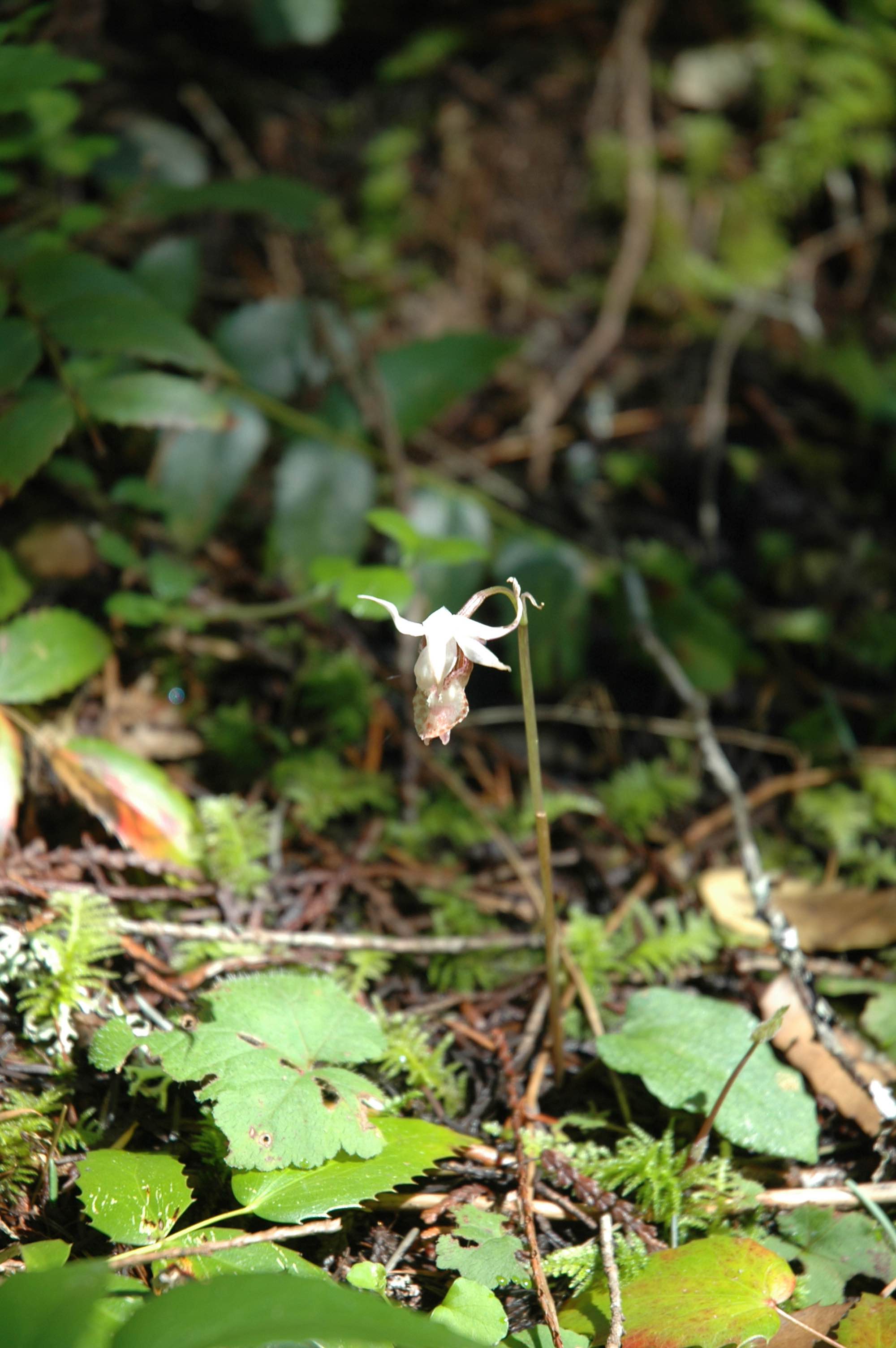
Your description of the native orchids in the North Downs is beautiful. The only orchids I’ve seen myself here on Vancouver Island are Goodyera oblongifolia and Calypso bulbosa, but there are others, apparently. In my own garden there are a couple of plants of a supposedly “weedy” orchid whose name I don’t know. It’s about a foot tall with small brownish flowers. Not much to look at but blooms dependably every year.
Calypso is a lovely thing and I was very excited to find it when I was exploring Oregon. Unfortunately it was the days ‘of film’ and the woodlands were very dark. I can only guess about your ‘weedy’ orchid but maybe it is an epipactis. Thank you for commenting and. Geoff