Time for the snip!
A recent plant purchase has left me with a big decision to make.
I have mentioned my ‘bed of death’ before (With mind-numbing repetition) but it is now coming to life. It is a bed at the bottom of the garden, near the gate, that drains badly. Of course I started planting as soon as the bed was made and before the soil was properly prepared and most things I planted grew fine in summer but then died due to winter waterlogging. These included a philadelphus, a bamboo, even a salix. I planted three whips of Betula papyrifera and one died and one is ‘dwarf’ though these were from seed so maybe it is genetic variability (haha!). Three other birch, further up the bed, struggled and one died but the other two are finally making decent growth. So I forgot permanent plants, grew annuals and dug in as much organic matter as possible including lots of fairly ‘raw’ strawy manure and the contents of old strawberry bags (lots of them, from the local farm) that are coir and perlite.
And things have turned round, although I am sure I am not out of the woods yet. Petasites and Zantedeschia thrive in the lowest part, Salvia uliginosa romps away and even a weigela is making great growth beside classic ‘wet’ plants like sorbaria, cornus and salix. But I wanted something big for the back of the bed.
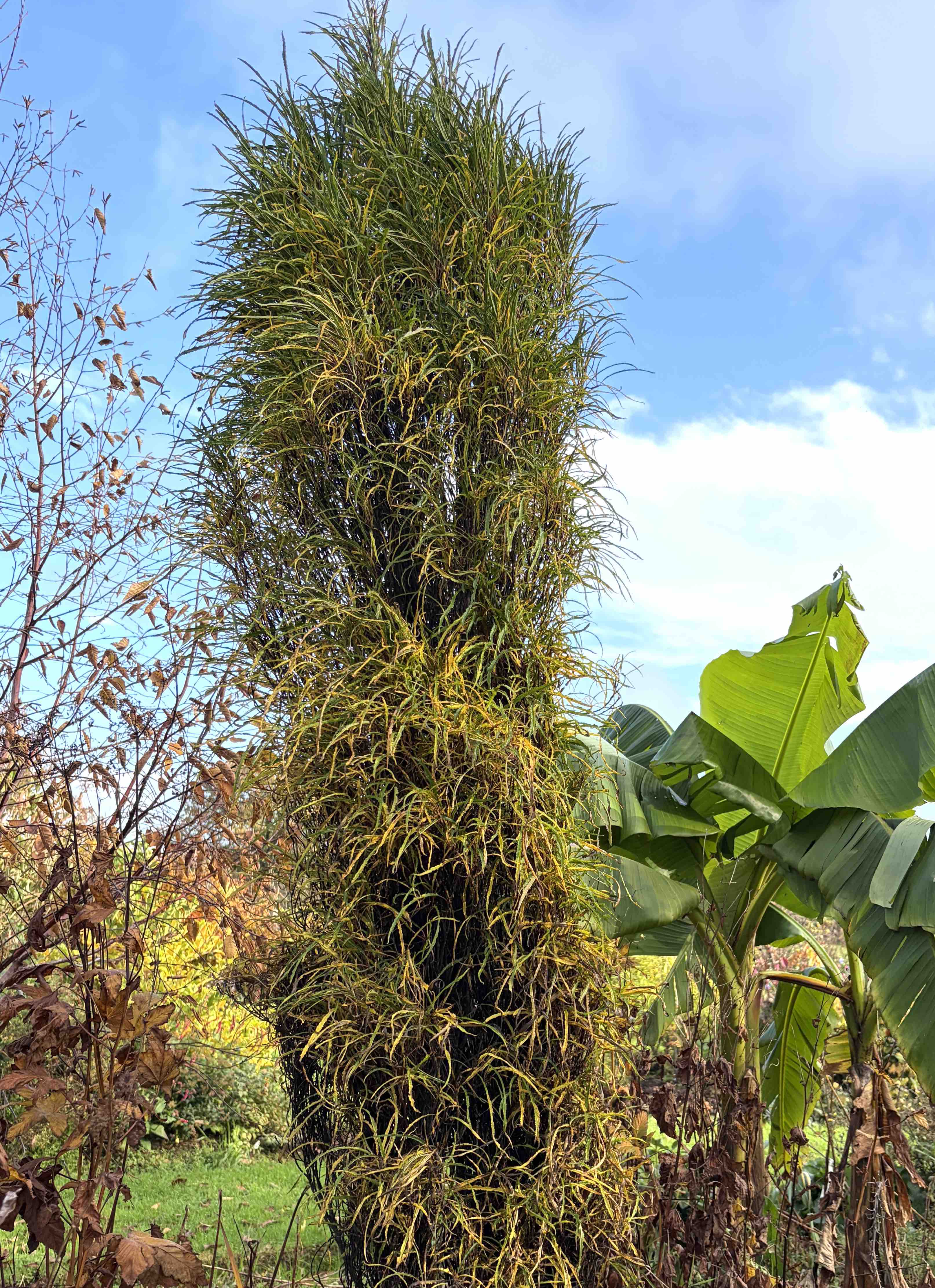
Rhamnus frangula (Frangula alnus) ‘Fine Line’ has been one of the delights in the neighbouring bed and when I spotted Frangula alnus ‘Aspleniifolia’, with similar foliage but without the narrow, upright habit, in a local nursery I thought it would be perfect. In the same bed, which is fast becoming my favourite part of the garden, I planted a metasequoia, early on.
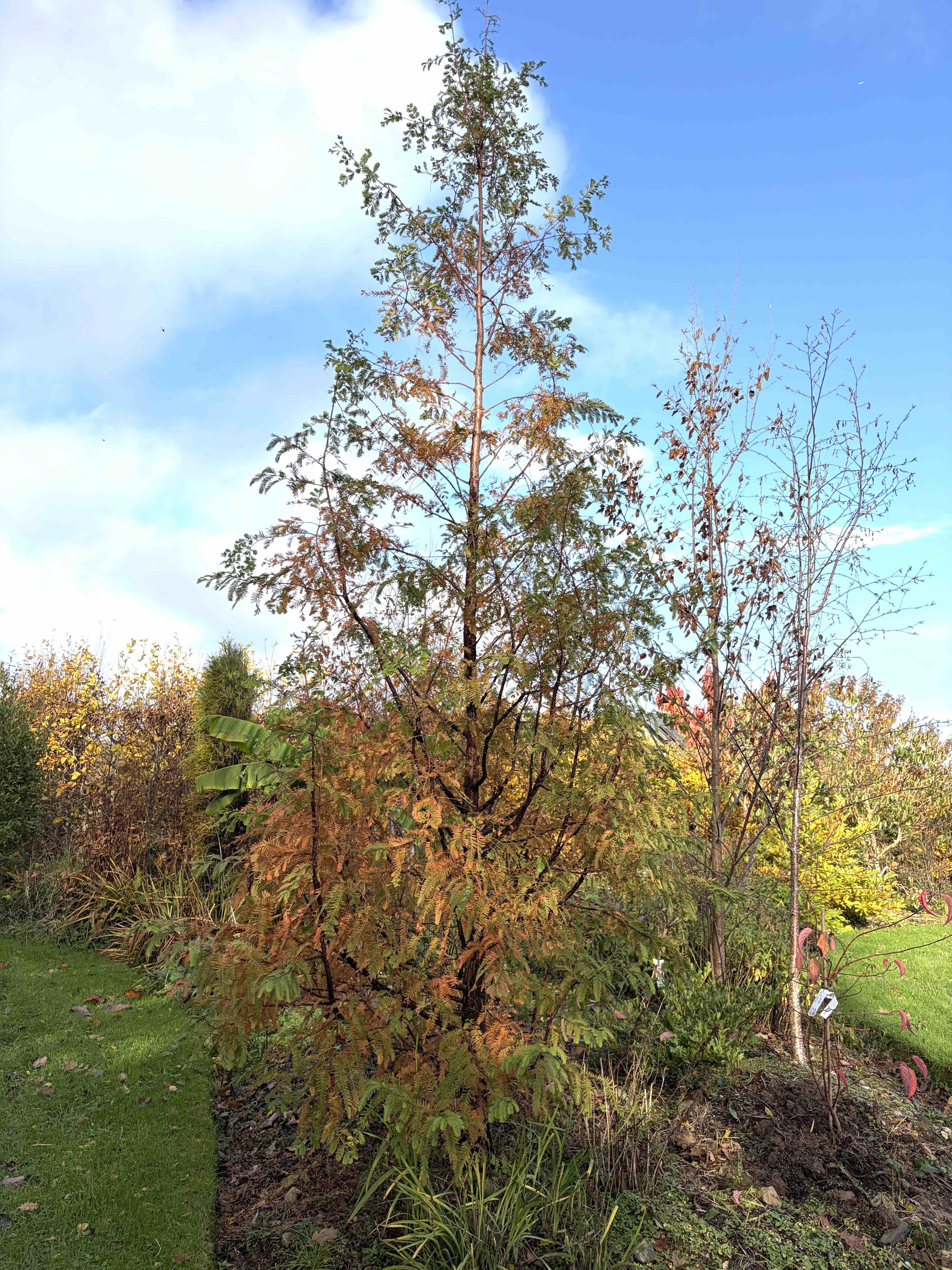
It is now rocketing up and I often stand and admire it. So one day I thought ‘why not taxodium, the swamp cypress?’ Why not indeed. I have a dark larch and a couple of ginkgo so it would complete the set of deciduous conifers.
And on a recent visit to the same nursery on a foul, wet and windy day (the cat only comes indoors, thus allowing us out, on such days) to buy something else, I spotted some taxodium, laying on the ground in the gale. But was so focused on getting a polylepis I decided to go back. And this week I did. But the taxodiums were upright and I realised I could not get them in the car; they were 2.4m high. I was disappointed, having made the special journey, on a wet day, of course.
But as I was chatting to the owners, out of the corner of my eye I saw what looked like taxodium foliage. At the back of a bed was a taxodium, about 1m high and a bit cheaper than the big plants. I bought it immediately. And then I saw the label. It was ‘Pévé Minaret’, a Dutch selection with congested growth that only grows to about 2m or so. It is supposed to be narrow at first and then broadening with age. I like conifers and I like ‘weird’ forms but it is not quite what I had in mind. But the problem is that the plant I initially saw was the ‘stock’ taxodium, quite literally. The plant is obviously grafted and the rootstock has sent up a shoot that is now taller than the graft (scion).
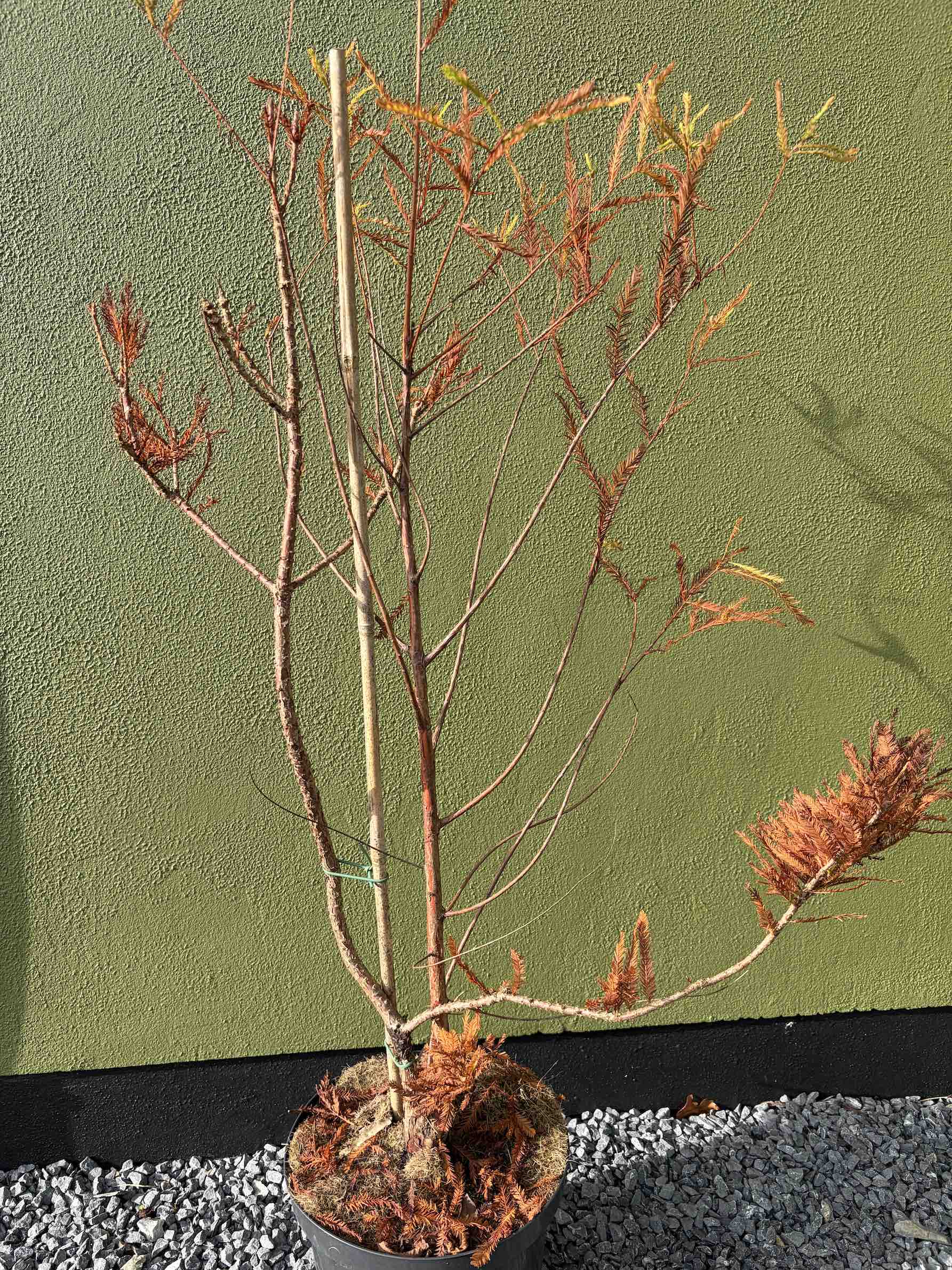
So what should I cut off?

I have bought and paid for ‘Pévé Minaret’ and it is far more unusual than the common tree which would have been less for such a small plant. But it is not going to have the impact of the species and will have to be planted at the front of the border. My head says to keep the part I paid the extra for. My heart says that I wanted the plain tree and that is what will make me happiest. It is going to be a very important snip! .
 The Biking Gardener
Winter waterlogging has become quite the problem in latter years. As with you, our garden has always been a wet winter garden but it has been dreadful these last few years. I lost 6 Sorbus ‘Autumn Spire’ a few years back due to waterlogging.
hard decision indeed – admire your perseverance with the swamp bed improvers which has paid off and Swamp Cypress is one of my favourites since first seeing them in Richmond Park gardens and also along the ponds areas of St James’ park in London.
Oh, that is a dilemma. I would go for salvaging the more expensive scion. You can purchase the common sort rather cheaply online.
Actually, I do not know about that. They are available cheaply here, but I do not know about there.