Madeira Botanic Garden
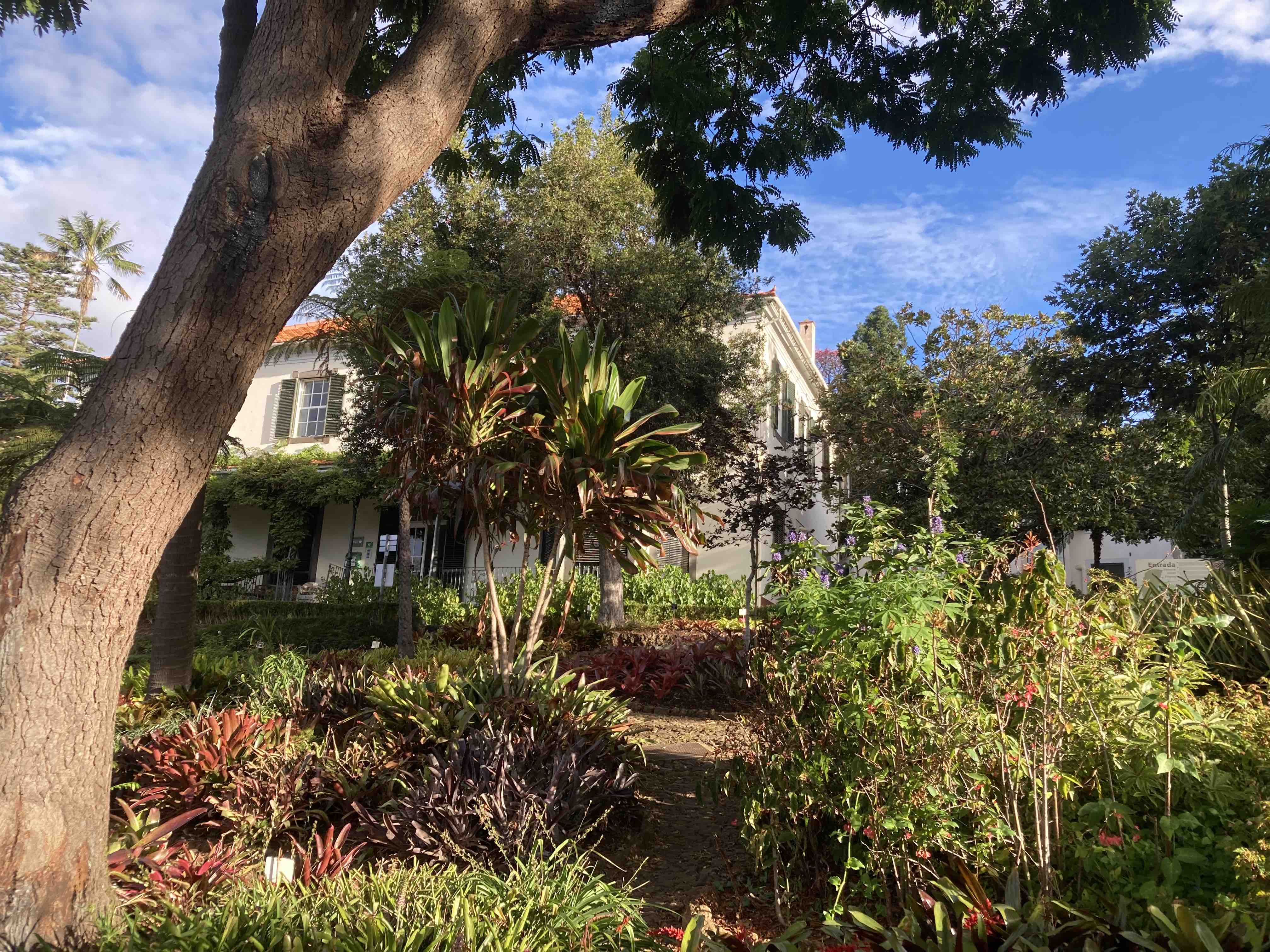
Having done my training at a botanic garden (Kew) I like nothing more than to visit a botanic garden. I confess that I am perfectly happy to see plants arranged by family or geographic region just as much as by design and love to see unusual, if not overtly ornamental, plants growing happily. It is because I love to see plants. So the Jardim Botanico da Madeira was a place I had to see when I was in Funchal.
Unusually, considering the unique and benevolent climate in Madeira, although there were plans for a botanic garden for centuries, it was not established until 1951 and opened in 1960. The site is not far from the Monte Palace Tropical Garden, on a ridge to the east, and was originally owned by the Blandy family. I am not sure when the cable car was built which takes you from Monte, across the ravine, to the top of the Botanic garden. To get to the garden you can take the cable car to Monte, from Funchal, and then the second cable car to the Botanic Garden or take a bus from Funchal or, as we did, take a cab to the garden and walk back to town – excruciating on the knees but not as far as the walk down from Palheiro.

Most botanic gardens are laid out in plant groupings and not necessarily for ornament. From the eastern, upper entrance, by the herbarium and museum, we headed down, past the succulents, down to the topiary garden, back up the western side to the ‘parterre’ and up into the more interesting, shaded area. The walk from the cable car station is probably more pleasant, avoiding the rather odd areas we encountered first. Generally, the garden is well maintained – it was late in the year so not everything was pristine – and well labelled.
There are some curious features, for a botanic garden. Oddest, perhaps, was the topiary garden.
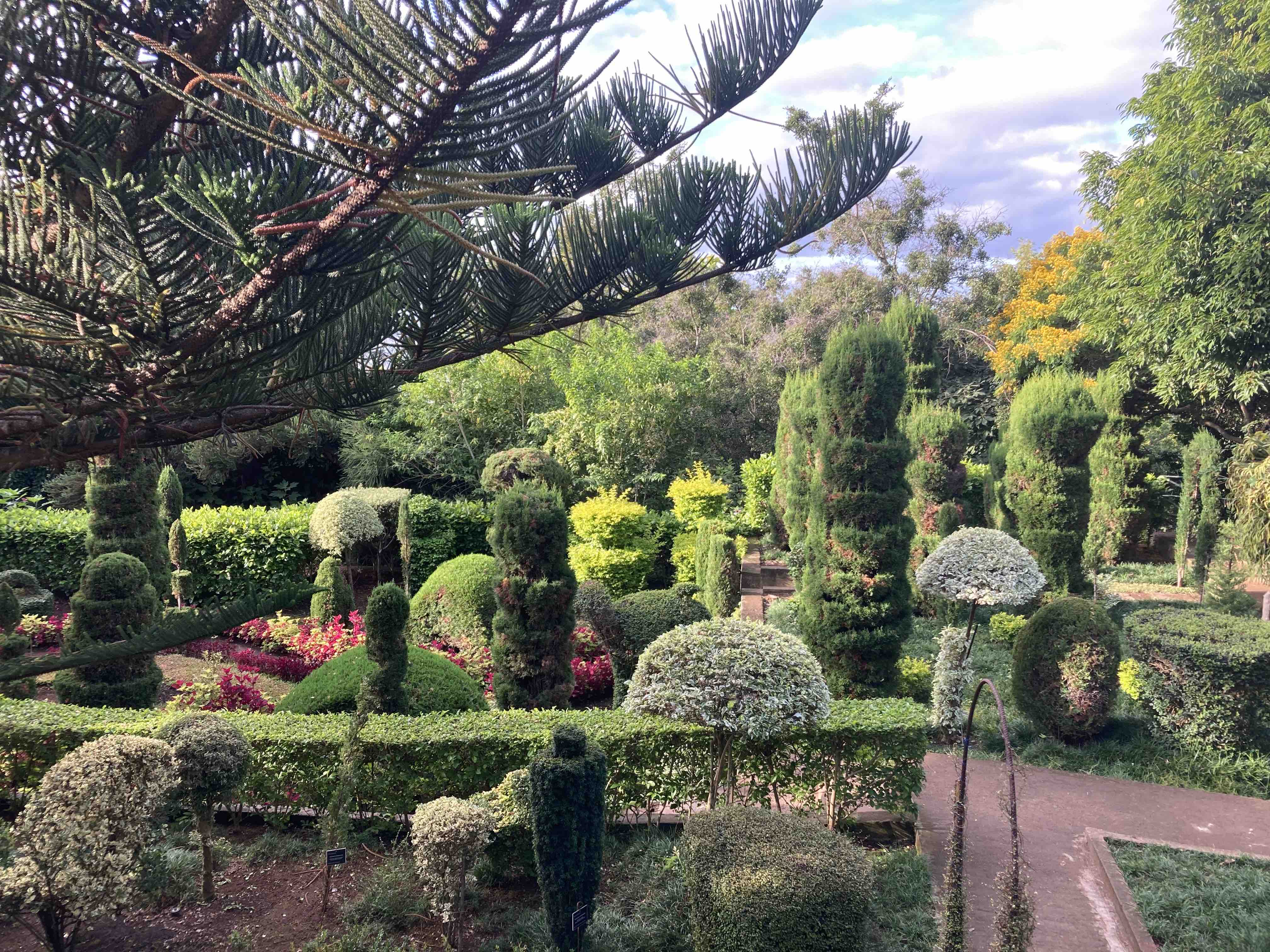
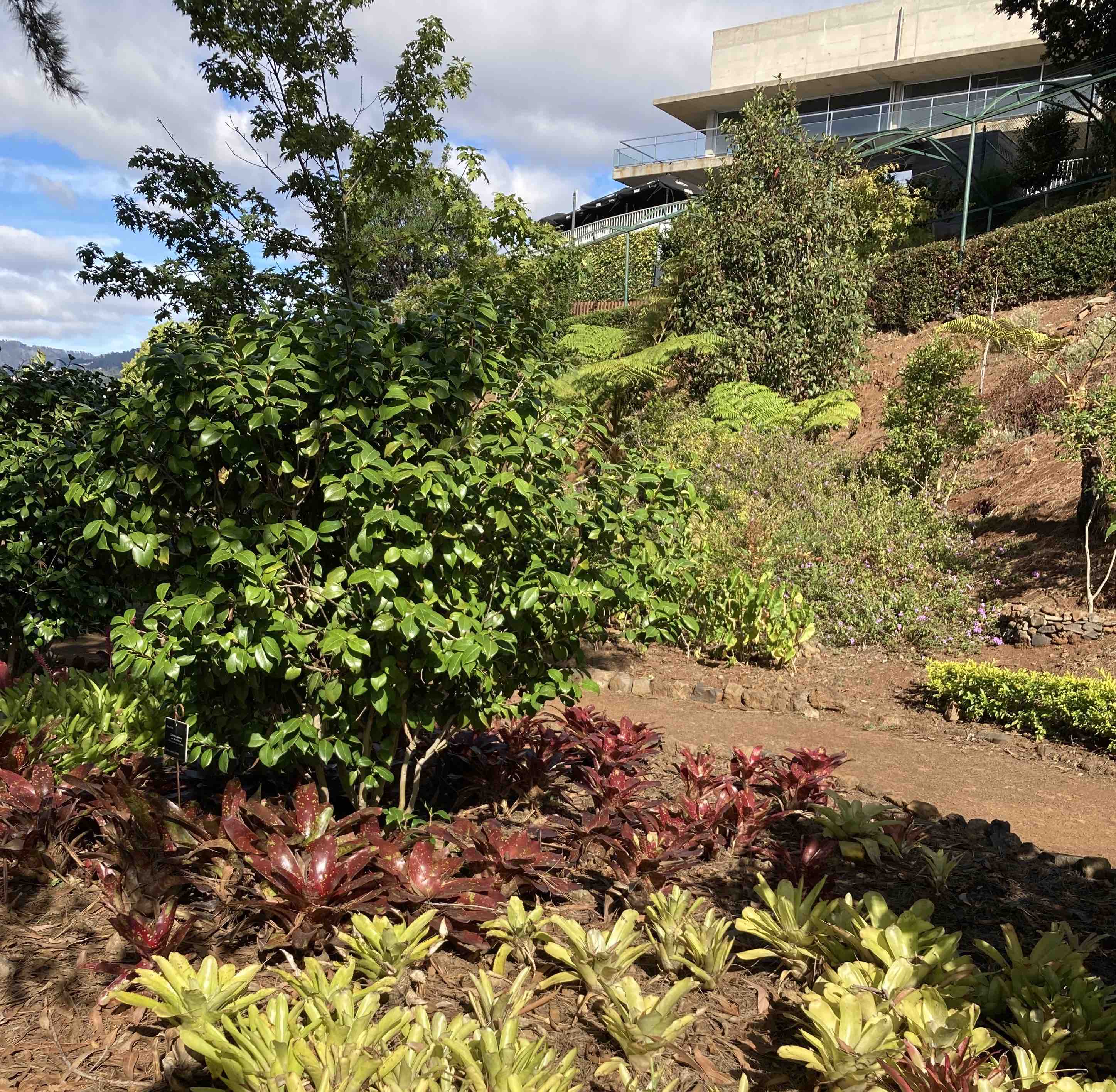
I am not really sure what the point of this could be, although it was popular with visitors. At the top of the garden is an area planted with camellias and magnolias, underplanted with bromeliads – something that is hard to compute! I would never consider these as companion plants in my most imaginative ramblings.
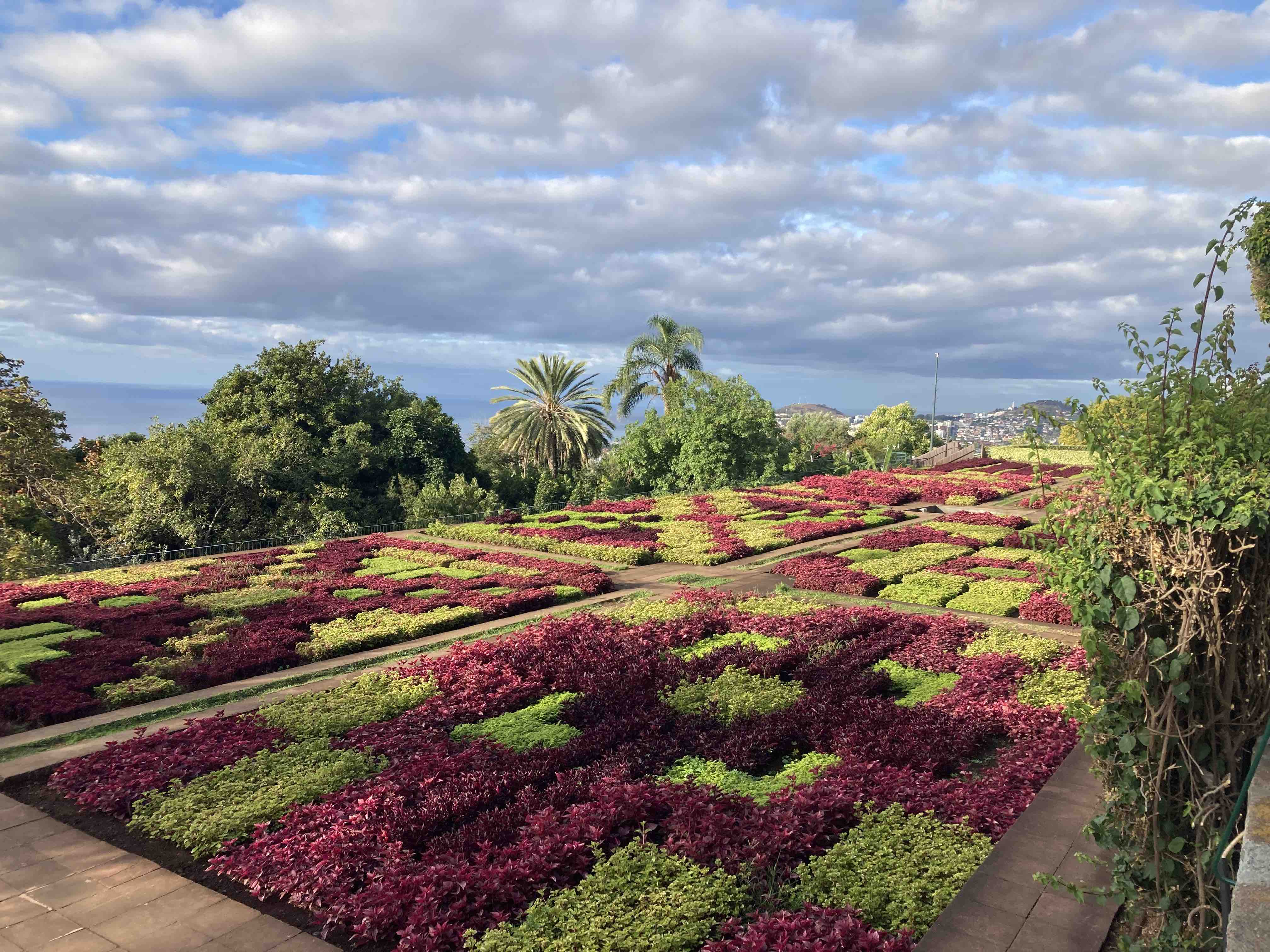
The photo that everyone takes is of the parterre in the centre of the garden, bedded with iresine and alternanthera. It is very ‘un-botanic’ but a real crowd pleaser and, viewed from a bougainvillea-clad pergola with views over Funchal, it is certainly dramatic.

Of course, botanic gardens should be about education and, increasingly, conservation. So we popped into the museum. If you think that museums are dusty and boring please stay away or you will never set foot in a museum again. Just ten minutes was enough to suck virtually all the life from my body. The overwhelming feeling is that no one has done anything here for decades – not even dusted. Cabinets of stuffed birds, slowly deteriorating as they age, and poor models of large fish and samples of rocks made me desperate to escape into the sun and see something living. I think they should keep it locked up because it does them no favours.
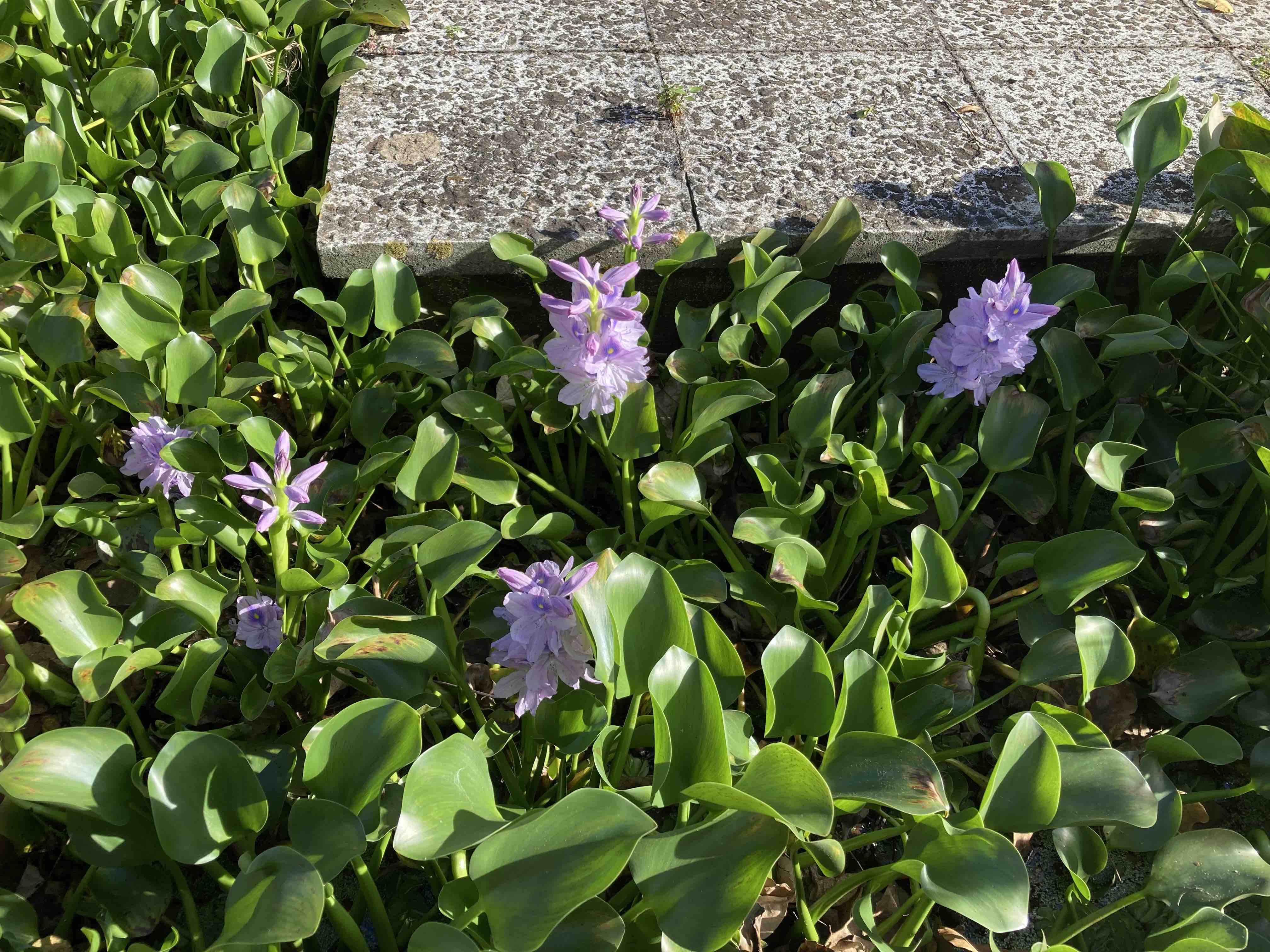
I was keen to see the ‘aquatic garden’ but that was a bit small and, unfortunately, closed off, perhaps for safety reasons. But it did have a large group of water hyacinth that was good to see. I know that people go on about how it is an awful, invasive plant but, living in cold, wet Ireland, I would love to get it to grow and bloom one summer and it will never be invasive here.

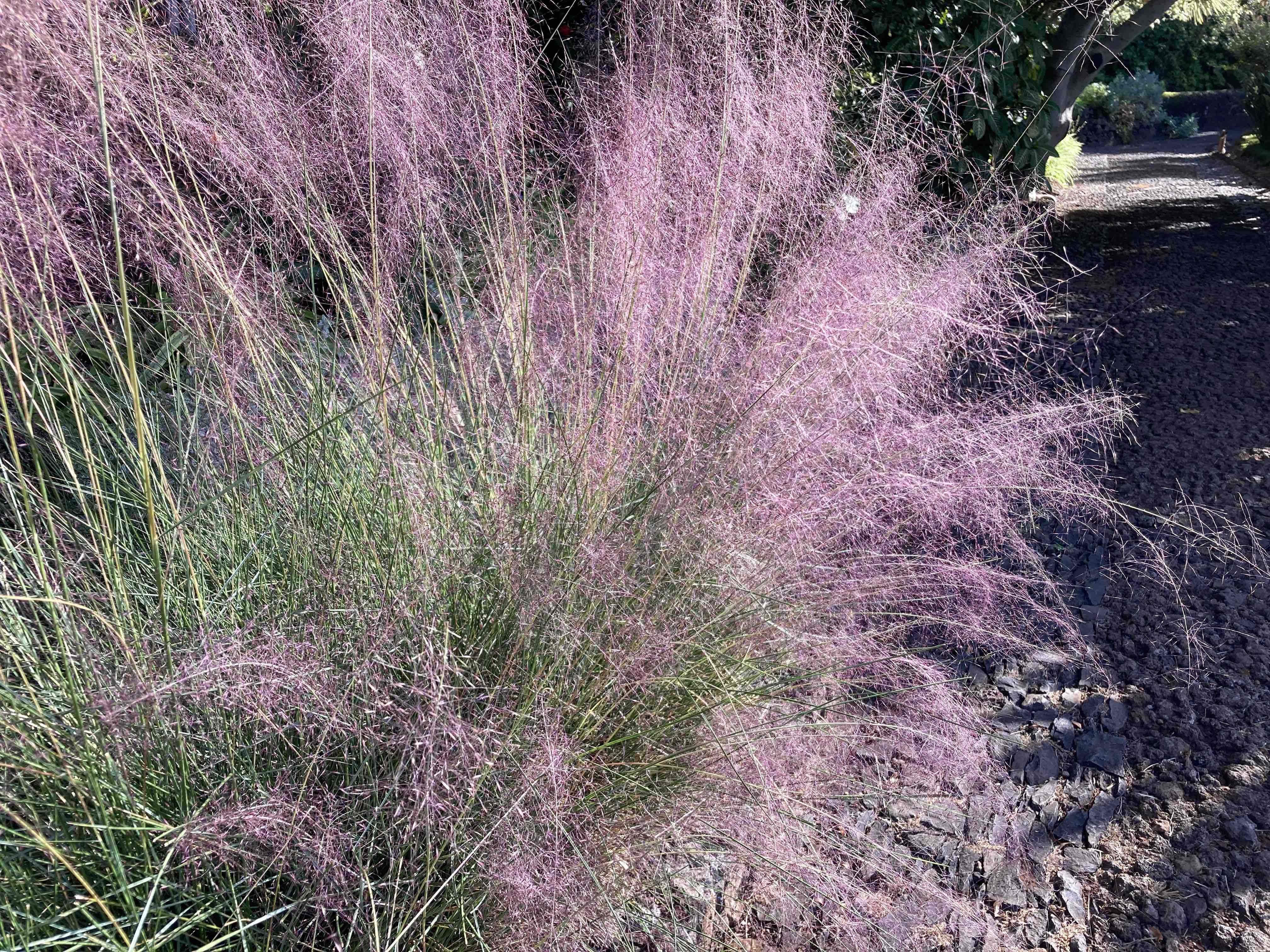
I was also pleased to see Muhlenbergia in full bloom. Grasses tend to be dull in bloom, as far as colour is concerned, but this grass is actually pretty! It should grow here but needs summer warmth. I have tried it once but it sulked. Seeing it looking so spectacular will encourage me to try again.
Another plant I was pleased to see was Trochetiopsis ebenus, the St Helena ebony. These trees from St Helena are very rare. There were three species and one is now extinct and one (T. erythroxylon) is extinct in the wild. When I was a Kew student I was responsible for looking after five plants of this species which, I am sure, were the only plants in existence. There is some dispute about the two species but perhaps the plant I saw in the garden was a descendant of the plants I had the privilege to water all those years ago!

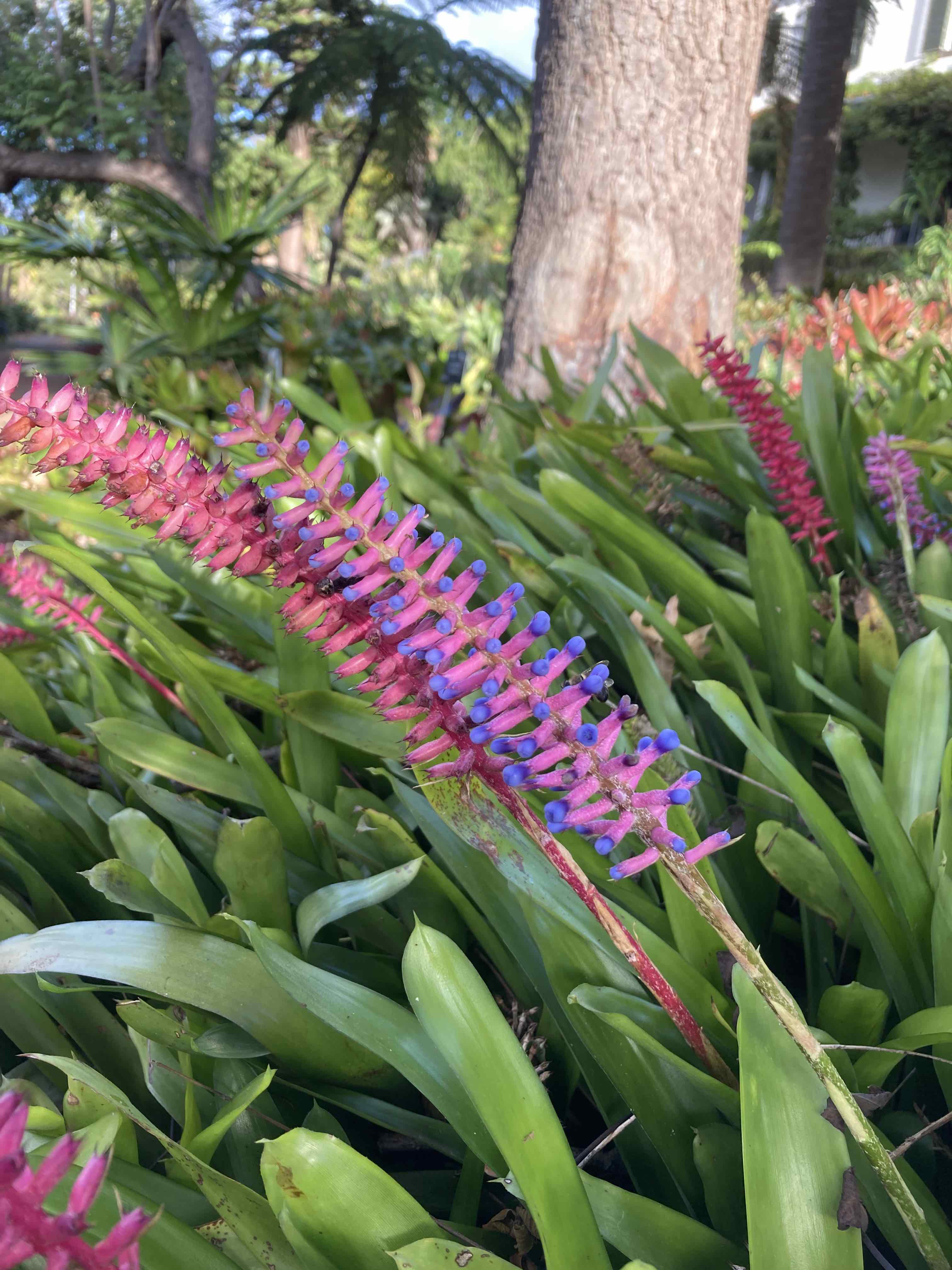
Not far away was another plant from my past. One of my favourite plants when I worked in a bromeliad nursery in my early 20s was Aechmea gamosepala, the matchstick plant. It is a very easy plant to grow and I wish I could find one and grow it again, but it was great to see it thriving and producing those wonderful flowers.
And Cordyline terminalis, a common and cheap houseplant, though not as popular as it was thirty years ago, is a huge tree in Madeira, of the size that C. australis is here. It was great to see it in fruit.

 The Biking Gardener
I am enjoying all your posts about the gardens of Madeira, inspiring me to think of visiting. Many thanks.