Cool retreat in the ‘English’ style
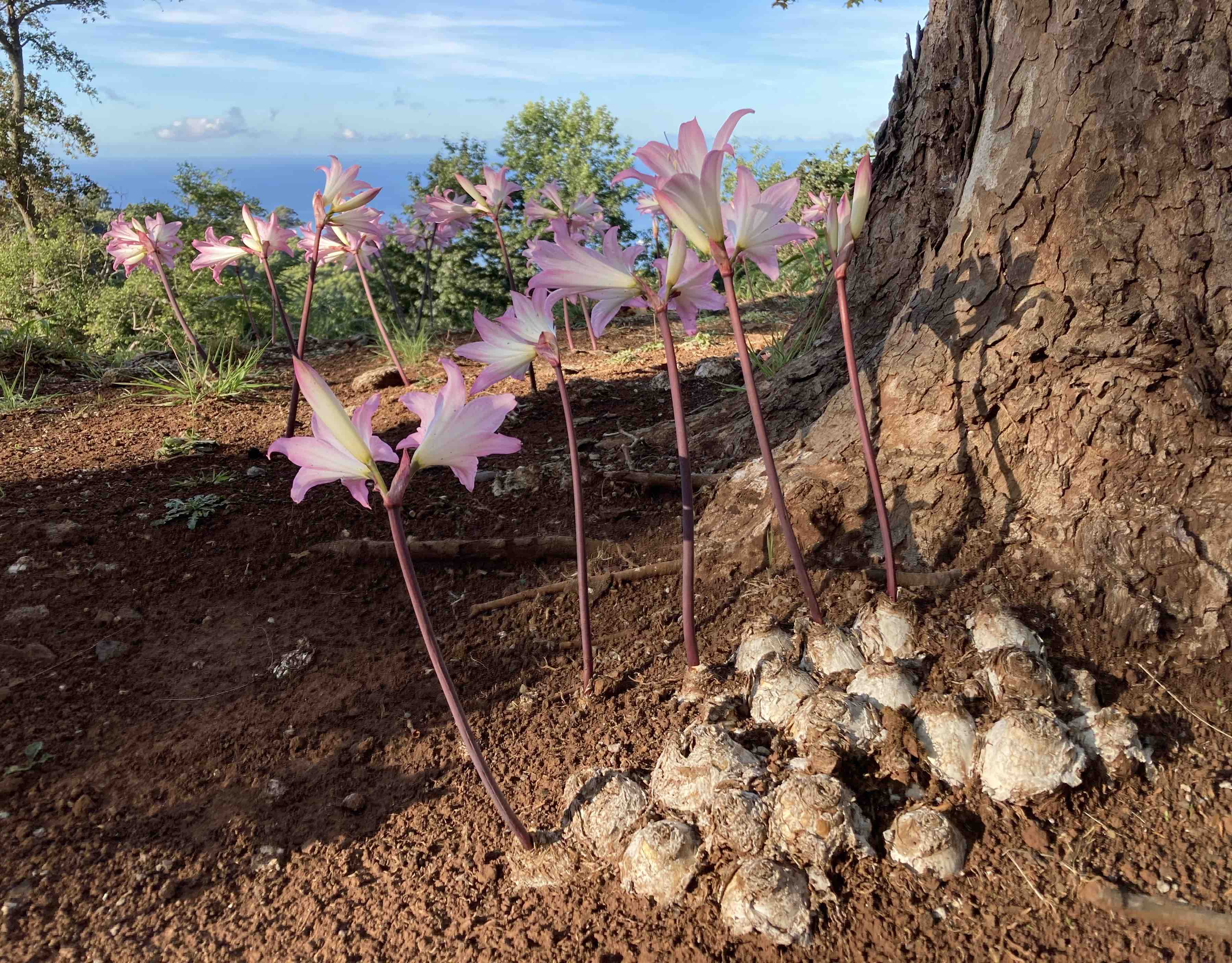
You don’t have to go far in Funchal to find flowers. Attractively planted and maintained ‘squares’ appear in unlikely places as you explore, and parks usually feature some form of water and flower beds to make welcome places to nourish weary soles. There are two main gardens that attract tourists, both usually reached by cable car, but the Palheiro garden (Quinta do Palheiro) is not as well publicised and takes a bit more effort to reach. East of the city, 500m high up on a promontory, the site was originally chosen for having relatively large, flat areas suitable for agriculture and now, sadly, a golf course.
Although established before, the house we see today and the layout of the grounds date to 1885. The house was designed by George Somers Clarke, who also designed the Reid’s Palace Hotel, and below it was laid out a ‘French style’ formal garden with paths of pebbles in patterns. The site had been purchased by John Blandy, of Madeira wine fame, and Blandy’s are still a large presence on the island. The family still own and run the property and are encouraging agriculture within the estate so this is a home and working estate which is good to know.
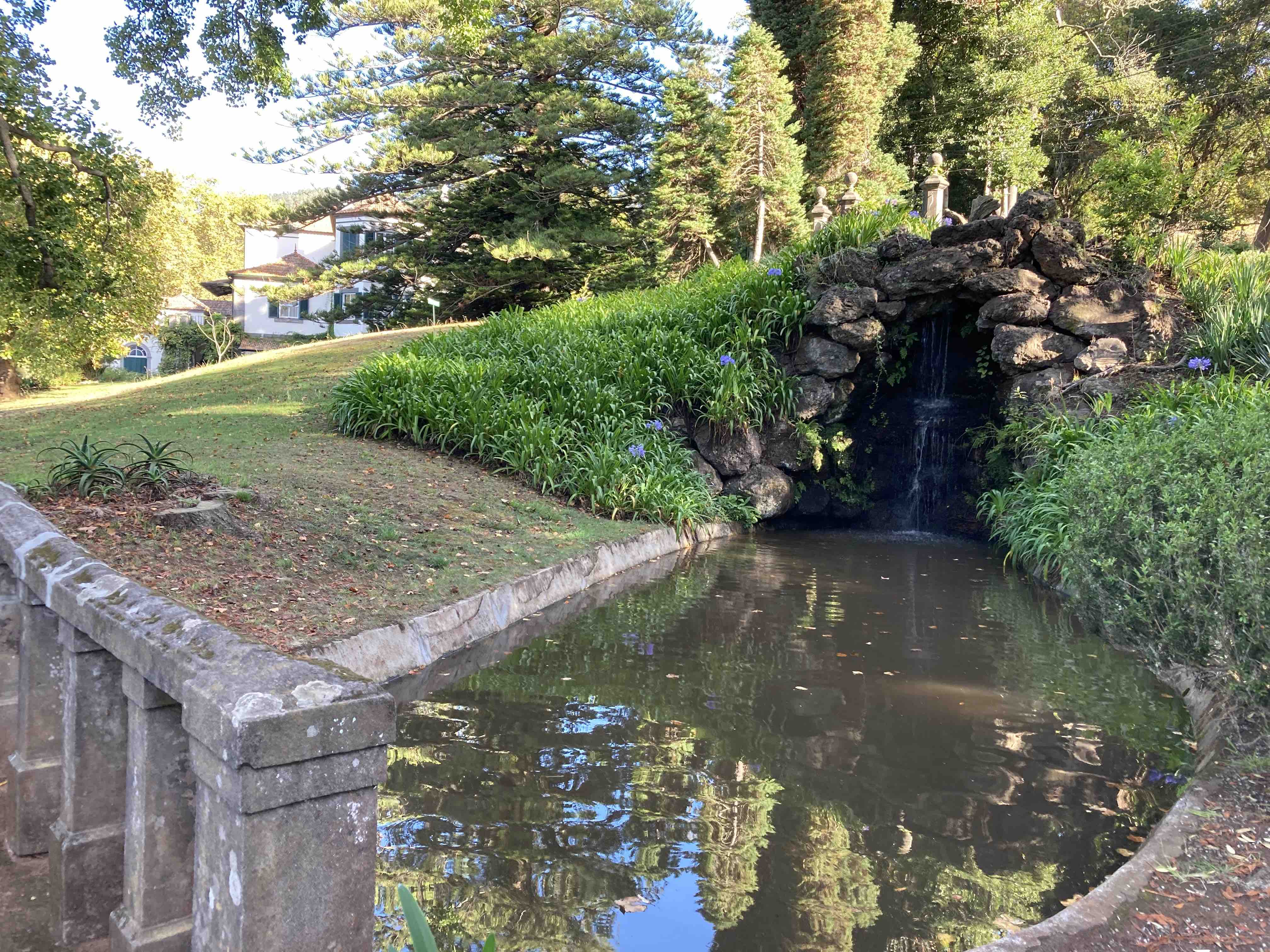
It was originally laid out to be as similar to an English estate as possible and a wide, sweeping drive stretches from the entrance at the top of the garden under huge plane trees, underplanted with agapanthus beside fields of crops. Even before the Blandys took charge it was being planted with exotics which thrived in the relatively cool, but mild climate, including camellias and familiar Northern Temperate trees. The camellias were starting to bloom in early October but what struck me most was the huge, North American liriodendron, the largest, by far, that I have ever seen, massive and spreading. Magnolia grandiflora also thrives here along with many proteaceae.
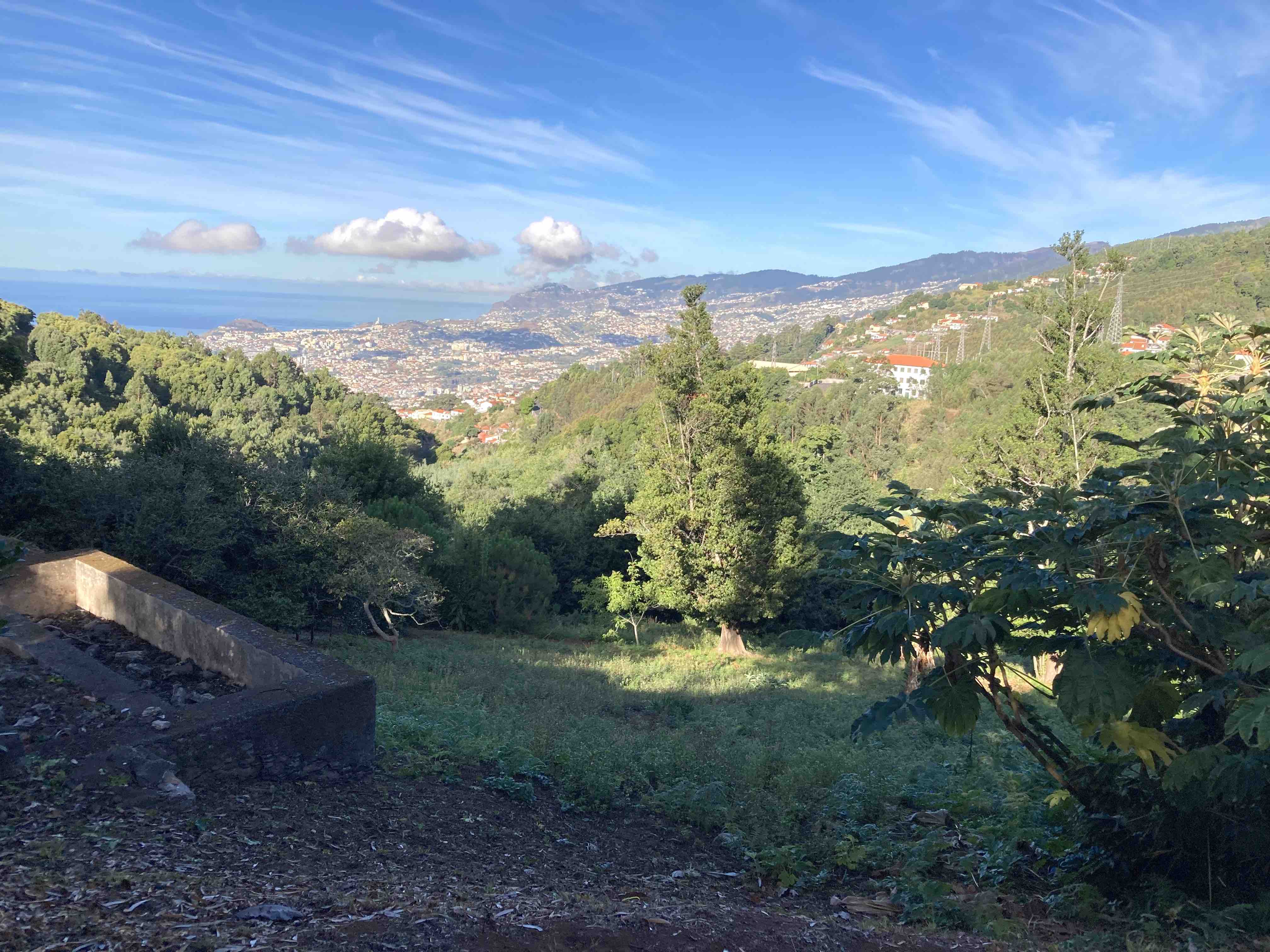
Many of the plants that people associate with Madeira are not native at all but South African, relishing the mild climate and sunny conditions. These include strelitzia, agapanthus and, more seasonally, amaryllis. It was wonderful to see them so happy, thriving in sun or shade, often deep in eucalyptus forest, but here in huge clumps with the bulbs exposed, in full bloom. (above)
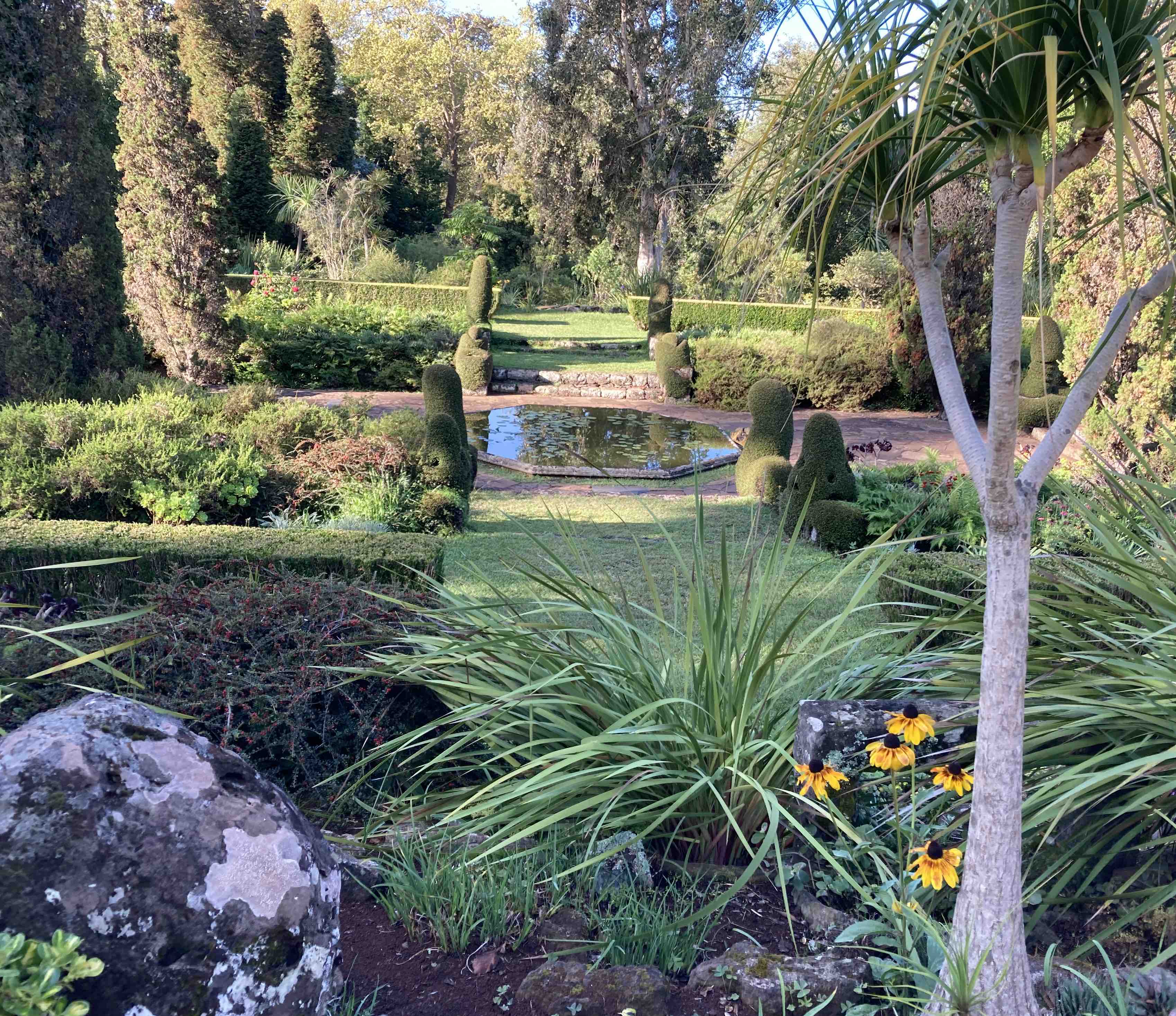
The most interesting parts of the garden lie to the south of the site, around the long border and the Jardim da Senhora.
What I found most interesting was the range of plants that grew cheek by jowel. Plants I could only dream of growing, even under glass, grew beside plants that I could just about cultivate, beside garden favourites that are reliable outside here. But I was disappointed, as I always am in warmer lands, that the plantings are, in general, unimaginative and use old forms of plants. I will ramble for a few paragraphs.
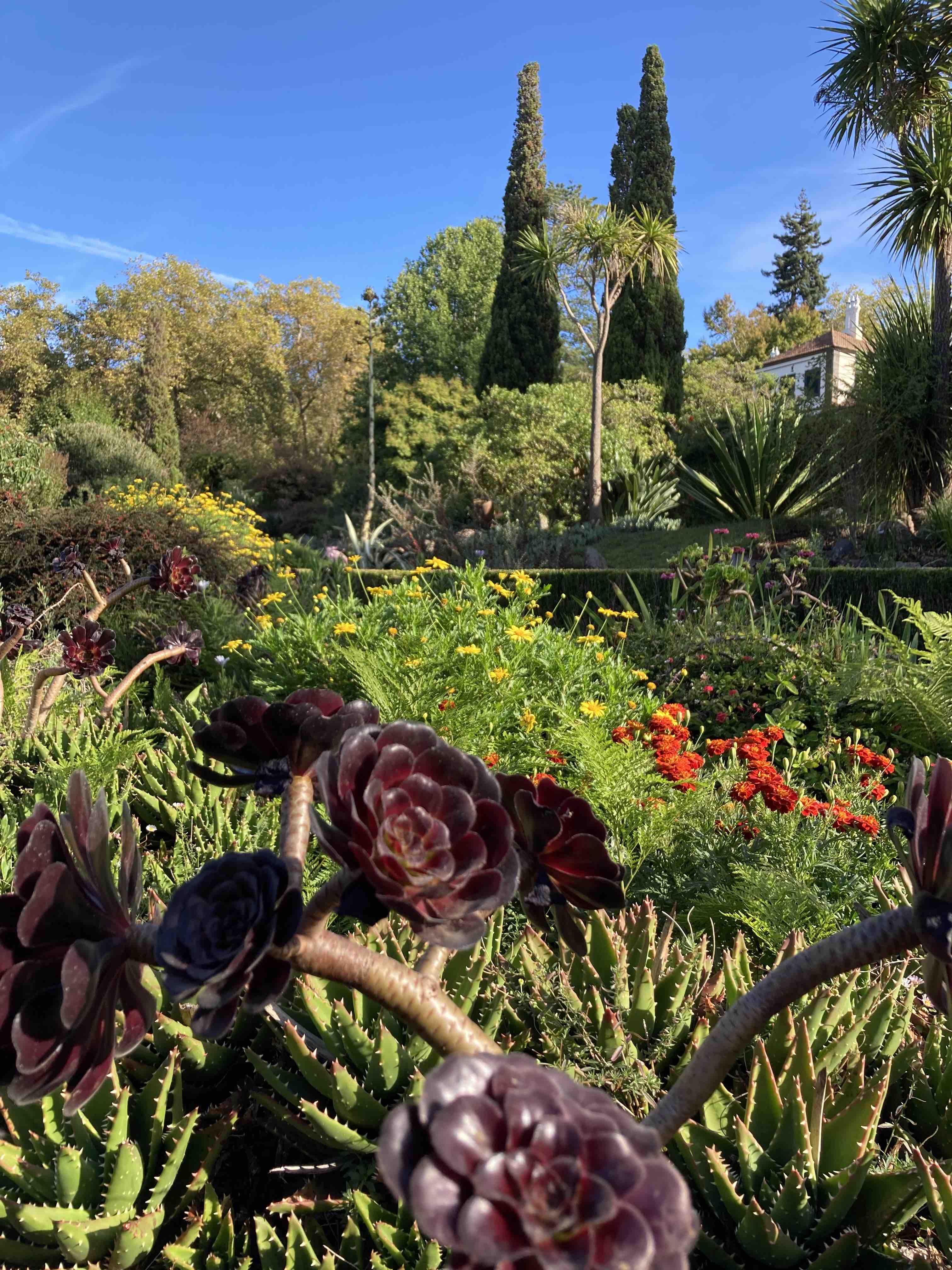
Garden centres here (Ireland and the UK) are often packed with novelties, the latest in plant breeding. When I was working in the UK a month ago, I saw a new rudbeckia, ‘Fireball’. It was being sold as a perennial and, although there is a chance it might survive an average winter it is really very optimistic to sell this as a hardy perennial. I am sure they all sold because they were amazing.

I appreciate that it is more difficult to get plants to Madeira than the UK but these have a good chance of being perennial on that island. And yet among the borders at Palheiro were scruffy, apparently self-sown rudbeckias. They were fine but just not that good. As you go from garden to garden you see the same range of plants, used relatively unimaginatively. This is not a failing that is unique to this garden and, in fairness the garden was maintained well and was full of interesting plants so I am using this chance to voice an opinion and I am not singling out this garden as being poor in any way. I just think there are missed opportunities in horticulture. It may be that importing new plants is just very difficult. And I am sure the majority of tourists that visit the gardens could not care less. Oh, to have money and buy a big garden there! But then I would be hated – as yesterday’s comments about tourists and modern colonists explain. But, as so often, I digress.
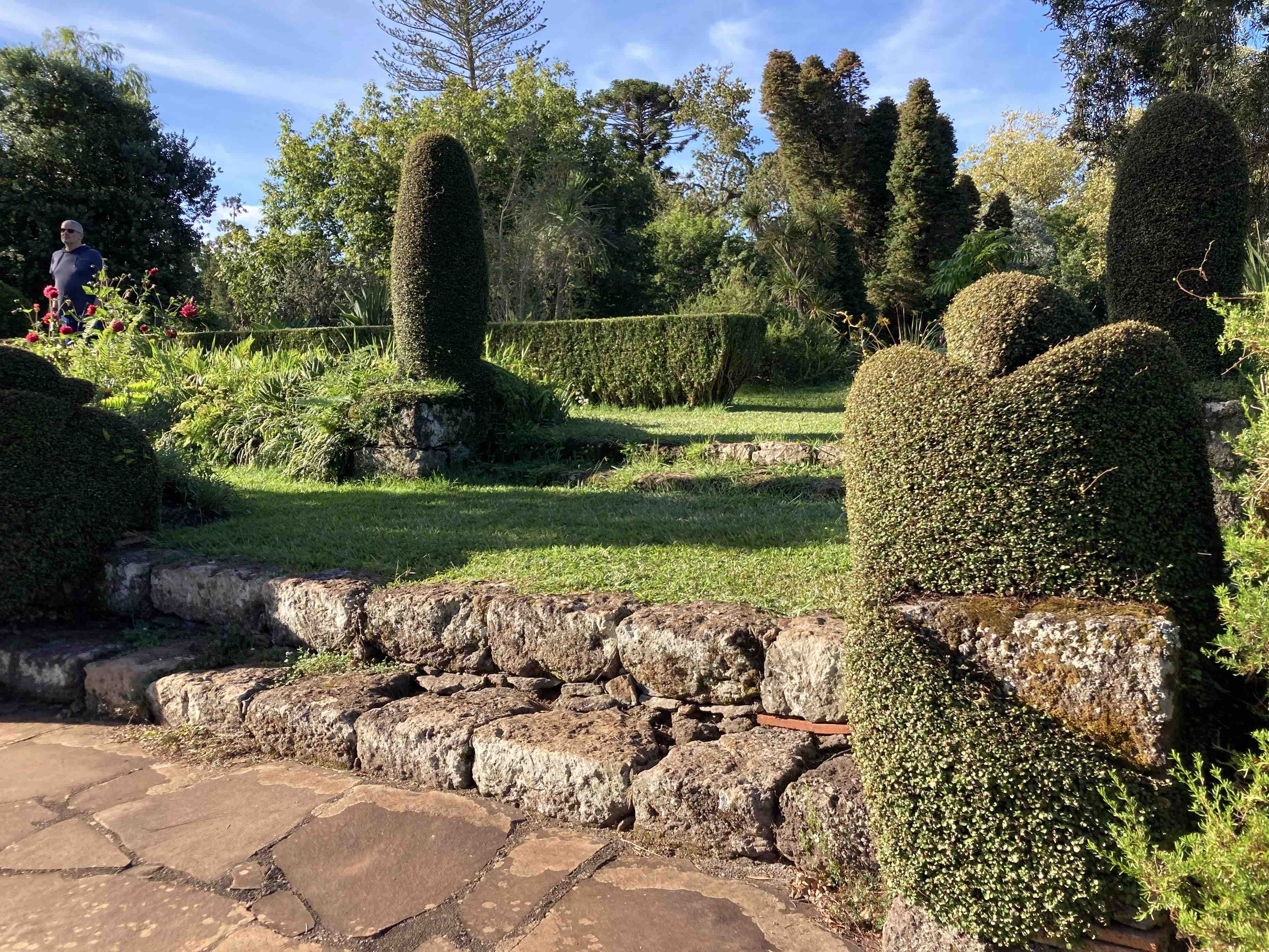
The rose garden was disappointing – so perhaps I should be glad to garden in a cool, grey climate where roses do well. And it was the end of the season. A lot of the topiary around the garden was muehlenbeckia, that straggly Antipodean climber that is currently trying to smother my smaller pond. It is a good use for it and I will have to try it myself because the tiny leaves and constant growth make fine clipped shapes.
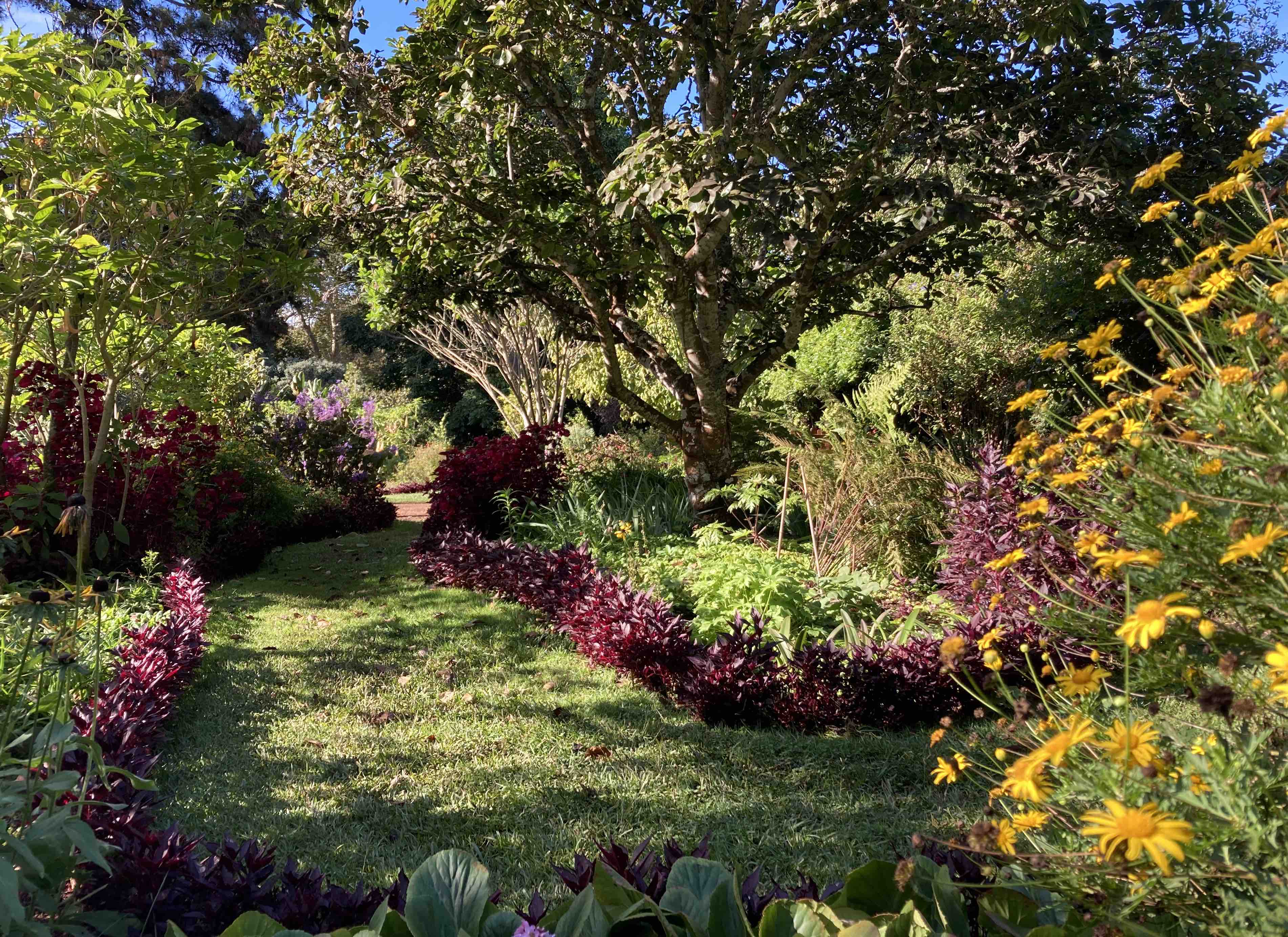
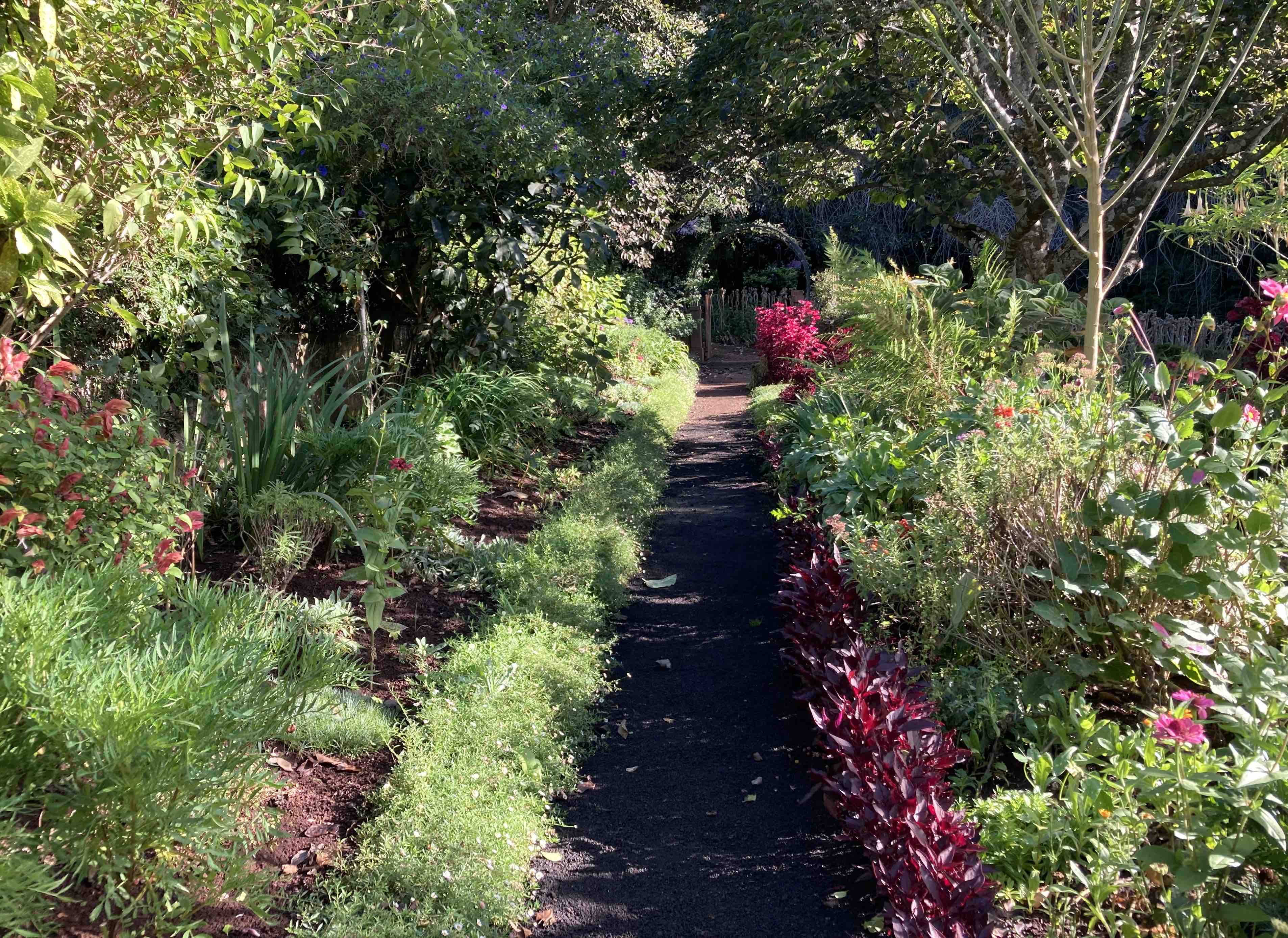
Once the lower parts of the garden were reached I felt much happier. Iresines and chlorophytum made gaudy edges to borders, brugmansias were festooned with huge trumpets, salvias and plectranthus flowers swirled with clouds of vibrant flowers and agapanthus and bergenia smothered the soil. Plantings were dense and a whirlwind of colour. I was satisfied.
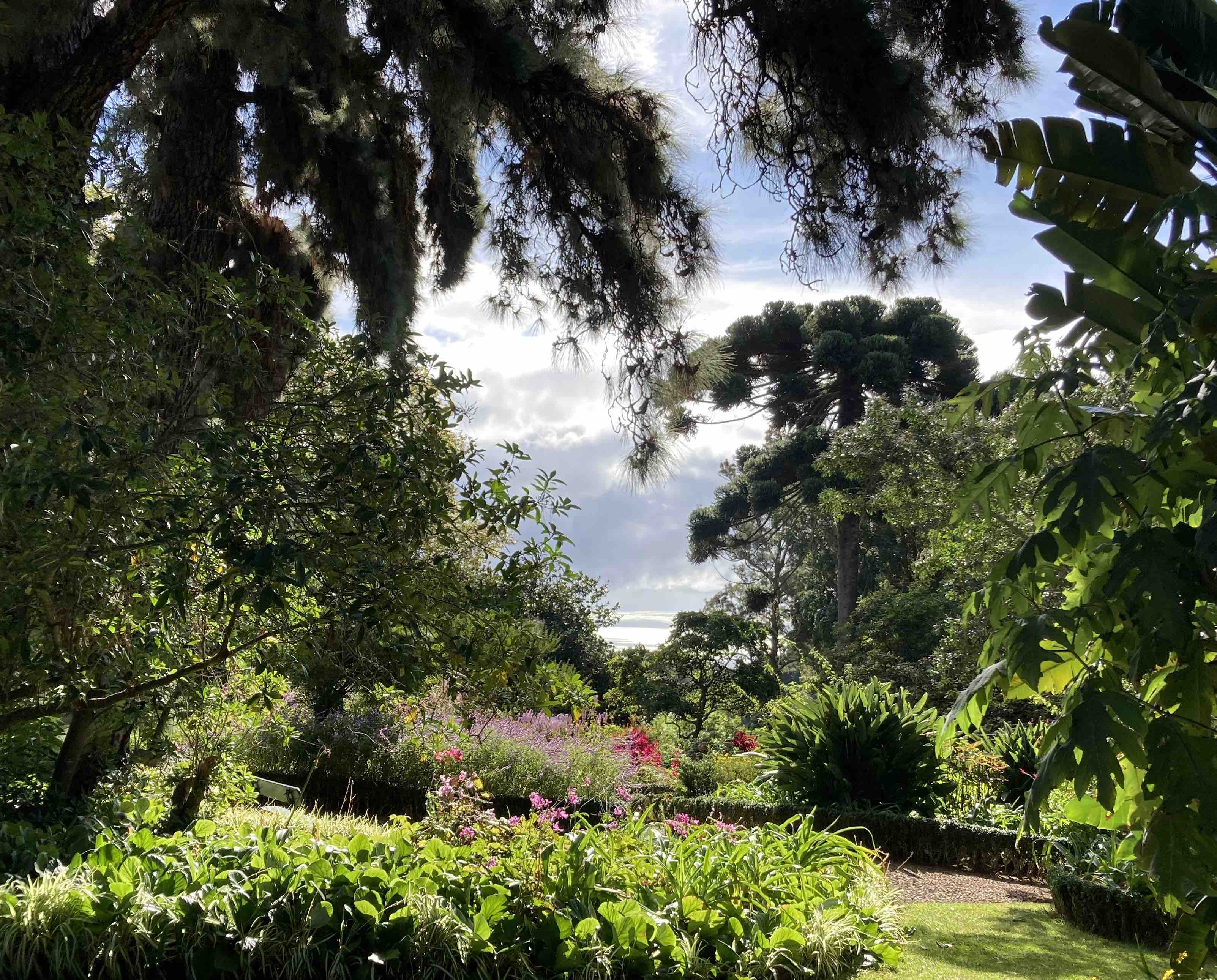
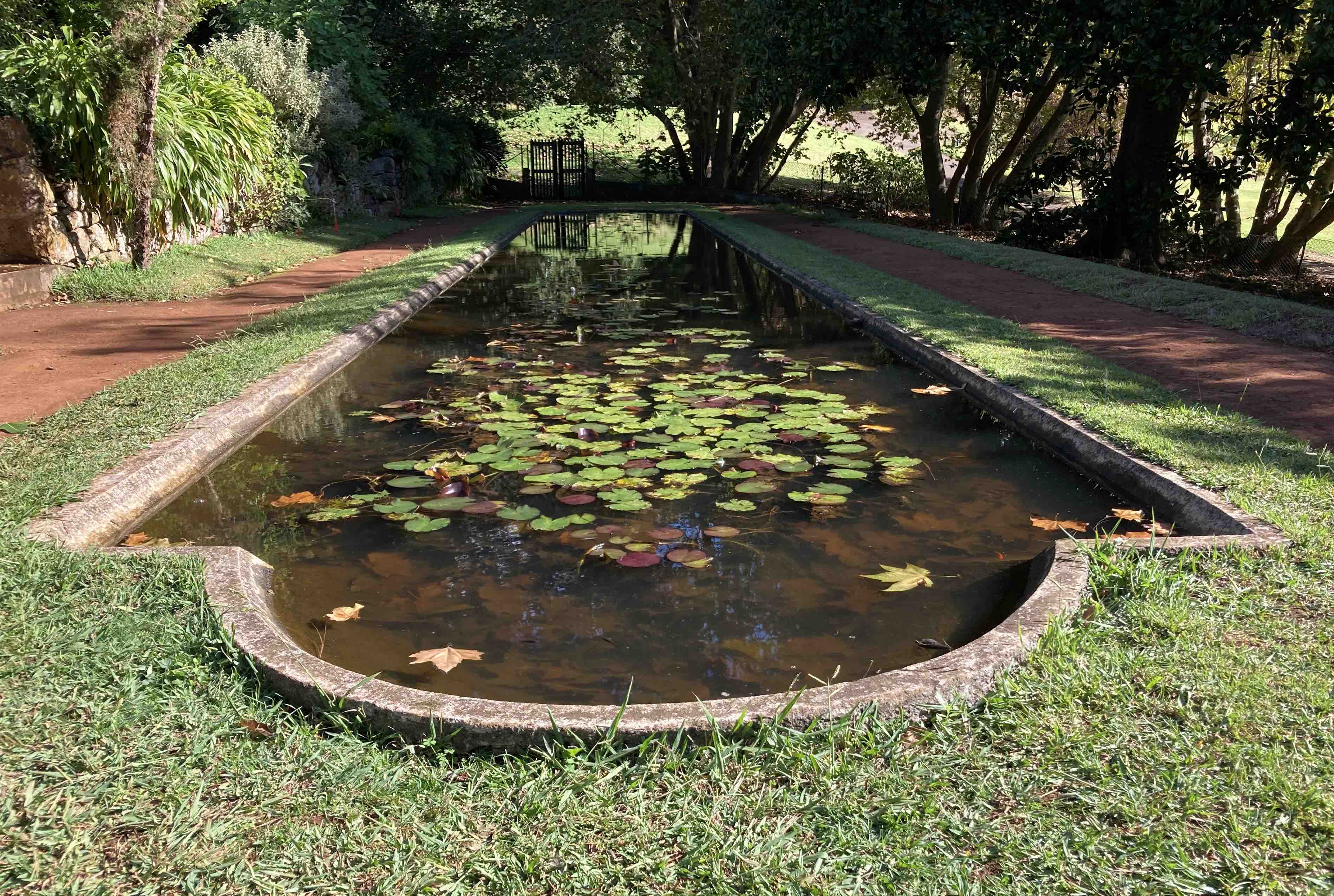
Below these some formal ponds lead to a small coffee house where a friendly lady made good coffee and served cakes to help us gain the strength to ascend the slopes again to reach the exit and then face the walk back to the coast. (hotel was near the two cruise ships)
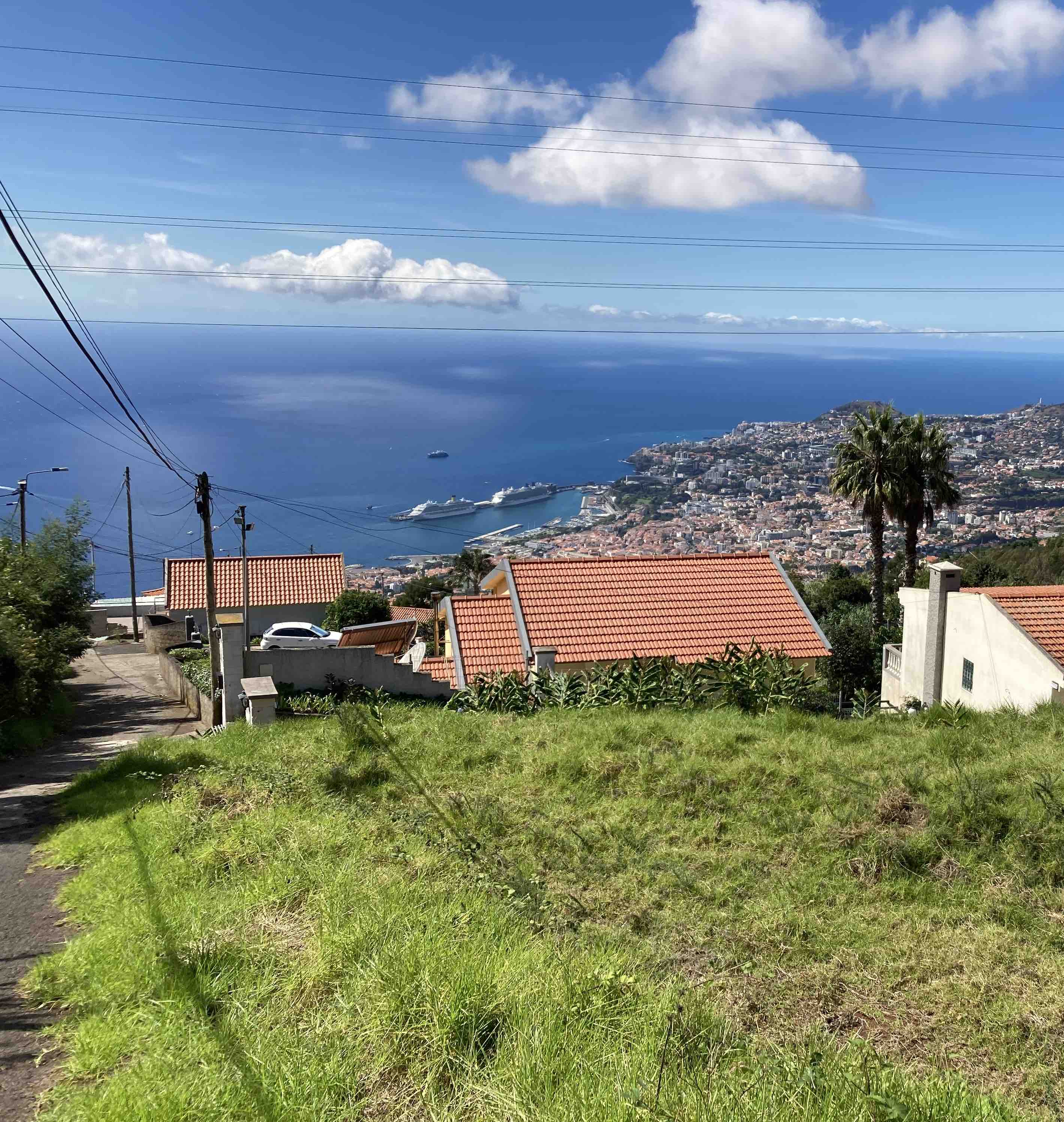
I would say that this was my favourite garden we visited. It combined an interesting collection of plants, a nice walk, interesting history and a good coffee shop! And the garden revealed the best part last, slowly building in interest.
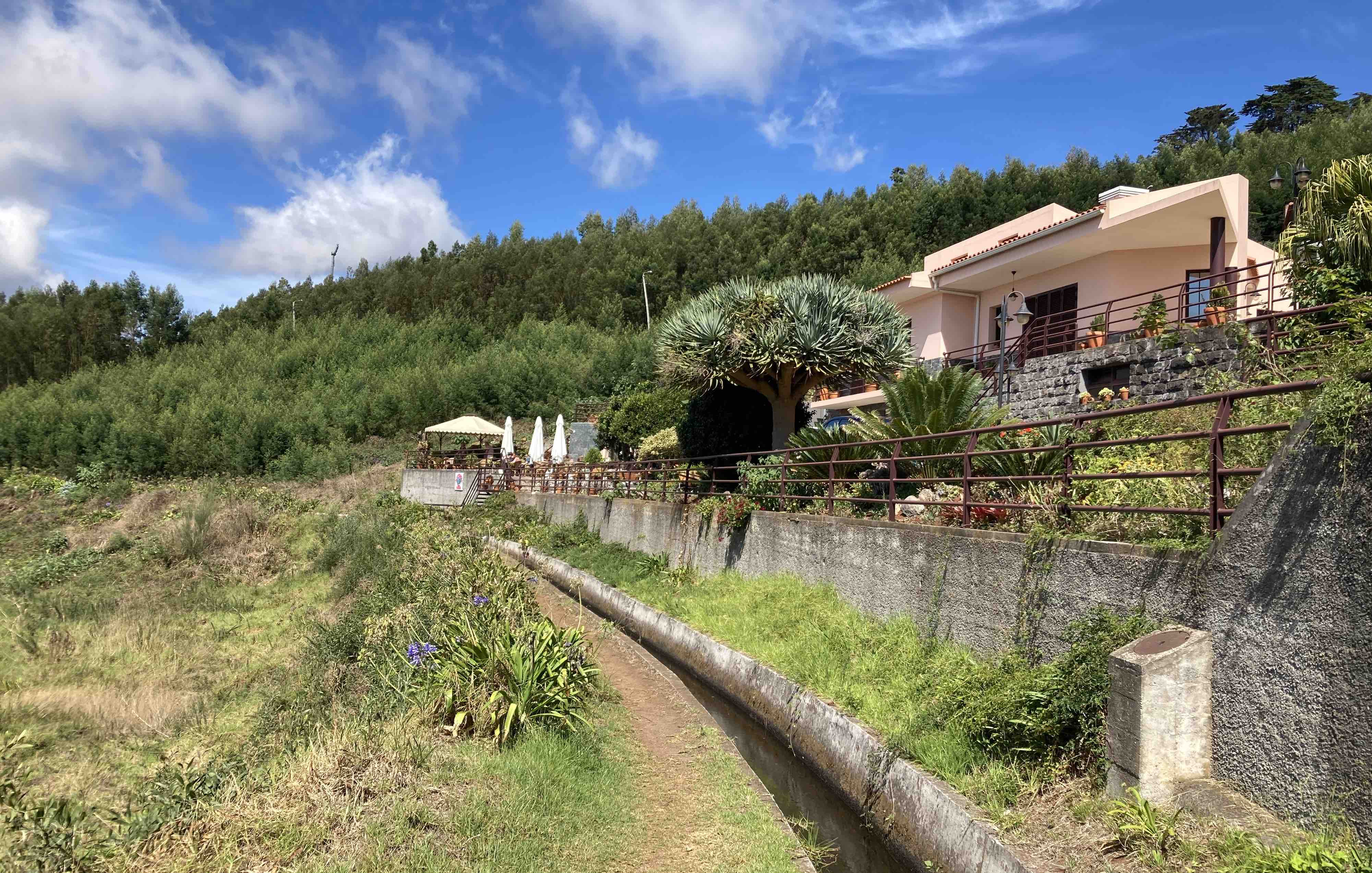
On the way down to the coast we made a short detour uphill to the Japanese Tea room, for lunch, an interesting place, and an accidental detour along a levada on our search for a way down that did not involve a major motorway. More on levadas next.
 The Biking Gardener
I think we have to accept that gardening and gardens will be different is such locations. We will meet much that we would wish was “better” and also a great deal of novelty and beauty we wouldn’t see at home.
I agree – I think I was just itching to garden!
But I am regularly disappointed and annoyed when I encounter poor gardening, poor maintenance in a garden where I have been charged for admission. This is especially felt when I know I give more attention to my own garden than is evident in the garden visited. I suppose it is a little like going to a restaurant – I expect the food to be better than that cooked at home seeing as I am paying for it but regularly it is not. I grumble a lot!