Mysterious Madeira
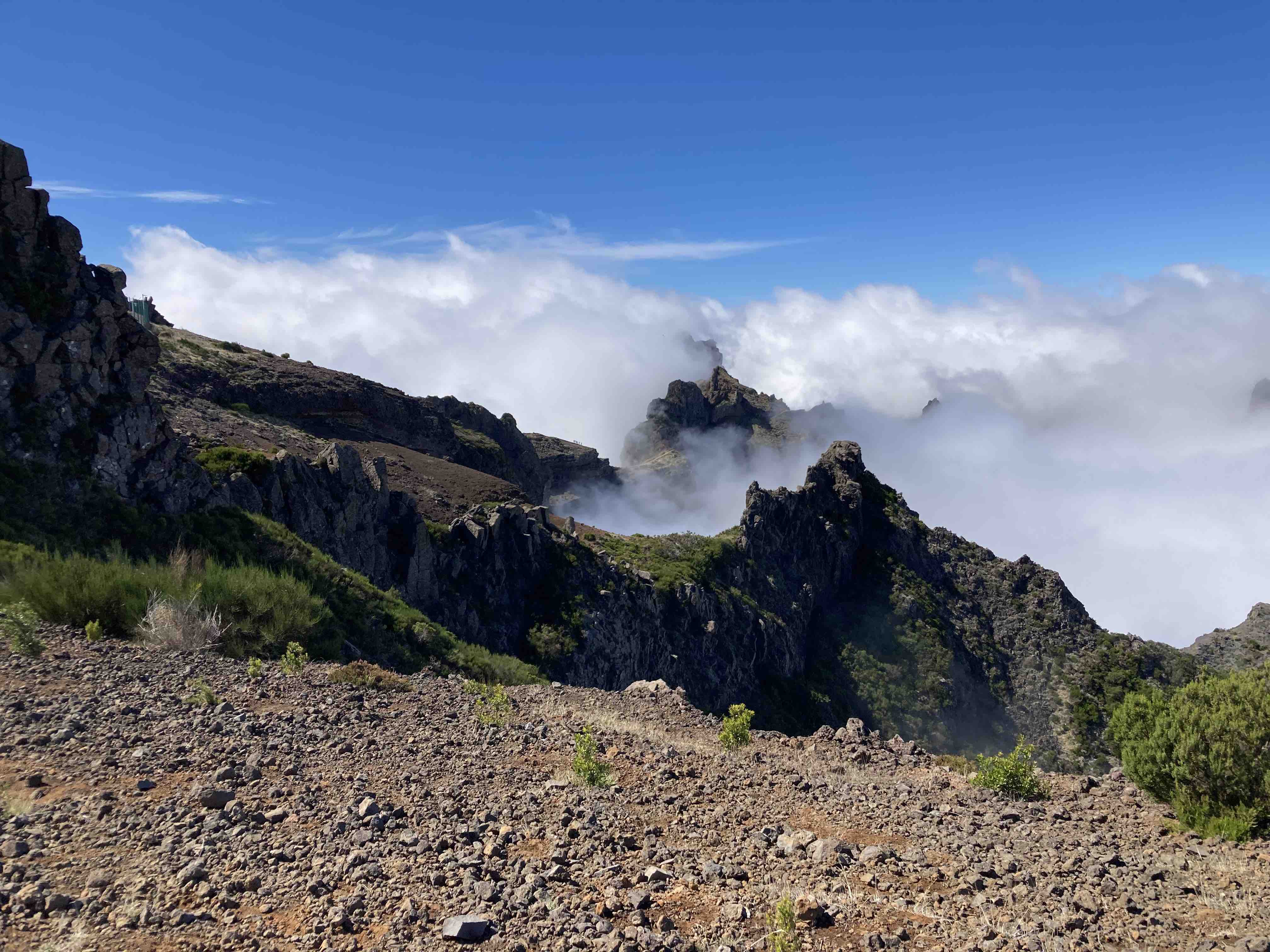
The next few posts will involve Madeira. This Island in the Atlantic is known for luxuriant vegetation and as a holiday destination for well-heeled and older travellers. I fit into the latter category.
It was discovered by Portuguese ‘Henry the Navigator’ in 1419 after Joao Zarco was blown onto neighbouring Porto Santo in 1418. They saw a huge black cloud in the distance and this was wooded Madeira (Madeira means wood). Like many Atlantic Islands it became vital for the exploration of the Americas and these ‘staging posts’ were exploited for their timber and ‘seeded’ with goats and pigs to provide meat for future expeditions. Not environmentally sound but practical during the era of exploration.
Madeira is home to the famous Monte Palace gardens and the nearby Botanic Garden, which tourists frequently get confused, for no good reason, and the infamous short runway for air travel, which is now extended. I will mention them later. Being a volcanic island it is steep and rocky but, unlike the Spanish Canaries to the south, Portuguese Madeira is blessed with copious fresh water. Water is captured by the upland forests, primarily erica, and percolates through the rock, seeping out in various places as different strata are encountered. This allowed the lush natural vegetation (laurel forests) which was felled by early settlers to make way for sugar cane which was ‘white gold’ and firewood which together led to the rum and molasses industries, and led to the development of the levadas, horizontal water courses that now form a network of walking trails that attract younger tourists.
It is almost incredible that until the 1980s there were few major roads across and over the island. Now more than 150 tunnels plunge through ridges, and bridges span deep gorges, most built in the last 25 years. Getting around the island is now easy and quite quick. But it cannot be overstated that getting anywhere involves going up or going down.
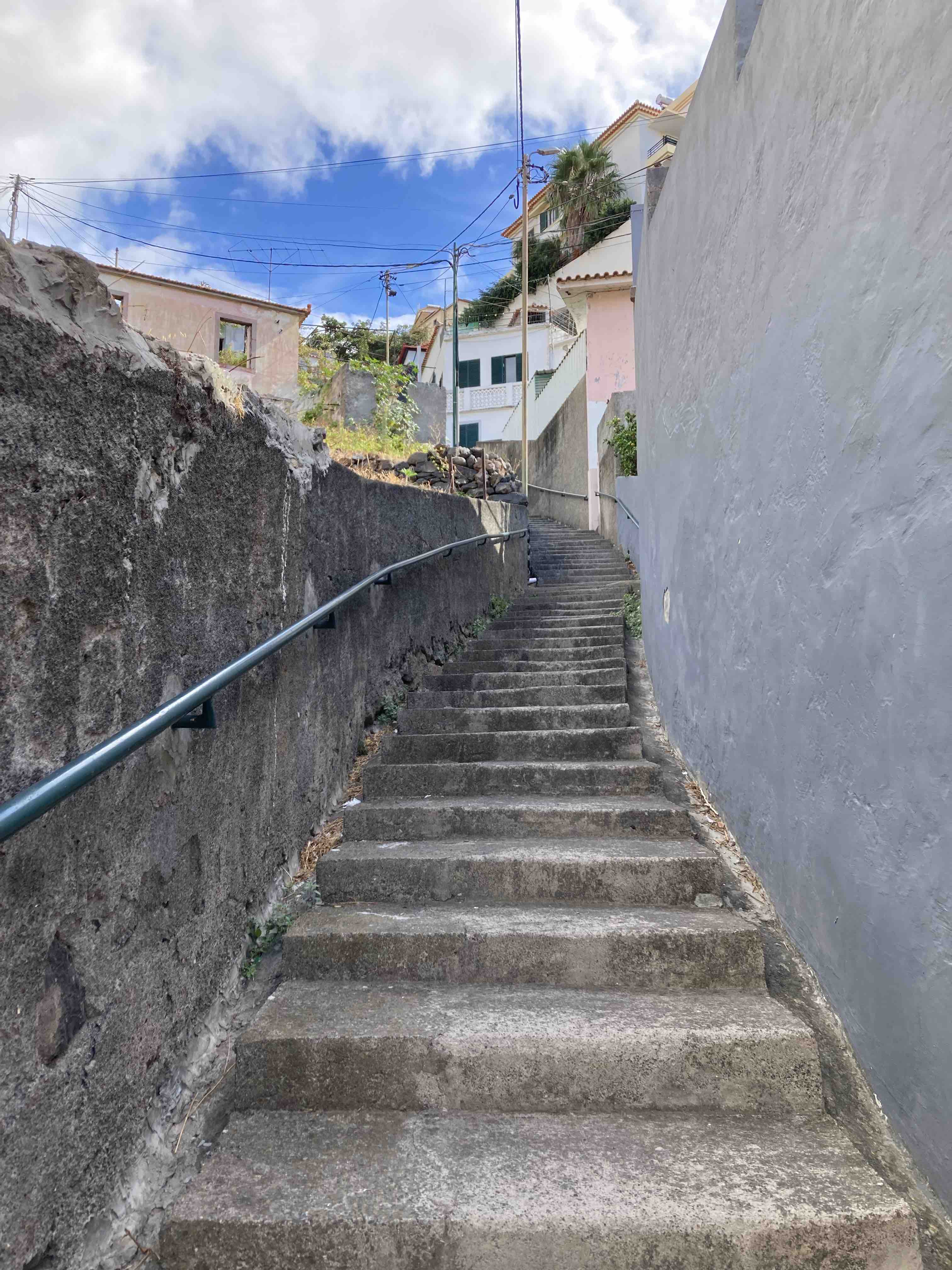
On a few days we got a taxi up the hills above Funchal to see a garden and walked back to the coast and the hotel. Although gravity was on our side, the relentless, steep steps and slopes played havoc with our knees.
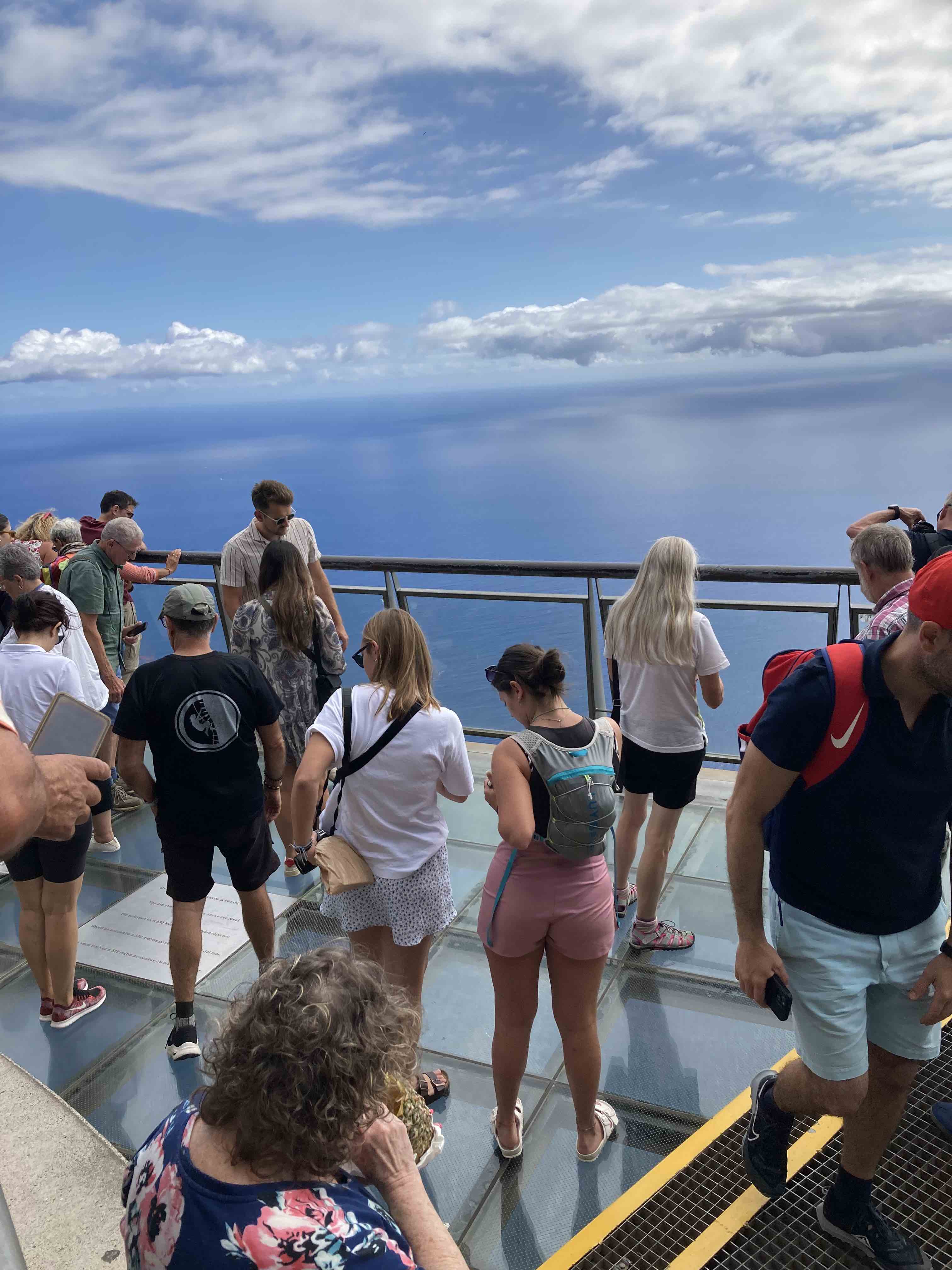
West of Funchal is the famous cliff at Cabo Girão, the tallest sea cliff in Europe (580m). It is usually seen from the glass-floored ‘skywalk’. But it is just as impressive, and slightly less scary from the sea. ,
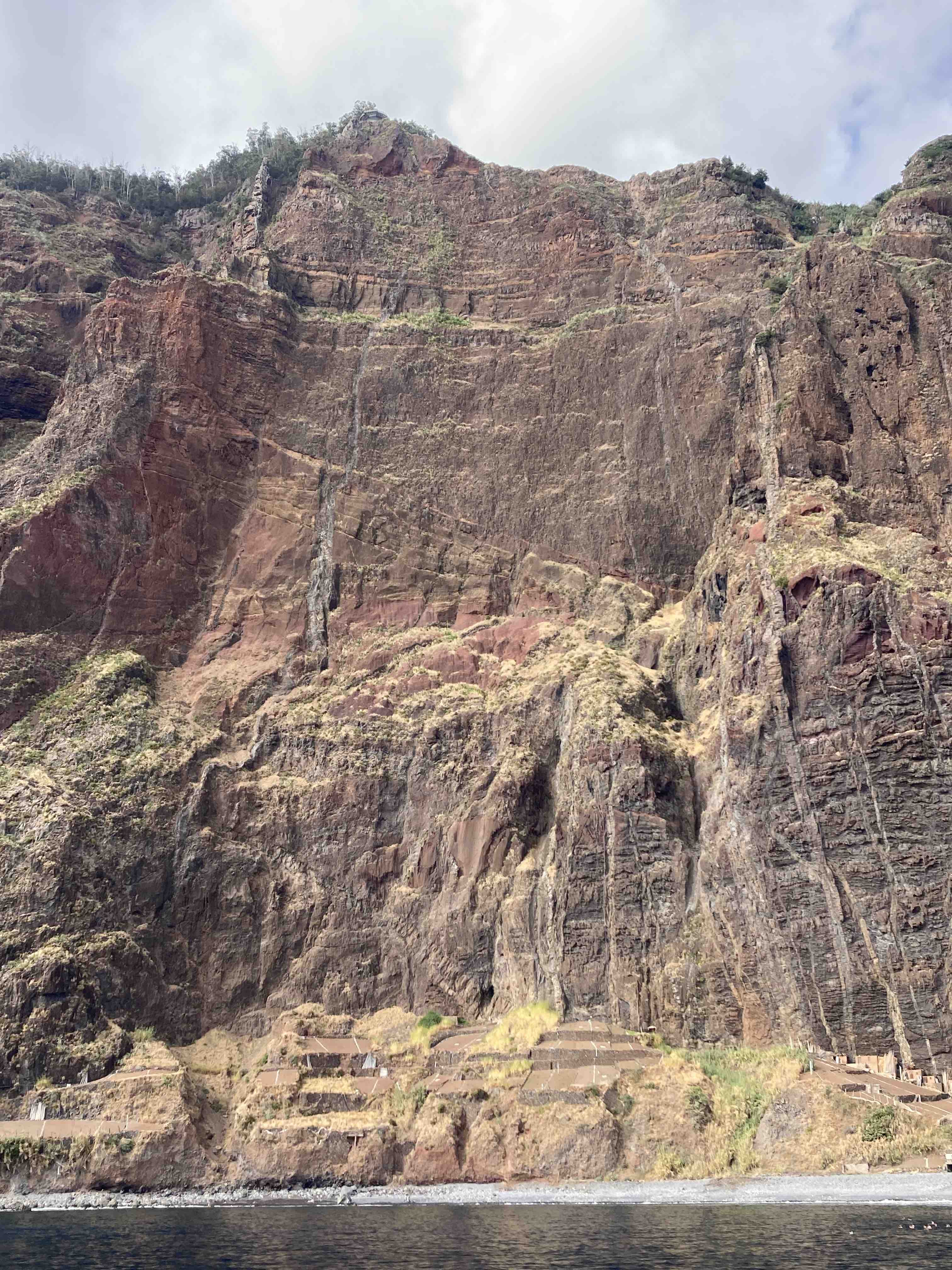
But you have to do these things. You can see another boat, in the same location, in the photo.

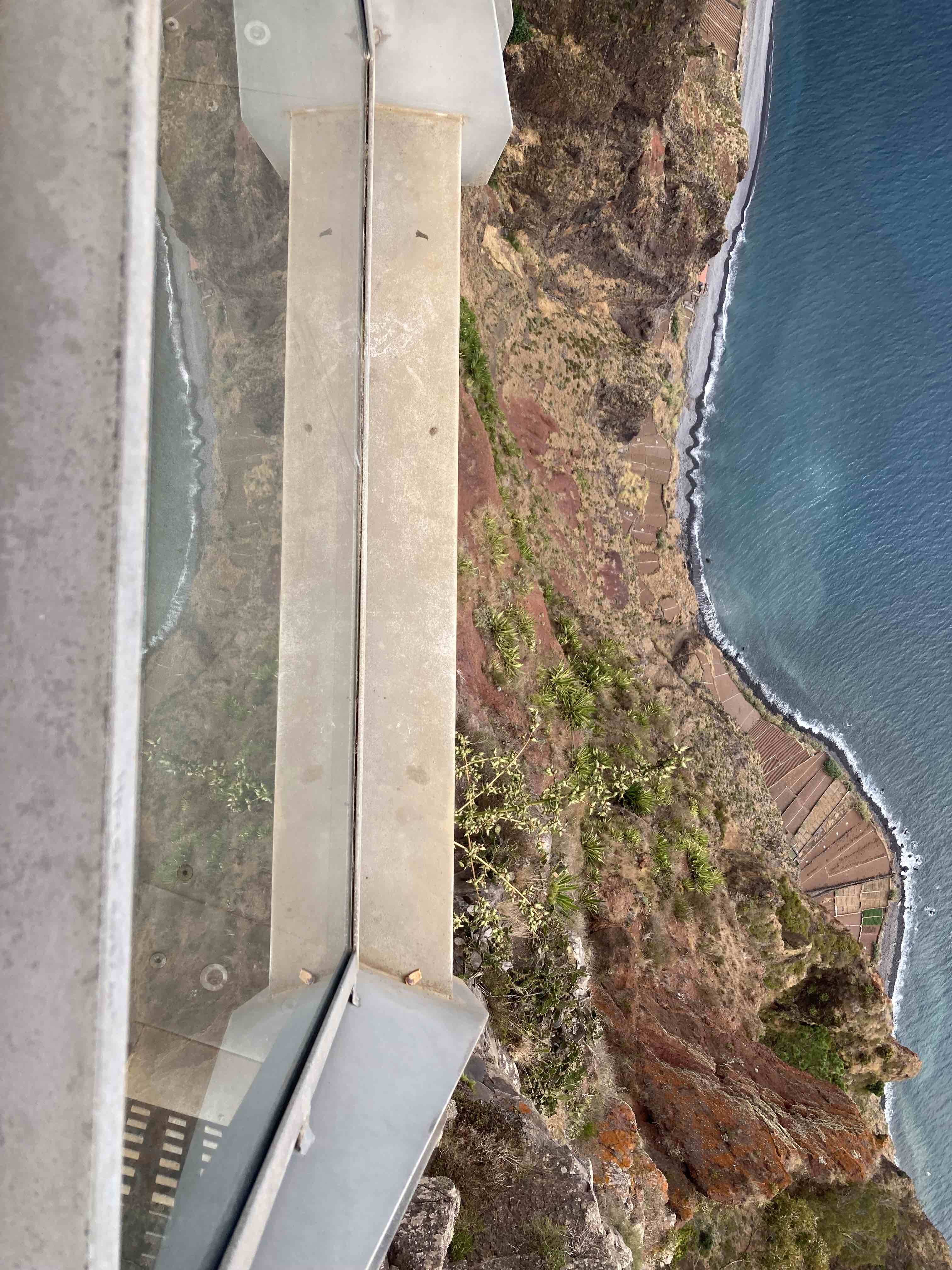
But back to normality. We took several guided walks and tours and as we learned about the history of the island, one thing struck me.

A typical tourist activity today is to visit Monte Palace gardens and take a toboggan ride part way down the hill (similar location to the photo above). The paving is set with small stones and inclines built with sloping steps that were designed to suit animals that pulled sleds.

An old tile mosaic showed this. And an old photograph in the Madeira Photographic Museum (which we found by accident and that I recommend) shows the other form of transport – a tourist being carried around in a hammock.
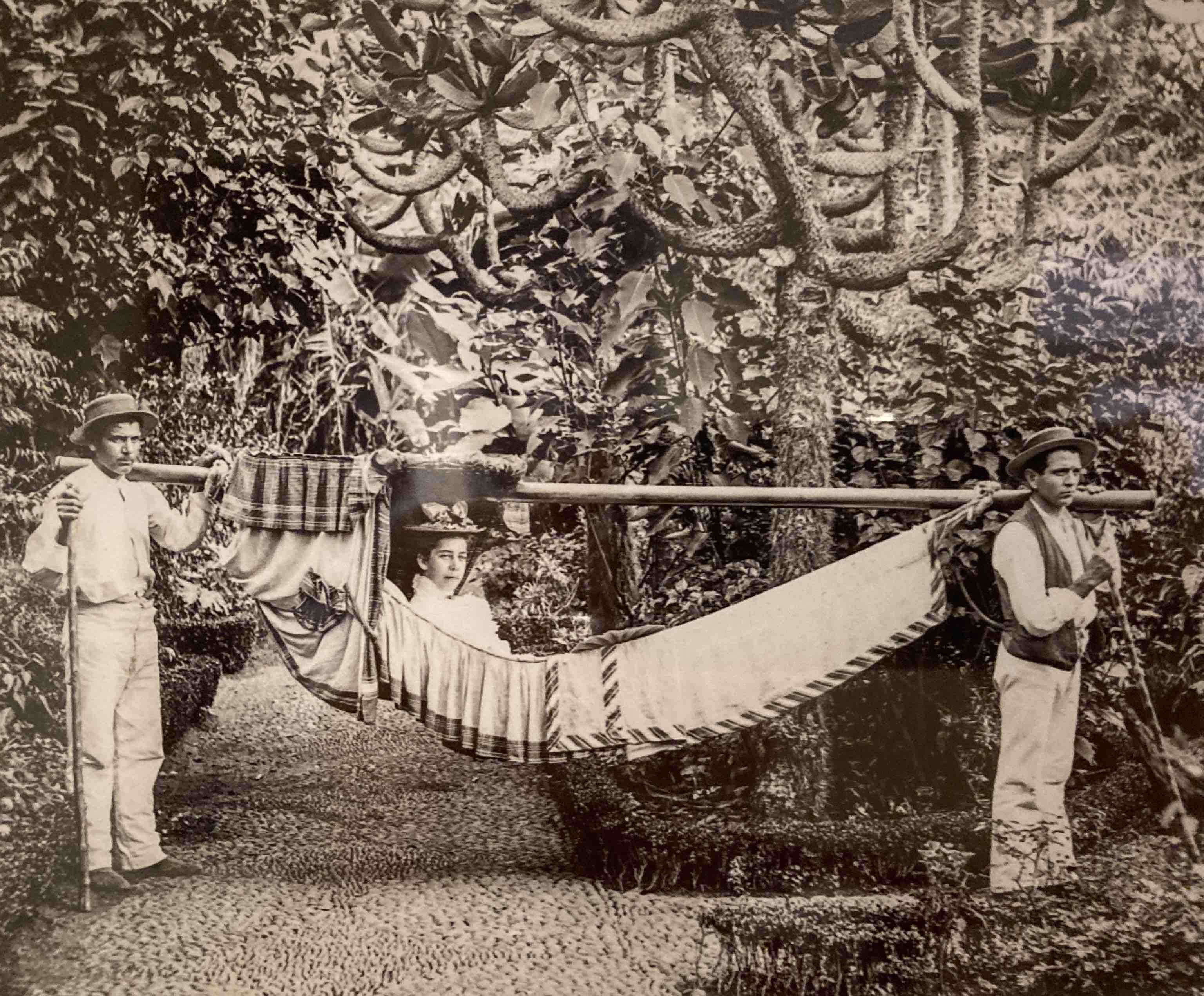
Goods were transported by cattle-drawn sleds and tourists carried around in hammocks. Obviously people were not made of sterner stuff in the ‘olden days’ after all. But then the only tourists were very rich, arrived by boat and would have a fit of the vapours if asked to walk anywhere.
But where are the wheels? I asked several locals and they seemed to think I was mad but seriously, why has nothing got wheels on? I appreciate that wheels could be lethal on a steep downward slope. Perhaps the roads were simply so bad that wheels would not work and I agree that two people carrying a hammock would be easier than making a smooth road but ….. for goodness sake, put them in a wheelbarrow!
I am sure the tourist board would be horrified for me to say so but I associate Madeiran tourism with Agatha Christie and Poirot. There is, as in so many places around the world, a conflict when it comes to tourism. So many people I spoke to complained about house prices increasing because of tourism. We try to be responsible, stay at a locally owned hotel, (B&B so we eat out), not a multinational all-inclusive hotel, eat locally and supported local guides. Because 70% of the income in Madeira is related to tourism I was slightly irritated that I felt part of the problem. I understand, but it stings a bit when you save up for a holiday, carefully chose somewhere, suffer levels of transportation that would be illegal for live cattle and then get criticised for actually turning up.
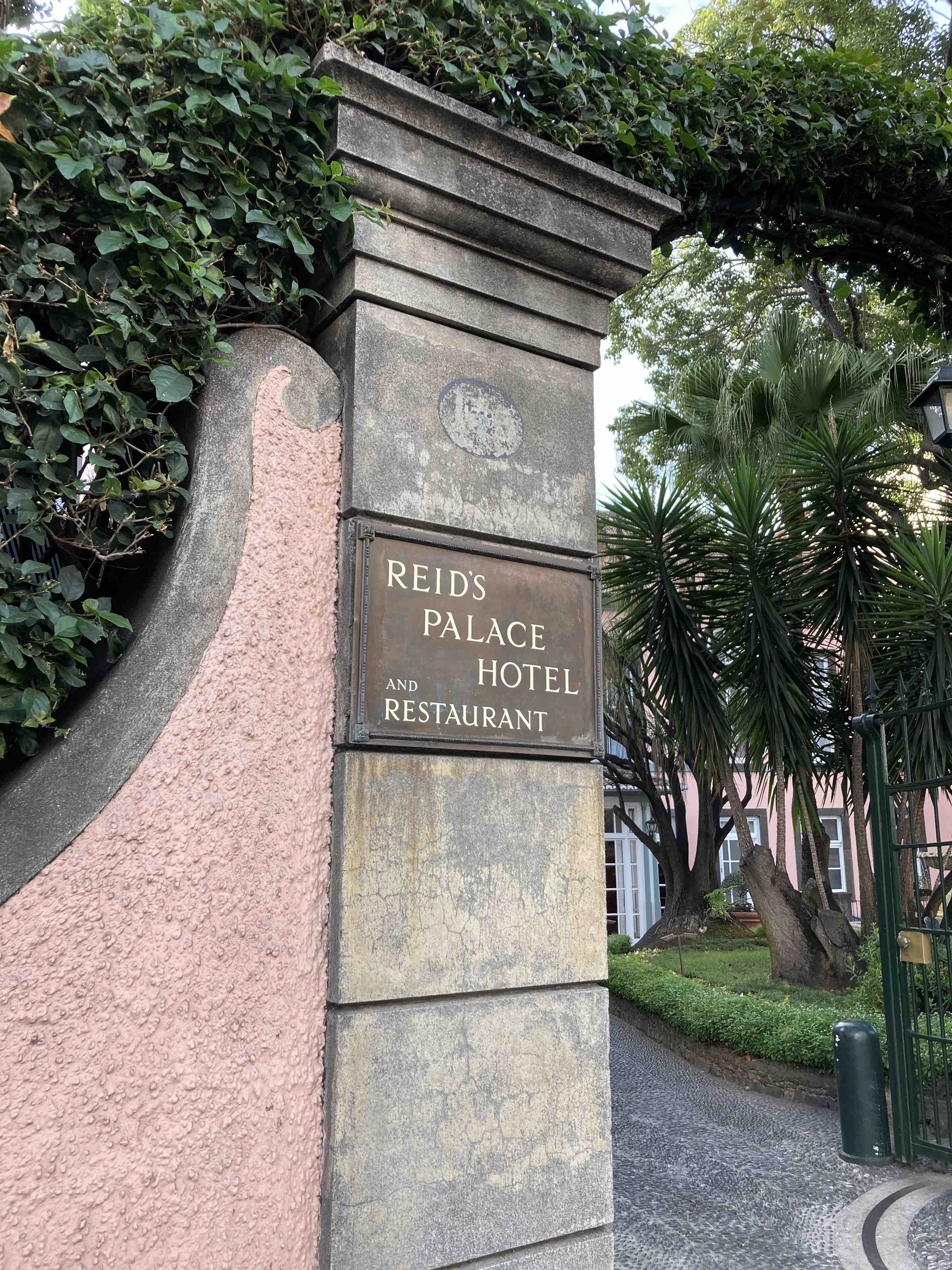
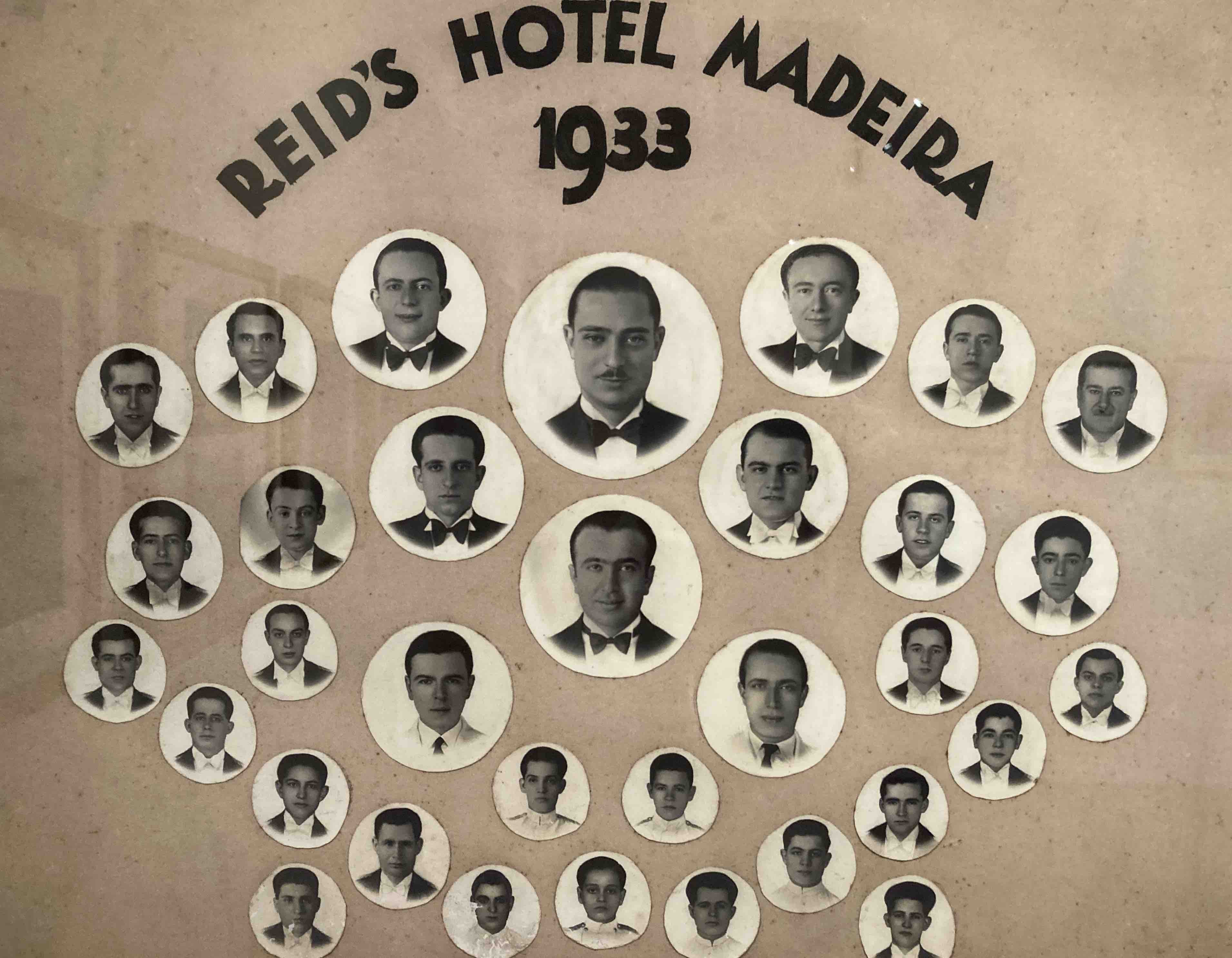
Anyway, our hotel (Quinta da Penha de Franca) is one of the oldest in Funchal, and was only a stone’s throw from Read’s, the most famous of all. A photo of the staff in 1933 in the photographic museum reflected the tradition of the place.
The museum, outside..

and inside

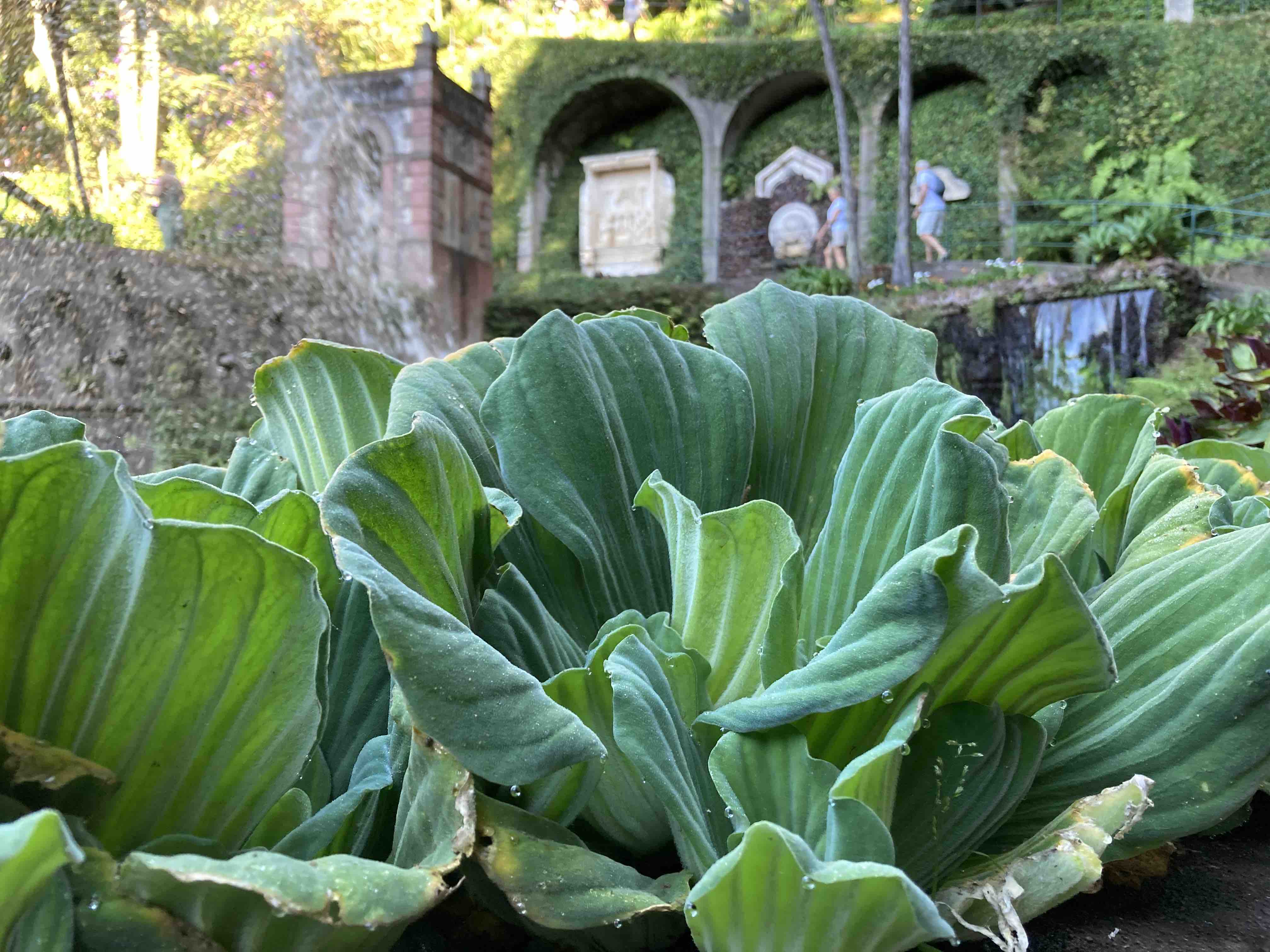
I promise the next posts will be about plants and gardens including Monte Palace Gardens
 The Biking Gardener
A wonderful location. I’m looking forward to the next posts.