Colour continues
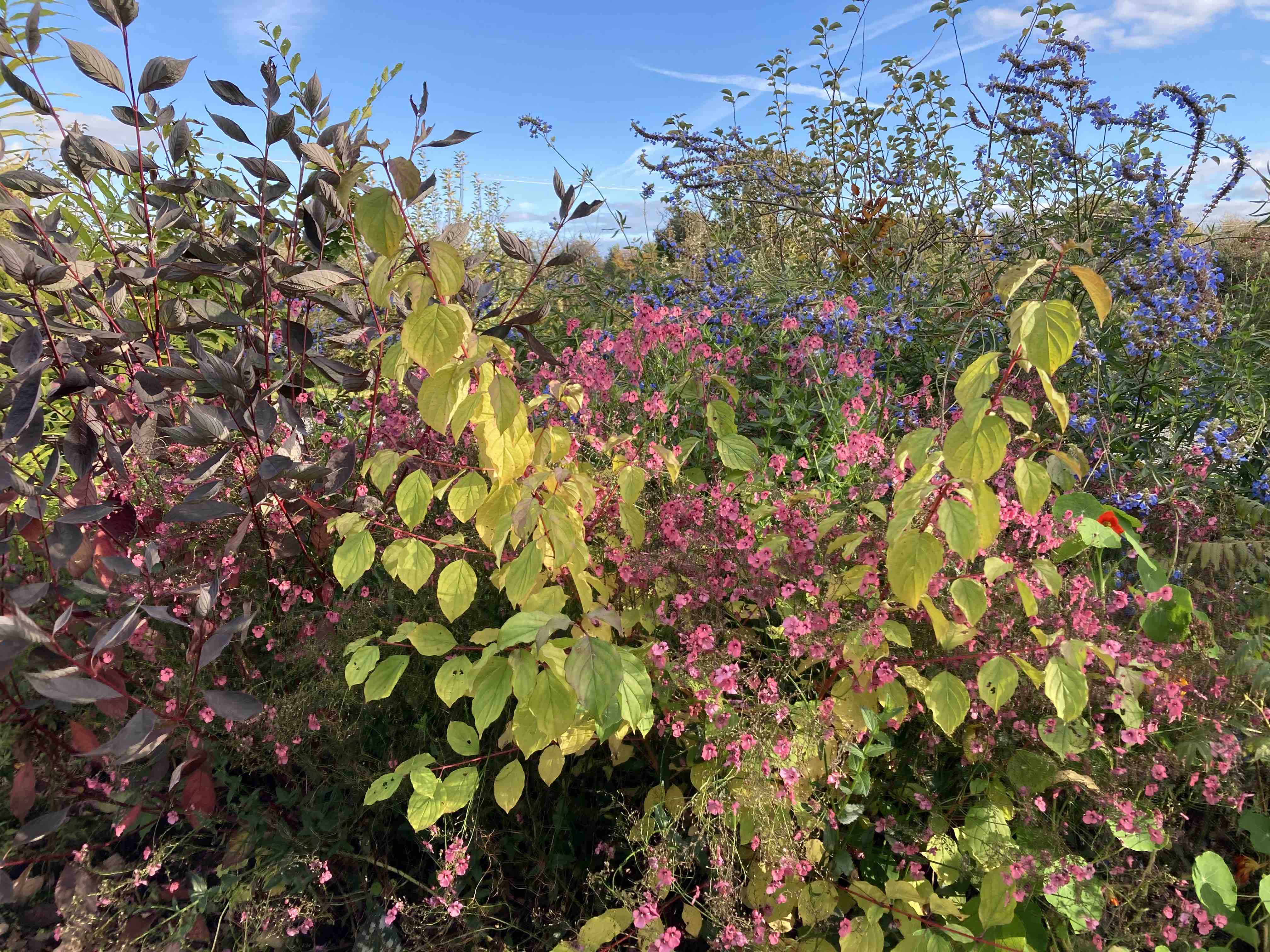
We finally made it to Madeira for our holiday, postponed from January when it was prevented by ‘that’ storm. And Storm Amy threatened to spoil the plans again but we got away just hours before it struck. I must thank a neighbour for checking the greenhouse (I have never left the greenhouse for so long except in the depths of winter) and for the lifts to town to catch the bus to and from the airport (shame the return bus broke down in Gorey High Street). And of course the cattery for looking after Mia and Tom. But two weeks away saw the garden change from late summer to full-blown autumn.
The weather seems to have been quite kind while we were away and we have not had a ‘proper’ frost yet. The grass needs cutting and the weeds are growing but it is wet and I can’t do much today. But yesterday there was sun and some parts of the garden are looking good.
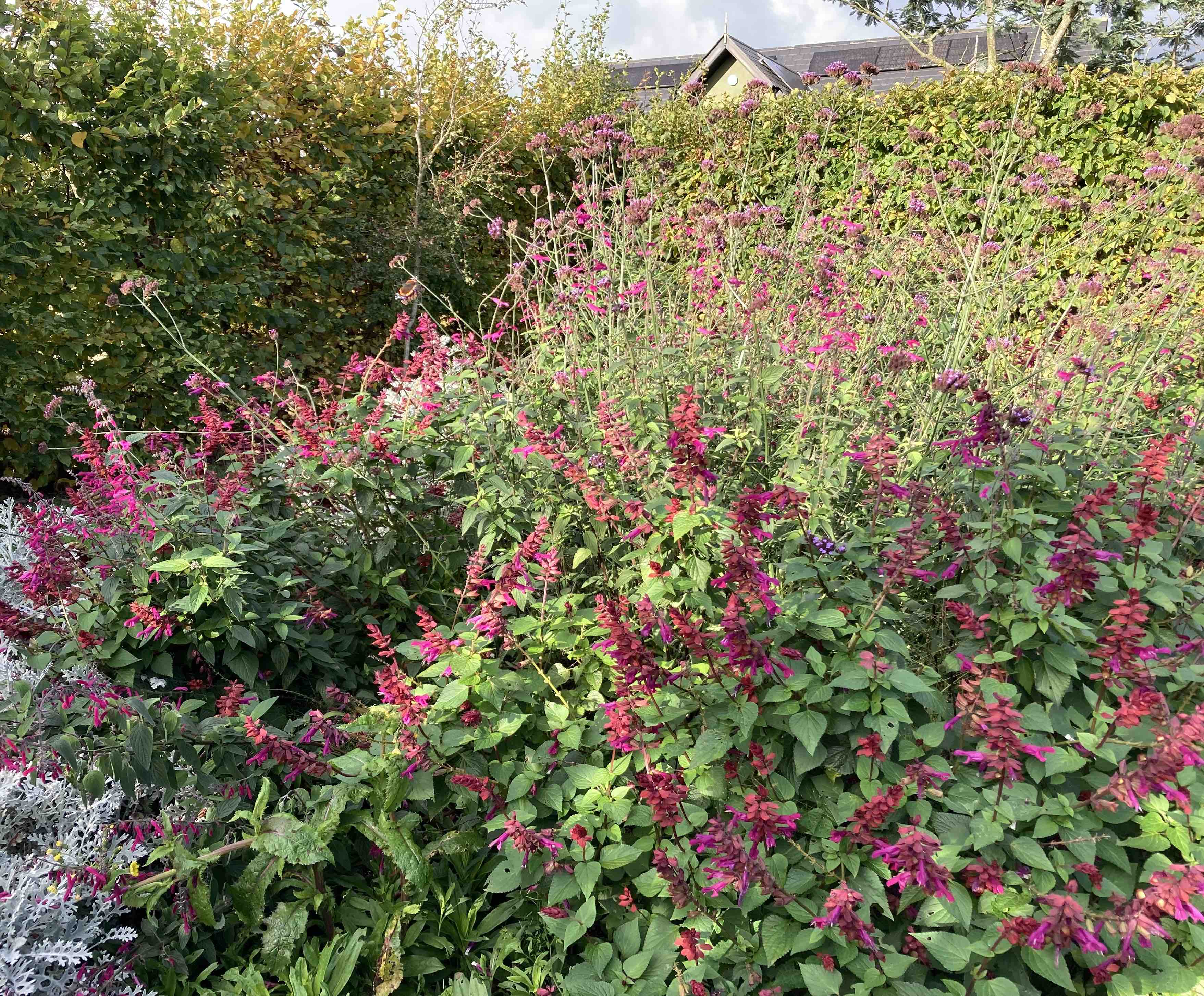
The bed with salvias (‘Strawberry Lake’ and ‘Tubular Bells’) has excelled. ‘Strawberry Lake’ is one of the Salgoon series that I bought almost accidentally (from Aldi) and propagated so I had lots to plant out this summer. It grows strongly but, like many salvias, is rather brittle. It has flowered all summer, struggled a bit when dry at the roots, but is now the best it has been all summer and the flowers are more intensely coloured. I need more salvias and I will use this more widely next year. It really is a great plant.
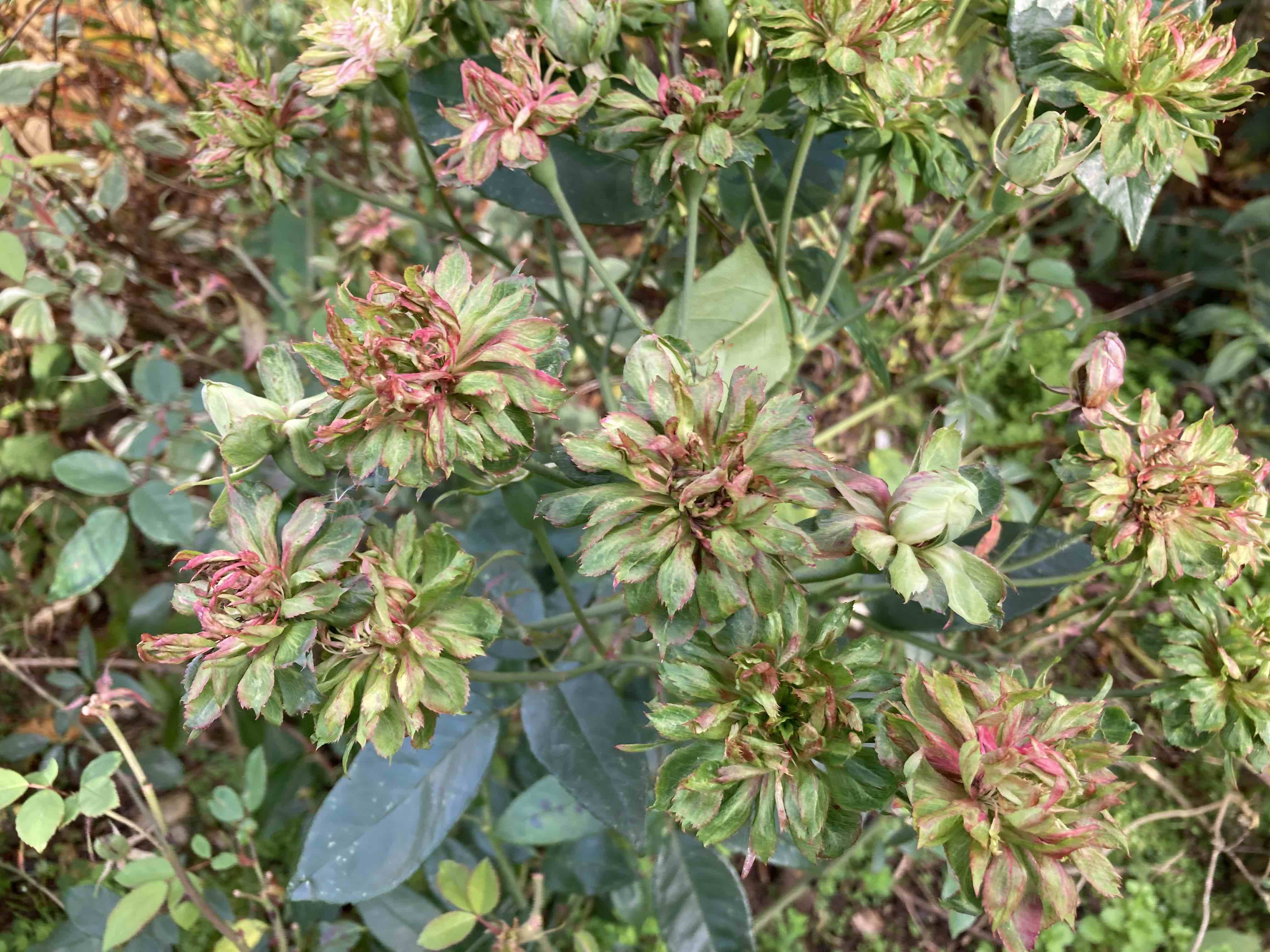
I have mentioned the green rose before and I know most people quite actively dislike it. I moved the roses this spring and gave this one a more prominent position, and yet no garden visitors noticed it. And yet it quietly did what it does and is looking quite wonderful now – if you like this kind of thing.
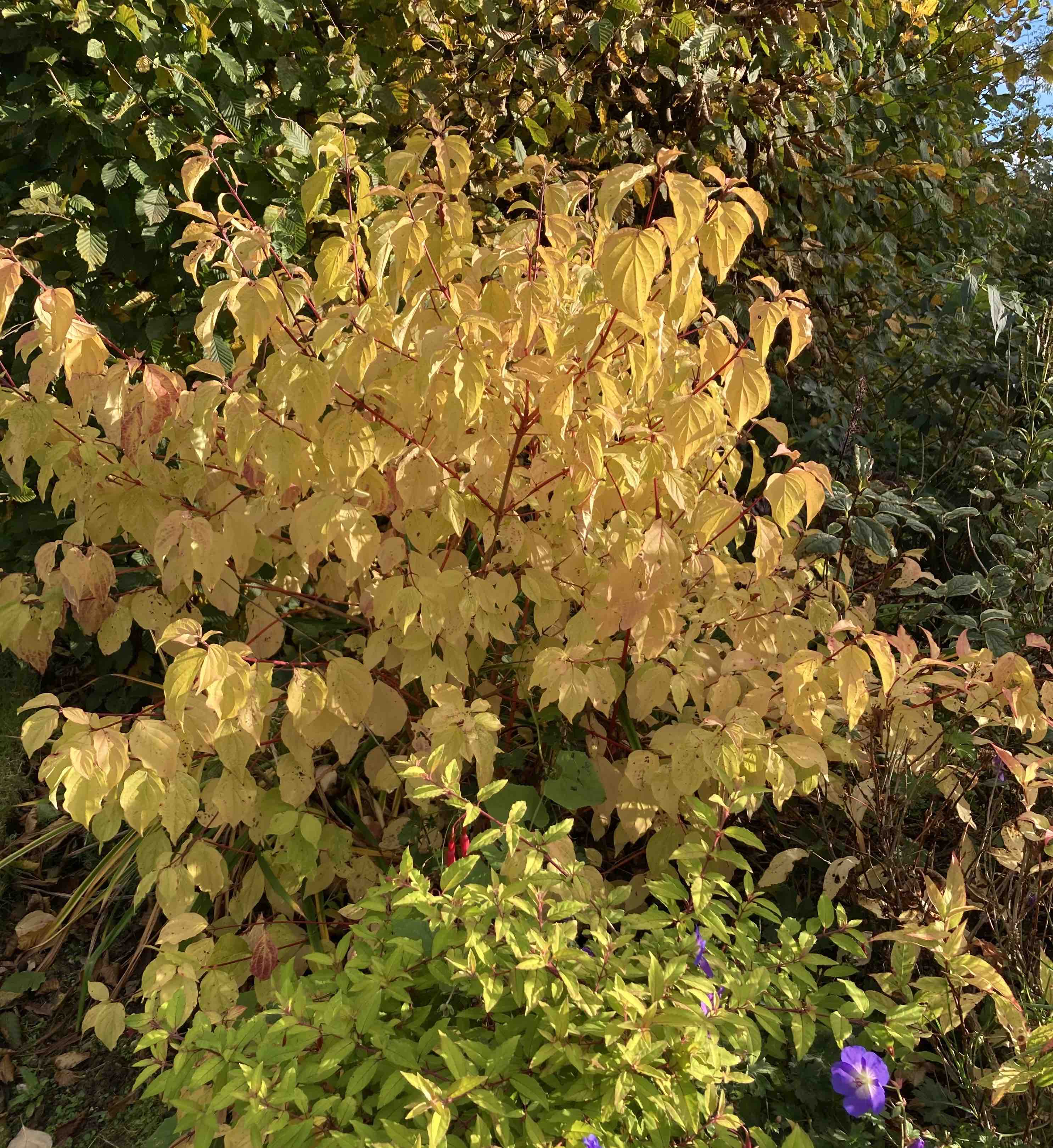
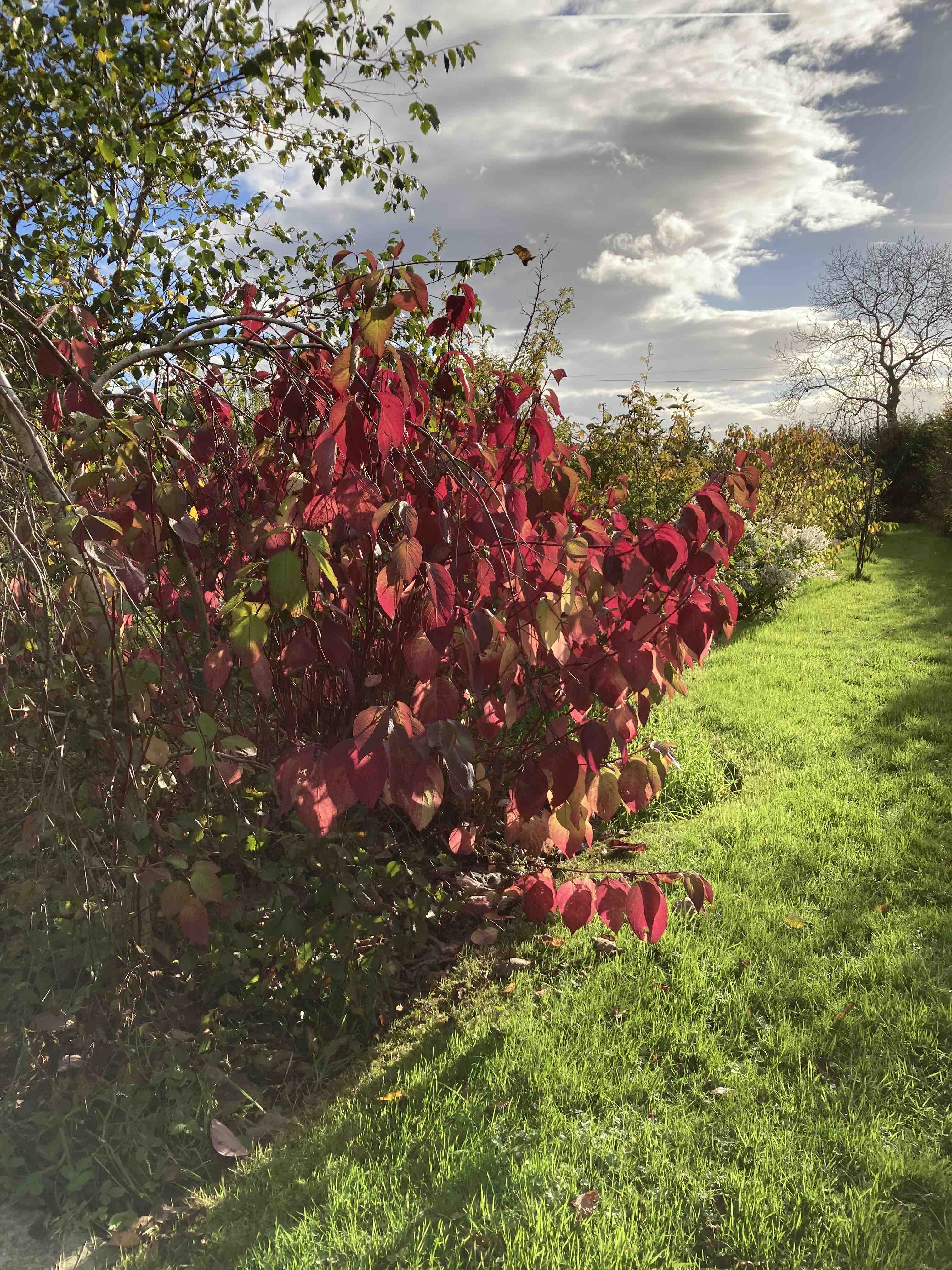
Although most cornus (for stem effect) thrive in the garden, for some reason Cornus sanguineum has always struggled. I almost gave up. But I tried a second in a better bed and it has loved it and, although the stems are wonderful, the autumn foliage is what I really appreciate. The first plant, that had not increased in size for four years, was moved to the bed of death this spring and, as you can see from the top photo, loves the new site, so my opinion of this ‘easy’ plant is now in line with what everyone else thinks!
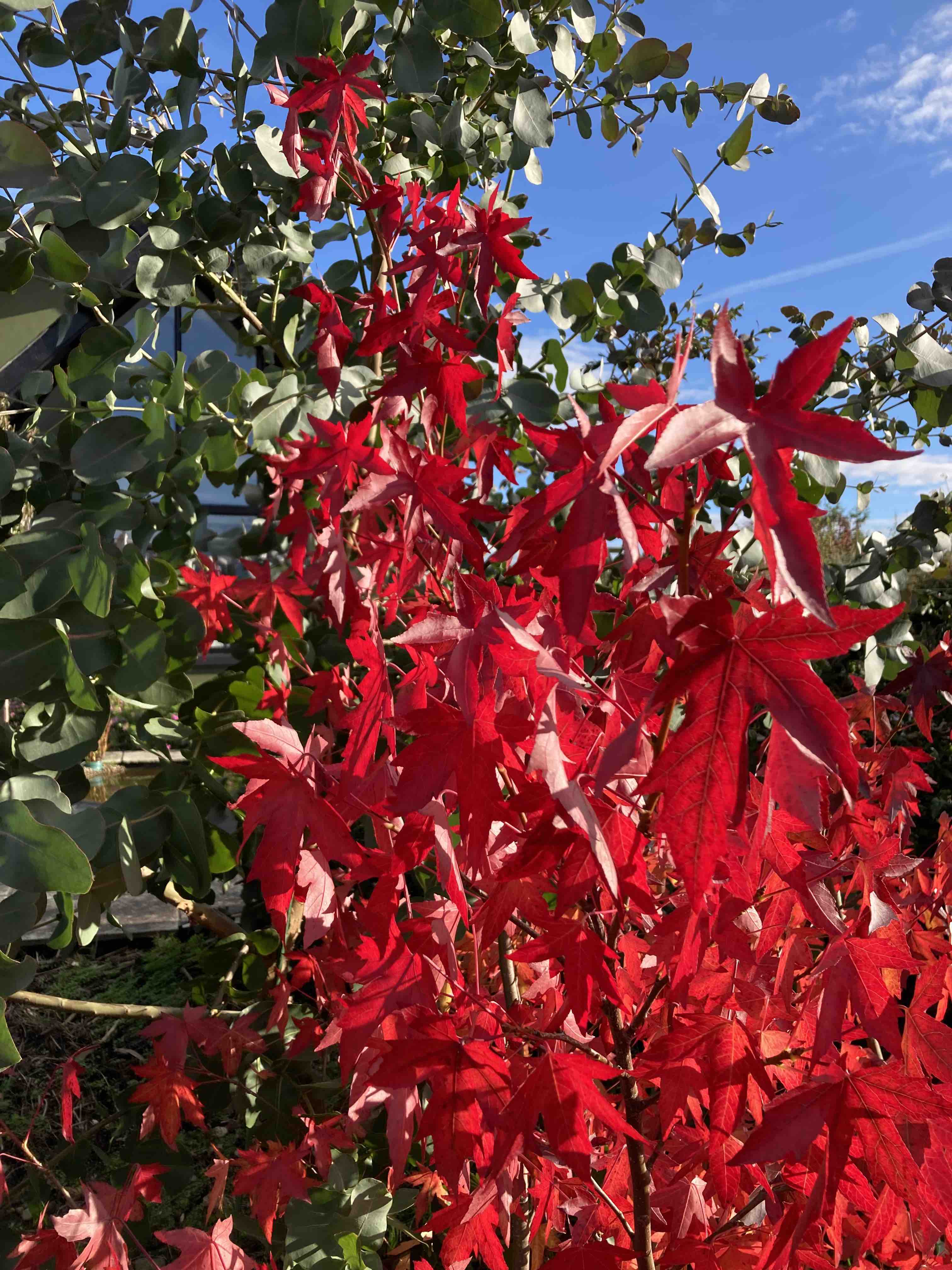
And Cornus alba is also doing what it does so well, resplendent in cherry and crimson shades. Fruits of the forest. It is, unfortunately, just outshone by the neighbouring liquidambar. I planted three to make a shocking fiery autumn display but they have struggled. I almost gave up on them and planted a eucalyptus near one and the liquidambar either liked the company (or shelter) or felt threatened. Either way it has made more growth this year than in the past and is currently brighter than any hardy plant has a right to be. It actually looks even better against the steely eucalyptus foliage.
Bidens aurea, planted as ‘Hannah’s Lemon Drop’ is a strange plant that I can’t quite love and yet I don’t want to lose. It seems to seed around because the flowers are not always as they were and some are all-yellow. But I appreciate the longevity of the flowering season, once it finally starts, which can test my patience.

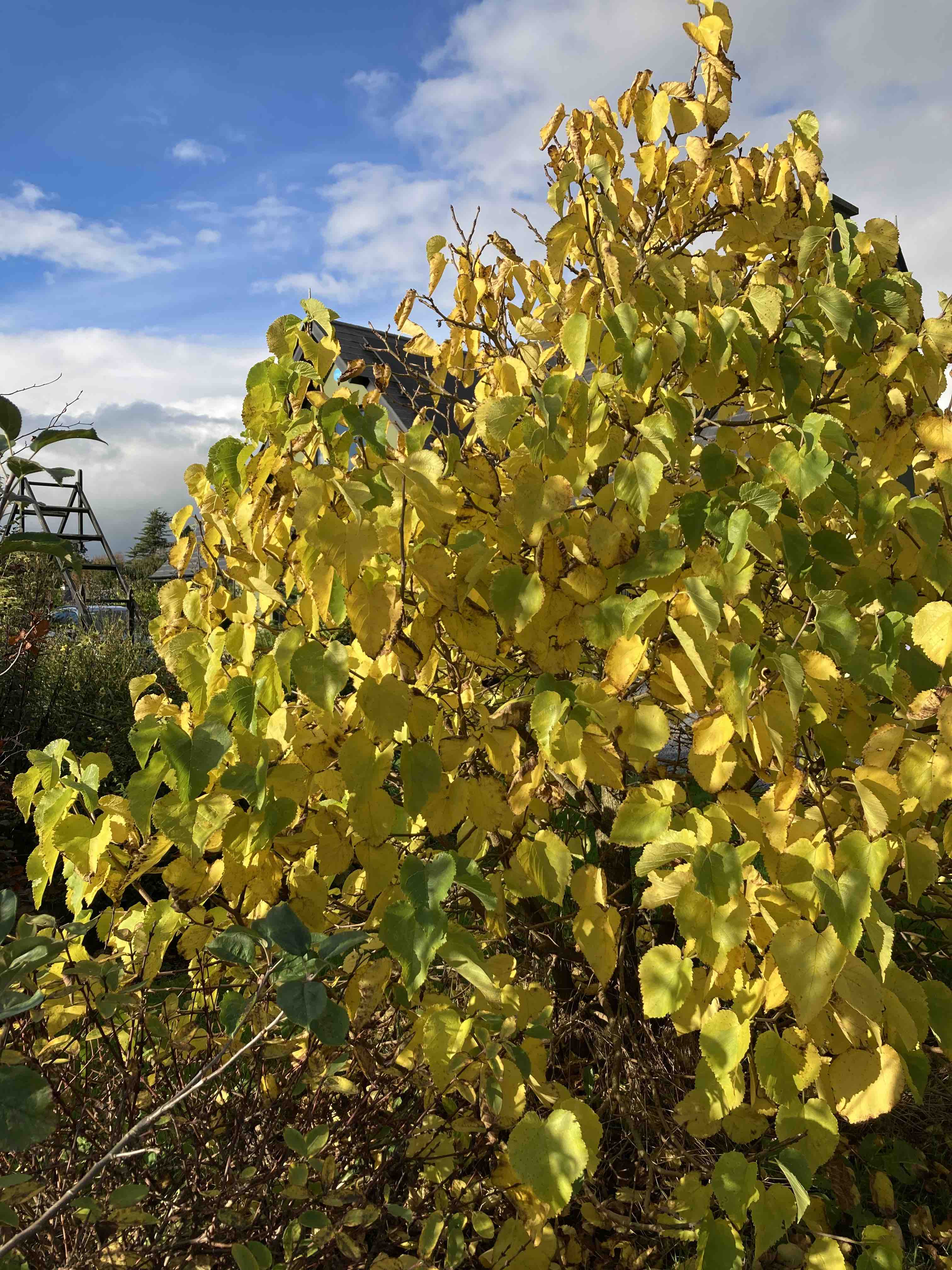
But at the moment it is put into the shade by the black mulberry which, having produced a good crop of fruit this year, is currently adorned in bright yellow autumn garb.
And beside it is mahonia ‘Winter Sun’. Like many mahonias, it started life as a single stick, 20cm high with a single ‘ruff’ of leaves and for the first few years it seemed unlikely to ever make much of itself. But, suddenly, this year, it is 1.5m high, multi-branched and magnificent. A few more days and it will be covered in bloom and busy with bees. Patience is indeed the best fertiliser. And it seems reason enough to justify the choice of ‘Phoenix Park’ to paint the house this year.

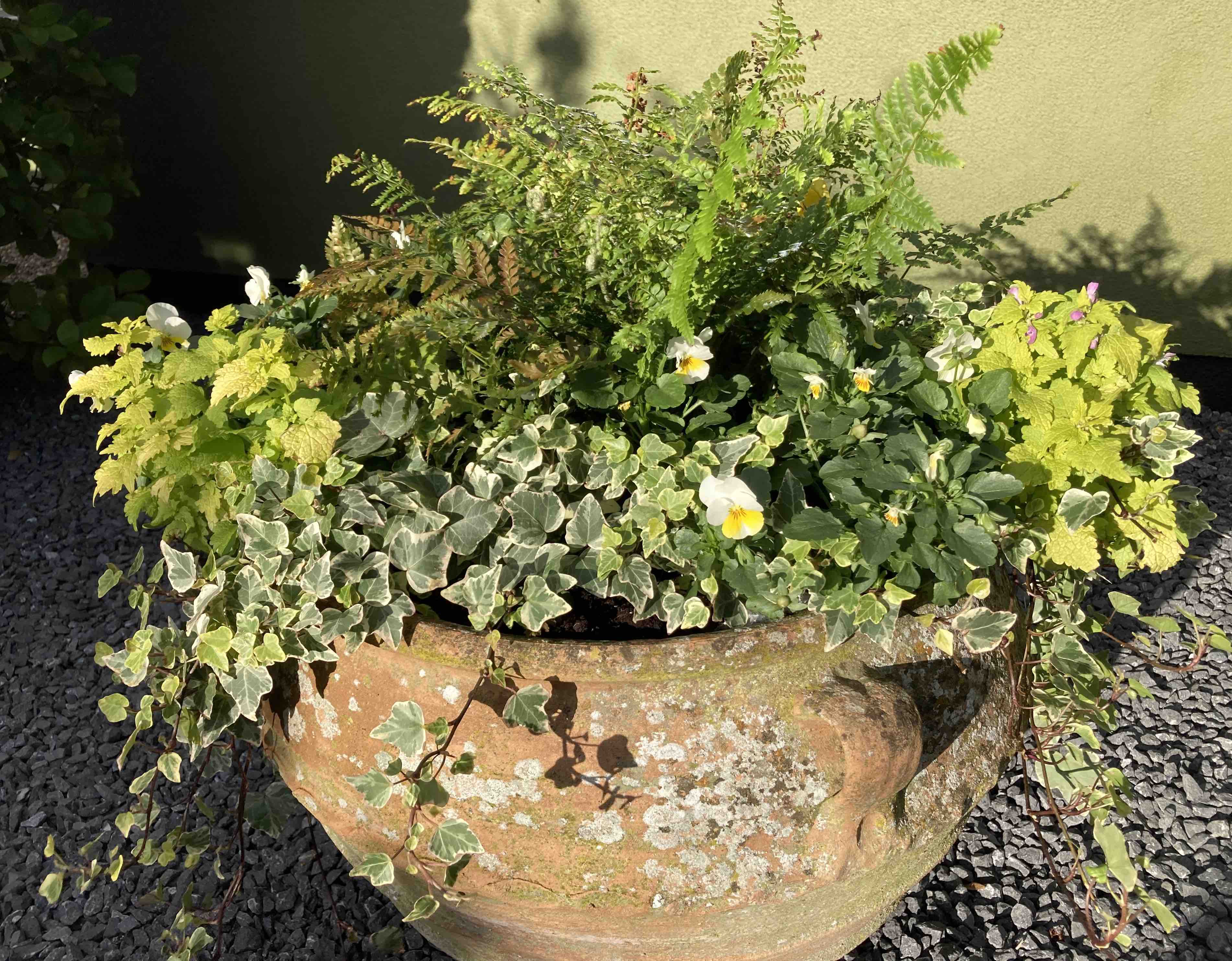
A winter pot of green and yellow shades also sits well against the house wall.
The quince actually produced a crop this year, thanks to the mild spring not damaging the first set of blooms.
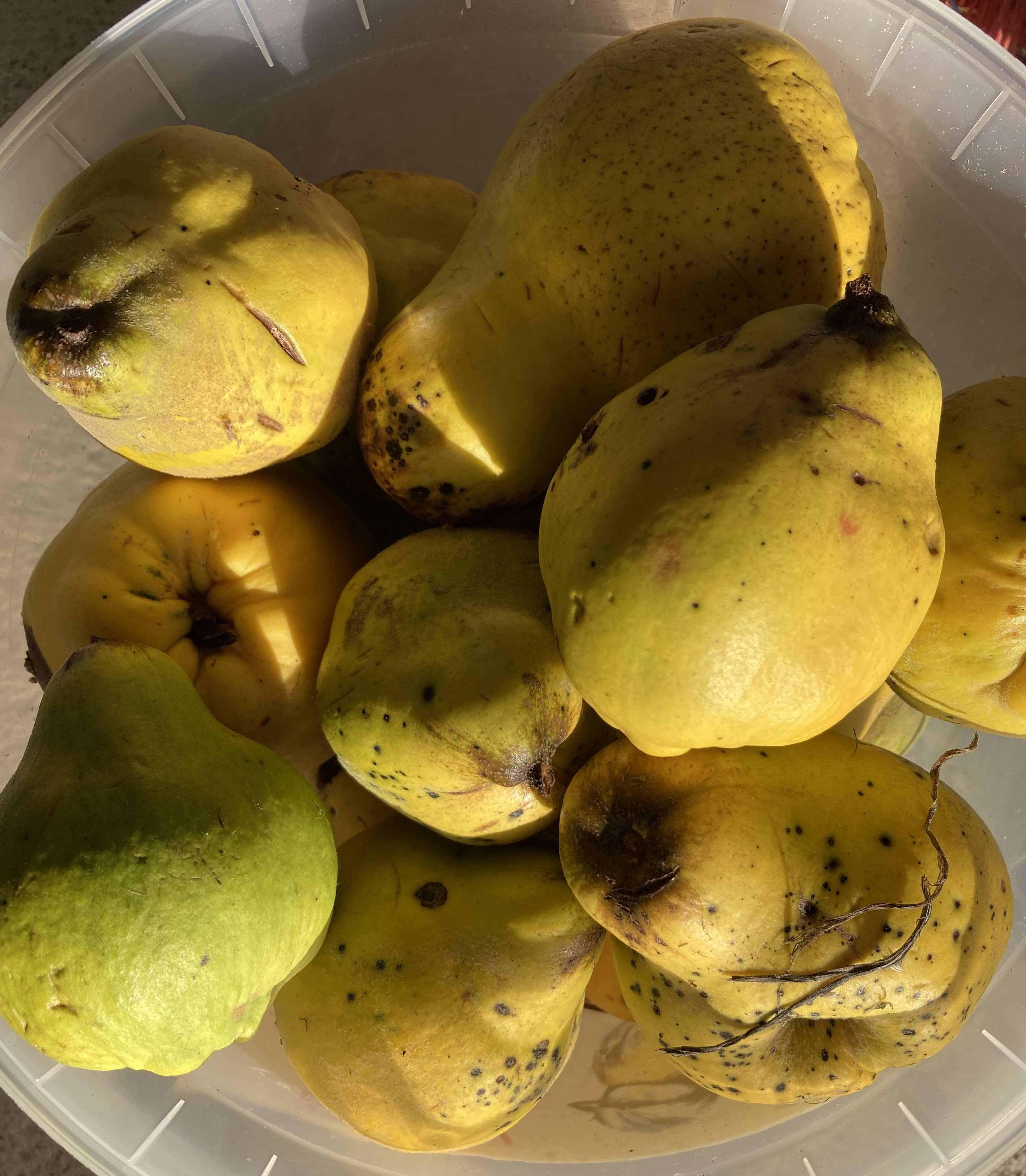
Unfortunately they all fell off in Storm Amy and virtually all are bruised. But they smell good and I am managing to get some flesh to add to the vats of apple butter I am making, some of which is being converted to apple leather. Autumn is a busy time! Something about Madeira to follow.
 The Biking Gardener
What a lovely return, to find everything so colourful! Not quite sure about the green rose, but it sure is different!
I’m jealous of your holiday in Madeira. We went some years back and really enjoyed it. You have plenty of winter colour. I was in the Picton Garden last February and was very taken by their selection of cornus, great winter stem colour, and determined to get some for the garden but have yet to find any. The search will continue.
I will be doing some Madeiran posts this week so I hope they bring back fond memories.
Looking forward to them!
Quince are rare nowadays. It is good to know that someone still appreciates them.