The root of the problem
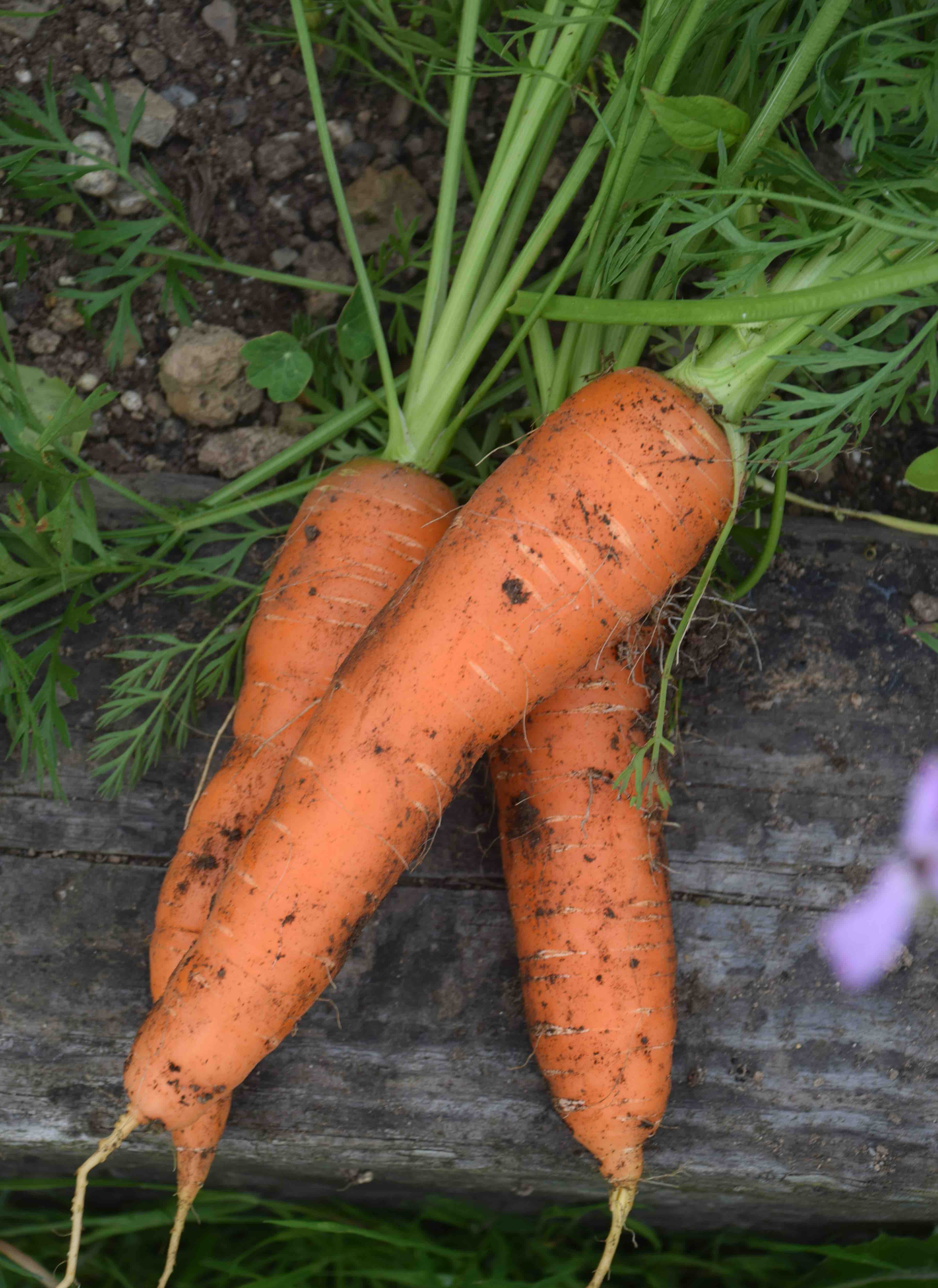
Despite the heading this is not a post filled with moans but quite the opposite – I have managed to grow some good carrots! It is the first time I have managed it in this garden. So what was the problem in the past?
Well, carrots need a light, ‘open’, or sandy soil. They do not do well on recently manured soil – excess nutrients lead to ‘forked’ roots. If the soil is stony it can lead to misshapen roots too as the tiny tap root hits a stone and bends or branches. Of course, you should never transplant carrots either because that will lead to bent roots or to the plants ‘bolting’ and flowering prematurely. Pots of carrot seedlings in garden centres are my pet hate. My soil is heavy and I often thought that the only thing it grew was stones. Well – rocks.
Carrots also have one serious pest – carrot fly. Being a new garden I should not really have encountered this but of course it struck in the first year I grew carrots because it also attacks the roots of cow parsley which is common in the hedges around here. It also affects chervil and parsley.
In the early years (well five years ago) I made two raised beds at the bottom of the garden and these were topped up with some very poor (gravelly) topsoil (It was not as good as it looked when I saw it in the heap but it is at least well drained). I also added compost from pots at the end of the season each year and last year added the contents of lots of ‘spent’ growing bags from the local strawberry farm. It is coir and perlite. The beds are used to grow my ‘spare’ tulips and my hyacinths every year and then filled with annuals for cut flowers in summer.
So the soil is now light and well drained and I thought I might have a fighting chance with carrots this year. I thought that if I can’t grow them in this soil I might as well give up. It is impossible to grow every crop in any given garden – the soil and climate won’t suit everything. But I was not going to give up without a fight.
This bed was not planted with bulbs last autumn (I had a lot fewer tulips because of losses caused by the very wet spring last year) but was used as a holding bed for ‘plunged’ shrubs bought in autumn and which were planted as space was prepared through winter and spring. In late March I sowed the carrots. The dry spring made frequent watering necessary because carrots are slow to appear. The position of the beds at the bottom of the garden made watering tiresome because I had to carry cans. But they did germinate. I lay netting over the bed to prevent Mia ‘using’ the freshly prepared soil. Germination was erratic but gaps were resown in May. It is rather messy to someone that likes neat, even rows but it does mean that there should be small carrots ready for harvest later in autumn.
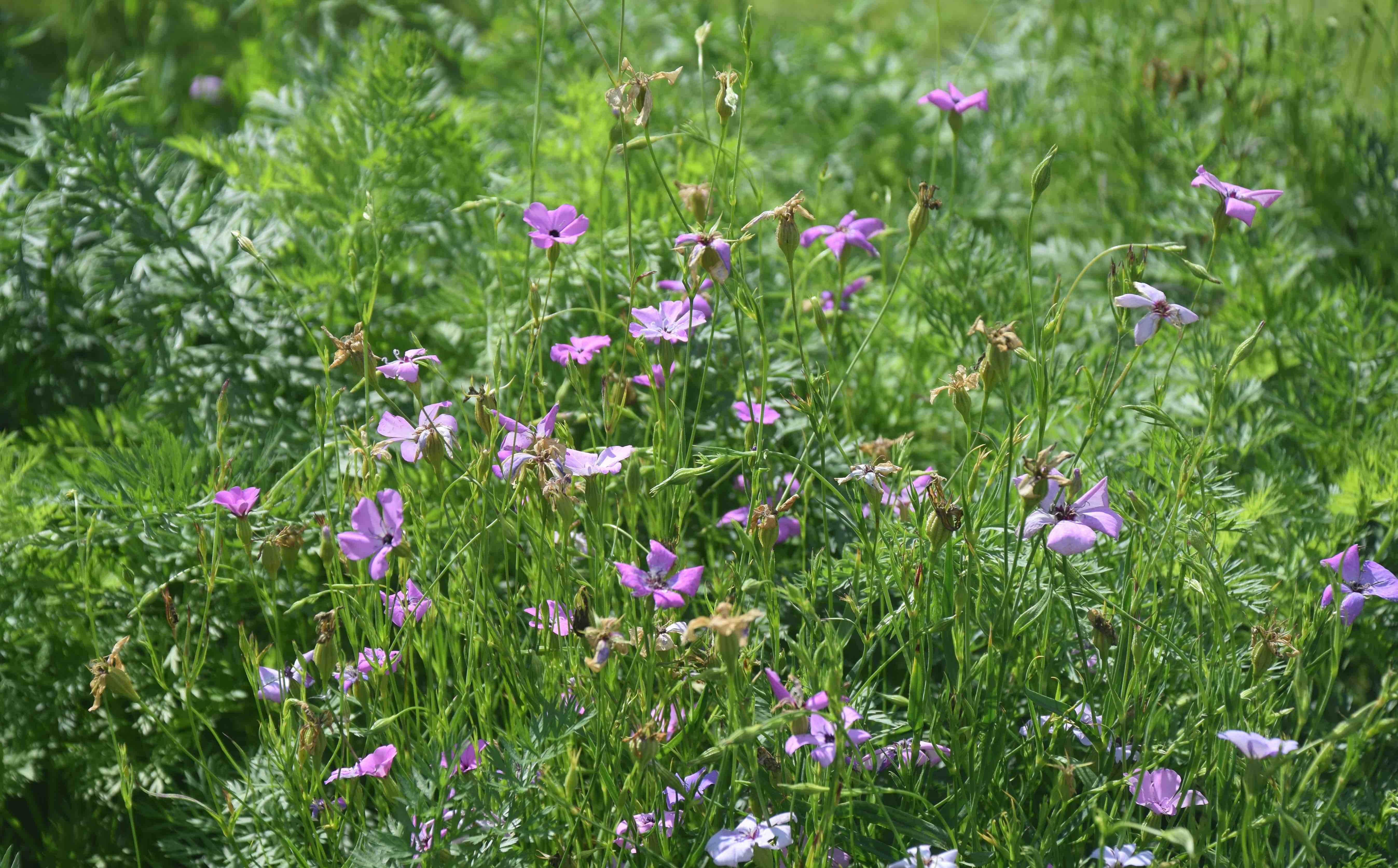
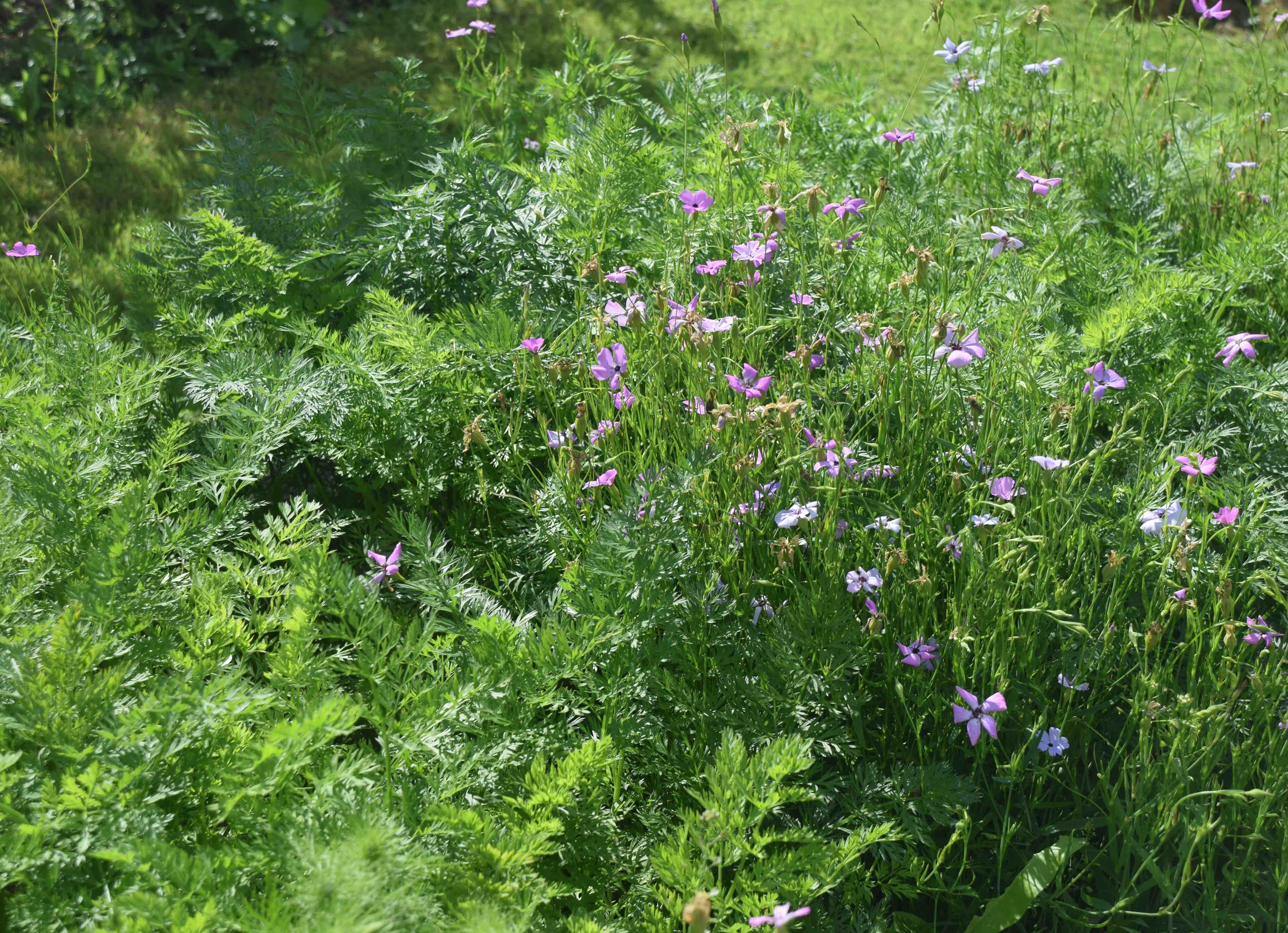
Between the rows I sowed viscaria, an easy annual with slight, slender stems that would not smother the carrots. Tagetes would be better because their pungent smell would mask the smell of the carrots and help prevent carrot fly but they are bushy and elbow out the carrots unless you give them lots of space. As it is, the viscaria seems to be completely ignored by pollinators. I have not seen a single bee, butterfly or hoverfly on the flowers. But they make the bed look a bit more attractive, although carrots are almost worth growing for their leaves alone.
And so I have been pulling carrots for the past few weeks and they are largely perfect. No signs of carrot fly so far and apart from a few slightly forked roots they are nice and straight. And it has reminded me how awful packs of washed carrots in shops are. For the past few years I had convinced myself that bought carrots are OK though I never eat them with much excitement. It was because I was struggling to grow them, but I was really only kidding myself. To get the best from my carrots we have been eating most of them raw, grated with orange juice, some honey and olive oil and cashew nuts or pumpkin seeds. Tasty and good for us too.
Never give up.
 The Biking Gardener
No comments yet.