Don’t look down!
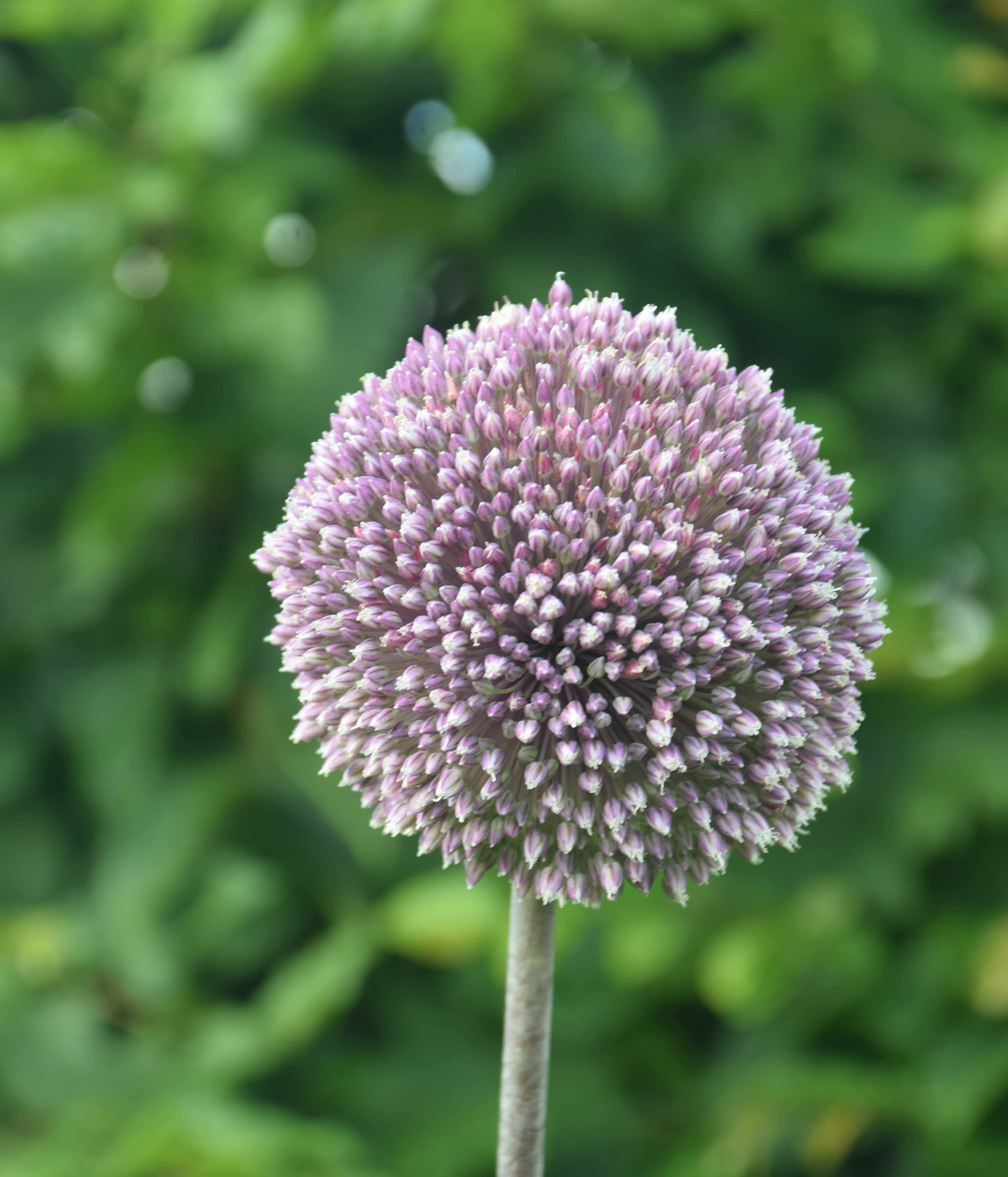
The ‘big ball’ alliums (ornamental onions) are enjoying popularity not seen since panic in vampire-infested regions of Eastern Europe. Every year there are new hybrids in catalogues and although most are variations on a popular theme breeders are getting adventurous and lots are bringing new colours or shapes to the heads of bloom. They seem to do well in this garden, much to my surprise, and I add at least a few more each year to keep up to date with what is going on, though some are far too expensive since I like to plant at least three of a kind – one always looks a bit daft.
Most are confined to a south-facing bed where I am happy for them to be a bit mixed up and the first bloom in April, reach a peak a month later and by now, with a few exceptions, they are dead. I tried ‘Party Balloons’ this year which promised more than one flower scape per bulb. It did. Nothing to get very excited about but it was fine.
And I finally took the plunge and planted ‘Summer Drummer’ which is lauded for being tall and very late. I have seen it before and know that, although the scapes are very tall, the heads of flowers are not that large. Perhaps if they were in proportion to the scapes they would pose a serious hazard if they toppled over! As it is, the stormy winds we had in early June did snap off a scape a third of the way from the top so my three bulbs only have two flowerheads.
Of course, a common problem with alliums is that the foliage is pretty bad by the time they flower. ‘Summer Drummer’ has masses of leek-like foliage in spring. It is often assigned to A. stipitatum but I don’t see that can be correct. If it is close to any species it might be A. ampeloprasum, the leek, but it also looks very like A. comutatum, a Mediterranean species with leek-like foliage. I do not know enough to be able to say. But it is leafy in spring and then the scapes soar into the sky. Mine are more than 2m high.
This makes them a novelty but very difficult to use well in a border. The flowers are taller than most companions. Oddly, the bees, which adore alliums and and still busy on the ‘Forelock’ in the bed, are not at all interested in ‘Summer Drummer’. The colour is OK but not good enough to love.
But even if you could love the flowers, don’t look down.
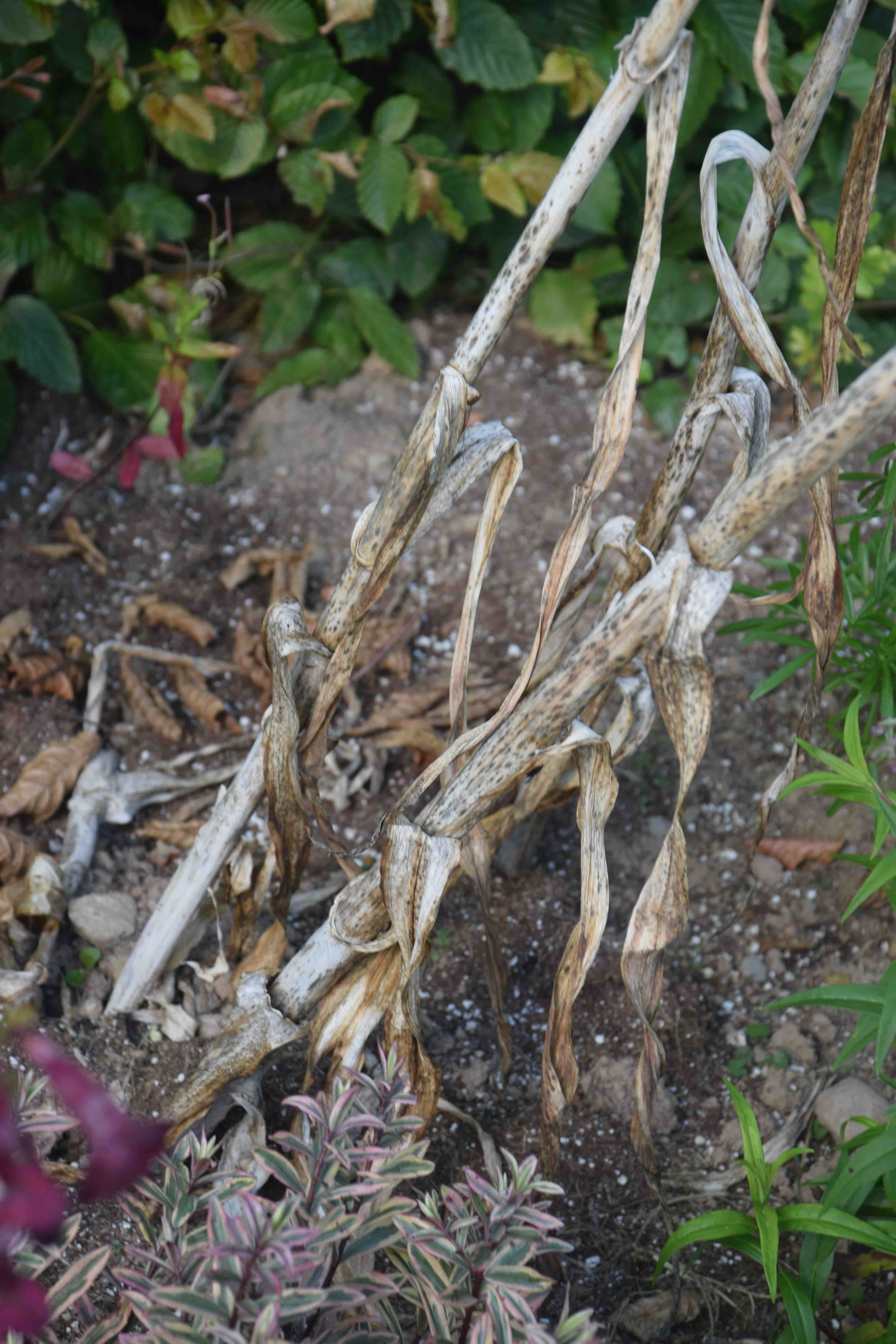
I do not think I have ever seen a plant in full flower with such ugly ankles. It makes a hollyhock with rust or a delphinium with mildew look beautiful! This is now, while in bloom. There is a choisya and hebe planted nearby which will help to disguise the foliage in future years but I think the only way to hide this mess would be a fence panel. I think the best way to grow ‘Summer Drummer’ is to give the bulbs to your neighbour and enjoy the flowers when they pop over the fence or hedge.
True, it blooms later than most hardy alliums (there are plenty of small, autumn-flowering species) but that is not, in itself, sufficient reason to plant ‘Summer Drummer’.
 The Biking Gardener
Mary is persistent in removing the foliage as it wilts, before the flowers open, but hates the smell of handling it. A good allium, in flower here at the moment, is ‘Mohican’. It stands tall, increases well etc. A good performer. We saw it in Powis Castle a few years ago and sought it out.
I am confused about my ‘other’ allium and called it ‘Forelock’ but I think it is actually ‘Mohican’ and that is confirmed by you saying that yours is still in bloom. I agree that it is a very good plant. It is about 1m high with sturdy, thin stems and the flowers open in succession over many many weeks and the bees adore it. I hope it establishes because it was only planted last autumn. I would certainly recommend it for a late allium.
That description matches ‘Mohican’ well. It has increased at the bulb over the last few years; attractive to bees and the flower stays in excellent condition for a long period. Tall and slender of stem, as you describe, but needing no support.