The Ringlet
I have been very concerned about the lack of butterflies and bees this year. I have seen various bumblebee species but not a lot of them. The plant that has attracted them most has been the various comfreys (symphytum) around the garden. Even when the lavender hedge started to bloom it was strangely silent. But the past week has seen a lot more individuals. It has coincided with the opening of the annual poppies and, for the first time, they are attracted to the mignonette (reseda) which is usually a hit with honey bees but ignored by the bumbles.
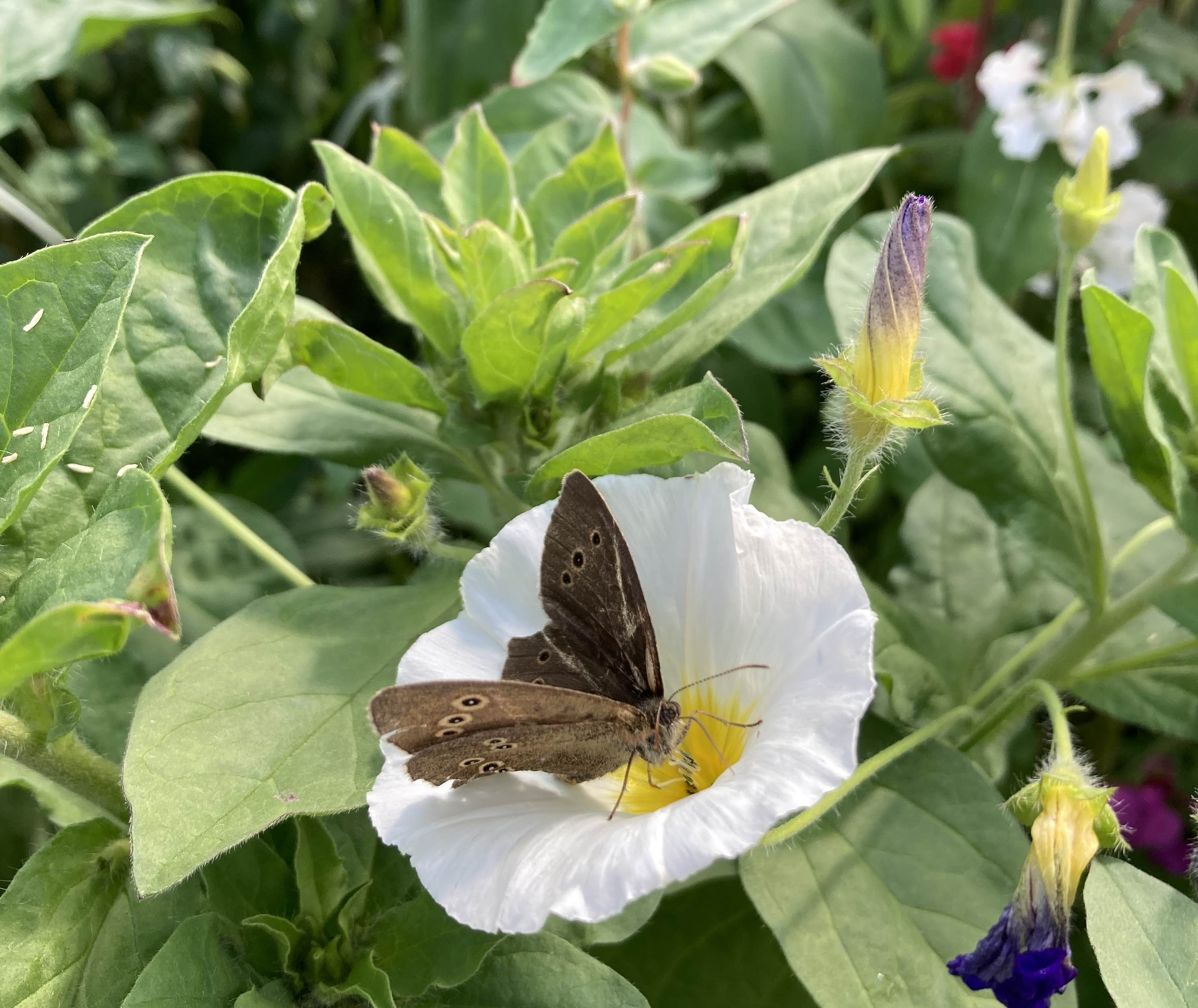
Similarly, apart from the erratic flit of cabbage whites, there have been few butterflies. I did see a painted lady the other day and there has been a tortoiseshell now and again but they have been few and far between. The most numerous butterfly has been the ringlet, a medium-sized brown butterfly that is not the most spectacular but is very charming – if an insect can have charm. I was following one around the garden trying to get a photo and it eventually settled to feed on a white ‘belle de jour’ (Convolvulus tricolor) – the seeds were French and they use this common name which is a bit less scary than ‘annual bindweed’.

The ringlet (Aphantopus hyperantus) is common in most of the British Isles apart from the north west, the Isle of Man and the Channel Isles, and is a species common to woodland edges and hedges. The caterpillars feed in long grass including Yorkshire fog and couch grass and since my native hedges are full of permanent long grass it must be perfect for them. The females apparently scatter eggs at random over host grasses, usually in August, and the larvae feed for about nine months. There are other spotted, brown butterflies but I think I have identified it correctly. The adults fly in July and August and are common on bramble flowers. They are active in cool weather, unlike other butterflies. They are the typical butterfly of shady hedgerow walks. For some reason they are attracted to something in the polytunnel and I am constantly rescuing them.
Apparently the species is doing well and generally on the increase.

 The Biking Gardener
Here in the deep south of the USA I have seen one butterfly. Very troubling indeed.
that is a worry! I hope some appear soon.
Can I ask how you rescue your butterflies without damaging them? I get them in the greenhouse and leave them to find their own way out (hopefully). They are so fragile.
If they are against the plastic I usually cup my hands around them. If they are static and have their wings shut I sometimes hold the wings and let them go and they seem OK. I also have two plastic trays – like you buy fruit in – and catch them, and bumble bees, in those, gently closing in from top and bottom or side to side. I keep the greenhouse doors closed most of the time to prevent bees going in and also birds – which then get cornered by my cat – but the bees and butterflies get in when the vents open of course!