And another problem

Late the other day, when all the urgent weeding was done and I had completed the watering, as far as I could tell, I allowed myself the luxury of deadheading the cosmos in the ‘bedding’ bed. And while I was searching the plants for spent blooms I noticed white spots on the ferny leaves. It was not actually a discovery because I had noticed a few previously, but now there were lots of plants affected.
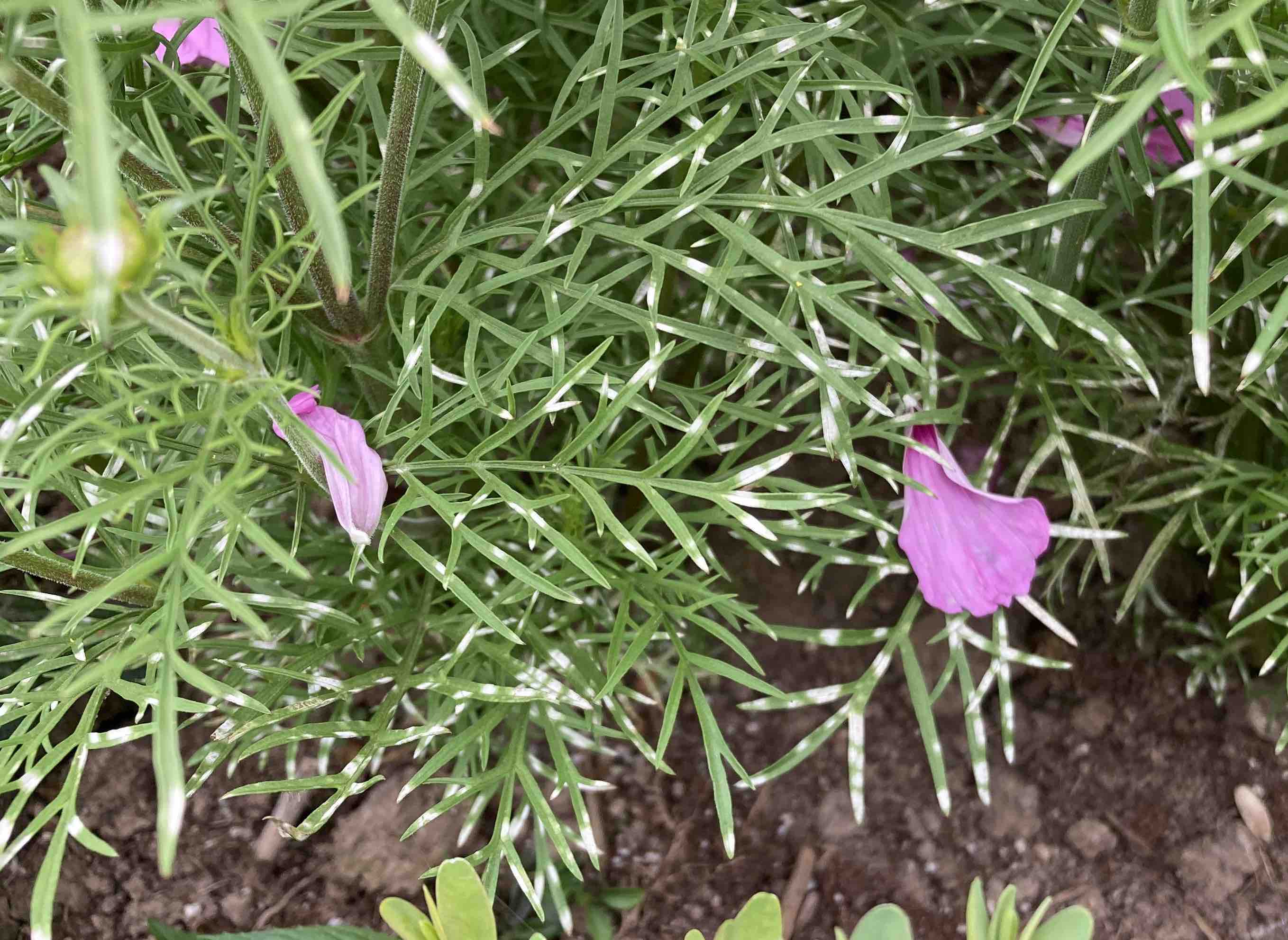
I was not sure what was causing this because I can’t remember seeing it before. It did not look like insect damage and was not powdery mildew. It does not seem to be affecting the stems at present, just the leaves. I went to check other cosmos in the garden. It was present on a few others but it is worse on these short-growing cosmos which are dense in habit. I have moaned about these before because they are not exactly what I thought I had sown and in addition to several white plants, there are also several that have not yet bloomed and are obviously going to be larger plants. As yet, these do not show any signs of leaf damage.

So some investigation seems to show that I have cosmos white smut (Entyloma cosmi). This is not only a new one on me it is a new disease for most people. It appears that it was first seen in 1996 in Japan and later in Germany in 2002. It seems to have then spread across Europe and the world, first being seen in Poland and Switzerland in 2008, France and Italy in 2014 and first reported in southern England in 2008. It seems to be spreading north and west and was in Yorkshire and Wales in 2020. I am not aware when it reached Ireland – I can’t be the first to have it!
The white areas apparently turn brown as the infection damages the plants. The life cycle of smuts is beyond my knowledge or understanding but many are serious diseases of major crops. But they are generally host-specific or have alternate hosts and this specific disease is not known to affect other plants. The incidence of the disease is linked to dense planting where there is poor airflow (tick) and also with cool, wet weather (no tick) but we have had warm, rather dry weather. It has been humid, with light rain which may have increased humidity around the foliage, but it has not been as wet as last year.
However, it makes me wonder where it came from at the start. It must originate where cosmos are native and that is not Japan. It must originate in Mexico or central America.
And how did it get into my garden? I grow cosmos every year and buy fresh seeds. I do not think it is carried on seeds. The problem is that, because smuts have complex life cycles, there may be resting spores formed that remain in the soil.

So I have a dilemma. I really should pull up these plants. But because smut spores are resilient, even if I do I probably should not plant cosmos in the garden for many, many years. That is going to be an issue for me because I pop them in the borders in many places to fill gaps.
It is hardly a disaster but it is a shame and I will need to find something else to rely on next year. Other plants are just as easy to grow but cosmos fit well into my intensive seed-raising in spring because they can be sown late because they grow so quickly. They are also more resilient to slugs than some annuals (though they do need protection) and they flower for such a long period.
I would not have planted cosmos in these beds next year anyway because i try not to plant the same plant in the same spot every year. But a summer garden without cosmos is going to be a bit sad.
Oh well, back to the drawing board.
In the meantime the ‘bee bed’ is starting to fill with poppies.

 The Biking Gardener
That is very sad news. I wonder if it has spread to the east of Scotland yet. I hope not, but I’ll know it if I see it in years to come.
I just had to pull out a large Bowles Mauve perennial wallflower. It was covered in, what I found out, was brassica white blister. I don’t grow a lot of veg, but it looks like my spring wallflowers will be off the cards for a few years. Such a shame!
White blister is at least a native disease. It often infects hedge garlic and honesty. Erysimums loose vigour as they age so that may be why your plant was so badly infected. I would not give up on wallflowers but look for it on weeds too. There is always something to look out for!
I have 3 beautiful Bowles Mauve that I only bought this spring and are quite large. Devastated to realise that they are covered in white blister, very far advanced (I’d thought maybe I’d let them dry out or something, didn’t look closely). Have cut back as much as possible for the time being as the butterflies are all over them and hate to deprive them. Do you think they can be saved or should I pull them out, leaving a massive hole in my sad little estate garden in Kildare… thanks a million!
That is a tricky one. To be safe it would be best to remove them. But if you have hedge garlic, honesty or bittercress which are also hosts to the disease new plants will also probably be affected when planted. I am sure the heat and dryness of spring has probably made the issue worse although, in theory, damp and poor air circulation are the primary factors that encourage the disease.
If they were mine I would cut of the worst affected areas. Rain is forecast this week that should prove some new foliage. Just keep an eye on them.
Thanks so much for your response, very kind. I have cut back as much as I can. And yes, I was surprised at the extensive spread given the very very dry weather. They look better now after the rain, but lets see how it pans out!
This is annoying to read about, but also sort of useful, since I have not encountered it yet.
I have grown Canna for years without problems, but recently purchased some that are virused. Before I knew it, some of mine were also virused. What is so annoying is that it was distributed by a grower!