Vivacious violas and friends
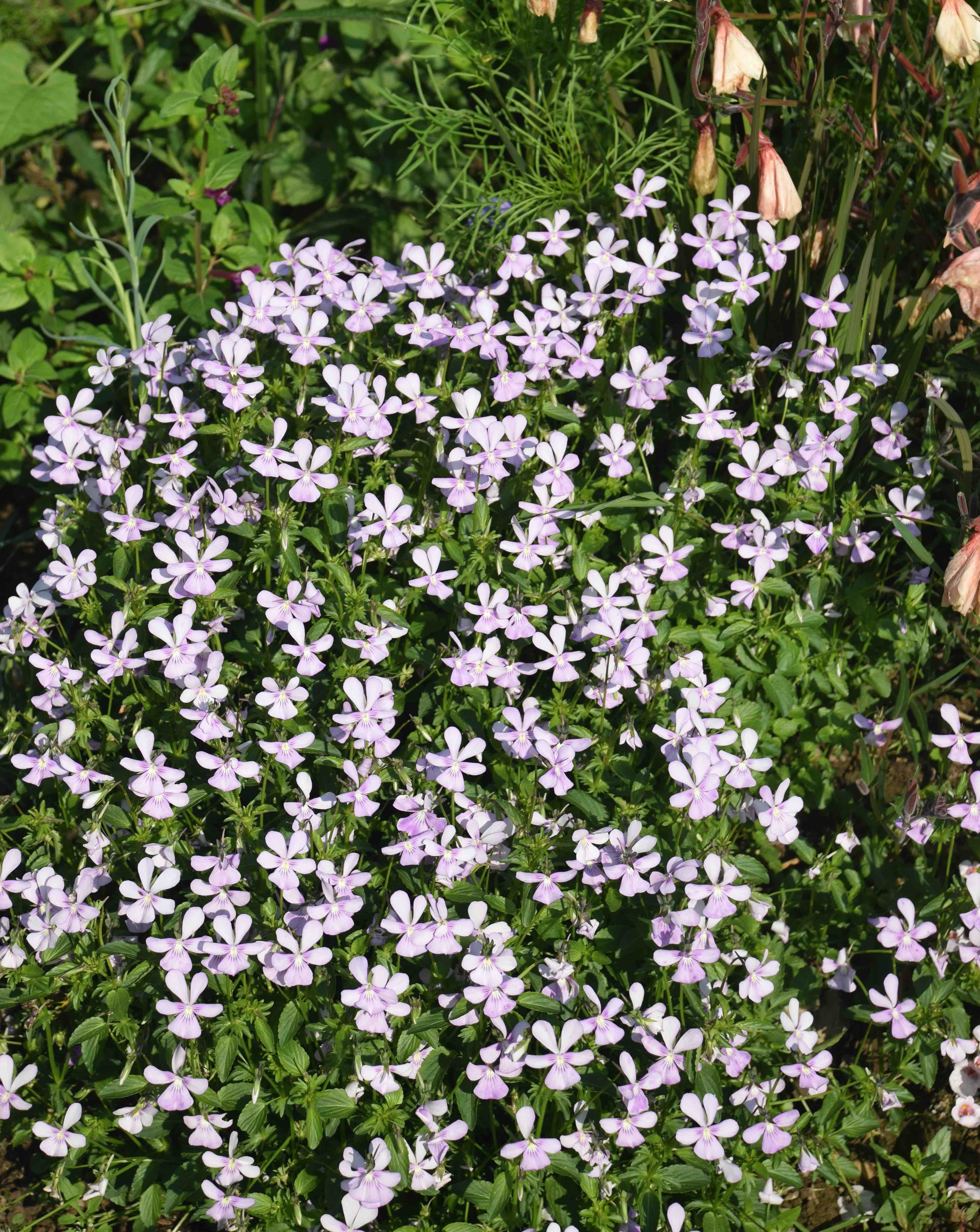
From the outset, one of the nice surprises in the garden has been that perennial violas have done quite well. In general, violas dislike searing summer heat and they are associated with Scottish gardens, where the first bedding violas were produced, so it is not surprising that they do well in Ireland.
A few are regularly seen in garden centres here, most often the yellow and lilac ‘Etaine’ and cream and purple ‘Rebecca’, both deliciously scented.
Several years ago I bought a few blues and they have persisted although the regal purple ‘Martin’ finally gave up the ghost, mainly, I think, because I planted it in a rather dry, south-facing bed where it struggled with aphids. In the end I got irritated with it and pulled them all up in a fit of pique. This is not at all like me and I had propagated dozens to use as edging but I was fed up with stunted plants with curled leaves and no flowers.
It did not put me off violas though and one of the first batch, ‘Ivory Queen’, helped me keep the faith. It has proved reliably perennial and the slightly waved flowers, in cream with a slightly lilac, silvery reverse are wonderfully fragrant.
At this point I should mention how to keep the plants neat. As the weather warms and the plants get bigger the stems can flop and get straggly. This is the time to give the plants a haircut, trimming away all the growth back to about 8cm. Now you can give a mulch of compost, without burying the crowns, and a sprinkle of fertiliser to boost growth and a second flush of flowers. Unfortunately you cannot use these stems for cuttings. Violas have hollow stems and will not root.
But the mass of new shoots that grows from the base are perfect for cuttings and, if taken in July or August, will make perfect plants to put in their flowering positions in autumn or spring. If you are lucky you may even find shoots that are showing small roots at the base, ensuring the cuttings will root easily.
I need to say that these are perennial violas and not the usual kinds sold in millions for bedding, These exhaust themselves and set seeds. You can cut them back after flowering and you may get a second flush but they are not bred to last long. It is like comparing plastic cheese slices with mature cheddar. So I will say no more about the seed-raised violas to avoid confusion.
These perennial violas are often assigned to Viola cornuta, but more often just listed as violas. Viola cornuta, the horned pansy because of the long nectar spur, is native to the Pyrenees. Most of the named cultivars rarely set seed but the species will. The lack of seed production helps these plants continue to bloom. I have found seed on ‘Ivory Queen’ and sowed it, producing similar plants and a few with yellow blooms.
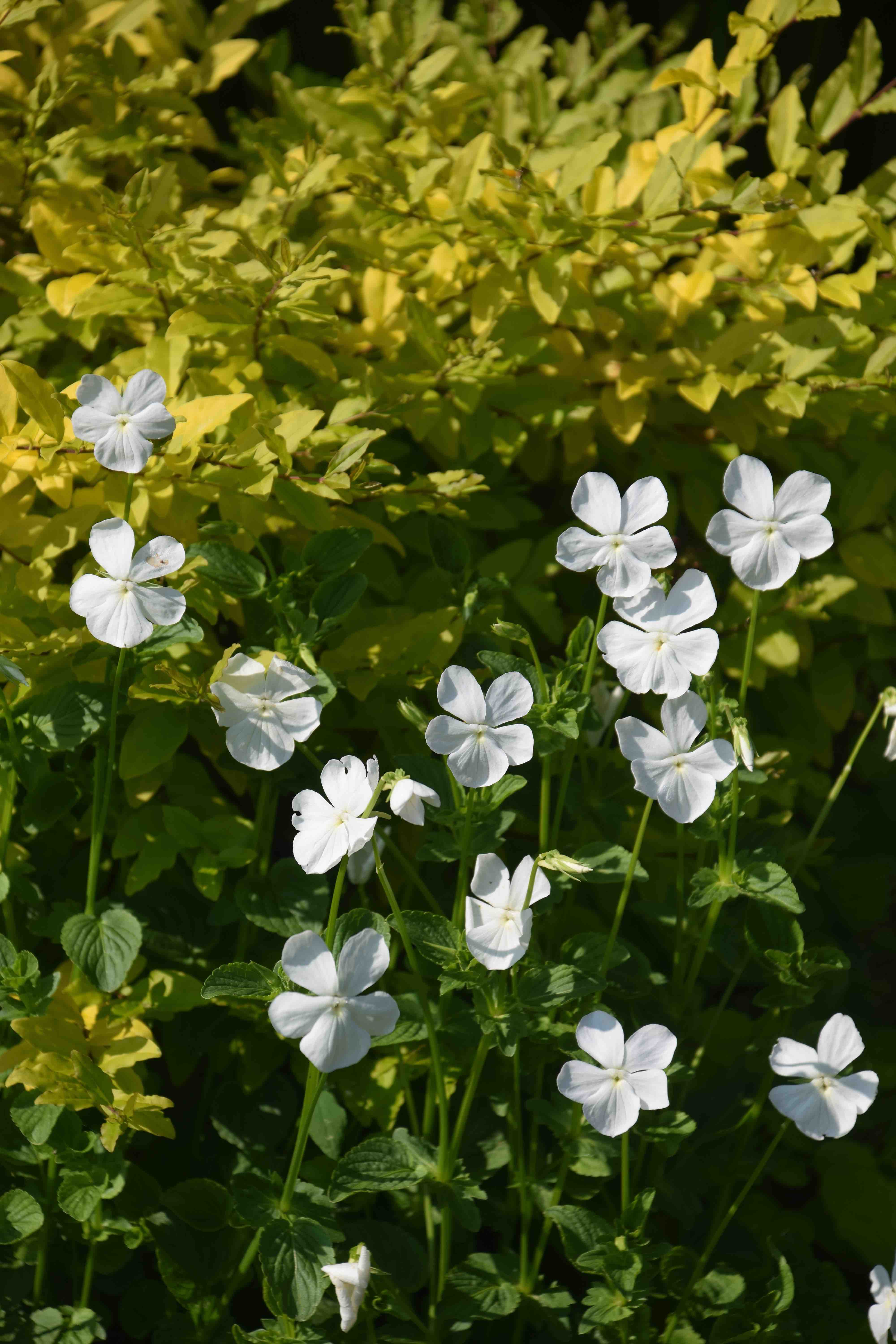
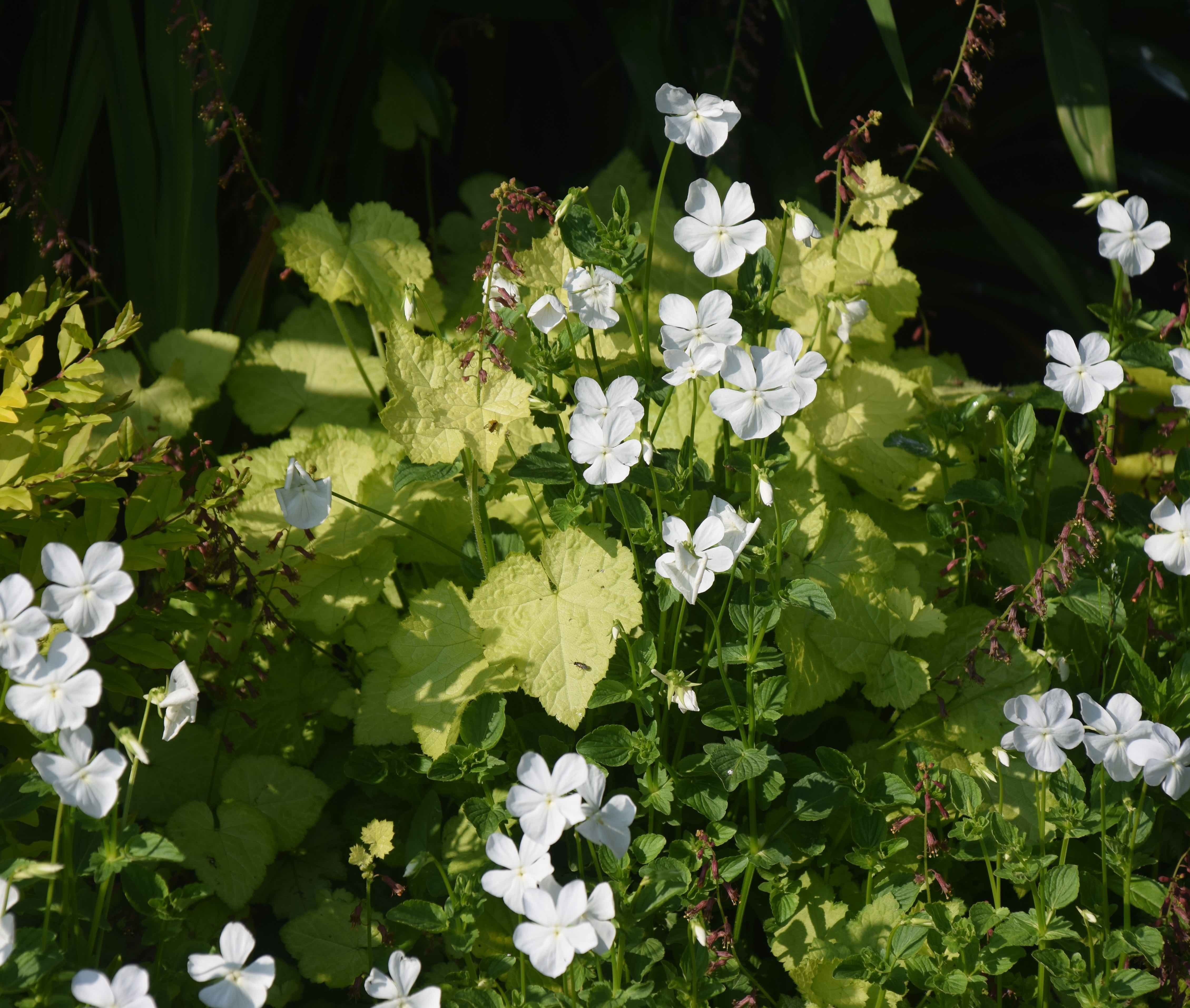
One of the newer introductions to the garden was ‘Wisley White’, often called just Viola cornuta ‘Alba’. The flowers have little scent but, for the species, the blooms are pleasantly ‘round’ and not as slender as most. The blooms are extraordinarily white. Last year I found a few seed pods and sowed the seeds in September, overwintering the seedlings and growing them in pots, planting out in April. I was not sure what to expect and I also took cuttings. All the seedlings seem identical to the parent and I am delighted to have them as an edging to one of the ’yellow’ beds. One plant is nice but a drift is better. This bed has been a problem to ne and the crocosmia ‘Suzanna’, if that is what it really is, is a bit of a runner. Some crocosmia form neat clumps while others spread and this is one of the latter and it also splays open when in bloom, something I must anticipate this year before it flops. It, and the general position is quite shaded. In the early years of the garden shade was something I longed for. Now I have some shady areas and I am grateful. Most gardeners consider shade a problem but it does open up a whole new range of plants.
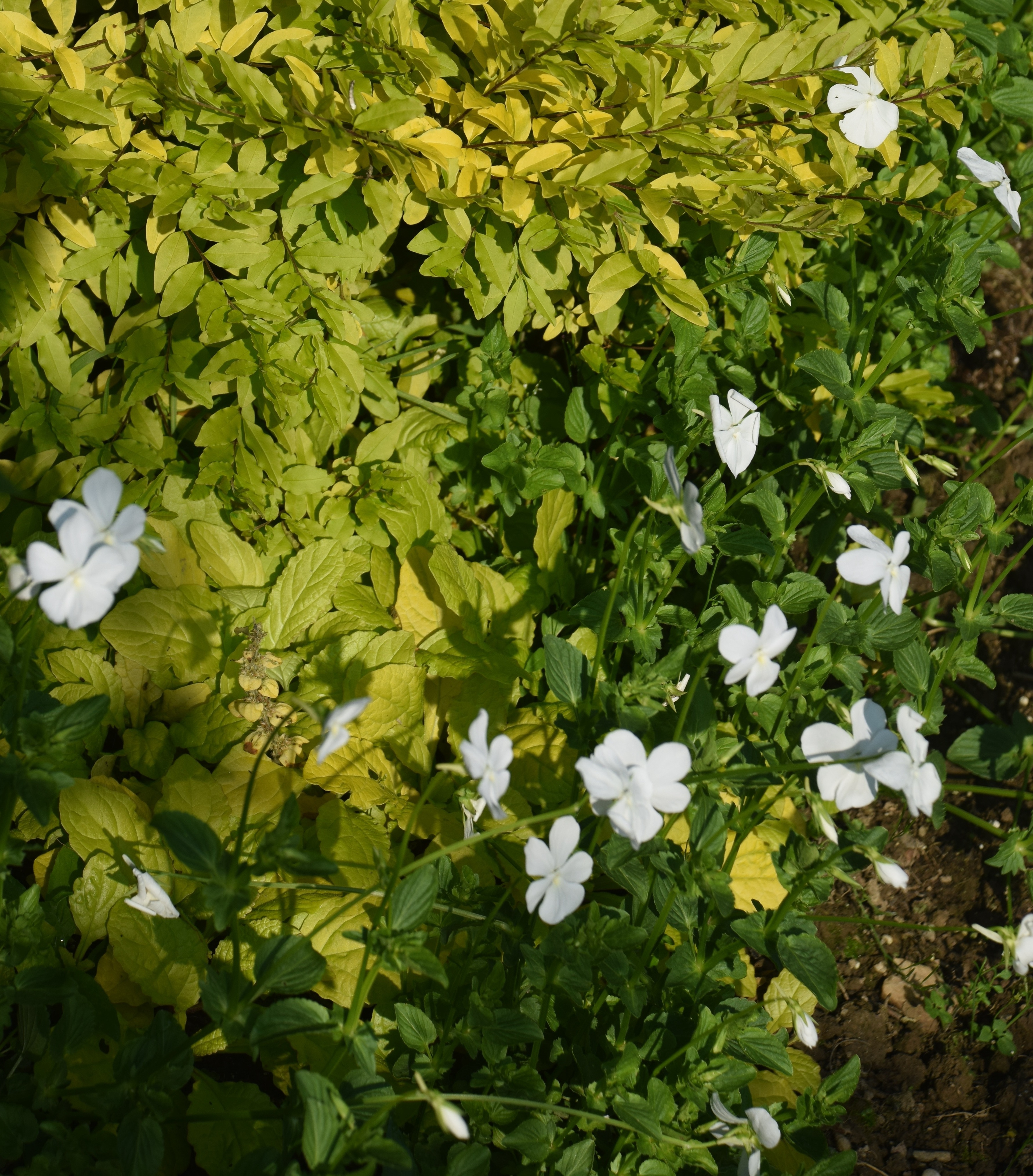
Last year I added Ligustrum undulatum ‘Lemon Lime and Clippers’ (great plant: stupid name) as the main plant in front. Eventually It may be large enough to cover Suzanna’s ugly legs. The ajuga ‘Tropical Toucan’ (another plants I am getting to admire) that was used in winter pots, was replanted here and I added Tolmeia menziesii ‘Cool Gold’. I will deviate from the violas to mention this, one of my favourite plants.
Tolmeia menziesii is an evergreen relative of heucheras and native to the Pacific Northwest of North America. I grew the green form as a child because of its curious habit of producing small plantlets on the leaves where the blade meets the petiole. If you peg these down onto the soil they will root. It gives the plant the name of piggy-back plant (pick-a-back plant) or youth-on-age. It is often grown as an easy windowsill plant.
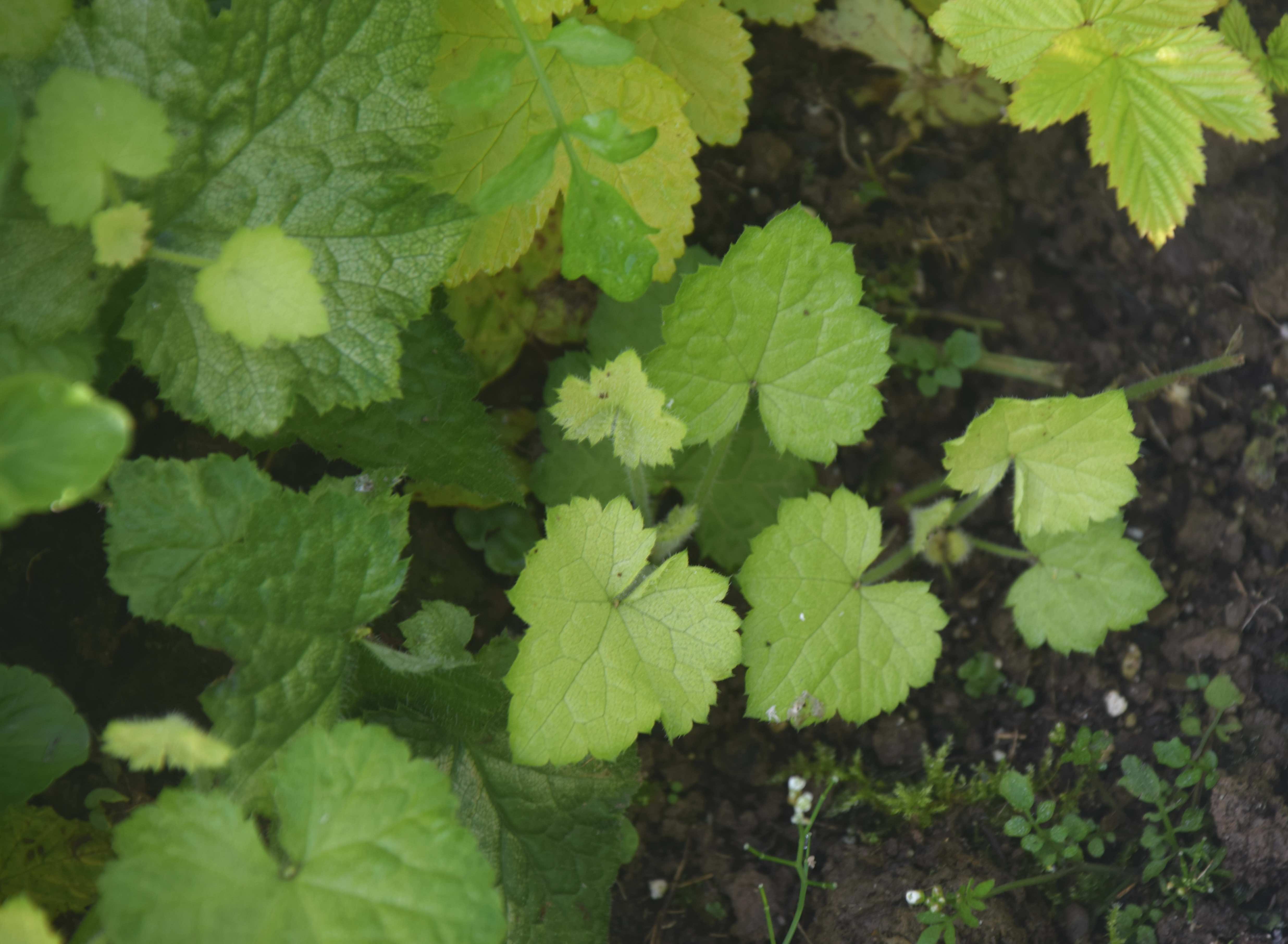
For many years the only yellow-leaved kind I knew was ‘Taff’s Gold’ with speckly green and yellow leaves. It was named after the late Stephen Taffler, a great collector of variegated plants I met many times. I still like the plain green form because I love the flowers. I am probably alone in this because they are small, brown and anything but showy. But the four linear petals are reflexed, whiskery and the tiny specks of yellow pollen shine. They are fascinating and must be pollinated by midges or something similar.
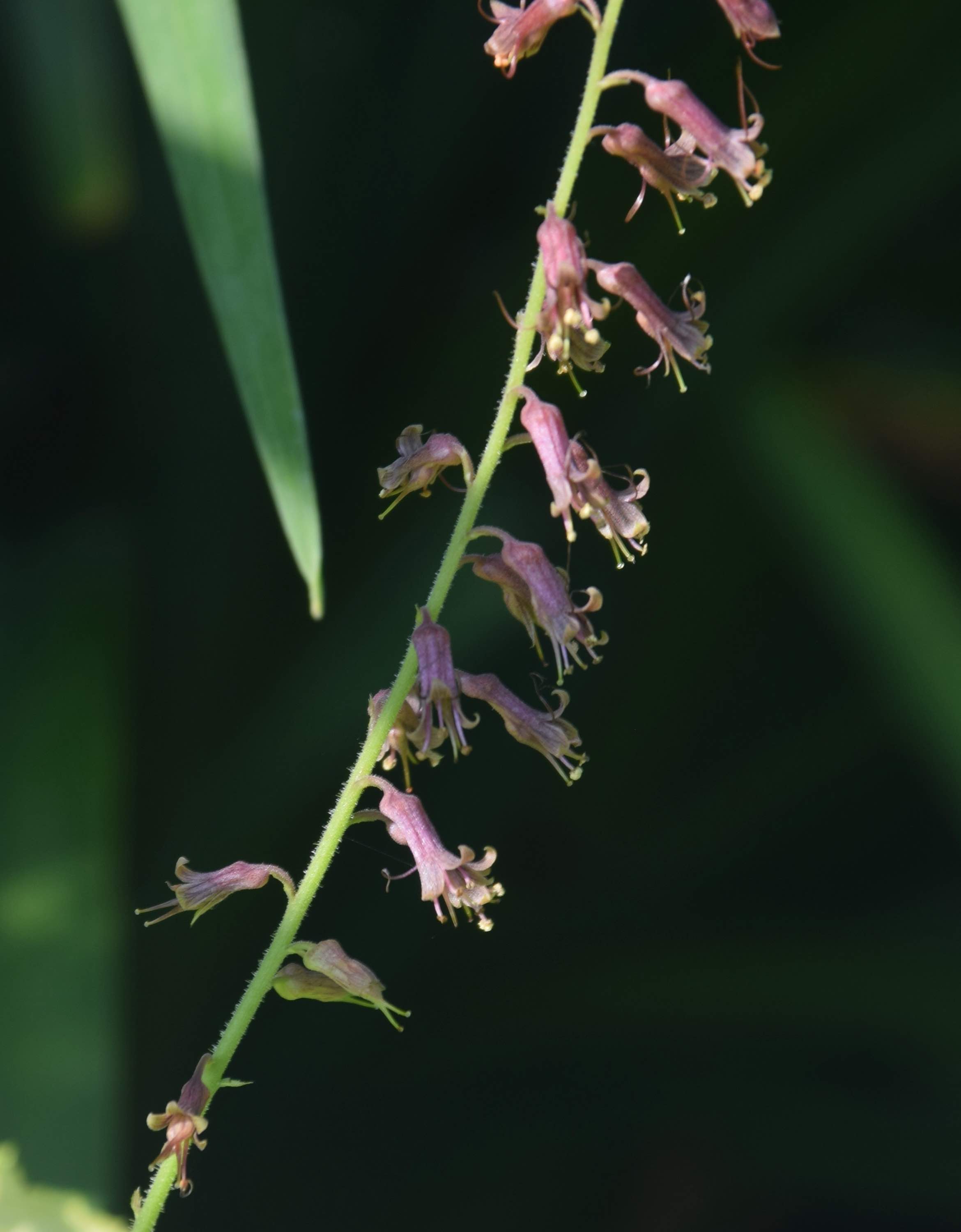
In its native range it is potential prey to the famous Oregon ‘banana slugs’ but the crushed leaves, which smell of cucumber, release a natural slug deterrent and I have to say that I have never noticed slug damage on the plant although I always attributed that to the bristly leaves in the past. My plant is ‘Cool Gold’ which I believe to be a Terra Nova introduction – discovered in the wild in Oregon by staff member Ken Brown. The foliage is soft lemon (rather than gold). It thrives in shade and will tolerate dry shade. ‘Wisley White’ glows against it.
The other success has been ‘Victoria’s Blush’ which is more typical of Viola cornuta with masses of slender blooms. The flowers are soft pink with deeper veins. Pink violas are not that common so I am pleased to have this and it has proved a great grower and combines elegance with a good show of colour.
 The Biking Gardener
Thanks for reminding me of Tolmeia menziesii. It’s a plant native to my region and I really should have it in my garden.
It is a quiet little plant and apparently has naturalised in the British Isles but I do like it
On violas: Viola labradorica is a huge pest along with another, name forgotten, one of similar stature but with green foliage. Mary hates both with a vengeance
I understand how, in a garden of choice plants, the purple-leaved Viola labradorica could be a pest – I have certainly had it self seed madly in previous gardens. But it is quite cute and useful – don’t let Mary know I said that!
Viola veracunda has been a very good reliable perennial here as has V. sororia ‘Freckles’.
I would like to add more. I have never grown ‘Freckles’ but it looks a pretty thing.