Revisiting rhododendrons
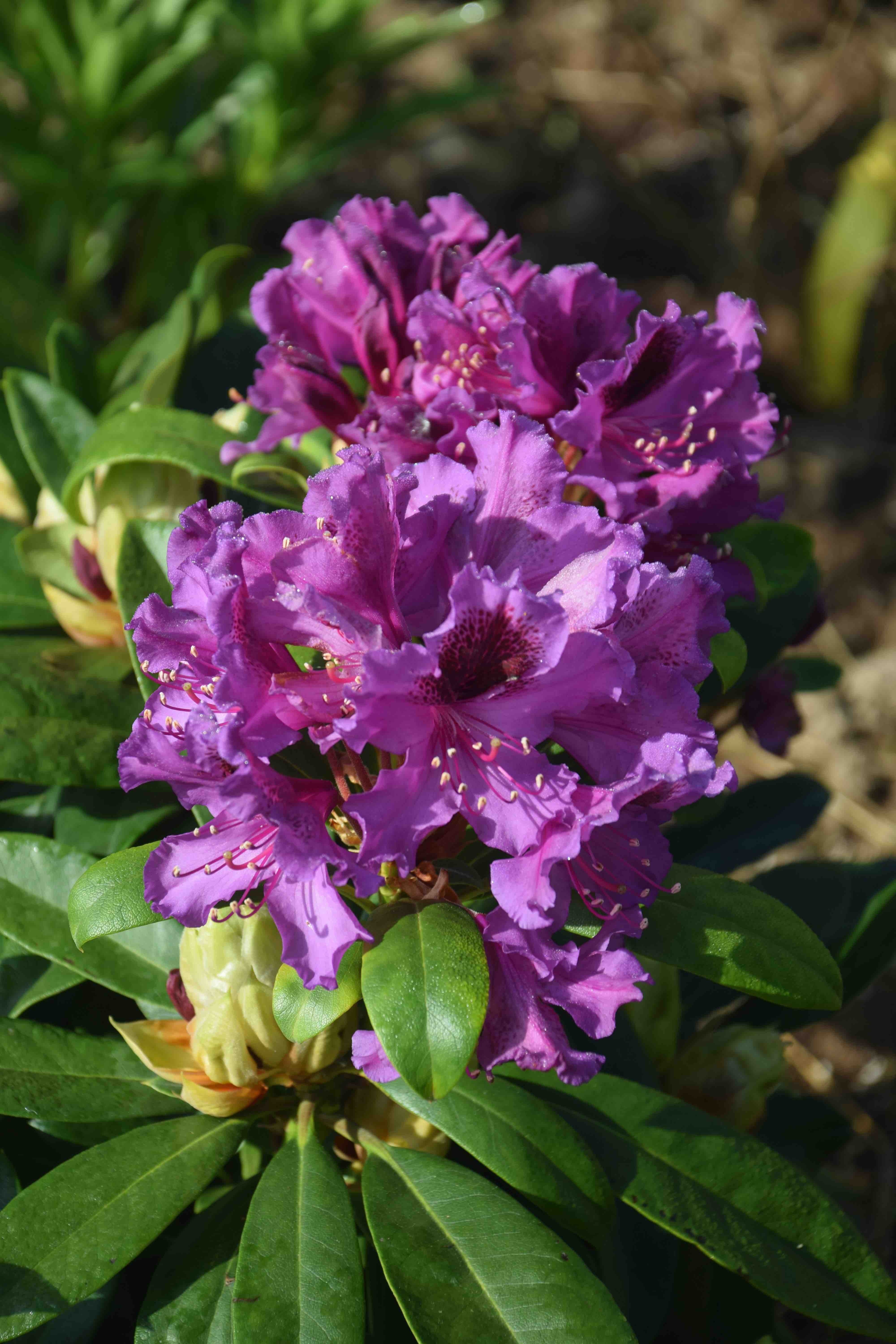
Most of my gardening life I have gardened on soil that was not really ideal for rhododendrons. In my early life it was too alkaline and then, mostly, either too dry in summer or sticky clay. That didn’t prevent me from admiring them though. From delicate species to retina-searing hybrids, there is something magnificent about. They tend to remind me of tartan slippers, cigars and a glass of port. That may not actually be so weird since they do so well in Scotland (as well as Ireland, of course) and most of the historic rhodo gardens in the British Isles were created by rich men. One of the many joys of this time of year is visiting large gardens and being overwhelmed by the magnificence of these plants.
But, as I said in my last post, I do not really covet them and don’t feel they ‘work’ in my garden. In fact they don’t ‘work’ at all and the few that I have actually planted, out of a sense of duty, have suffered slow, lingering deaths. I think it is down to my heavy soil and possible waterlogging. The soil is on the acid side and other lime-haters grow, if not actually thrive (late spring frosts are the main problem with pieris). Rhodos have very fine, fibrous roots, close to the surface and need plenty of organic matter in the soil.

When I was in the UK last week, in Oxted, Surrey, I had to walk past some old rhododendrons every day and some were breaking bud. But they illustrated very well two of the main problems with them. They were obviously planted a long time ago and were on a bank where they were bravely battling the brambles and nettles but many were stricken with rhododendron bud blast.
This is a fungal infection that kills the flower buds, turning them greyish brown. It is spread by rhododendron leaf hoppers, most active in July, which puncture the buds as they feed, allowing the spores to infect the buds. There is obviously a lot of variation in the resistance to the problem and some of the plants had very few healthy buds while others were largely unaffected. It is good practice to pick off the affected, dead buds so that the hair-like fruiting bodies that will soon emerge from infected buds do not spread the infection. On this plant you can also see the angular notches that reveal the presence of vine weevil adults.
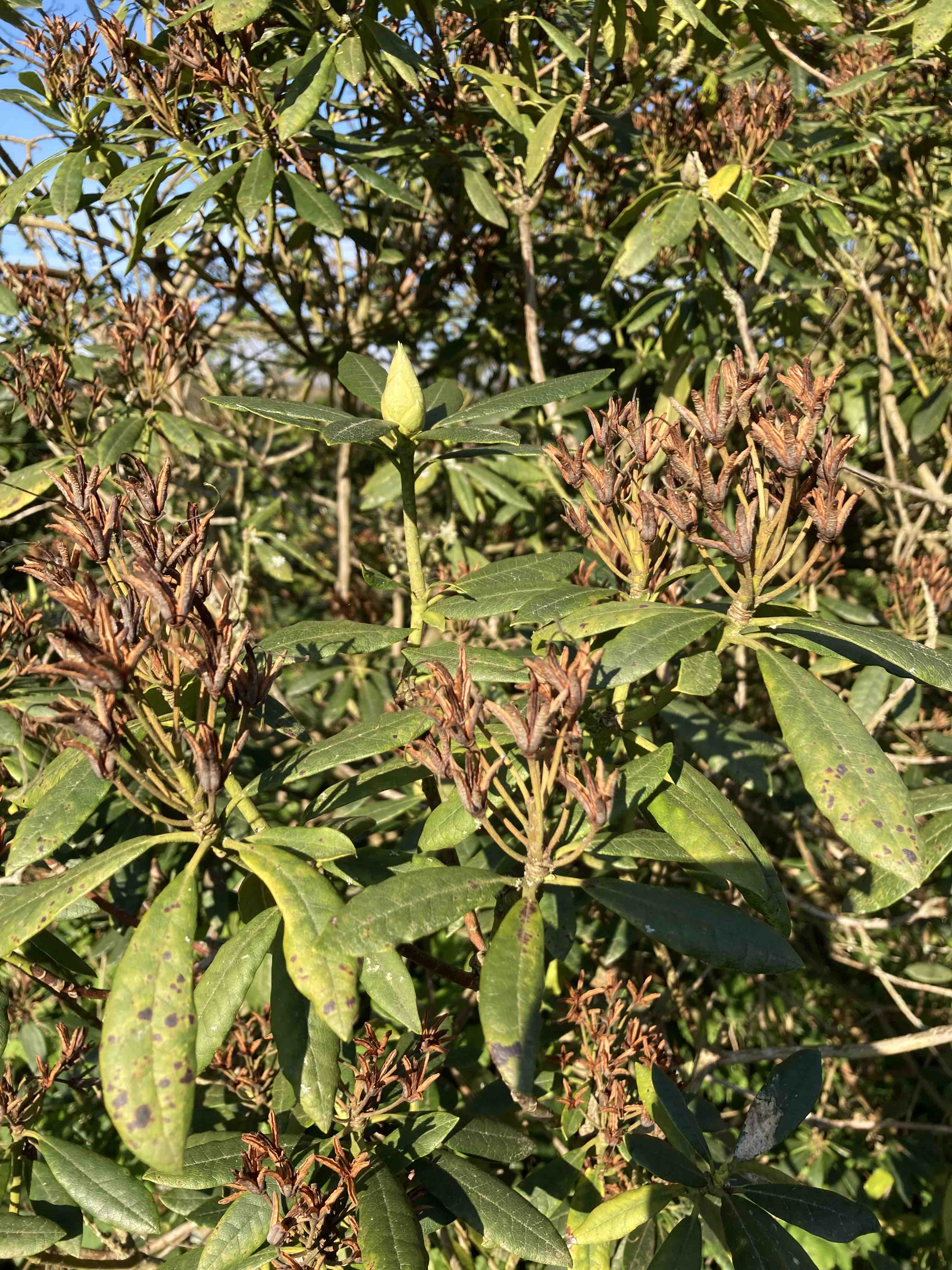
Another plant showed the importance of deadheading. I know it is not always possible on a large plant and there are so many things to do in June but this poor plant clearly flowered well last year and it is covered in seed pods. But there is no sign that new growth was produced last year, which appears from below the flower clusters. There were a few shoots but not many.
I had to plant a rhododendron for my weekly jobs in Garden News. I decided to buy an Inkarho ® rhodo. These are grafted onto vigorous rootstocks that are also tolerant of slightly alkaline soils. The ‘range’ includes some novel varieties but the Easydendron® range are existing varieties grafted onto the special rootstocks. They are supposed to be more vigorous and to need extra feeding but I am not sure if this affects the mature size. Of a limited choice I settled for ‘Orakel’ which is a deep purple. It is a German variety bred by Holger Hachmann, introduced in 2009 and generally regarded as a good purple. It should reach about 1.5m in ten years. Anyway, I have done my best for it. There is now a little shade from neighbouring birches, something the others did not enjoy in my infant garden, and I enhanced the soil with plenty of spent strawberry bags (coir and perlite).

Fingers crossed.
 The Biking Gardener
Rhododendrons and citrus trees are the two horticultural crops that I miss most. I will likely resume rhododendrons before I retire. Although they are an obscure crop in California, they are popular enough to justify growing. Rhody is named after them, and his name is on the license plate of his Roadmaster – Rhody’s Roady.