Hanging on in there – late flowers
Colour is something of a rarity in the garden right now. Leaves should be turning fashionable shades of bronze, copper and vermilion but the sad truth is that recent gales and rain have been ripping them from their stems while still green. A vicious easterly the other day has finally managed what all the previous winds failed to do during summer and ripped the banana leaves into tatters. It is the most sheltered spot in the garden but was not protected from this particular storm. It is of little consequence because it will soon be time to cut the foliage off and insulate the ‘stems’.
Wet and windy weather here usually means comparatively mild temperatures and that means no frost. I am taking every day as it comes but the day when I need to clean away the old tomato plants and make room in the greenhouse for the cannas et al is becoming urgent. But a few outdoor plants soldier on and add splashes, or more truly, ‘hazes’ of colour.
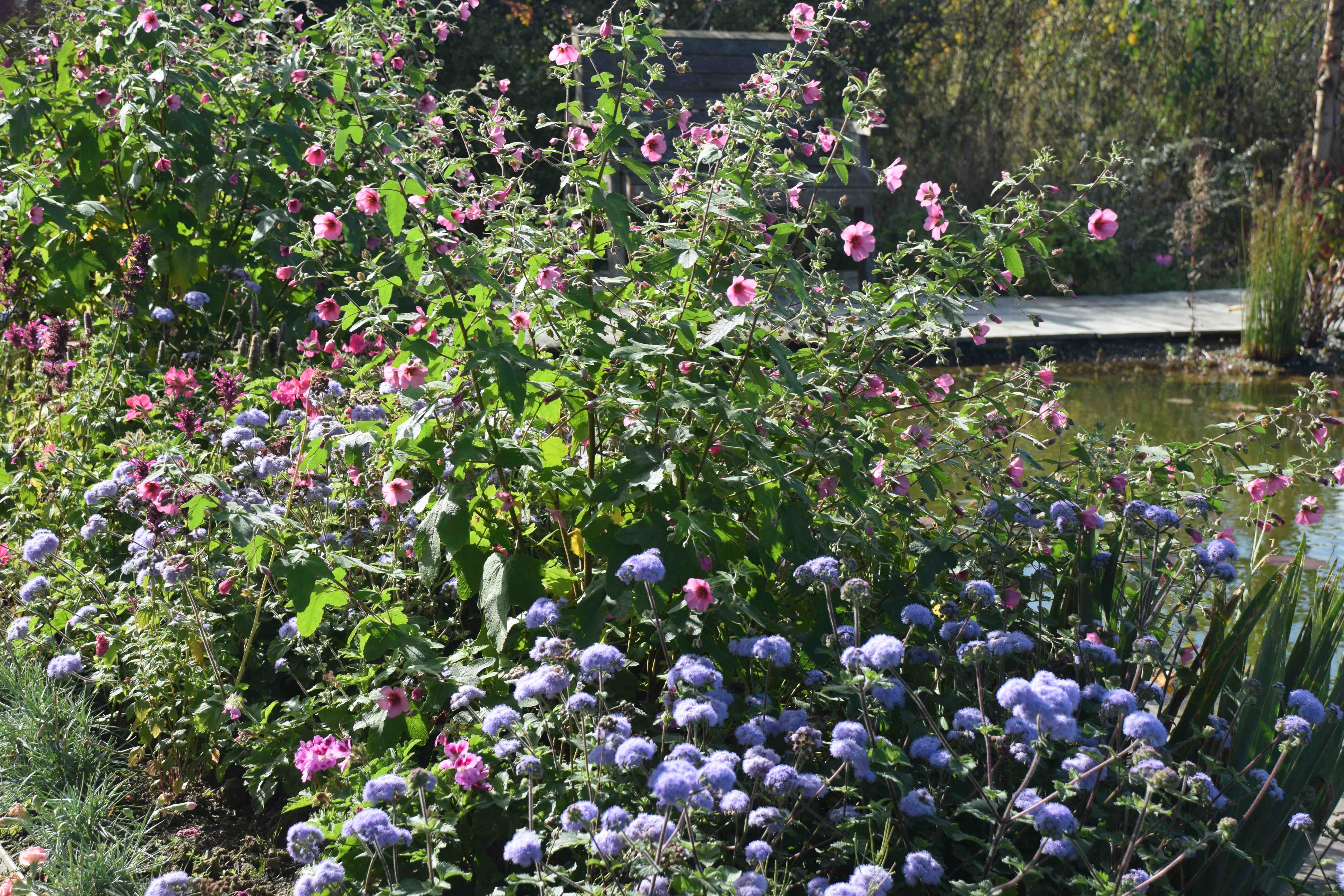
Anisodonta ‘El Rayo’ is possibly at its peak now, or would be if the flowers were not constantly shredded. Deservedly popular, I am getting to grips with how to treat it for best results. It is famous for being almost constantly in bloom, all year. Efforts to treat it as a hardy shrub have been rewarded with failure so far – it has not quite managed to pull through the cold, and more likely, the wet, of winter here. I am sure that, planted against a sunny wall it would sail through winter, but in a ‘normal’ bed it seems able to stay alive until March and then dies of a broken heart, waiting for the warmth.
So I treat it as a half-hardy perennial and take cuttings in late summer. I then don’t have to worry all winter. But it takes a long time for the plants to ‘bulk up’ after planting in May. They make lots of growth and flowering only starts in earnest in August. These three plants (above with my perennial ageratum) will be left in the ground because the soil here is better drained. I am tempted to plant some in the drive by the house wall where the soil is just hardcore. The meagre diet will reduce growth but may encourage blooms and help them survive. One mitigating feature that encourages me to carry on with the plant is that honeybees seem to adore the flowers.
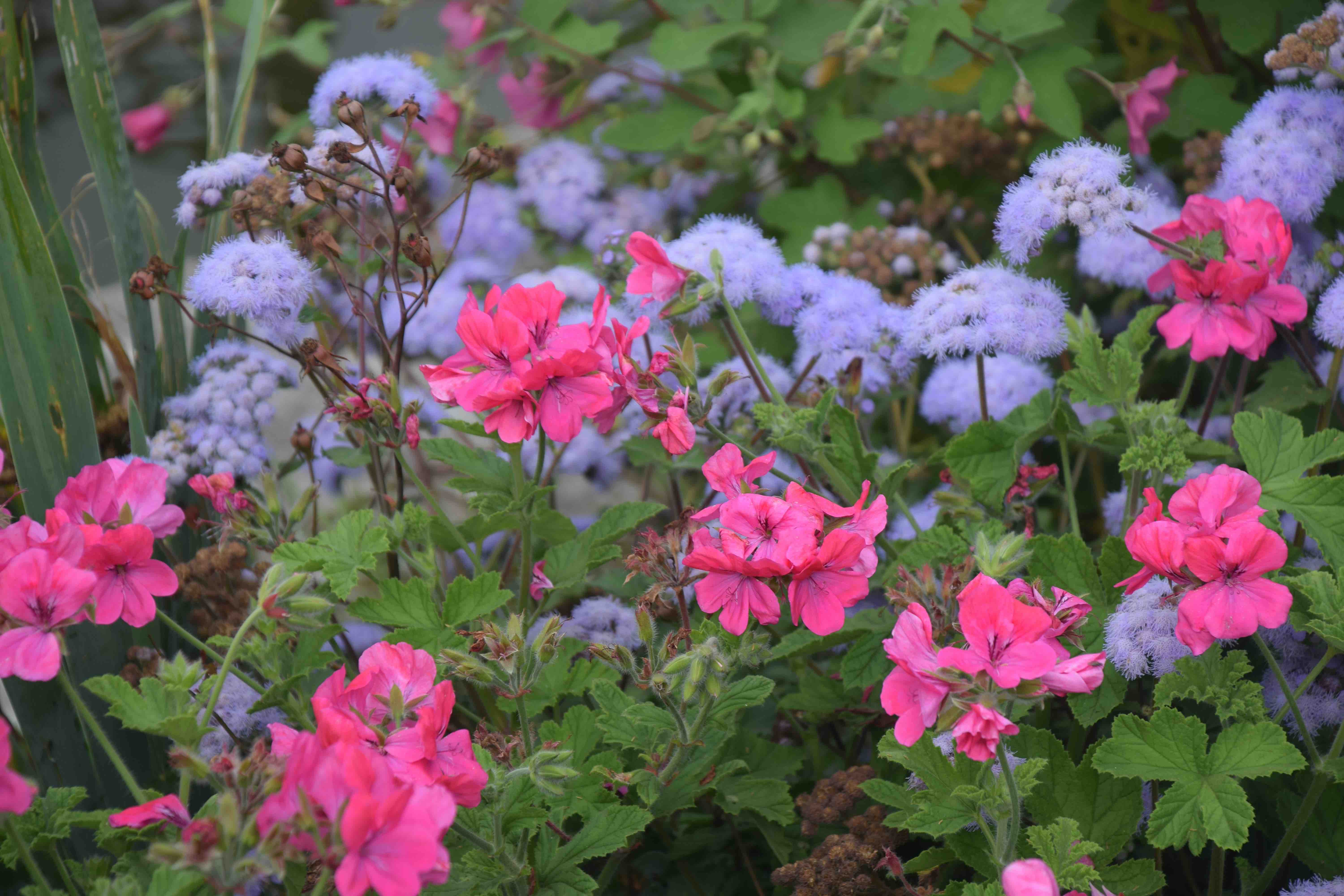
Among the ageratum I planted many pelargonium ‘Clorinda’, a scented pelargonium that I am glad to have again. It is one of the pelargoniums classified as ‘Uniques’ which are a variable group. The foliage is described as cedar-scented and it has very large and showy flowers for a scented leaf pelargonium. I assumed it was ‘old’ and seems to date back to 1907. If old plant are protected from frost in winter they will easily reach 1m high and wide but I take cuttings in late summer to bed out. Although I have a tendency to be attracted by oddities with small blooms I really appreciate the large flowers of this one, produced all summer and the bright colour is especially welcome right now, the flowers produced in abundance even though the plants have been stripped for the 24 cuttings I have taken for next year.
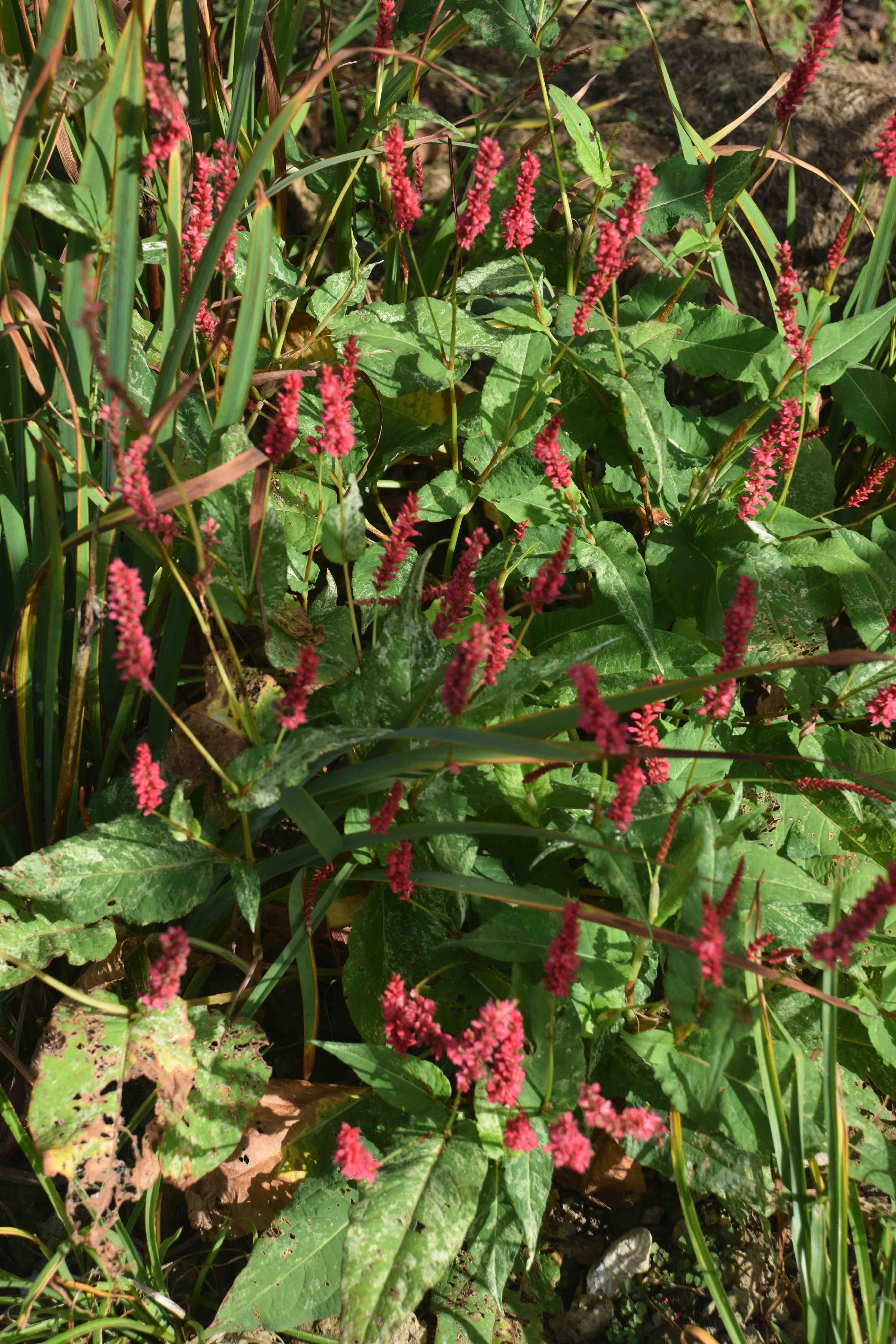
I added just one new Persicaria amplexicaulis this year; ‘Spotted Eastfield’. It was planted in a ‘good spot’ near the rather disappointing geranium ‘Joseph Green’ – my expectations were just too great. ‘Spotted Eastfield’ promised variegated leaves and the usual long succession of red blooms. I am not aware of another variegated form though there are some with golden leaves. ‘Dotty’ variegation is not my favourite and here it is rather subtle. It looks rather too much like the speckling caused by leaf hoppers. If you didn’t know the plant is supposed to be variegated I don’t think you would notice. Overall the plant is fine, if not outstanding but I certainly won’t be throwing it out even if I don’t admire it s often as I expected to.
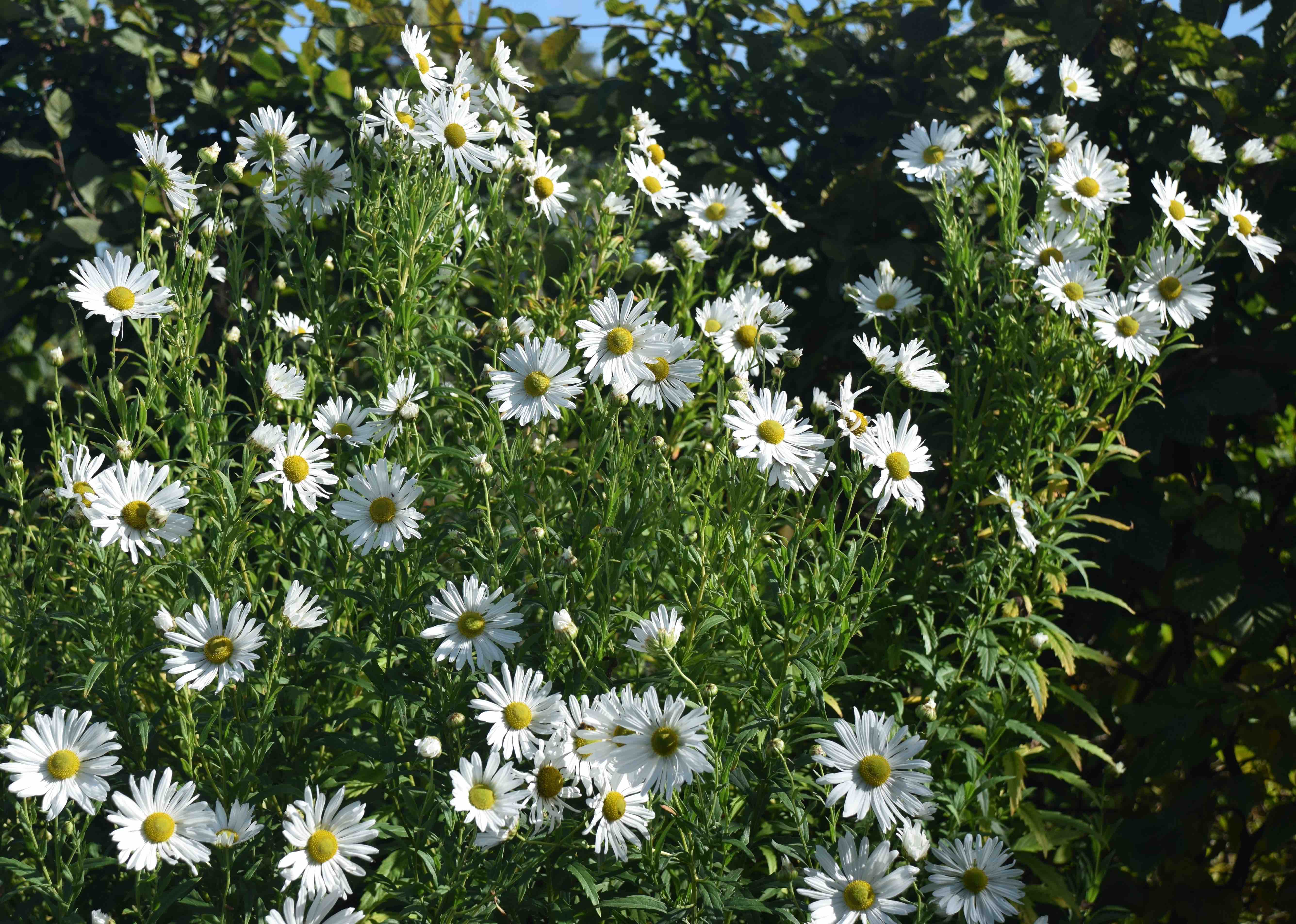
Leucanthemella serotina is another plant I like but is always slightly at risk of being discarded, usually in August when it seems as though it is just a bulky lump of ugly green and will never pay for its upkeep. But then, in late September, when I have almost given up on it, the buds open to the most beautiful, pristine white daisies with fresh, lemon-lime button centres on stems at least 2m high. Every October I promise I will pinch out the tips the following May but I forget. I WILL remember next May. It gently suckers, making a few, gaunt stems that branch profusely in mid summer. A May pinch will make for a much better clump. The fact that the great Margery Fish wrote so endearingly of this plant is the reason I first grew it and continue to persevere with it.
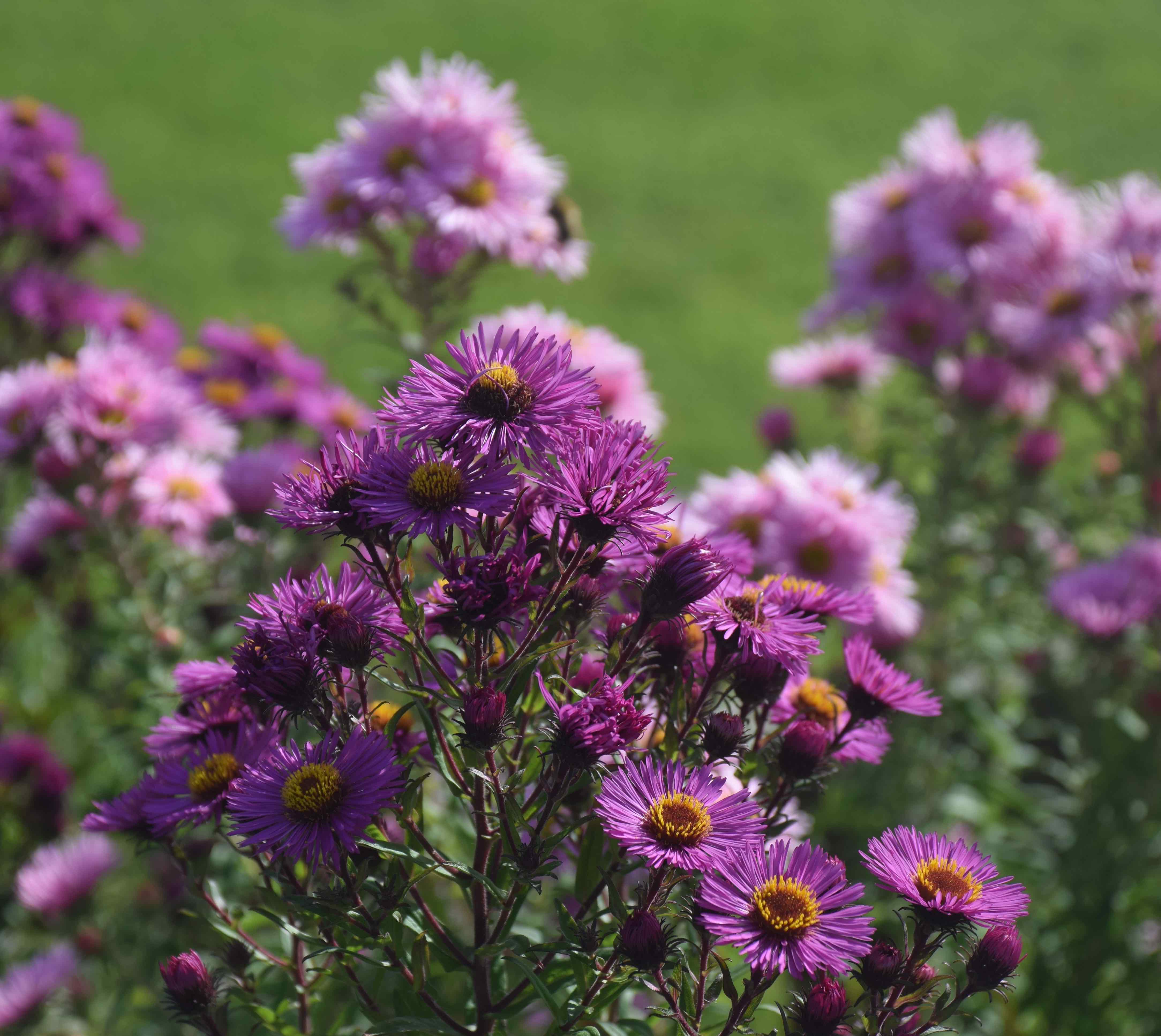
Symphyotrichum novae-angliae or New England Asters are also so late that I almost give up on them. They are easier to deal with and more perennial, if not frequently divided, than the nova-belgii kinds. The colour range is more limited, though there are some bright colours, and the plants are generally taller and coarsely hairy. The flower clusters react to dull weather in the same way as me, looking utterly miserable but if the sun shines they open wide and reveal all their flowery goodness to the bees and butterflies. After a long wait all summer it is a shame that the terminal flowers open first and are often past their best and brown by the time the majority of the flowers open.
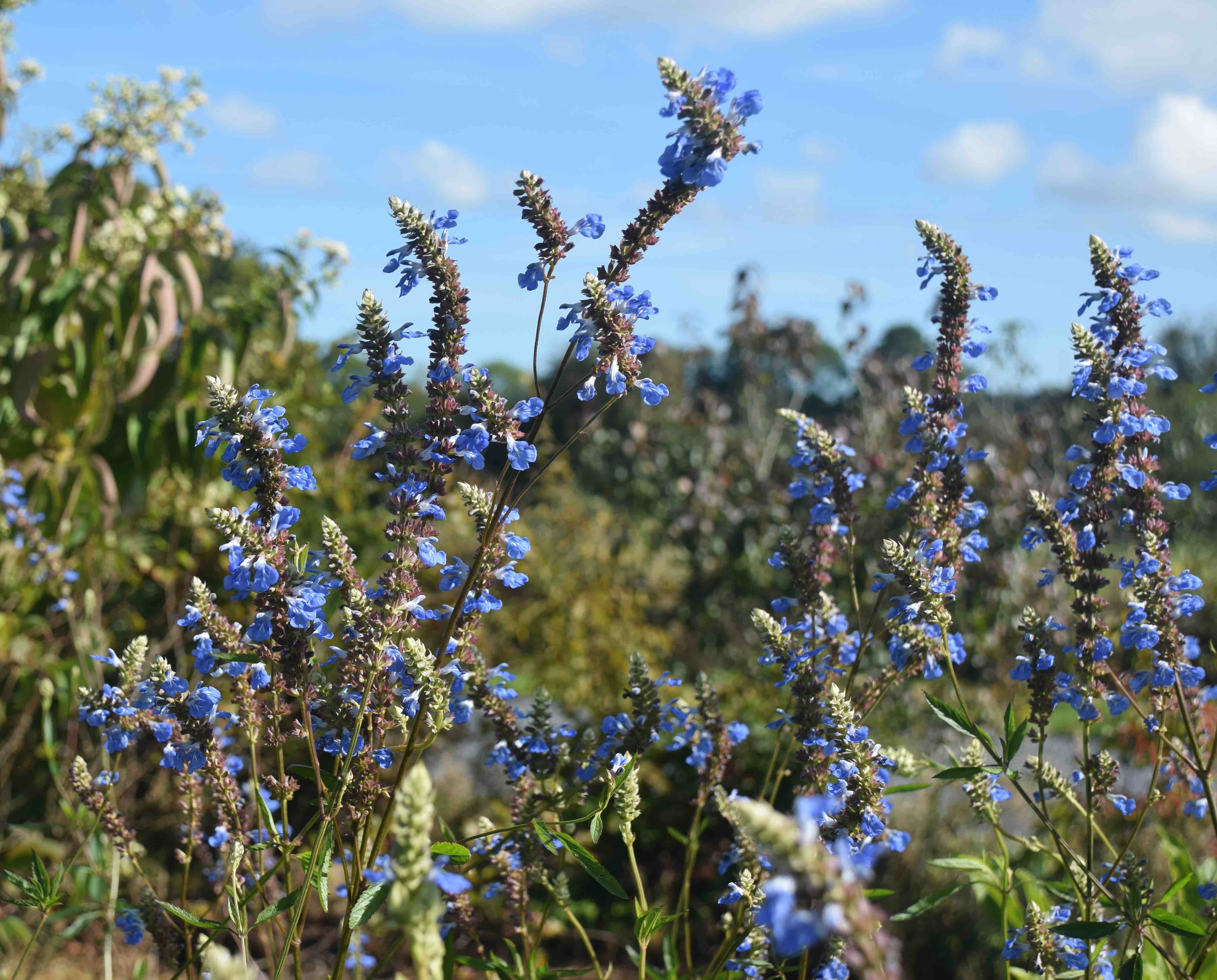
All these plants seem to come with a caveat! I suppose few plants are perfect and at least these are all relatively easy to grow. And to bring colour so late is a great feature. If I had to grow one plant for autumn colour I would choose Salvia uliginosa. It is far from perfect and it does spread rather enthusiastically by creeping stems that root as they burrow just under the surface in a way that would make mint up its efforts! And the elegantly willowy stems which sway in the breeze, if you are being poetic, or lean lecherously over neighbouring plants like a drunk uncle on New Year’s Eve if you are being honest, are difficult to love. But the flowers are such a gorgeous blue and produced from August till frost. Bumble bees love them though they chew through the back of the bloom to access the nectar. I usually dislike dwarf forms of plants but this would be the one exception. If it bloomed at 1m rather than 2.4m I would not complain. Where there is room for this delightful thug of a plant it should be added. It is hardy and tolerates heavy and wet soils. Up to now I have either enjoyed it in association with helianthus ‘Lemon Queen’ or the leucanthemella. I need to be more creative. I have not yet planted Verbena bonariensis in the garden, for no particular reason, but have just ordered seed and will combine them next year. The stems of the verbena might help support the salvia. Or perhaps the whole lot will collapse in a kaleidoscopic ‘bloomslide’.
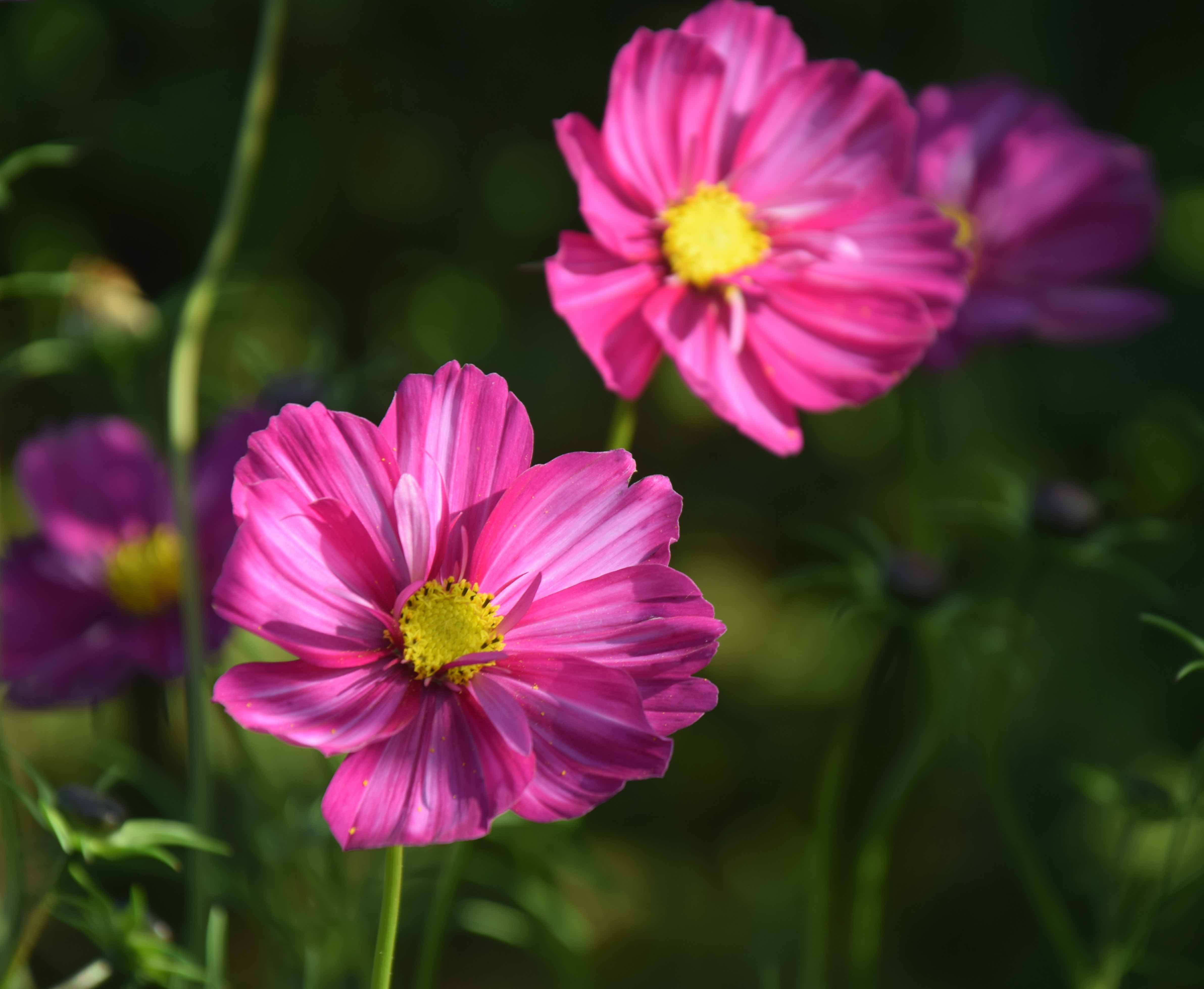
If ever there was a plant without faults, surely cosmos, in various kinds, comes close. Last year the short ‘Apollo’ cosmos delighted for several months but ran out of steam by September and had to be culled. This year, in a bit of a sulk, I only planted a batch of mixed cosmos that were free. Most are tall and did include the inevitable sporadic late-flowering plant that resembled a conifer, devoid of blooms, for far too long. One or two were dismembered by storms. But the rest provide me with smile-fuel on sunny days. Bees love them, butterflies love them and I adore their almost infinite variety. My seed order is done and sent for next year and I have added cosmos to my list.
 The Biking Gardener
Late summer and autumn are very different for us, but some (different) autumn flowers do happen to be popular here, probably because, without them, late summer and autumn can be rather boring. Colorful deciduous foliage is popular within some landscapes perhaps for the same reason; because there is not much of it naturally.
I had visions of pot chrysanthemums everywhere and pumpkins on porches but perhaps I am in dreamland
Pumpkins and chrysanthemums are oddly more popular to the East, particularly in New England. There are certainly many here, but they are not as prominent as they are there. However, Half Moon Bay, just a short distance from here, is the Pumpkin Capital of the World! I went to school with the Pumpkin Festival Queen of 1985!
That is some claim to fame! Half Moon Bay sounds nice too.
You still have plenty of interest in the garden!
Not quite like yours but there is some colour remaining 🙂
I always exaggerate – the camera always lies!