Perennials from seed

Like most gardeners, my spring season is dominated by sowing lots of annuals but this spring I sowed some perennials too. Perennials can be sown at various times and there is still time to sow perennials including lupins, delphiniums and aquilegias now. They will overwinter as small plants and bloom next year, rather like biennials, but they will keep on blooming for several years.
Growing perennials from seed has lots of good points. It allows you to fill large areas with colour for little cost and you also get to know about your plants. The most popular perennials to grow from seed are those that are often listed in catalogues as ‘first-year-flowering’ and these, if sown early, should bloom the same year as sowing. Most need to be sown by the end of March to stand a chance of flowering but they also have the advantage that none of them need that annoying ‘stratification’, or chilling, that some perennials need to germinate. Just sow in heat like your annuals and off you go.
In addition, none of these need a winter chilling (vernalisation) once they are growing to make them bloom. Most foxgloves will only bloom once they have been vernalised so whether you sow them in March or in August they won’t bloom till the following May/June. Of course, March sowing will produce massive plants with much more spectacular flowers than an August sowing.
Achilleas are easy to grow from seed and are a good starting point and a cheap way to fill a border with lots of colour that insects will appreciate too. Plants get woody at the base and scruffy after a couple of years so replacing them is easy and sensible. And you can always propagate any plants you particularly like by dividing them.
I grew several perennials this year including some grasses. Also eryngium, lychnis, oenothera and others. It was a varied bunch with a slight slant towards things that were least likely to be immediately devoured by molluscs. Some were a disaster like all the campanulas which disappeared the night after planting.
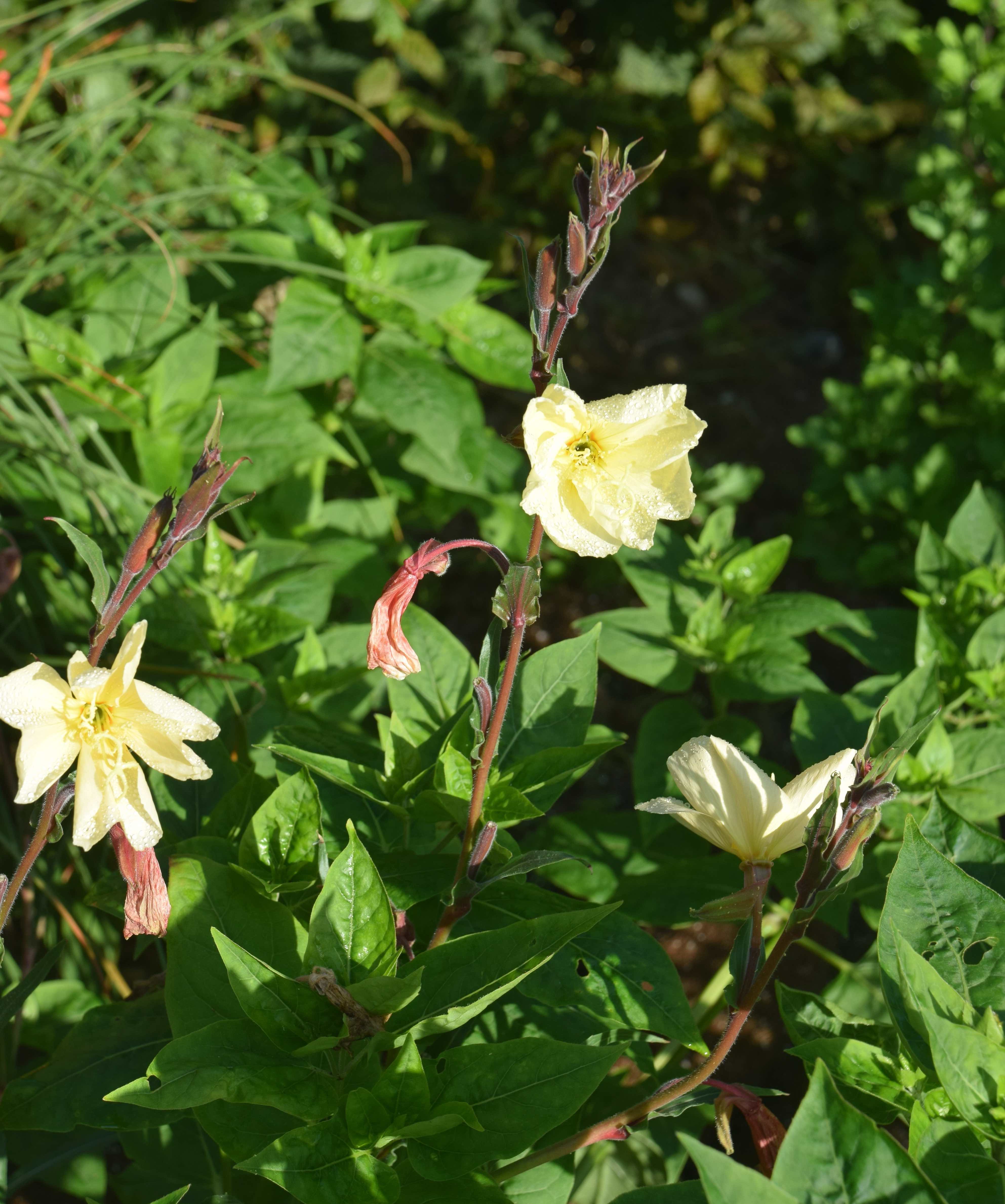
Oenothera (evening primrose) was more successful. They are Oenothera odorata ‘Sulphurea’ which is also confusingly known as ‘Apricot Delight’ and ‘Lemon Sunset’. I am not overly familiar with oenothera, having dabbled from time to time. Many are biennial but this one should be perennial. It is native to Chile. It is usually said that the flowers, that open in the evening, are pale yellow and age to apricot and then pink the following day. I have to say that this colour change is minimal and they are only apricot when the flowers shrivel. That aspect is disappointing. I think it may be dependent on temperature as much as the time of day but time will tell. But when the blooms are fresh they are large and showy and they are fragrant, as you would expect from the name, though you do have to ‘be like a moth’ and stick your nose in to really appreciate that.
The plants themselves are pretty scruffy. The foliage is long and thin and the rosettes throw out long reddish stems that spread as they bloom. I can visualise this growing in scree and rocky habitats along with grasses and scrubby plants in the wild. Because the plants are so sprawling and untidy I think this is best used with grasses, verbena and other wispy plants in the garden. Verbena would also provide some support for the oenothera stems and the purple would work well with the pale yellow. Plants should reach about 75cm high and almost as much across.

Another of the newbies is Phuopsis stylosa, a plant I originally knew as Crucianella stylosa. It is a tough little plant that I first met many decades ago in the Dukes Garden at Kew. Although mature clumps are quite showy I remember the smell almost as much as the look of the plant. The plant smells quite strongly, the odour said to be cannabis-like or rather foxy, a bit like Fritillaria imperialis. I wonder if it is a coincidence since both are native to Iran (and surrounding areas). Perhaps it deters goats or some other herbivores from grazing it. It is sometimes called skunkweed in the USA.
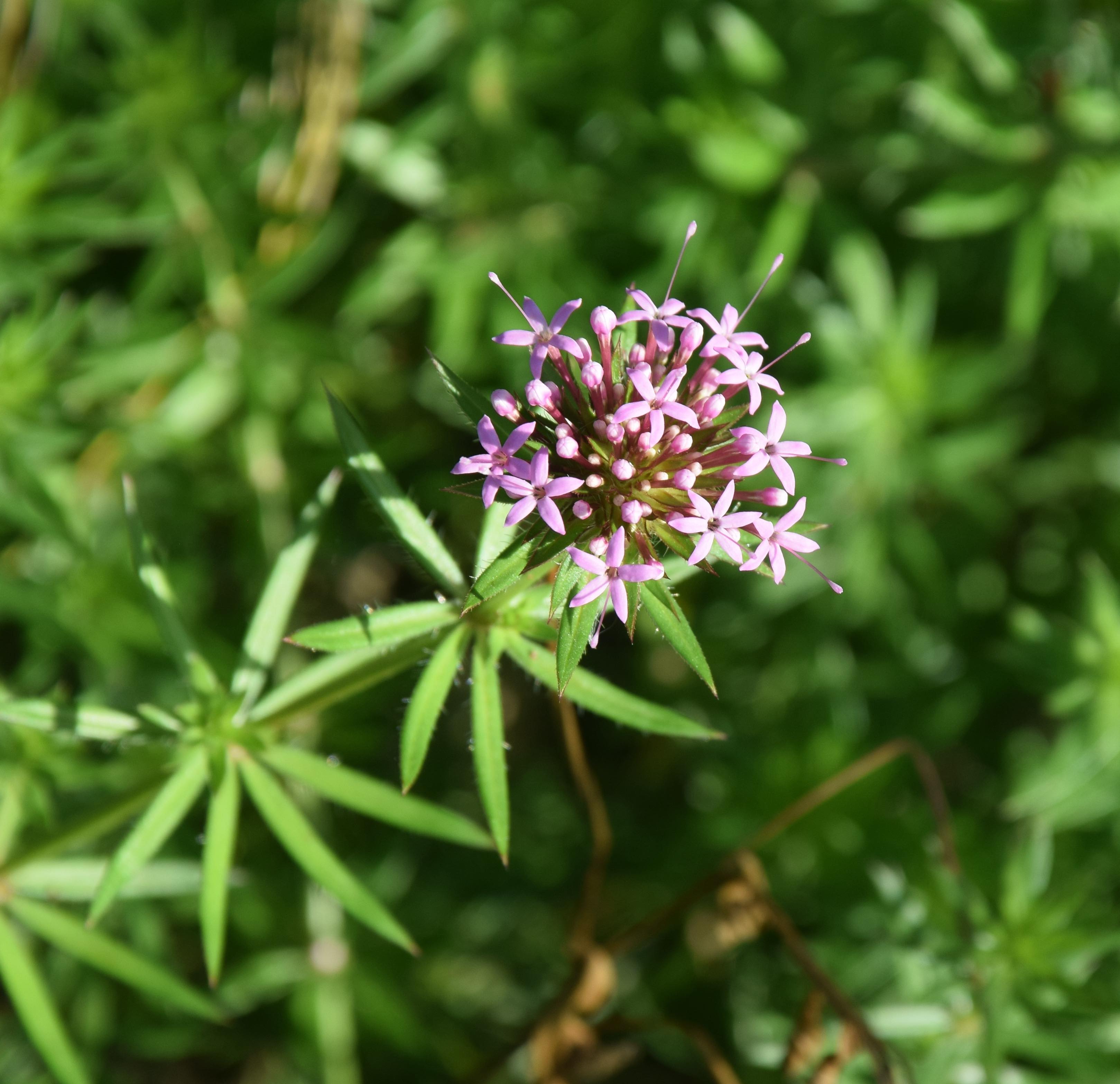
I was surprised at how easy it was to raise the plants and they grew well in cell trays. I do admit that it was slightly strange to plant seedlings that looked so much like goosegrass (sticky weed) but they are related after all. The seedlings have made good ground cover already and, after I thought they would not bloom this year, most of the plants have started to produce a few flower clusters. I think there will be a few more throughout summer and autumn but next year they should be covered in bloom. It is not a tricky plant to please and thrives in most soils, ideally well drained and in full sun. I think I might grow some more (the packet had masses of seeds and there are more to sow) and use them under the roses where the violas struggle because it is south-facing and rather dry in summer.
The flowers are not large (even for a bee) but they are so pretty and intricately shaped. And insects like them too. They are produced in early summer on mature plants and the plants are semi-evergreen but benefit from trimming over in autumn or early spring.
 The Biking Gardener
No comments yet.