(Almost) Perfect pinks
I have mentioned escallonia Pink Elle (‘Lades’ pbr) once before – eight years ago in fact – just to criticise the marketing. But I mention it again because, ironically, it is the first and so far only escallonia I have planted in the garden.
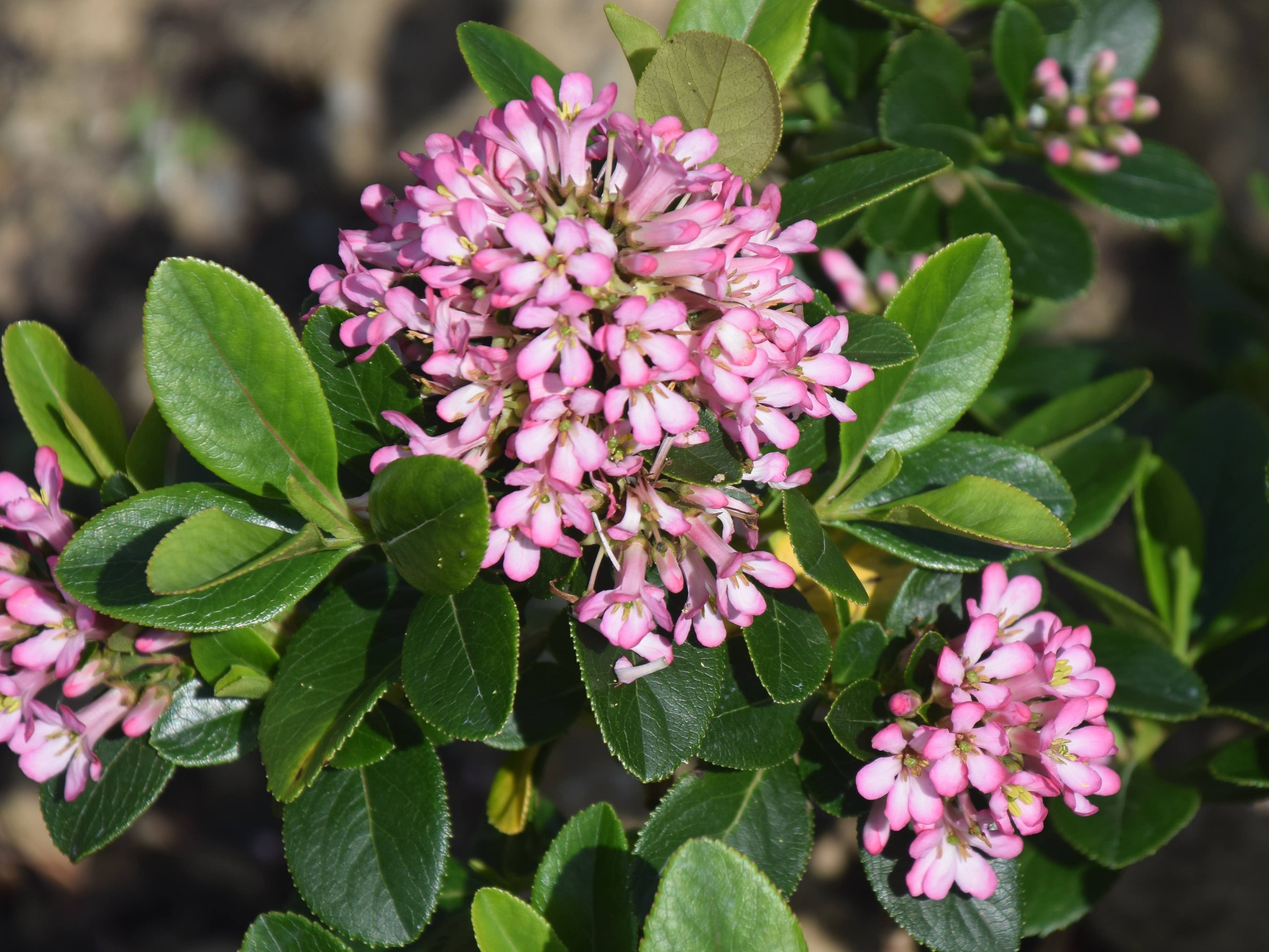
Escallonias are useful evergreens that are most associated with coastal planting because they prefer mild winters and withstand salt-laden winds. They are useful shrubs and have profuse, small, five-petalled flowers that are attractive to insects but somehow they are just not very exciting. Most have small, glossy leaves and most (but not all) are evergreen and they grow quite quickly. Flowers are usually pink but can be white or red and some are fragrant.
Pink Elle was launched to some fanfare and is more compact than most, reaching about 1m high and wide. The flowers are a delightful pink and produced at the ends of new shoots in a fairly dense cluster and they are quite nice. They are sweetly fragrant – though it requires a dignified dropping to one knee to appreciate this at present – and the flowers are rarely without a few bumblebees. So all good.
Perhaps because of the extraordinary heat of the past week (LOL – well it has reached 23c for four days and it has been dry) the flowers are not lasting that long and my secateurs are getting itchy as I want to deadhead them in the hope that it may speed up the promised second flush of blooms in autumn. But the petals drop and the fading flowers do not detract from the look of the plant. It is planted in some pretty dry soil – something of a rarity in this garden.

Curiously Pink Elle was not a deliberate hybrid but a seedling that ‘popped up’ in France and was selected by Ludovic Ladan, (which I mention only to provide a clue to the strange cultivar name – Lades – presumably from LADan and EScallonia) and then propagated and trialled. It has even got an AGM.
It is supposed to be completely hardy. I have a nasty feeling that it might be too ‘cutesy’ for me and that I might tire of it. I have this unsettling feeling in my gut that most Pink Elles will be planted in plastic pots on patios, the cheap multipurpose compost studded like a pincushion with solar lights and resin rabbits. That is fine and I know they will grow and will delight their owners for a year or two, but it makes me want to rush out and plant something unruly and prickly!
Speaking of unruly, there are a couple of other pink flowers in the garden that deserve a name check. Although the very word convolvulus strikes fear into the heart of the toughest gardener, Convolvulus tricolor (C. minor) is a darling, albeit a with a bit of a wilful streak. It is a hardy annual, native to the Med and called ‘belle de jour’ in French (relevant only because I get lots of seeds from France now and am learning French common names) which (I think) means ‘beautiful day’. It is better and more charming than ‘dwarf morning glory’.
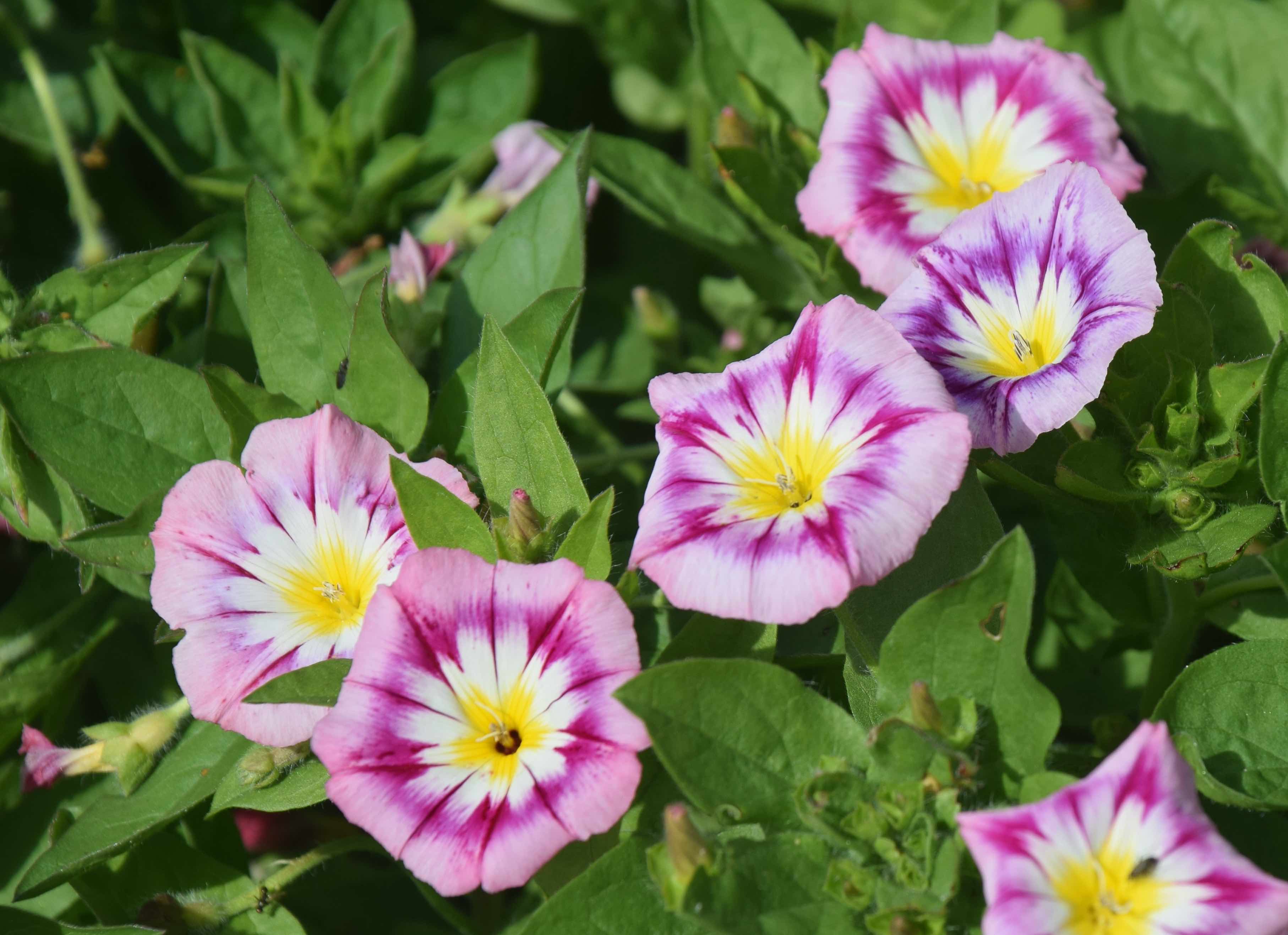
The ‘tricolor’ bit refers to the flowers being typically blue with a white zone around the yellow centre. Mixtures can and should contain pure whites, good pinks, crimsons and even some nice purples. I chose just pinks for this year and the seeds are easy to grow. They can be sown direct but I sowed in cell trays. Unlike some annuals these do not start flowering as tiny plants but need to build up a head of steam before they bloom. And as they do the neat domes of foliage rapidly expand into sinuous stems that spread so each plant is at least 60cm across.

I find the flowers utterly charming and hoverflies and honeybees in particular seem to like them. What is especially useful is that they flower for ages. Seeds are large and easy to collect too though I had no self-sown plants this year. It is a useful filler and great value.
The square formal bed has suffered a series of disasters with box blight striking last autumn. I have decided that this autumn I am ripping it out. And then waterlogging in spring (and by that I mean MAY) caused all the pelargoniums and statice to die. I am digging over the whole bed and adding sand and composted bark this winter so it can become the bedding showcase it was always supposed to be.

But the plants in the centre have grown. The Lavatera trimestris ‘White Regis’ have suffered a bit and the plants on the lower side of the bed have shown wilting that suggests waterlogging, though I would not rule out leatherjackets. But they are now flowering well and are of monstrous size. They should grow to 60cm high and as such, should have made a good surround to the pink cleomes. But they are now 1m or more and in danger of smothering the cleomes.
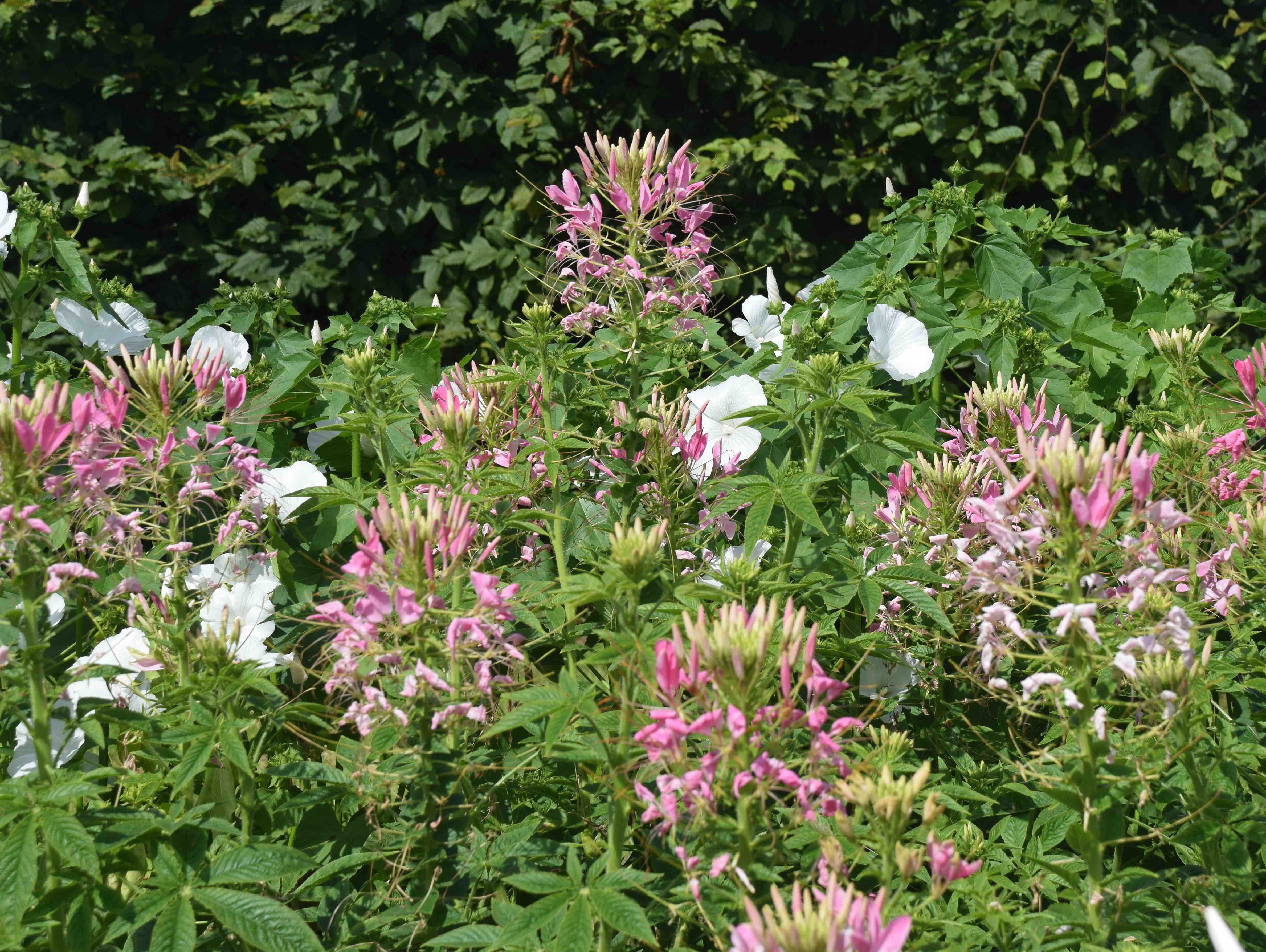
There is a link to the convolvulus here, at least in my mind. I was pondering them yesterday and the huge white flowers and lush foliage gave me a fleeting moment of panic. It looked just as though the cleomes had been invaded by a legion of bindweed! The pure white flowers are quite extraordinary but are strangely ignored by pollinators. The rest of the bed is a disaster but, provided the lavatera does not out-compete the cleomes, the central area has worked more or less as planned. If I had planted the pink ‘belle de jour’ around the edge it might have been perfect.

 The Biking Gardener
The escallonia sounds interesting. They have gone out of fashion but may return with this one…in pots etc.