Totally tropaeolum
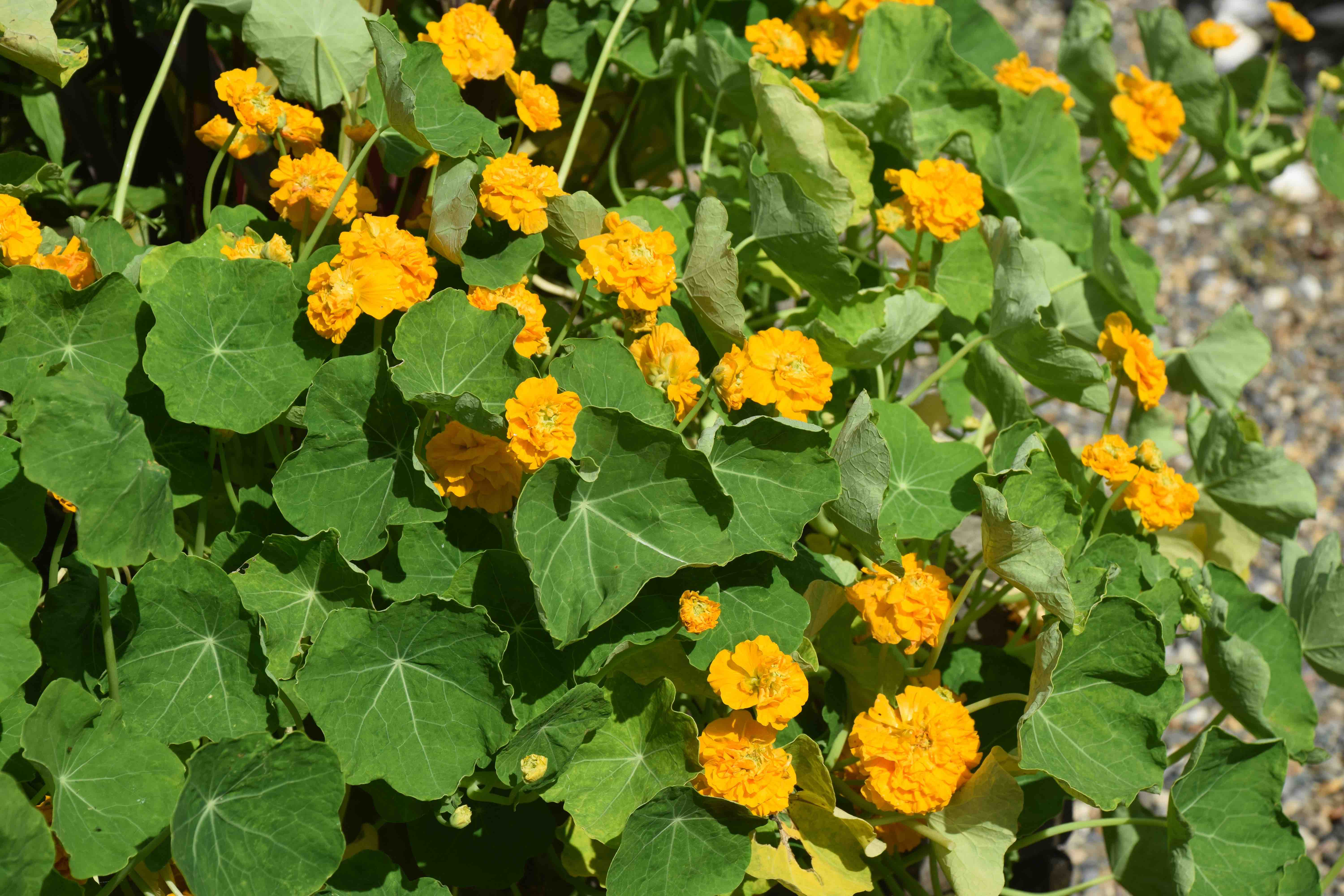
The genus tropaeolum includes some fascinating species and I am ashamed to admit that I have never been very adventurous with them. I have always been scared by the stories of how difficult they can be to please, although I have managed to establish the brilliant red Tropaeolum speciosum in a previous garden. Like oxalis and impatiens, their numbers include weeds and impossibly intractable gems. They even include edibles and almost everyone knows that the foliage and flowers of nasturtiums (Tropaeolum majus, and others) are edible though I am not that fond of the taste. I wish the same was true of cabbage white caterpillars, the parents of which can identify the ‘mustardy’ constituents that provide the brassica-like taste.
Nasturtiums are known for their ability to provide food for wildlife and as well as caterpillars, blackfly love to feed on their sap. The large flowers also prove fascinating for bumblebees which are to be found diving into the blooms to extract nectar from the long spur at the back of the blooms.

Although we all call them nasturtiums, derived from’nose-twist’ because of the spicy taste and smell, they were called Indian cress when first brought back to Europe (initially Spain) from the ‘East Indies’. Exactly when they reached Europe or the UK is open to debate but John Gerard wrote in 1596 that he had received seeds from Paris. An unusual moment in the history of nasturtiums in cultivation came in 1762 when Elizabeth Christina, the eldest daughter of Carl Linnaeus noticed electric flashes coming from the flowers at dusk. This was followed by much speculation as to the cause and it was even hypothosised that it was a defence mechanism by the plants to repel pests, rather unlikely since it would not be an evolutionary advantage to electrocute potential pollintators. Later the same phenomenon was seen in other bright and orange flowers and it was realised that it was an optical illusion caused by turning the head and the initial image of the bright flower being seen in peripheral vision. Much to my shame I have not checked this and I need to.
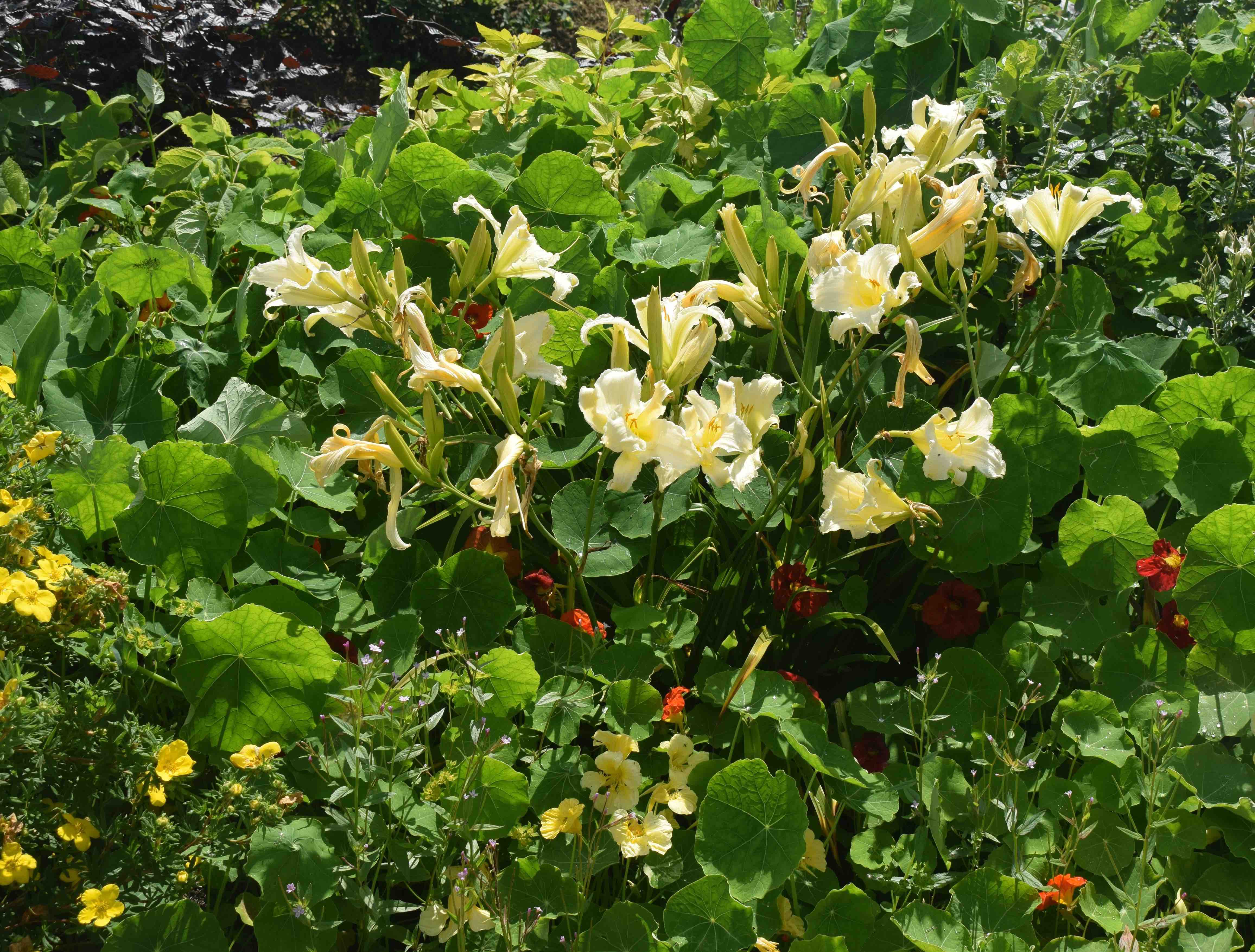
And back to the garden. Nasturtiums have become abundant but they were slow to appear this summer and I thought there would be none. To explain, I allow them to seed around. I say ‘allow’ but it is impossible to do anything but! Although they are always listed as hardy annuals the plants are killed by frost and seeds that germinate in autumn will not survive winter here. But enough seeds remain to pop up in spring.
They breed fairly true and in one area I have ‘Yeti’ a pale climbing kind that clambers up trellis every summer and rarely shows anything but the palest of blooms. Elsewhere what I think was originally ‘Alaska’ produces a mix of all kinds, not all with variegated leaves but all with rampant stems, and I pull out the plain green plants. Sadly ‘Phoenix’, with more feathery petals, throws up a lot of ‘off’ kinds but all are showy and now and then, in all parts of the garden, I find curious shades including some dusky ‘port’ colours that appeal to me this year. The bees like them all.

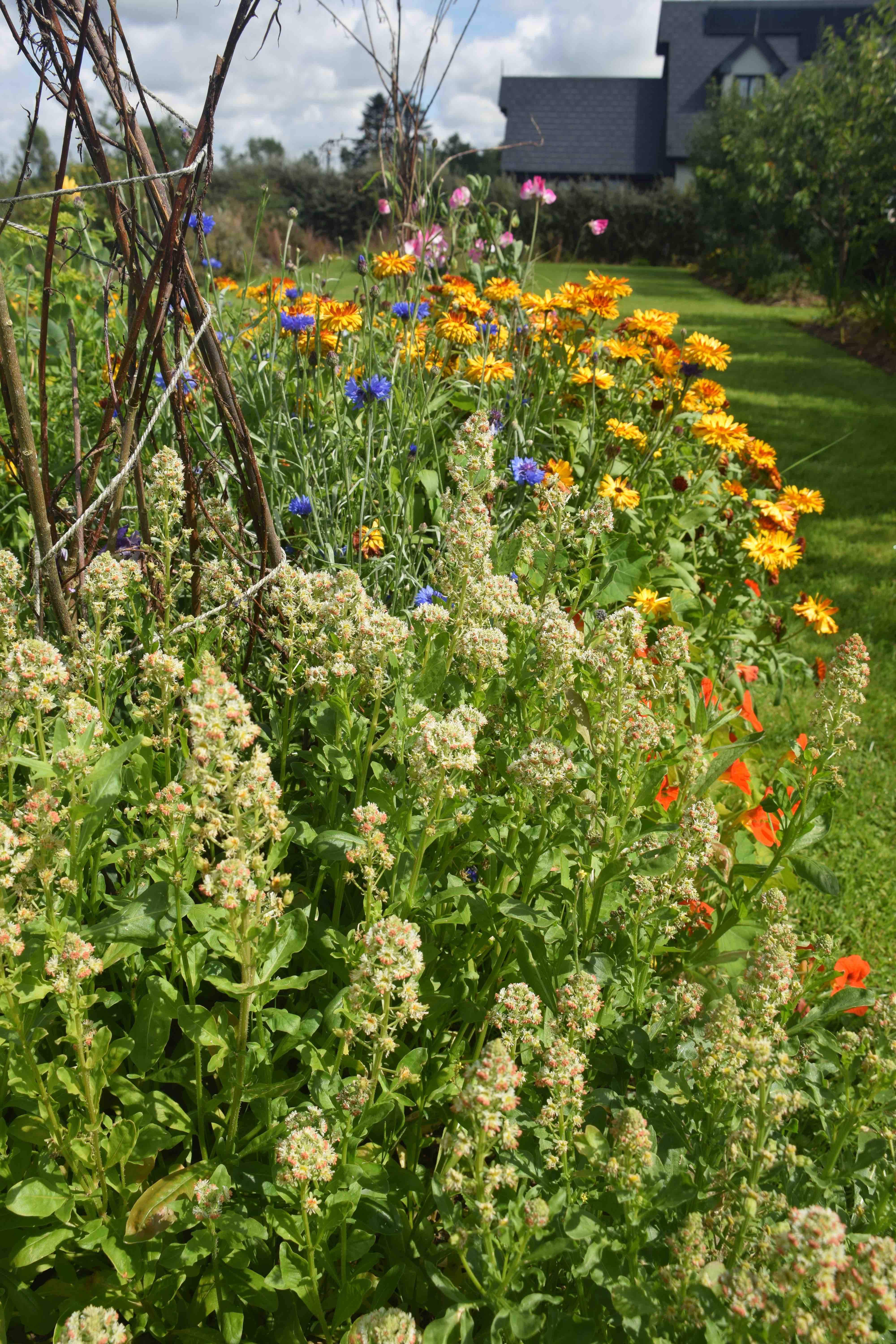
Nasturtiums are often suggested for dry, hot banks to control the vigour of the foliage and this summer they have been ‘lush’. I need to thin them out a bit more but, having struggled with the weeding this summer I am grateful that the nasturtiums offer very effective ground cover. Even so, in some places they are creating a tsunami of growth that threatens to smother other plants. I can tolerate it when shrubs rise above them but in some areas they are in danger of being swamped.
Last year I posted about the excitement of obtaining three double-flowered kinds that have to be maintained in frost-free conditions in winter and must be propagated by cuttings. I am delighted to say that I kept them going, took lots of cuttings and was even able to send some plants back to the Belgian nursery where I obtained them that lost their stock.
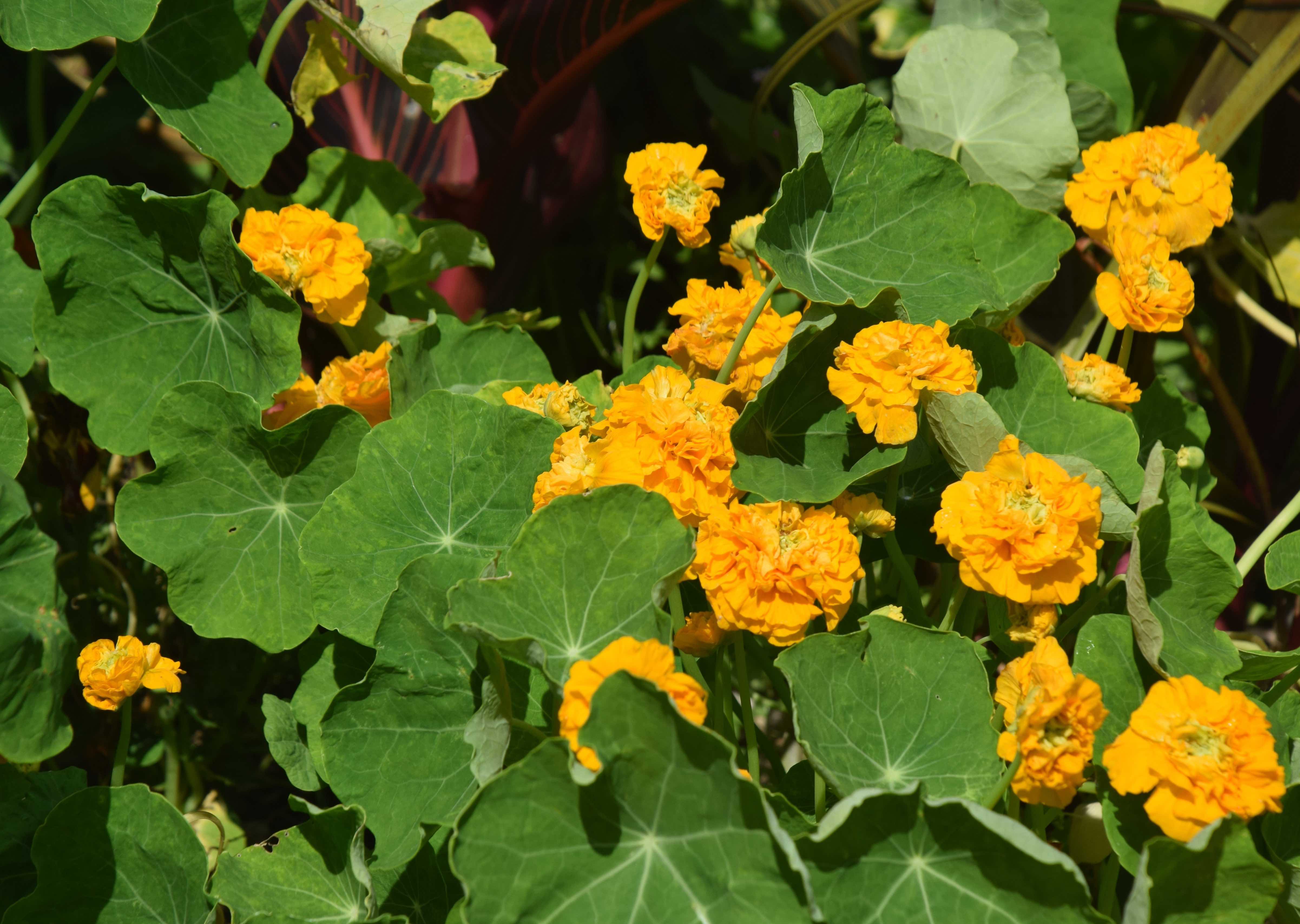
I have learnt that not all three are the same. Firstly, the far more recently introduced ‘Darjeeling Double’ (or ‘Darjeeling Gold’) is the most vigorous. It came from different stock than the other two and is such a different plant. All were miserable in spring and I lost a lot of sleep over them but this one seemed the more robust and a few were planted in a raised bed around cannas. Growth was slow until we had some half decent weather at the start of July and now they are little monsters! Despite the pathetic hair-like stems of the plants at first they now have long, trailing stems as thick as my finger. Admittedly they are in a bed of decent soil with added nutrients to please the cannas. But in the same bed I planted some ‘Hermine Grashoff’ with red flowers. These are far less vigorous but were holding their own for a while but are now being subsumed. I have others in a pot with cuphea and pavonia but they were very slow to make headway. I am reluctant to repeat my moan about the quality of compost but I am sure that is the reason for the slow start. I have ‘upped’ the feeding and they are responding well.
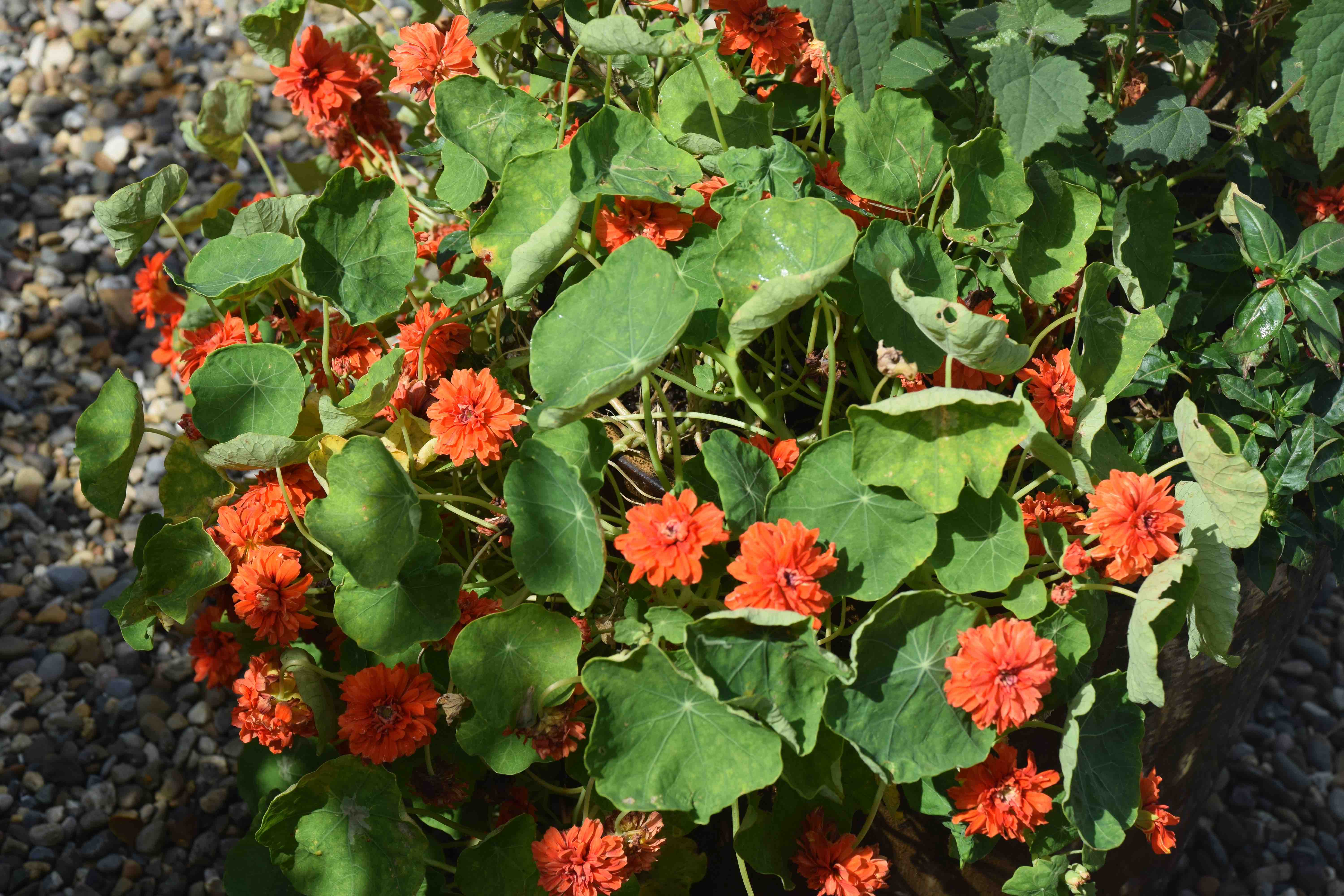
I wish I could say the same for ‘Margaret Long’ the apricot sport. It seems a lot less vigorous and I have been afraid to let any suffer the Irish summer outside and they are all in the greenhouse. Their growth is slow and they worry me. I now have a feeling I should not be so scared and I should put some out. Sometimes you just have to trust. It will be a job for later. Nasturtiums seem fairly low down on the menu for snails, though they did demolish many of the young cuttings in spring and I think they might manage OK in the garden. One comment I need to make is that these cuttings-raised plants are fully double and they are of no use to the bees that often buzz around them. But before you ‘tut tut’ at me for doing nothing for wildlife I will defend myself by explaining that much of my planting is directed specifically at making bees happy.
This year I have noticed that bees seem particularly scarce but I think it is at least partly down to the cold, wet weather. But I do plant lots for the bees as I will explain in the next post.
 The Biking Gardener
They have made very attractive plants in the garden for you.