March: In like a hippo!
There is a saying that goes something along the lines of:
March, in like a lion, out like a lamb. In like a lamb, out like a lion.
It is basically saying the the weather is very variable at this time of year and don’t give up, it will get better! Well I really hope it is the case because March started with more rain or sleet here, though we were spared the snow that affected other parts of the country. But it is cold and windy and not at all pleasant.

The rain has had a bad effect on the garden which is still too squelchy to walk across and all the plans I had, to improve areas and do some significant replanting, are still on hold. The ‘gutters’ around flower beds have been full of water all winter. Even some daffodils are suffering from waterlogging and look very unhealthy.
In desperation I have retreated to the greenhouse which has had a more thorough clean than usual. I took everything out, in a mild spell, and repotted some plants and checked everything for slugs and snails before I returned them. It is no point doing any sowing with the greenhouse full of molluscs!

Some joy has been provided by the freesias. I was disappointed the first year these bloomed because the colour range is limited and the flowers are not as big as I expected, but now, in their third year, I am just grateful for their colour and fragrance. There are lots more to bloom and these are the first flowers. These are growing in their natural cycle, growing in winter and flowering in spring, unlike the ‘treated’ corms you can buy now. To start from seed you sow in August and the plants need protection from frost in winter, though mine tolerate temperatures just down to 0c. The plants are floppy and I stake them with twigs cut off the hedges. They bloom in March and April and they die down in May, are kept dry in summer and repotted and restarted in August again, discarding the masses of tiny cormlets – which may lead to better colours being accidentally discarded over time!

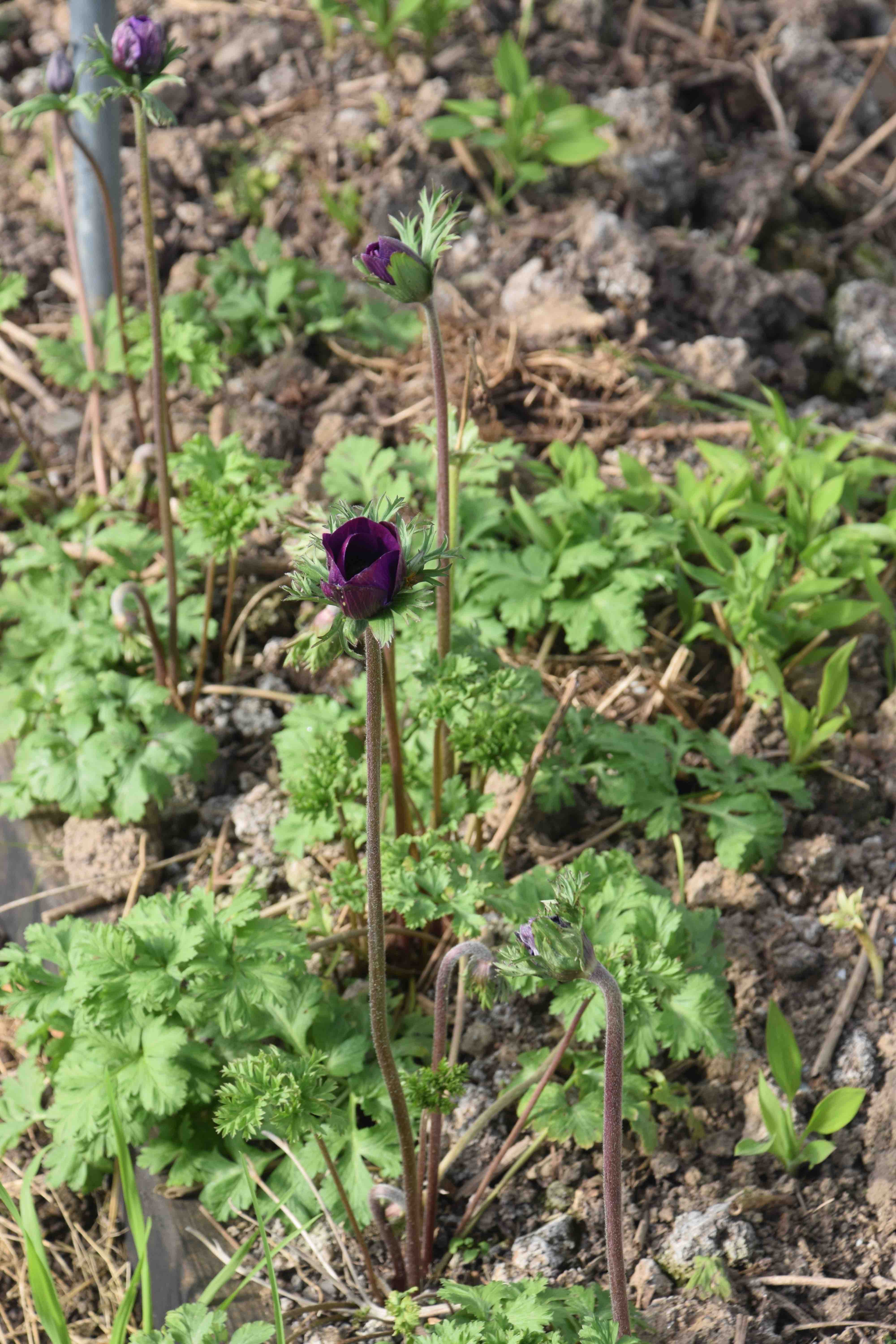
I am planning to start selling flowers at the gate next weekend for Mother’s Day and there should be some freesias along with daffs and some anemones from the polytunnel where they grow with the alstroemerias. These anemones can be grown outside but the flowers are often battered by the weather so last autumn I moved then to the tunnel in the hope of earlier and less damaged blooms.
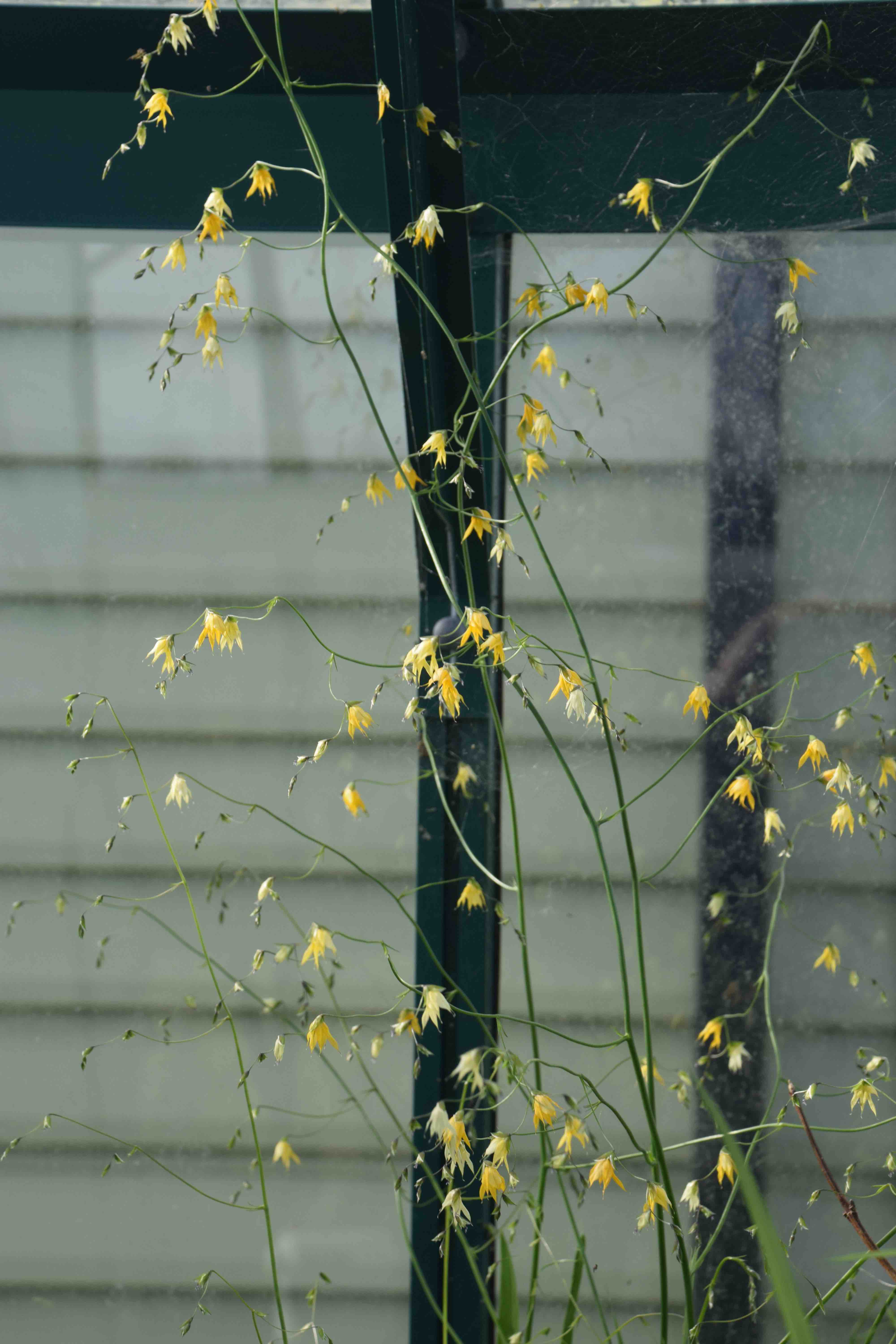
Also in the greenhouse Melasphaerula ramosa is starting to bloom. I really adore this plant, and admire it more than most people would consider rational. It is slightly less hardy than the freesias but is otherwise easy to please and it seeds freely and flowers in one year from seed. It is lanky and wispy and the flowers are small but they have a sweet, slightly ‘hay-like’ fragrance. I wish it was just a bit hardier but then I would release it outside and it could become a weed I guess. I thought the other day that I ought to try crossing it with one of the more miserable freesias (which may be diploid) to get a plant that had bigger flowers and maybe a different colour but melasphaerula is a monotypic genus and I might be wasting time – my eyesight is the main issue with such tiny flowers!
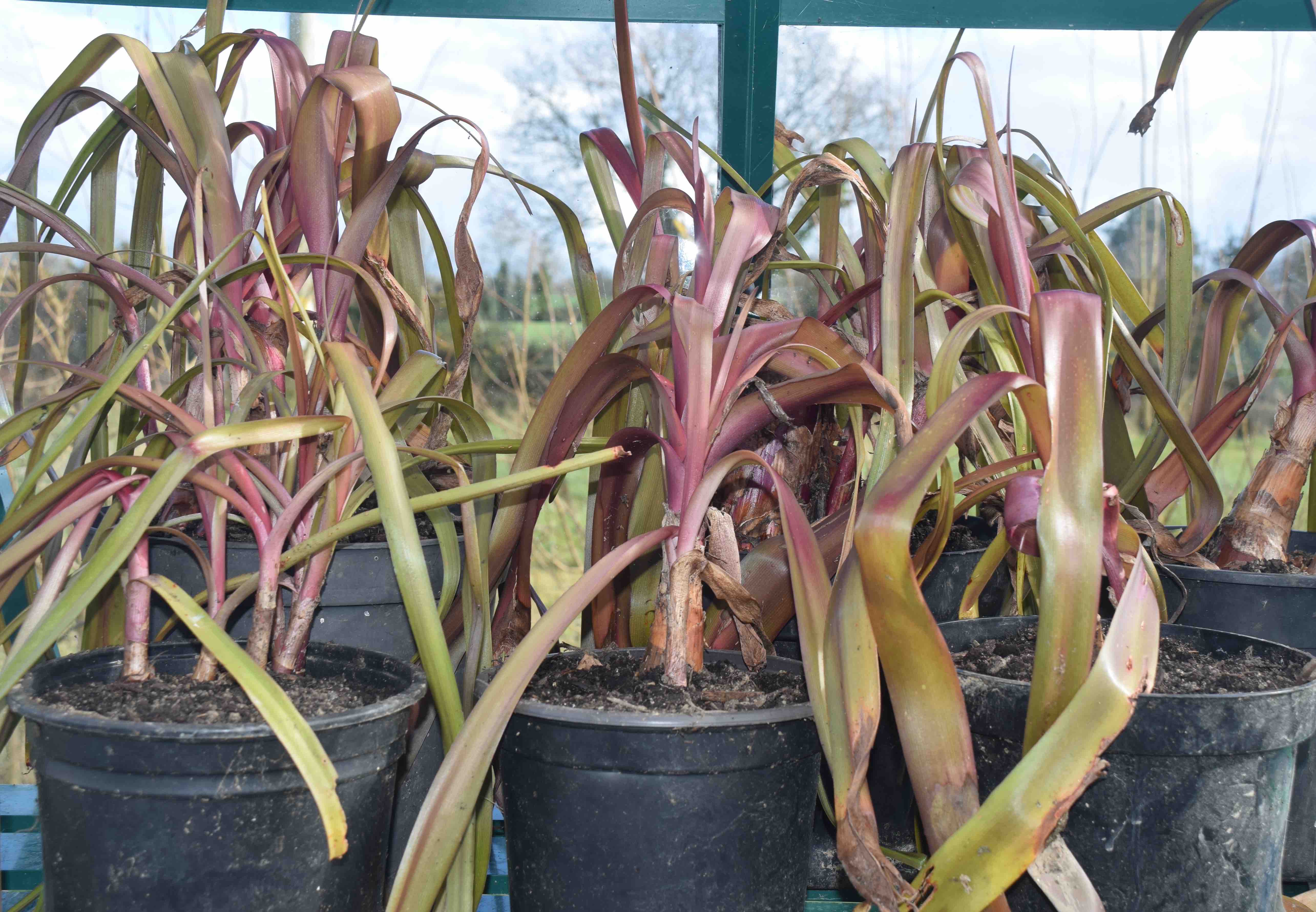
I have been repotting some plants that had been a bit neglected over the years. I got Crinum asiaticum var. purpureum about five years ago, on a whim, knowing it would not survive winter outside but hoping it would grow enough in summer to produce its gorgeous, heavily scented, spidery flowers. It has struggled and has bloomed a few times but not impressively and snails usually chew through the flower scapes. It had produced offsets prodigiously and no bulbs had really achieved flowering size so I divided the clump into seven and repotted them. I will feed more heavily this year – crinums like lots of feed and water and sun and warmth!
I have started some seed sowing too, but mostly perennials and first-year-flowering perennials so I can give them a warm few weeks and then bring them out into the greenhouse for a chill to stimulate germination. It is tricky to find out if some plants need stratification (chilling) so I tend to treat them as though they do if I am not sure. I am growing a few carex, luzula and even juncus because I have some areas that are so wet even the weeds struggle!
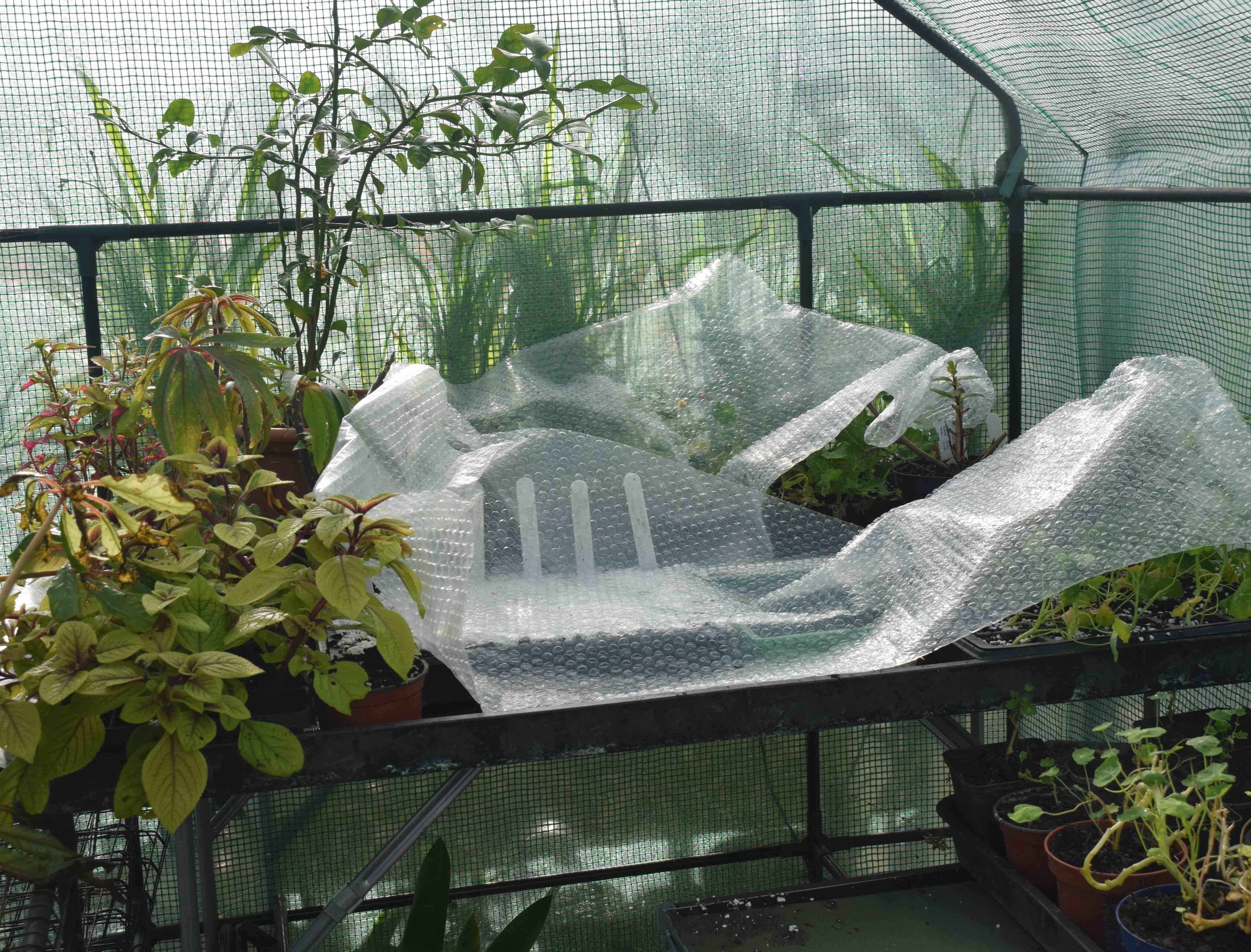
And because the variegated kale plants are getting old I decided to take cuttings to keep it going. I actually got round to eating it this winter and it was really nice. I am starting to be really impressed with it, as an ornamental and an edible. The cuttings have rooted within two weeks from heel cuttings and all look healthy now.

In the polytunnel there is a crop of lettuce, and some lamb’s lettuce, planted in October.

They are supposed to be ‘All the Year Round’ but are obviously not very ‘true’ with a range of plant shapes. And although I don’t like butterhead lettuce that much they are better than nothing at this time of year.
 The Biking Gardener
Thank you so much for coming back to us Geoff. Your writings provide light in these dark times.
Thank you for checking the post and commenting – that makes it worthwhile!