Falling leaves
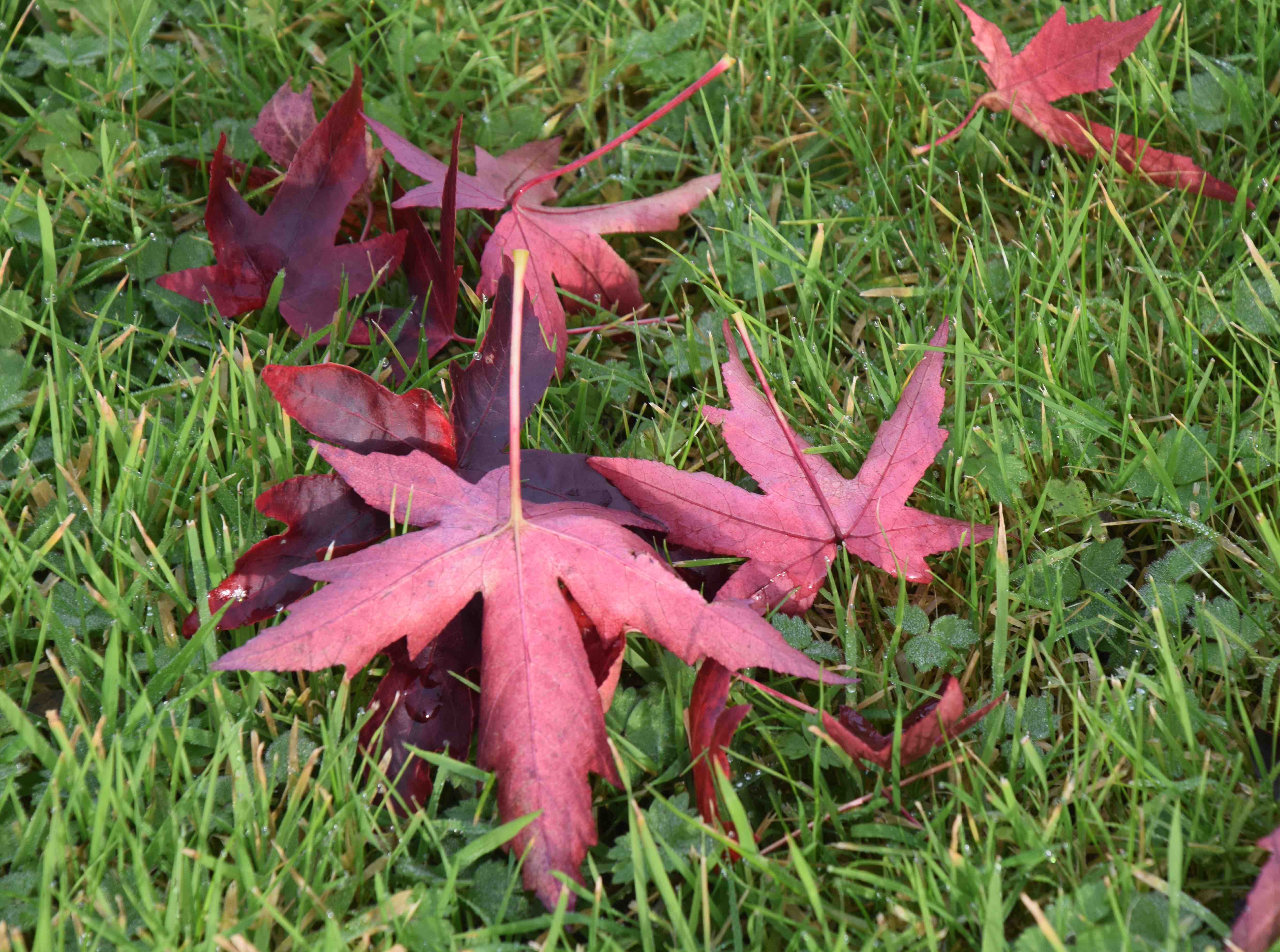
By this time of year the lawn should be covered in leaves. But because of recent, frequent, strong winds, most leaves have been ripped off local trees and disappeared over the hills. The past week has seen most trees and shrubs become bare but some leaves still hang on. Ash trees (fraxinus) have been bare for what seems months but oaks (quercus) are still obstinately covered in brown foliage. Down the road the beech (fagus) are shedding their gold and copper leaves and my own beech hedges, where they have managed to cope with the wet soil, are burnished copper. It is true that the much more amenable hornbeam (carpinus) is a good alternative to beech in tough conditions – and I have used it liberally – but beech is unbeatable where it thrives and the autumn foliage is absolutely beautiful. Hornbeam is dull and almost ugly and I long for it to drop as the new growth starts in spring. My wish must have been heard because a lot of the old leaves have been ripped off in the wind already.
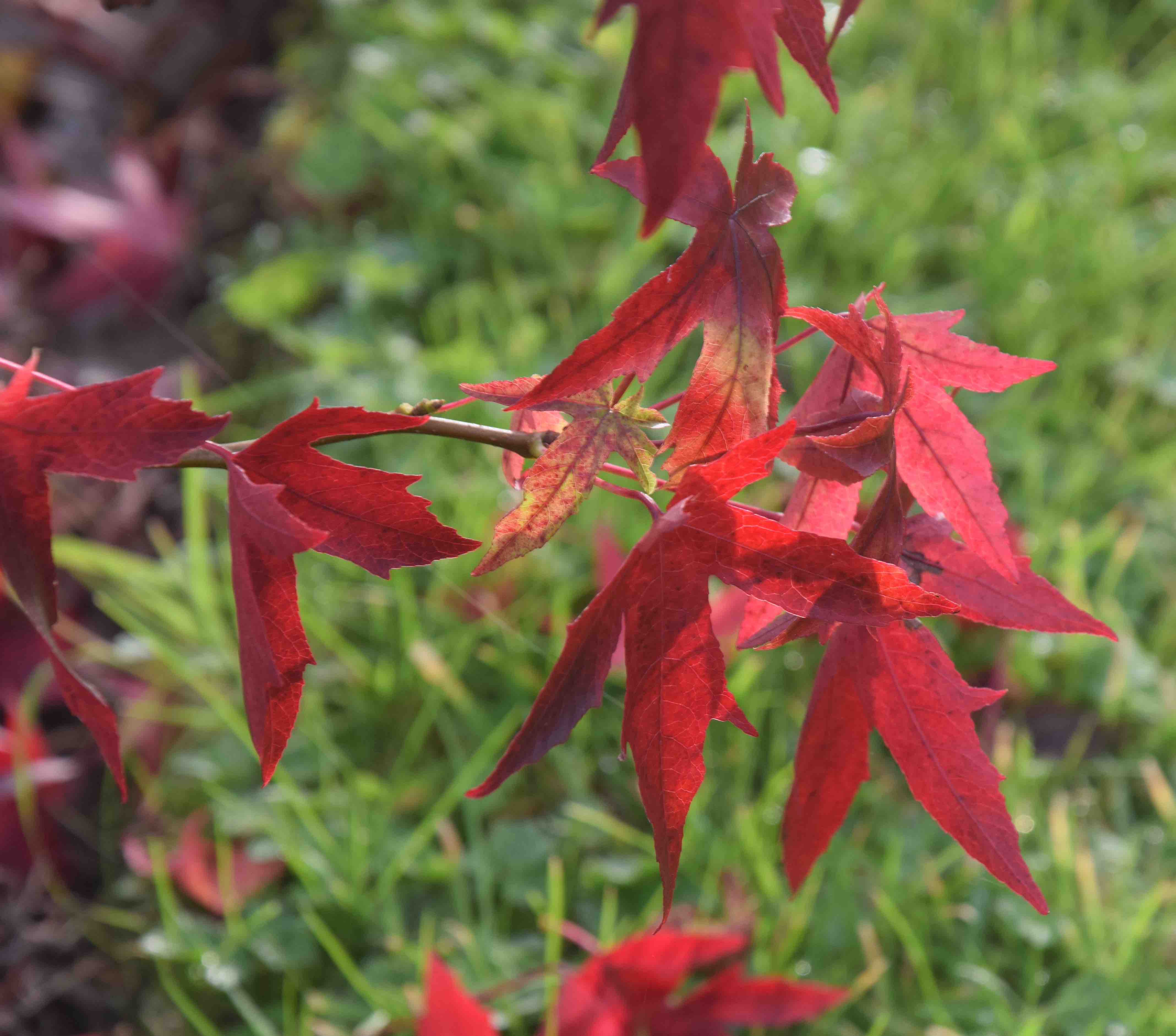
Dull is not something you could accuse liquidambar of being. I planted three in the garden and they have struggled. One even died back and had to be cut to a stump 90cm high. I decided that it was probably not going to grow much longer so planted a young eucalyptus very close, to replace it. It may just be that it liked the company or that it now has some protection but this year the liquidambar has doubled in size and looks very healthy. I now have the dilemma of what to do; move the eucalyptus (not a good idea because it will weaken the root system and they don’t transplant well) or let them fight it out (my preferred option).
I have planted several nine barks (physocarpus). I like them for their ease of cultivation and usefulness. This year I popped in a ‘Dart’s Gold’ which is old and common but a good plant nonetheless. It is starting to add some pink to its gold hues to create a final flourish to a good performance all summer.

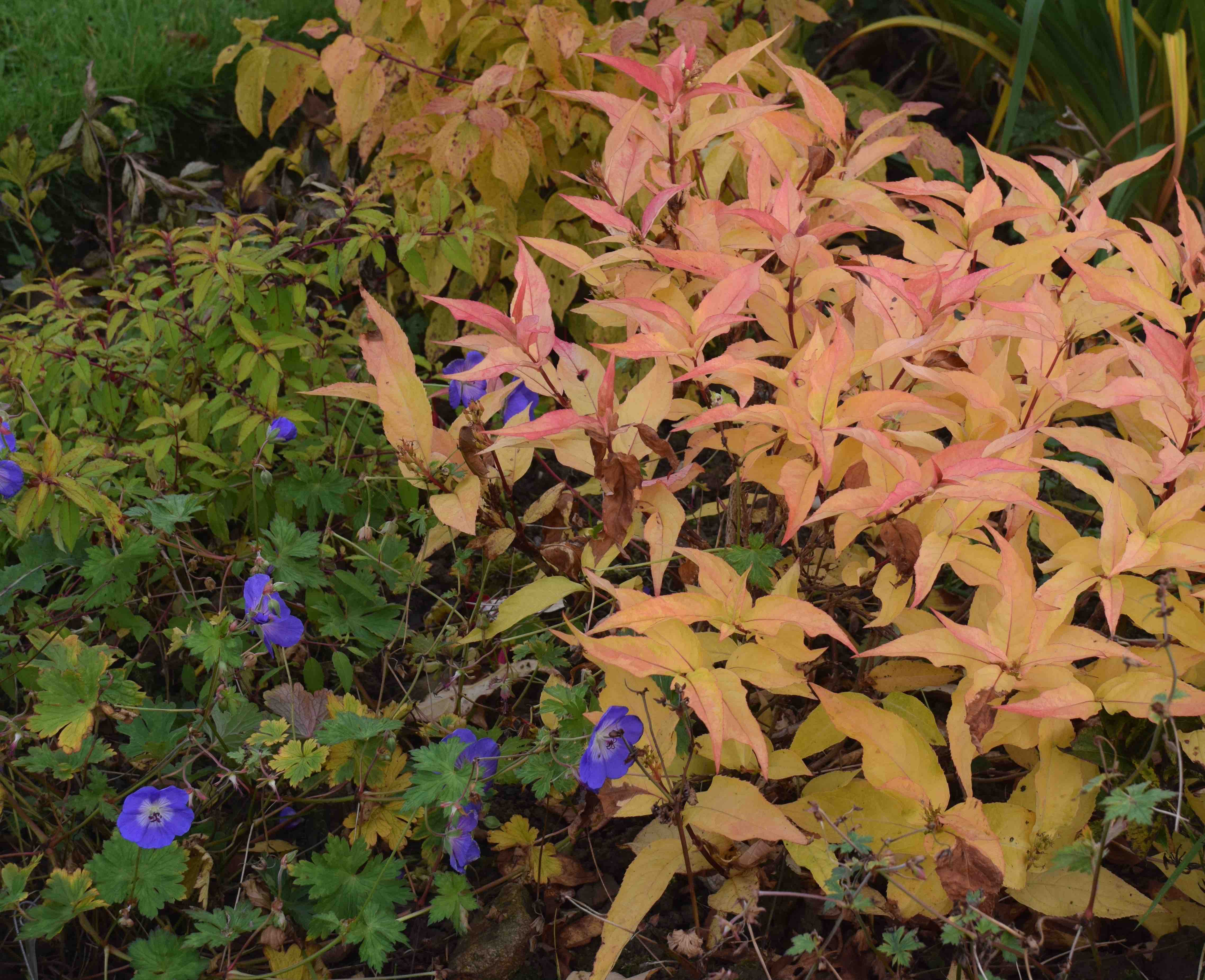
Diervilla are shrubs that are relatively new to me. In their ‘plain’ forms they are tough and useful shrubs, covered in bee-friendly, small, yellow blooms for many months, but not exactly exciting. There are lots of new cultivars coming on-stream at the moment and I started with one of the ‘Kodiak’ series. So far it is compact and mildly attractive. The small flowers are pretty if not spectacular and, just before it drops its leaves, it is putting on a pastel autumn display. I am very happy with it.
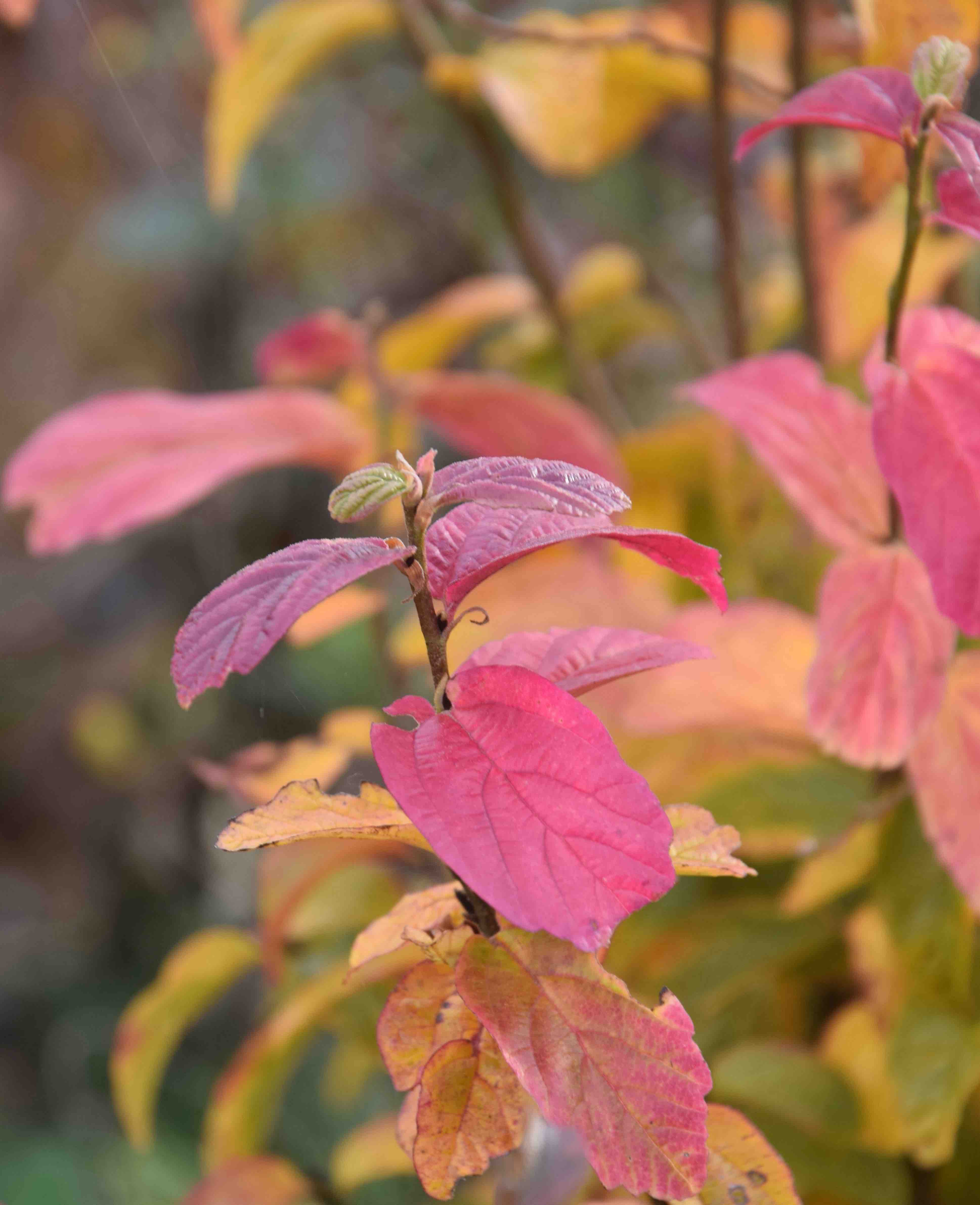
The parrot ‘Persian Spire’ is colouring too, though not the searing shades it is capable of but a subtle show, welcome even so.
For most of my gardening life I have been a bit sniffy about the sterile Viburnum opulus, partly because, I am ashamed to say, it is so common. Well I should be ashamed of my past snobbery because I really enjoyed its ‘childish’ white snowballs in early summer and, right now, it is distinctive in the garden with deep claret foliage. Of course, there are none of the translucent berries that impress me so much on the other forms, but the birds always eat them as soon as they ripen anyway.

Colour from berries is a bit scant in the garden – the blackbirds see to that. But a mild winter last year and a wet summer this year has ensured my Arbutus unedo has produced its best crop of fruit to date.

A plant that was just 30cm high when planted has made a nice, bushy shrub that will soon be tree-like. It is a strange tree for many reasons, firstly because of its unusual natural distribution, in Portugal and west Ireland. The flowers open in November (making a good nectar source for bumble bees) and the fruit ripen a year later. This year there are quite a large number of ripe fruits and I treated myself to tasting a few. It was hardly a treat. Famously the name ‘unedo’ means ‘you eat one’ because you would be hungry indeed to eat two. But they were not unpleasant, though a bit mealy.
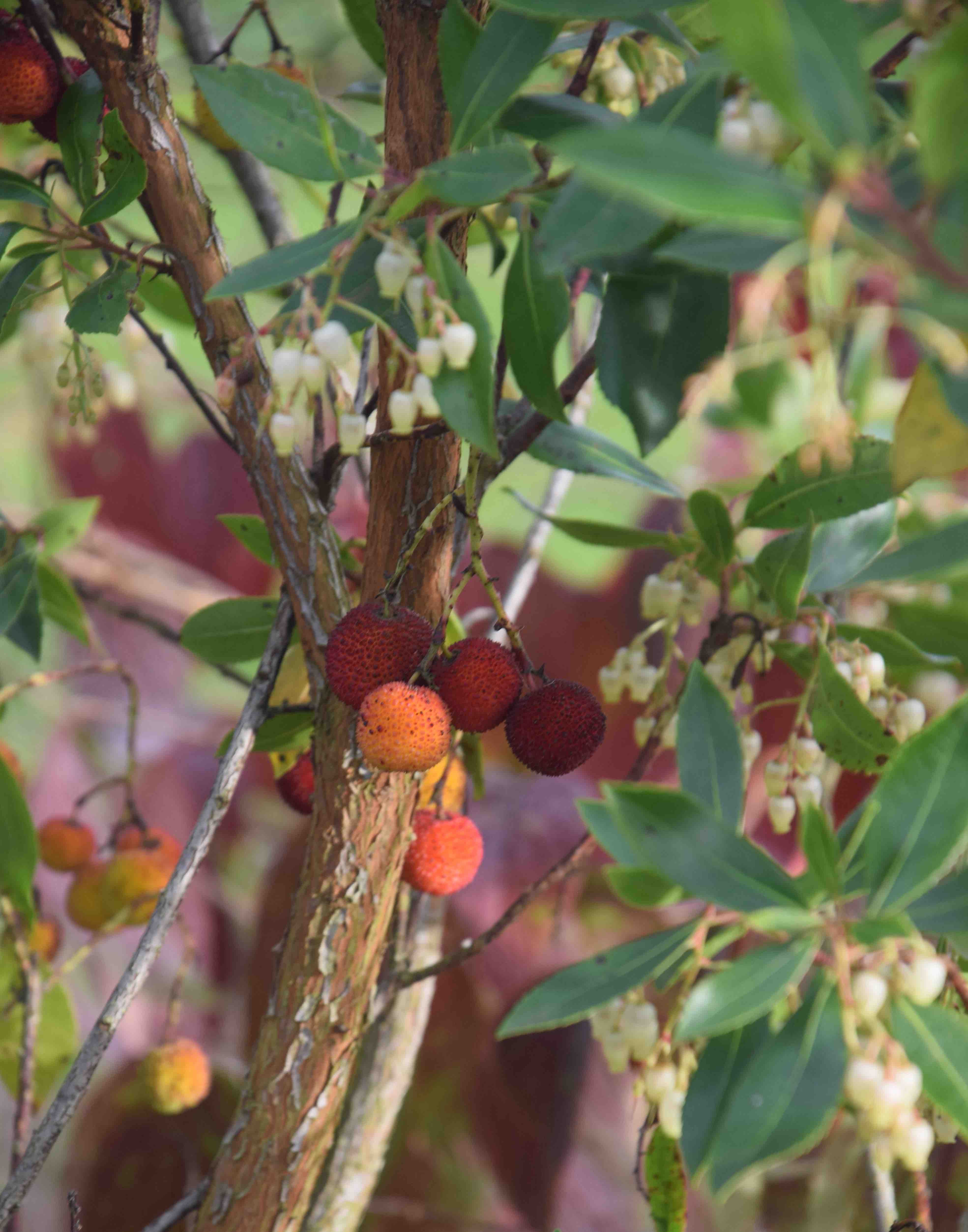
It is a shame that the bark is the least imposing of all the species. I will have to push the boundaries and try another now I have had this small success.

 The Biking Gardener
You have some interesting specimens there…
Ooh, lucky, lucky you to have the space to grow Liquidamber!!! I saw one in a garden centre a few years ago, for the first time, and was blown away by the foliage! It was a fastigiate one but I still wouldn’t have the size of garden to do it justice.