Good things come, to those that wait
As colour in the garden becomes a rare commodity, the few plants that save their display for the end of the year become especially valuable. Of course, some plants just keep on blooming and we can become complacent. The alstroemerias in the garden, and the polytunnel, almost give the impression that they are plastic plants; they are aways there. Although we have had a few, light frosts, they are unfazed and are still in bloom, though they are growing more slowly now and every extra day is a bonus.
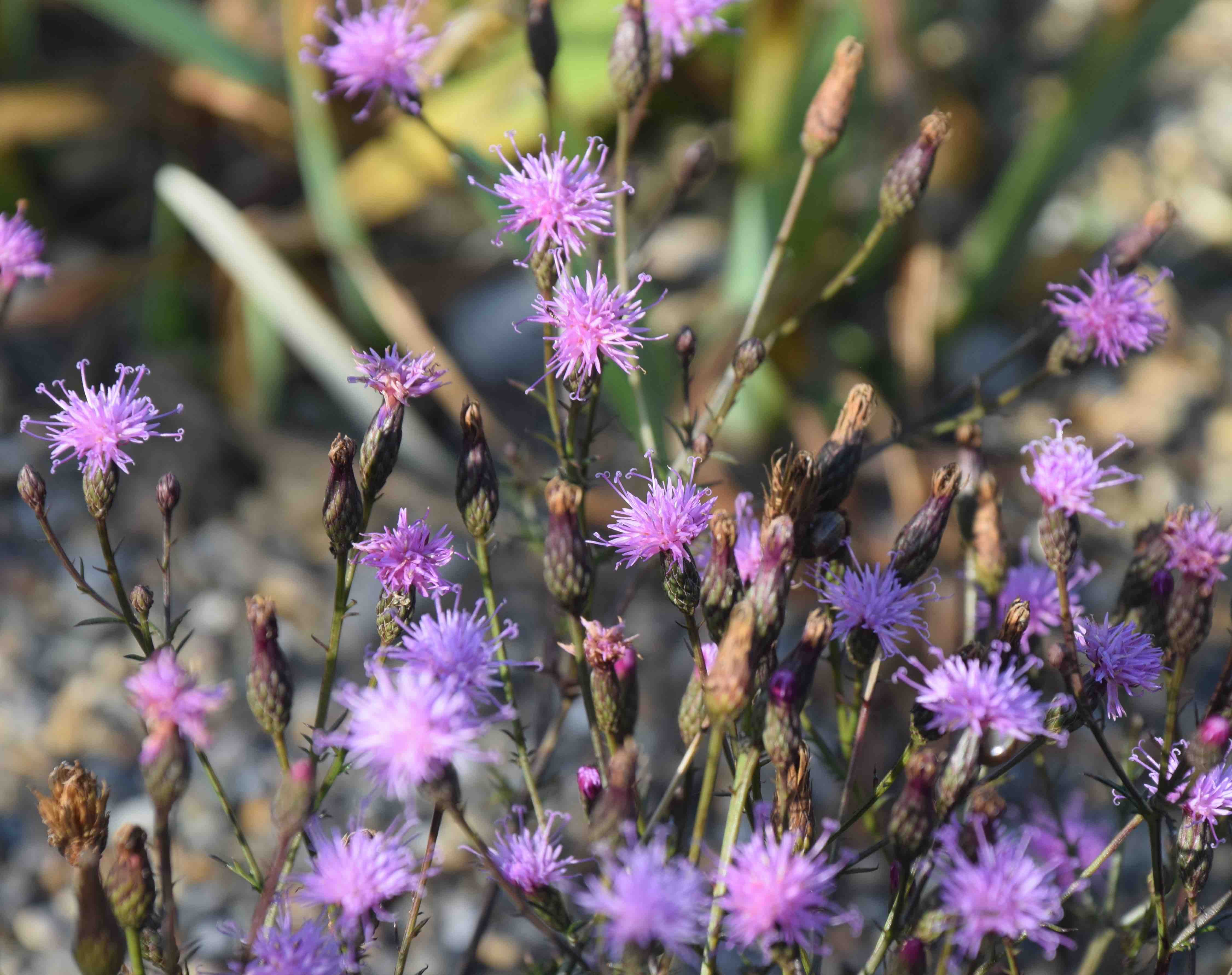
Other plants take a long time to build up a head of steam and manage to bloom, none more so than Serratula tinctoria var. seoanei (S. seoanei). This is a knapweed but much smaller and more delicate than the common roadside weeds. It has some basal, finely divided leaves, tinged with purple and seems reluctant to grow at all in summer. Only in autumn does it appear to want to bloom and it gradually creates a wiry, stiff framework and you watch and wait and when it gets to September and you have almost given up, the first flowers finally open. They are rather small but there are lots of them and it makes a small dome of pretty, lilac flowers. As the flowers go over, the heads dry and remain attractive as they splay open to shed seeds and are like strawy gold stars.
This plant is native to north west Europe and most common in the British Isles in the south west. It was recorded in Ireland, but only in New Ross (down the road) in 1925 but seems to be extinct there now and has not been recorded since 1952. I was given the plant (thank you Meriel) and it has grown well in the raised bed, in the best-draining soil I can provide. Strangely, late-flying bees do not seem that attracted to it. I would have thought that late butterflies would love it too but weather has been too wet and windy for them.
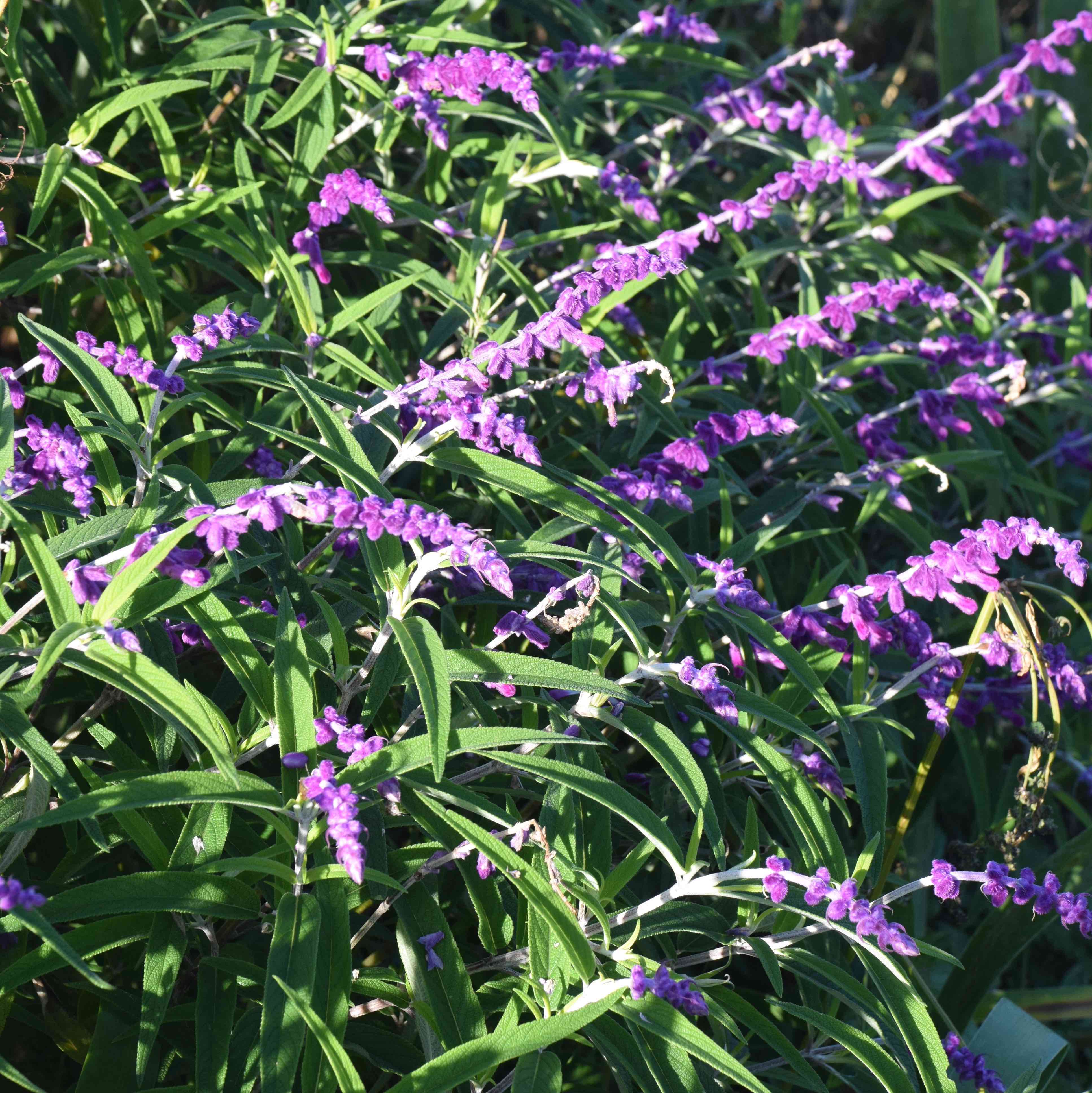
It is now almost two months since I took the cuttings of the few perennial, tender salvias I have and, they are now well rooted and need potting on. In the depths of winter I wonder if I really need them, though I like them too much to be without them. And in July, as the plants start to gain bulk, I question their garden-worthiness again. But any doubts are long forgotten now as they show their worth, just when any colour in the garden is welcome. Salvia leucantha ‘Santa Barbara’ is similar to the species but more compact. I wish it would bloom prolifically earlier in the season. It does send up a few flowers from August onwards but it is only now that it really shows off. I treat it as a temporary plant but I will try some in the gravel by the house to see if it can make it through winter. The poor soil there should create very compact growth but, allowing it to overwinter may stimulate a longer flowering period. It will withstand a few degrees of frost but is not really hardy here.
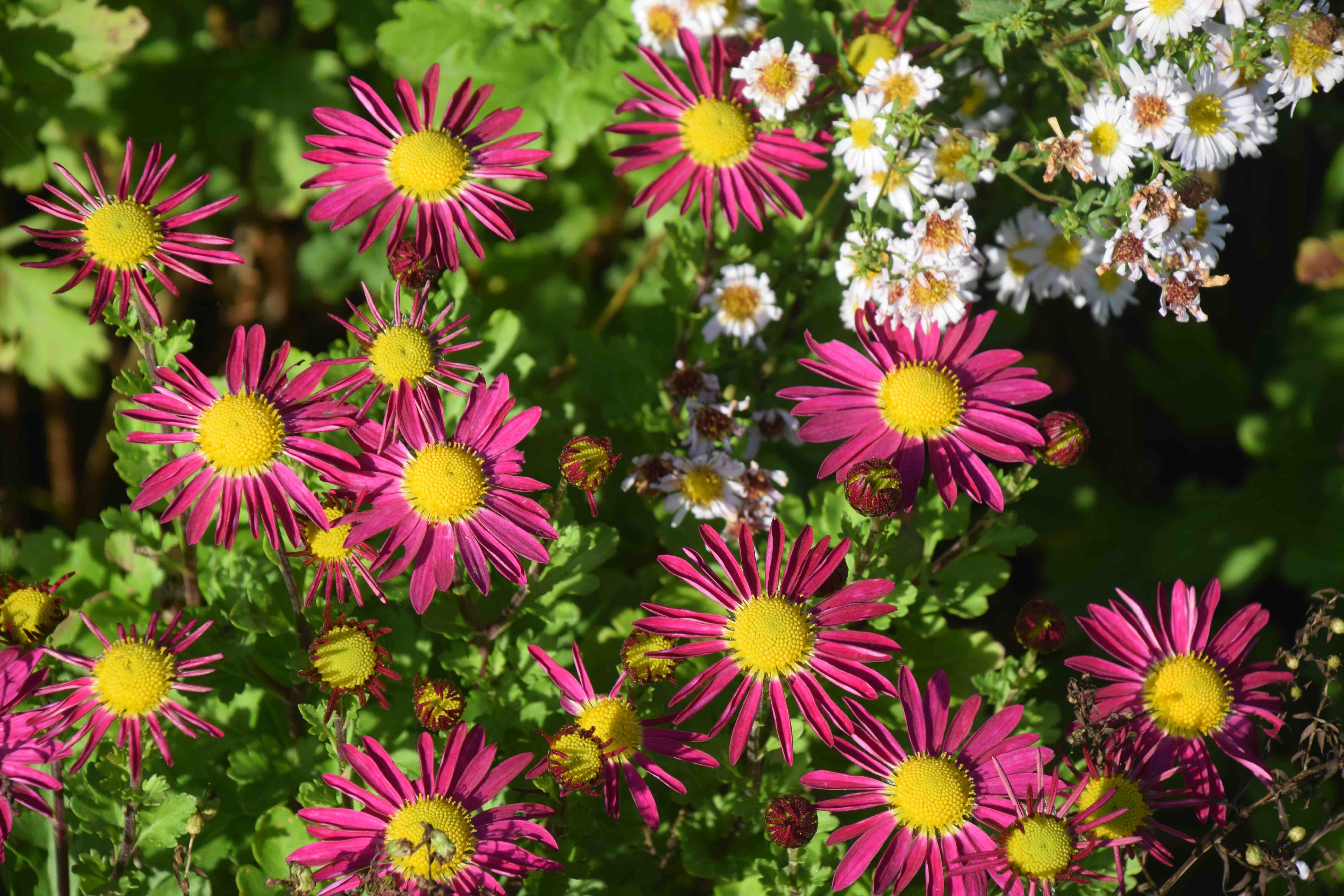
The hardy chrysanthemums make you wait too. I was almost giving up on them and their lateness is emphasised by planting with the Michaelmas daisies which are now going over. But ‘Mrs Jessie Cooper’ is just starting to bloom and the vibrant blooms are so welcome.
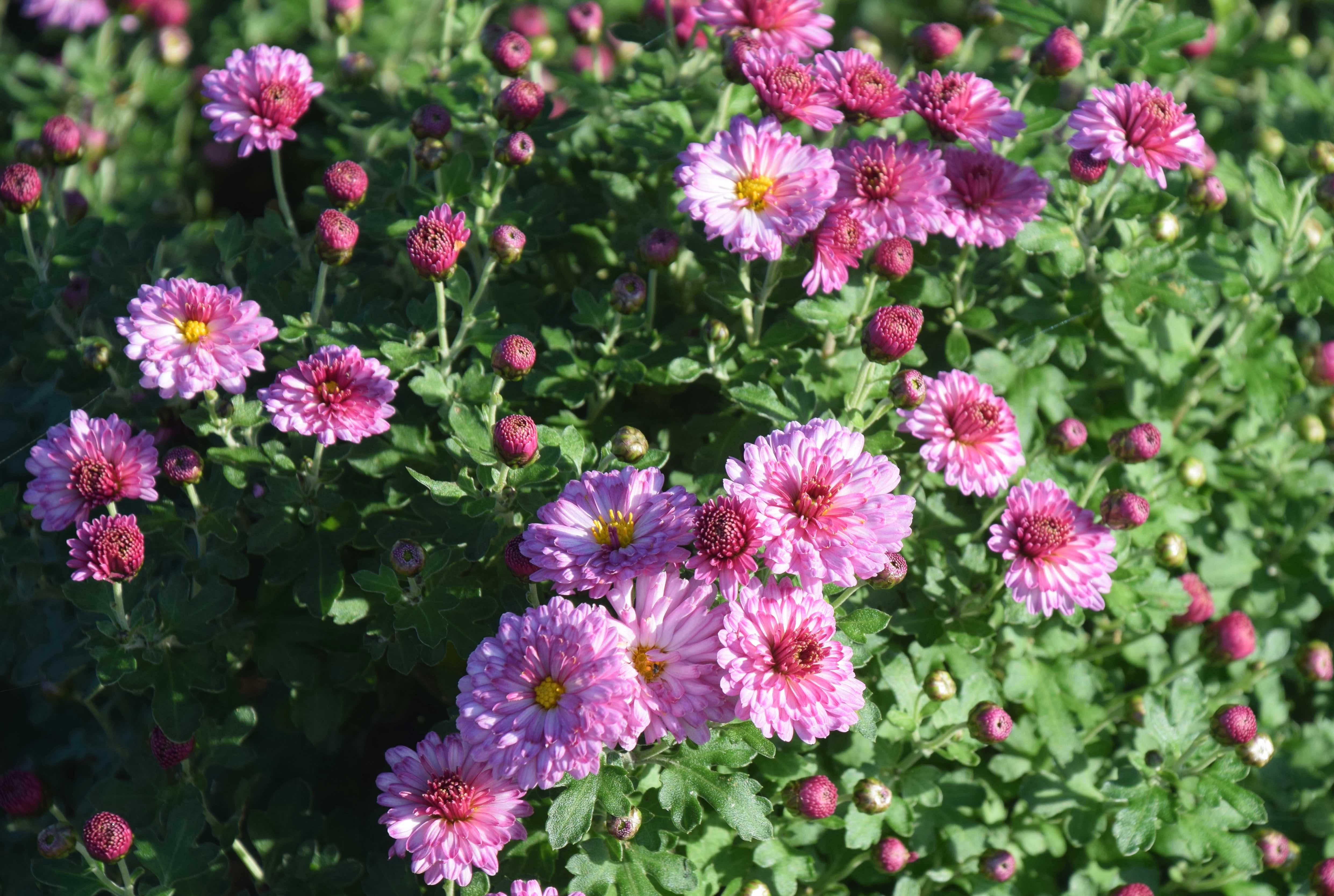
I grow ‘Mei Kyo’ because I used to grow it almost half a decade ago. It is not that remarkable now that ‘pot mums’ with thousands of double flowers can be bought in bloom for a few euro (how do they manage that?). But this hardy and neat plant is as comforting as a nice cup of tea and a scone and it gives me a big hug when I see it.
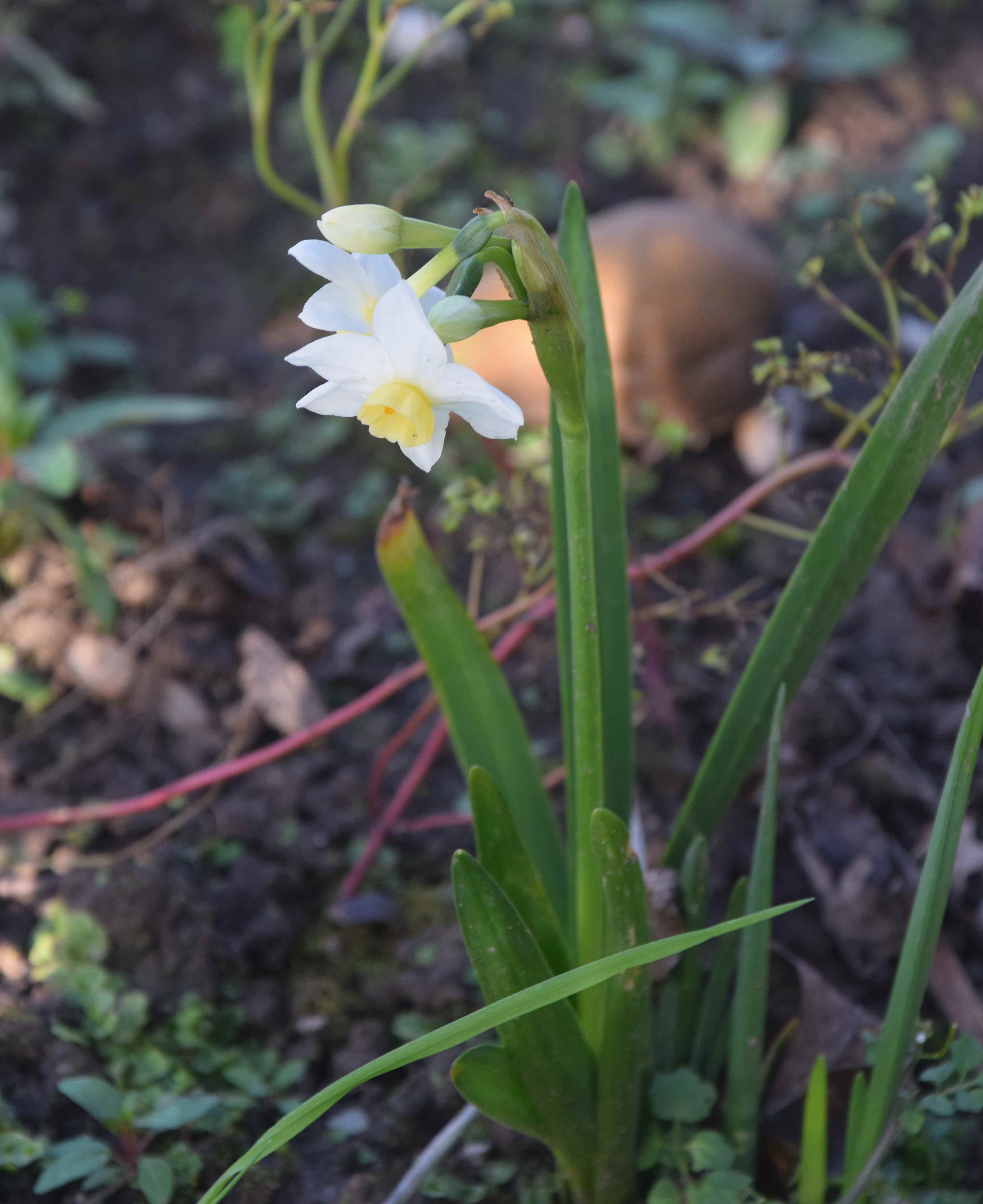
Of course, colour can come from surprising sources and I would never have expected to have salvias and chrysanthemum blooming along with narcissus. Several of the tazetta daffs are sending up leaves and now blooms.
 The Biking Gardener
Oh, it’s good to have some spots of colour in the garden at the moment. I imagine you have similar conditions to ourselves this morning with heavy rain and intermittent downpours.
Yes it is wet and gloomy!
Salvia leucantha is rad! It seems to me that it lost popularity since the 1990s because it gets so big through the season, and then leaves a comparably big void through winter. ‘Santa Barbara’ is available, but is no more popular than the common sort. What we have at work seems to be an old sort that gets quite large, and blooms with dark denim blue. Is ‘Santa Barbara’ more purplish? ‘White Mischief’ is, as the name implies, white, but, . . . I am not so keen on it. I typically prefer white bloom, but this one looks rather dusty.
I would have thought that the relatively compact size of ‘Santa Barbara’ would have made it more popular. It is certainly very purple and I would not describe it as anything like blue – though we know how inaccurate nurseries are with their adjectives! I am not sure I need White Mischief either – I mush prefer the colour of what I have, especially in the poor light at this time of year.
It should be more popular, but likely makes the impression of being too similar to the formerly common larger sort. Not many of us bother to read the label to know that it stays more compact. ‘White Mischief’, . . . well, it is one that I would not recommend. My colleague installed quite a bit of it for a client who wanted it, but I was not impressed.It is not a good color for it.