Oh no. Box blight
Gardening is a bit like making jam: you can never take your eyes off the boil. You can stand there for ages, stirring, waiting for the jam to start to thicken but you know that the moment you walk away for an instant, to let in the cat, the jam will be burnt to the bottom of the pan.
And so it can be in gardening. You cosset and nurture and worry and all is well. And then you neglect for a short time and things go horribly wrong. And so it has been for my box hedging.
I suppose it was all so inevitable. Box (Buxus sempervirens) is (or was) universally used as a low, formal, evergreen hedge and it has many good qualities. I used it partly for these reasons but also because it is relatively easy to propagate and I rooted hundreds of cuttings and then planted them out. It is a tough and undemanding plant and they mostly grew well. In the beds between the box hedging I grow bedding. All very traditional and formal. This spring the hedge had grown sufficiently that I could actually give them a proper trim and they finally looked like a small hedge, after about three years of growth, and I planted the summer flowers.
The statice and ageratum grew well, too well. For they smothered the hedges and, combined with a wet summer, kept light and air from the box and produced shady and damp conditions. Box won’t hate this but box blight loves it!
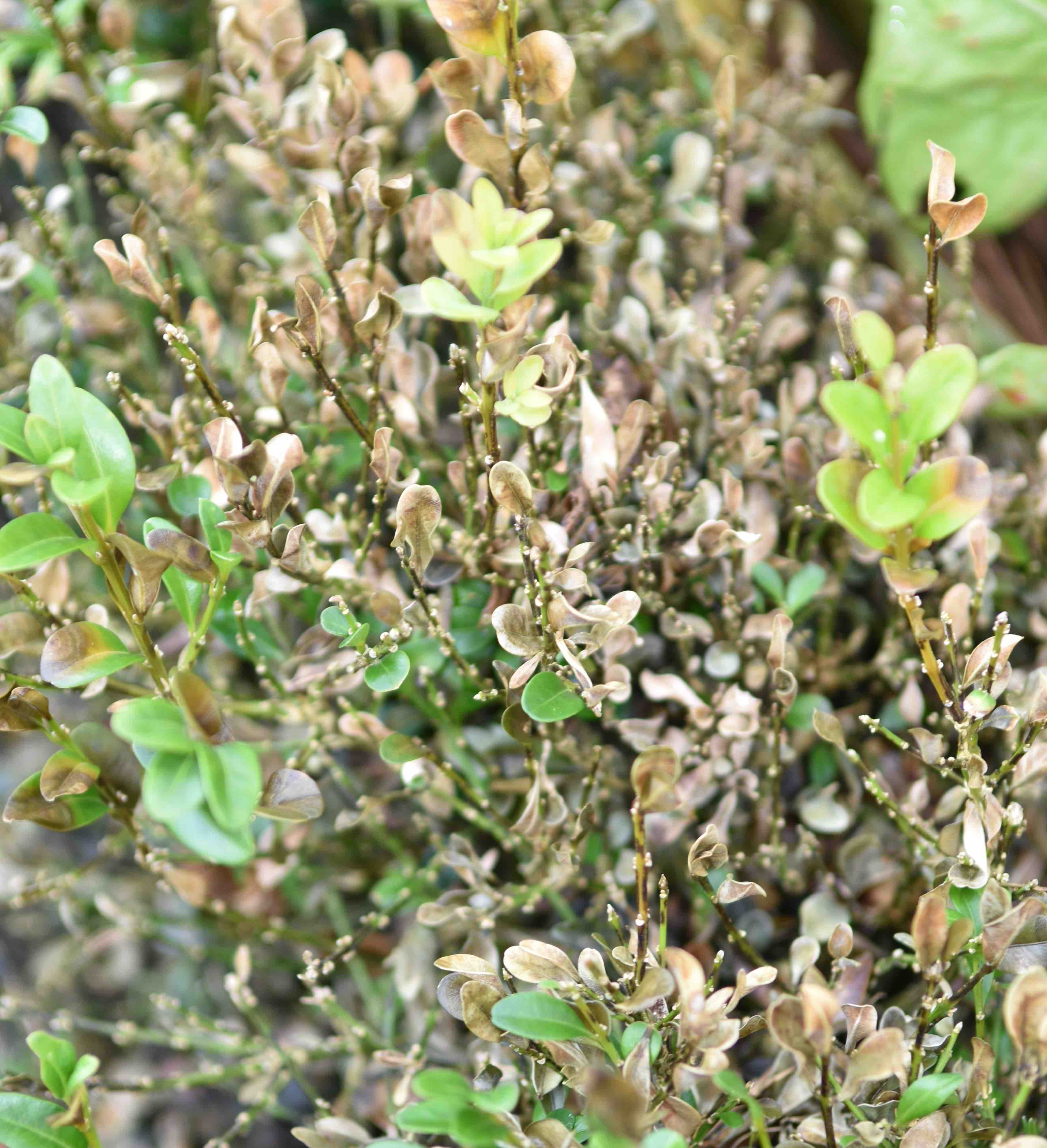
Box blight is a fungus (maybe two fungi) that kills the shoots and leaves (well no, it doesn’t leave – that is the issue). It was first found in the UK in the 1990s and is now widespread throughout Europe and also North America. Strangely, no one seems to know where it came from. But it certainly has been spread by infected plants being moved around. The big problem is that, although it will not kill the box plants, it ruins the look of them and they have to be hard pruned, so that healthy new growth is produced. And that will probably be attacked later. The fungus produces ‘resting’ spores that can remain alive in the soil for more than five years. If these are splashed onto the plants they can infect the plant. So mulching under the plants might help – a bit.
Tebuconazole is probably the most effective fungicide against blight but it needs to be applied often. I am not sure I want to do this.
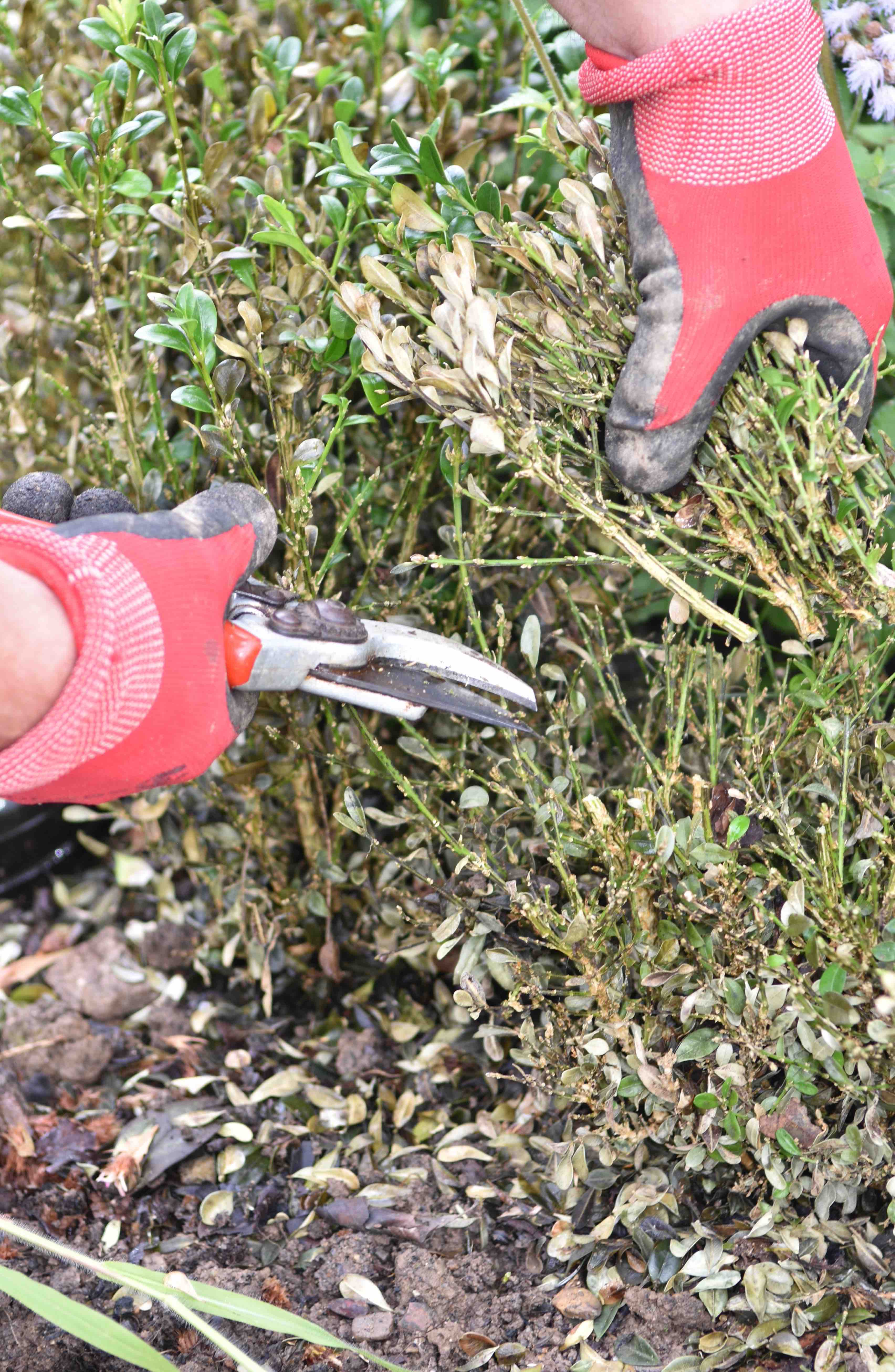
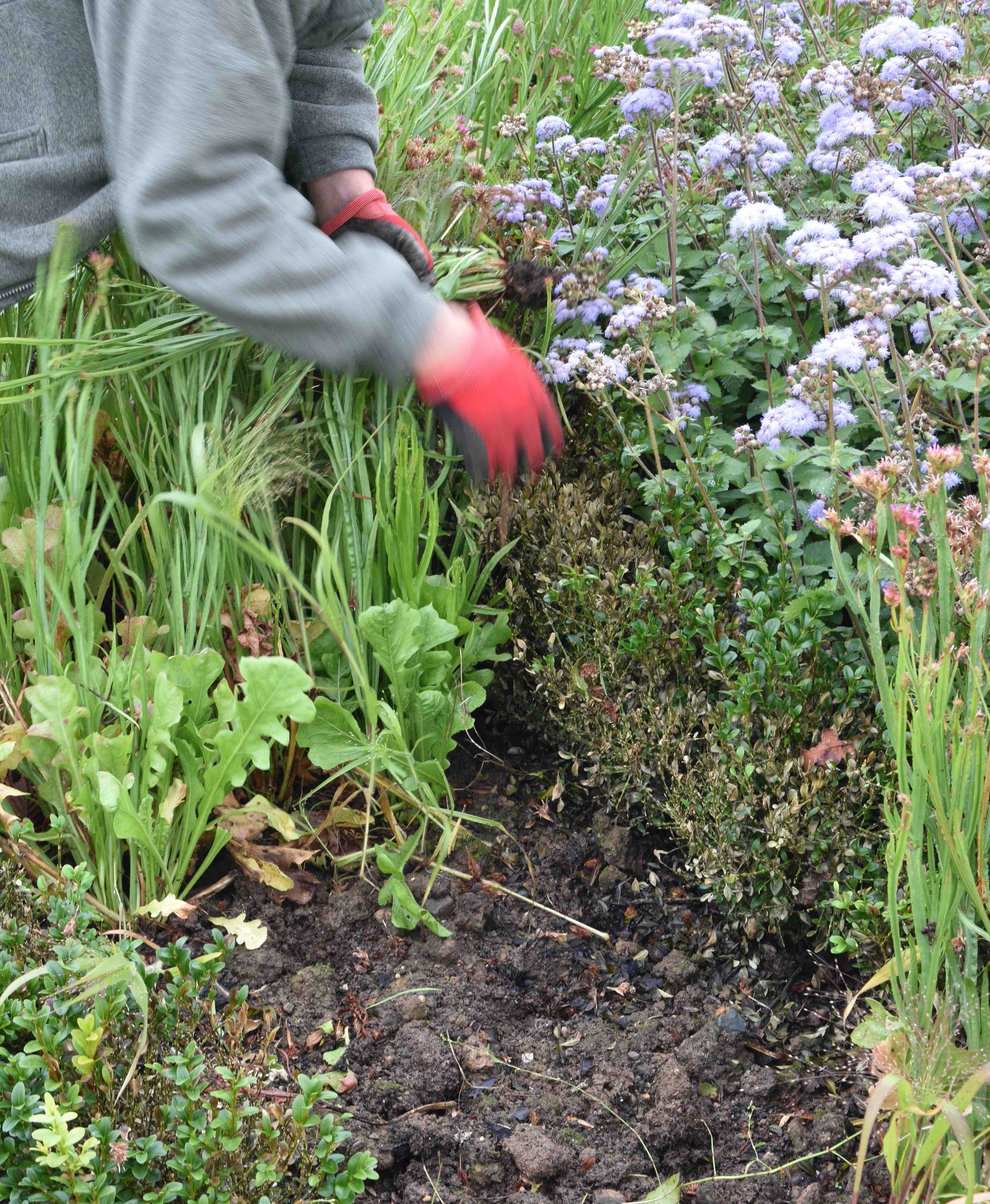
I will just have to cut down the hedge, leaving the open, green pieces and dispose of the debris. We don’t have a ‘green bin’ and we are not supposed to burn in the garden, despite the neighbour regularly burning tyres or plastic. Perhaps I should divert his sulphurous black smoke over the garden to control the fungal diseases.
The usual recommendations are, to dig up the hedges, to cut them down and trim more lightly when they regrow, to avoid dense growth that is more prone to the disease and to avoid overhead watering (not possible in a rainy climate like this).
I am annoyed, not only because this year seems to have brought more than its own fair share of issues in the garden but that, just as the hedge was starting to become ‘hedge-like’, along comes a problem. And I am not just being selfish, box hedges are among the best places for ladybirds to hibernate. But that dense growth, that suits these colourful little friends so well is just what caused the downfall of my box.
Next year these beds will be filled with dwarf French marigolds to please the bees as well as keeping the ladybirds happy. Then I need to think about whether to keep the box hedges. I hate to be defeated but, perhaps it will be the first big change in the garden.
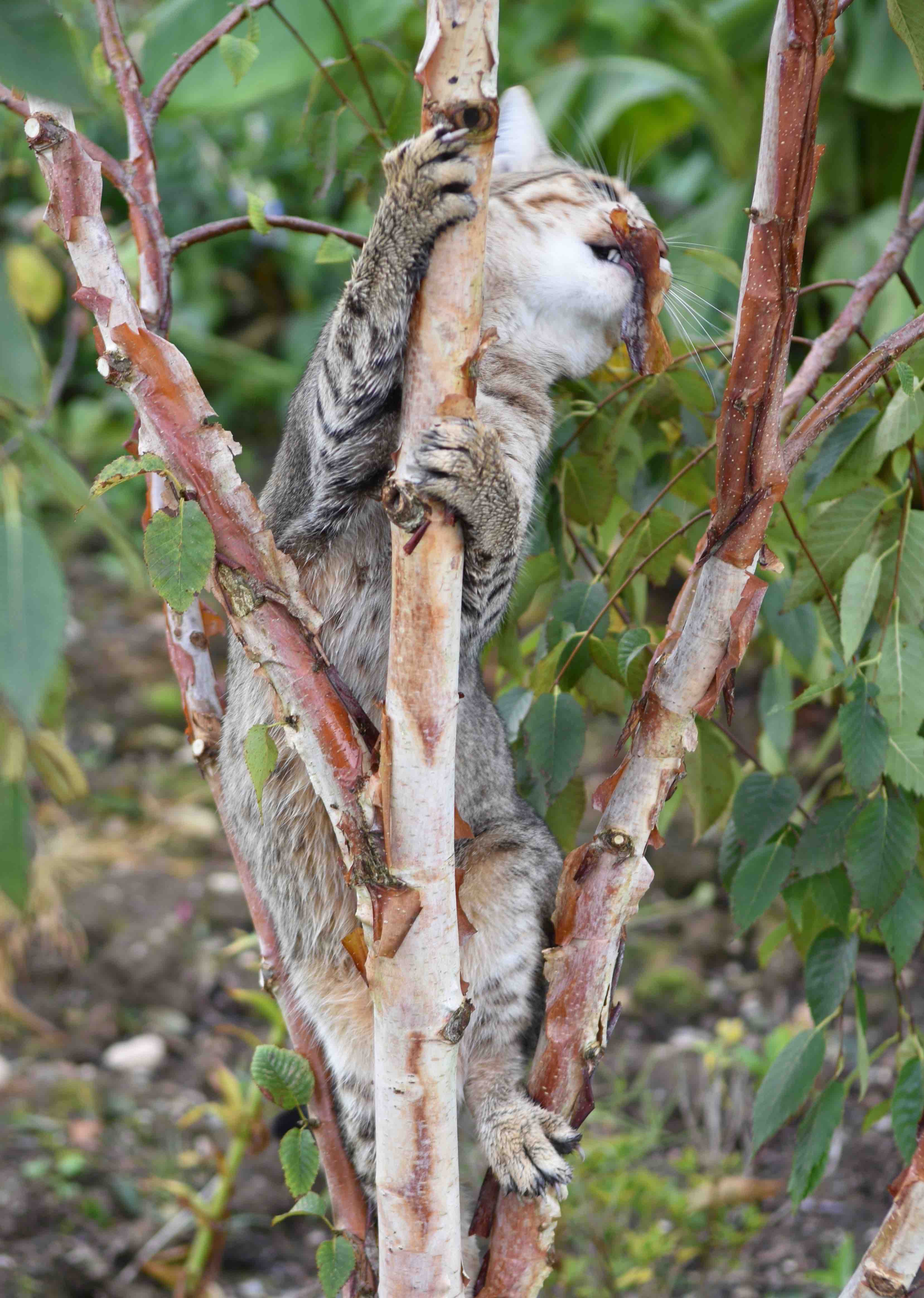
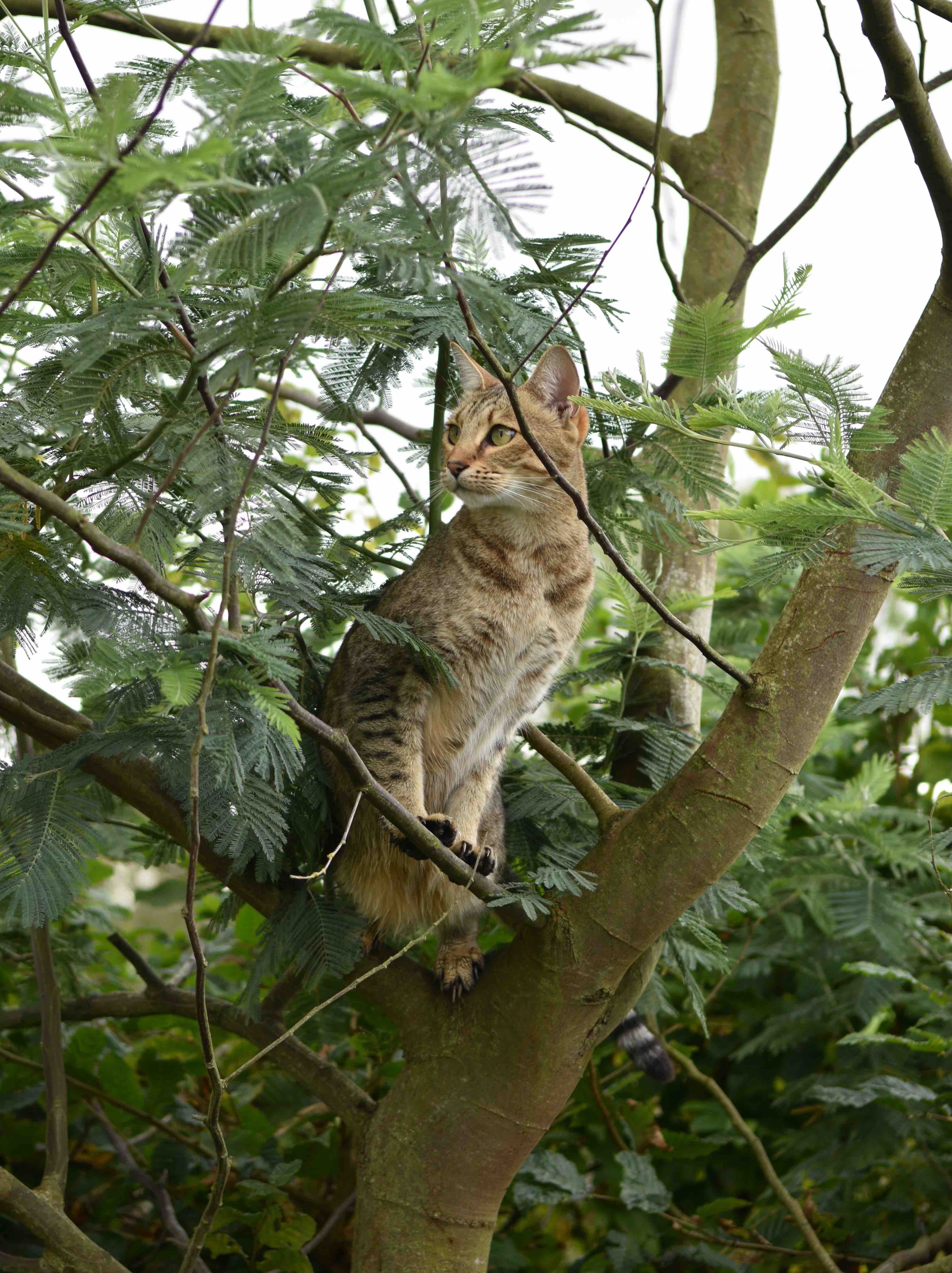
On a slightly more upbeat topic, I was removing some smaller branches on the birches now they are getting bigger, to shape them and to avoid removing large branches later, to expose and enhance the peeling bark. Mia helped. She has waited patiently for the trees to get big enough to climb and she decided that the peeling bark was annoying, fluttering in the wind, so she decided to leap up and pull it off.
The mimosa doesn’t have peeling bark but it is the largest tree in the garden and the branches make a useful perch from which to watch the world.
 The Biking Gardener
We have battled against box blight for a number of years and spray with Buxus each month during the growing season. It has helped but not eliminated the problem completely. The fungicide you mention is one I have not seen but must seek it out as another treatment for the problem.
I am not sure I want to spray so will have to see what happens. Gardens have to evolve and perhaps this area may see its first extinction!
Oh no! I’m so sorry to read this. I almost feel like it will hit all of our box plants at some stage. I’m hesitating on planting a new box hedge, fearful of the blight striking. But I believe there is an (expensive) alternative – not sure of the name.
Ilex crenata is often recommended as a suitable alternative but is, as you say, more expensive.
Commiserations. I can’t imagine how it managed to get near your box as you’re so out of the way, particularly as you raised the plants yourself! I’m afraid to mention mine as I might be testing fate. Mia is such a gorgeous looking cat.
I think box blight is everywhere now. It was inevitable but a shame it struck so soon. I will have to think about its future. Yes, Mia is a cutie.