Rewilding or just laziness
Warning – a long rant follows
I have often commented, partly in jest, that having a wild garden is just lazy. While providing habitats for wildlife and food for native creatures is a noble cause and very appealing, it is not just a case of letting everything go wild. As anyone who has tried to create a wildflower meadow or a wildflower border has discovered, coarse plants quickly take over and that dream of pretty flowers all blooming in harmony quickly becomes a nightmare. It is certainly not an easy option.
Anyone who has read this blog will also know that I make a lot of effort to make sure I provide flowers for pollinators but also habitats for wildlife. The trouble is that wild things won’t do as we want and that log pile to provide a winter bolt-hole for toads or newts is just as likely to become a cosy home for rats. It is all part of nature’s plan.
And going native is not always the best for wildlife. There are few flowers, that will make themselves at home in the average garden, that will provide nectar and pollen for early-flying bees. So my garden contains winter heathers, trachystemon, pulmonarias, crocus and hellebores, all loved by bees, and none native, as well as lamiums, which are native. I get really annoyed with most ‘wildflower’ mixes that include cosmos – great for bees but not at all ‘wild’ unless you live in Mexico.
But I want to concentrate on rewilding. According to various definitions, ‘It’s about letting nature take care of itself, enabling natural processes to shape land and sea, repair damaged ecosystems and restore degraded landscapes.’ (Rewildingeurope.com) This is all very laudable and I have no issues with the idea. But allowing weeds to take over a garden or an urban landscape is not always a credible option. This post was going to be written a month ago but I bottled out. But something I read this week prompted me to stand up for one of the UK’s most loved gardeners. This is not something I am prone to do.
In Garden News, Sept 2, * a news story ‘Bird Expert hits back over rewilding’ states ‘The row over ‘rewilding’ the UK’s gardens continues with a bird expert hitting back at Alan Titchmarsh.’ It continues ‘The celebrated TV gardener has written to the House of Lords claiming that gardeners have been ‘brainwashed’ by the fashion for rewilding, saying that gardens left to grow wild could be ‘catastrophic’ for wildlife.’
‘However, Lucy Taylor, manager of one of the UK’s leading bird food retailers, Lincolnshire-based Vine House Farm, said it’s important to consider rewilding to increase and improve bird habitats.’ It goes on.
I won’t delve too deeply into the origin of bird food. Perusing the Vine House Farm website it is clear that they make a huge effort to grow as much of the seed they sell as possible. But is it better for the environment and wildlife to allow bindweed and brambles to cover my garden or irrigate acres of central America to grow peanuts to feed birds? It is a complex argument. I am not going to start blaming anyone.
I agree that allowing natural areas, where humans have done harm to the natural balance, to ‘rewild’ is a positive step and I fully support it. But just standing back and letting nature have its way is not the right solution for every area.
And back to what wound me up in the first place was my visit last month to Lowestoft, Suffolk, arguably my home town. Lowestoft is (slightly) famous for being the most easterly point in the British Isles. It is where the sun rises first. It was once a thriving fishing port and a minor tourist destination because of its sandy beaches. But it always suffered from being in the shadow of its flashier and less refined neighbour to the north, Great Yarmouth. And to the south are the posh resorts of Southwold and Aldeburgh. Lowestoft sits unhappily between them despite a few attractions that bring summer visitors.
But being in Lowestoft in August 2023 was depressing.
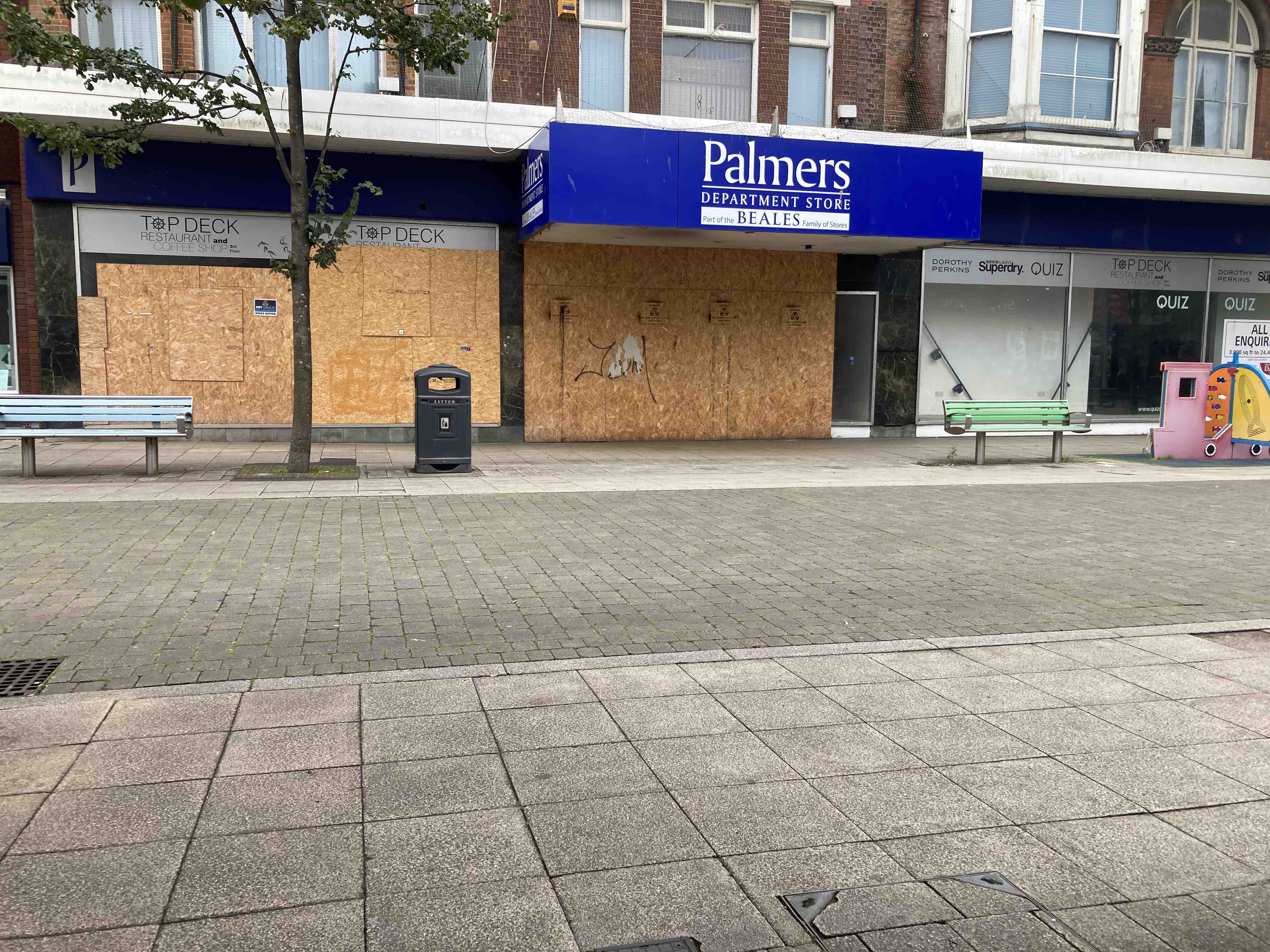
The high street is dying. Like many towns, bigger shops have closed and only bargain stores and cafes remain open. Amazingly, M&S still hangs on.
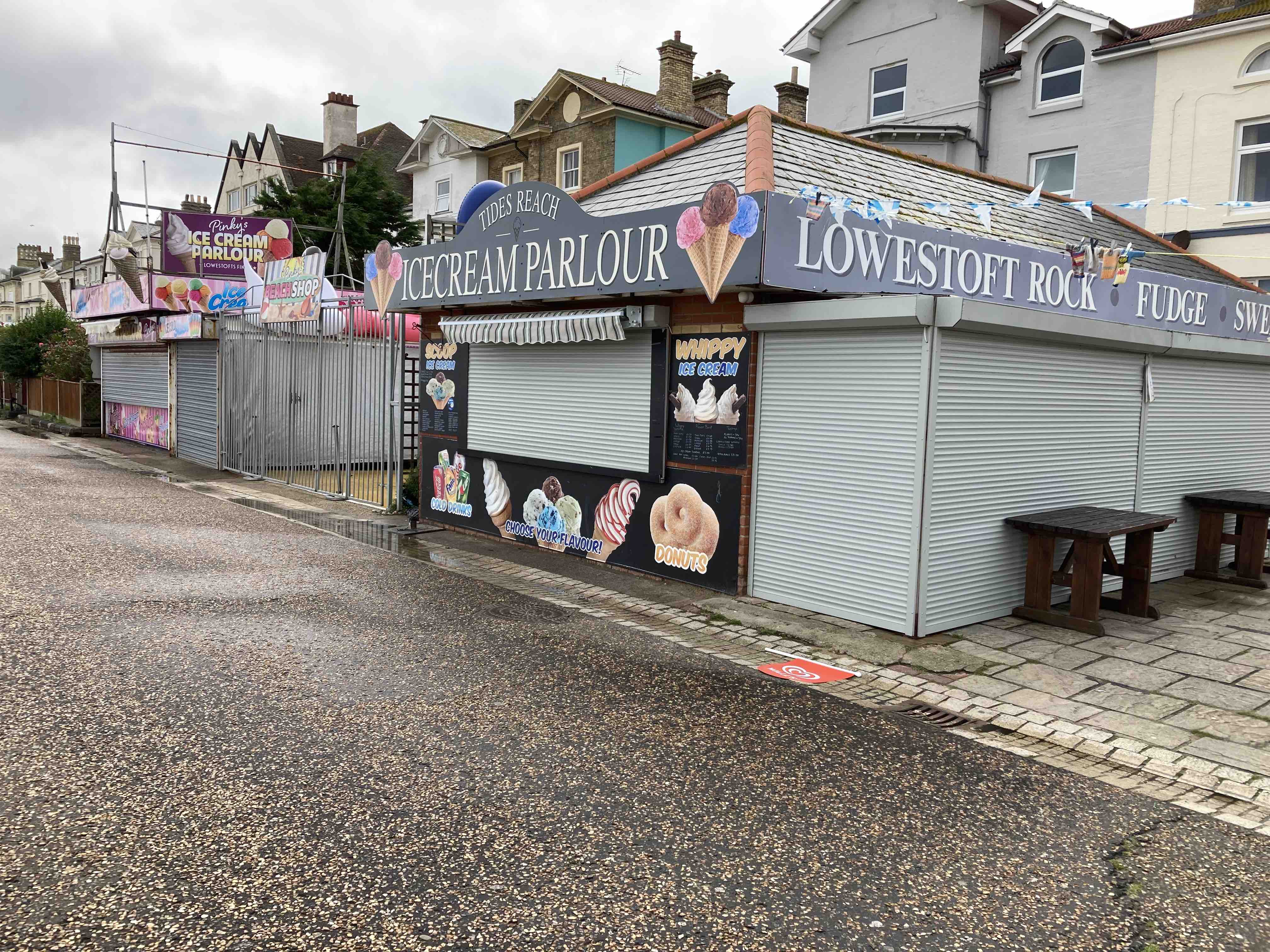
Along the seafront things are not much better. This was taken at 5pm on a Saturday. OK, it was a wet day but still – there was nothing open apart from a chip shop on the pier where I had tea.
But, back to the rewilding. Everywhere there were weeds. And not just recently germinated weeds.
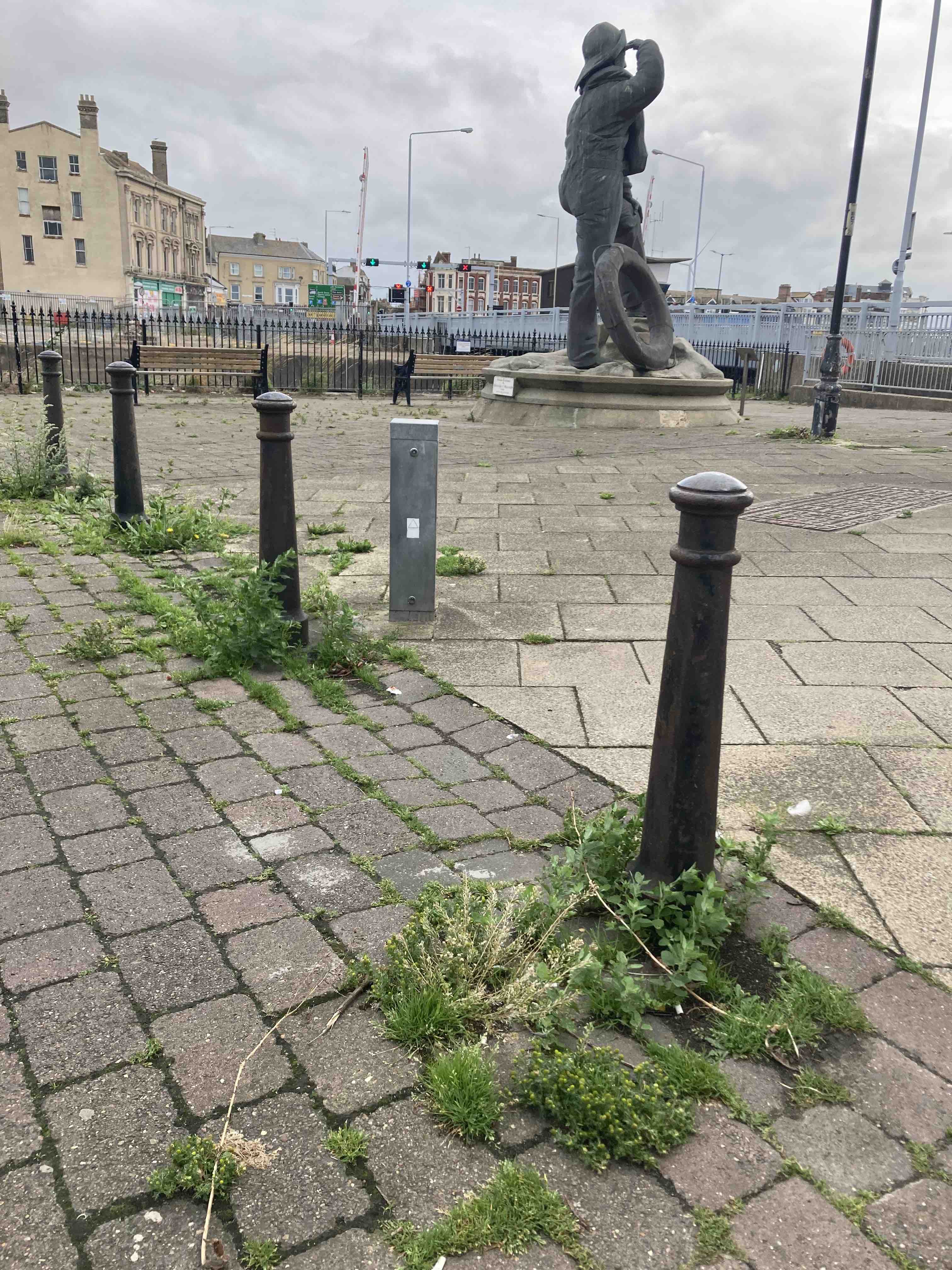
By the town bridge weeds are growing everywhere in the paving. What is the excuse, or reason? I assume that it is to encourage wildlife. But what wildlife? Does someone expect rabbits or deer to graze? In theory some insects could feed on this but are they likely to thrive?
Or is it to avoid using weedkillers that are supposedly bad for the environment? I suspect it is. But this is a pedestrian area beside a busy road. I know the use of glyphosate is slightly controversial but, since it is sprayed by farmers over thousands of acres to kill weeds before crops for humans are grown I can’t accept that it is harmful for the environment here. And before you explain that cars are bad and the roads should by dug up and replaced with fields – it is not going to happen. Even electric cars have tyres and pollute through dust and debris from those. And this is not a recently pristine natural area.
The weeds here look awful. They are not doing anything for wildlife. They may be a danger to pedestrians. Dog walkers (I am not one) are increasingly seeing harm done to their pets through painful grass seeds getting stuck in their flesh and paws. Because of this lack of care.
Of course, everyone is overweight these days and we all need to walk and cycle more. So what do we do to encourage this?
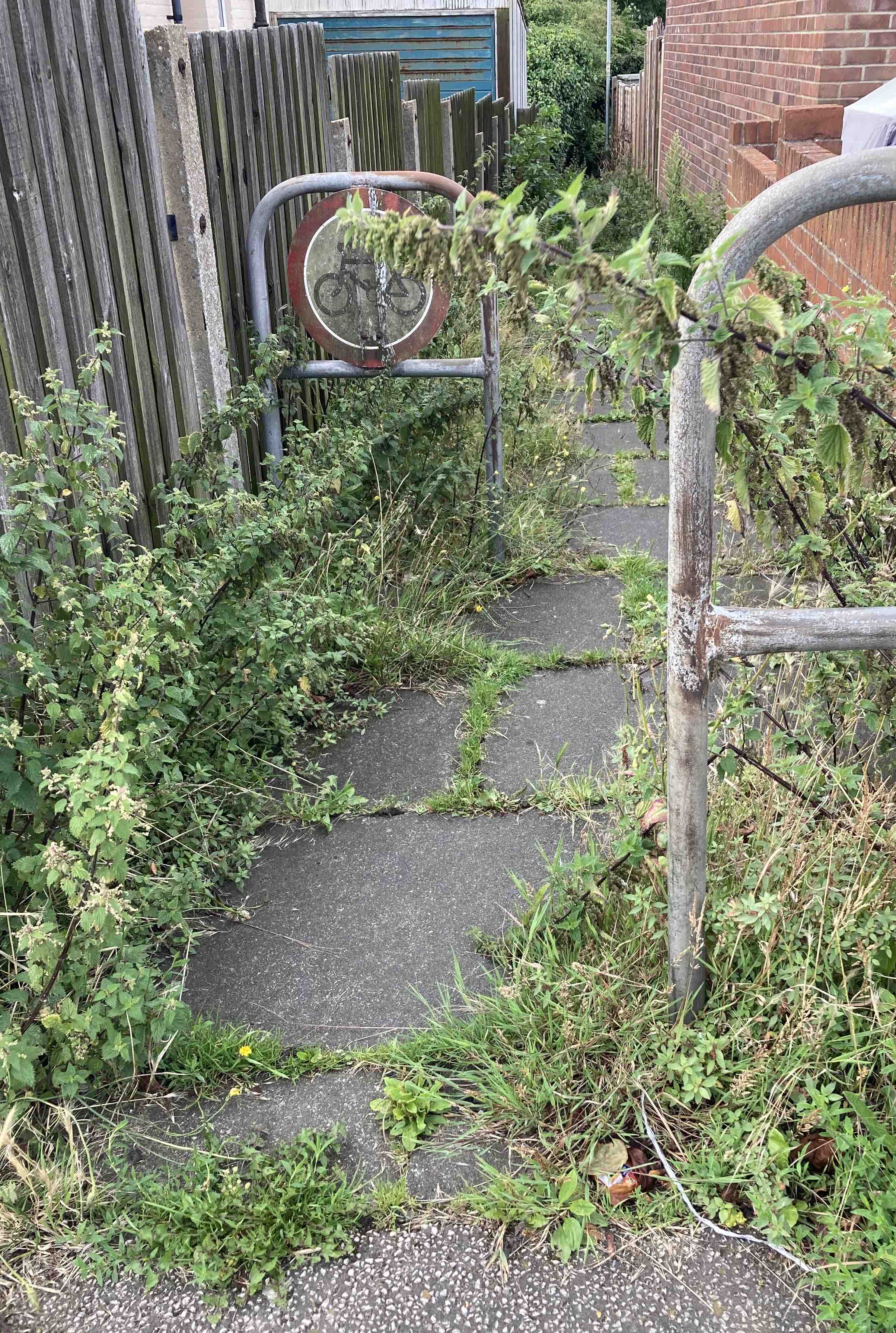
We let the weeds, including nettles, take over the footpaths.
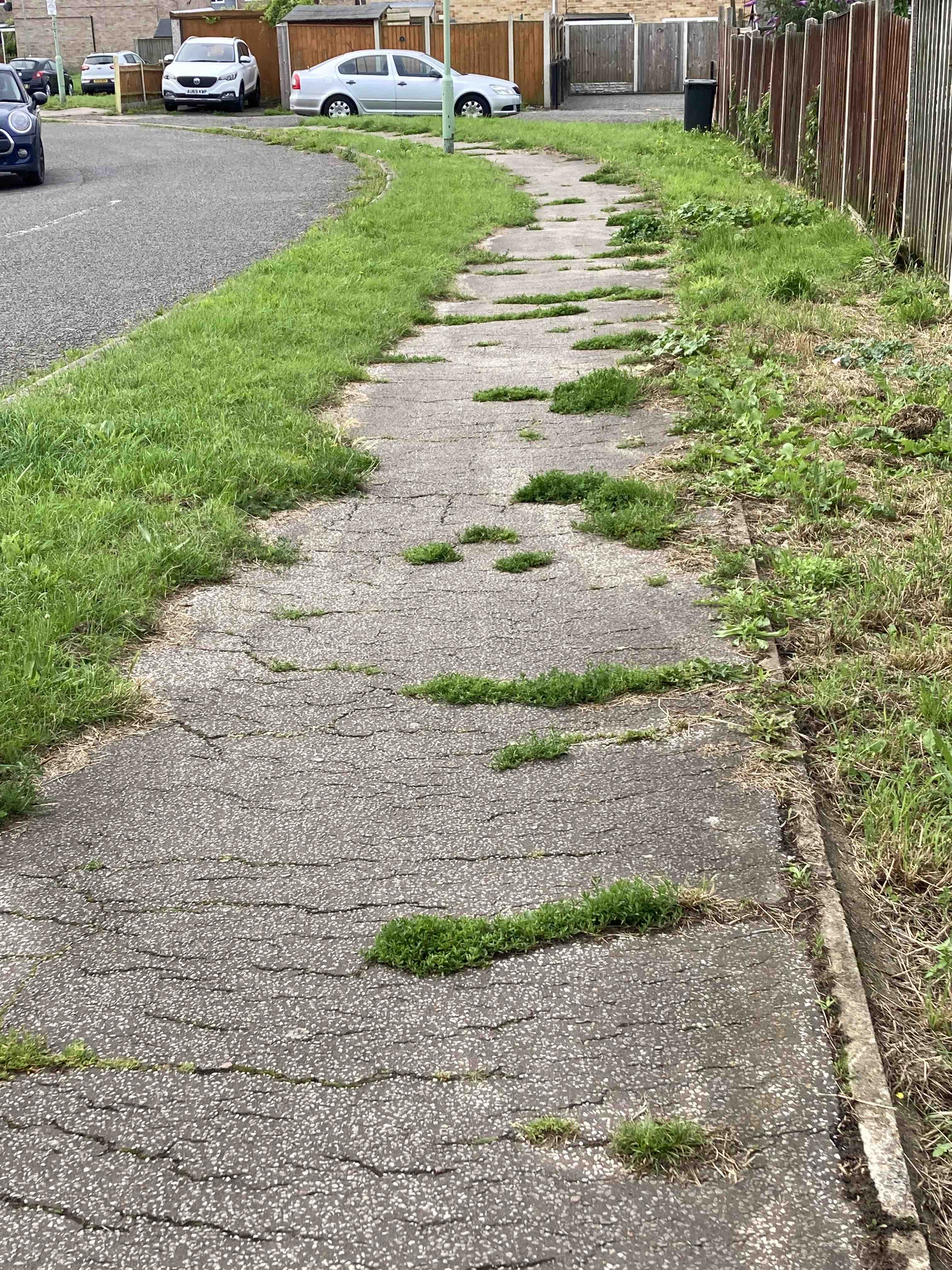
Of course, the irony here is that the moronic car drivers will park on the grass verge and pedestrians are left to walk on tarmac paths dotted with dangerous clumps of grass. Just imagine the herds of wild cattle and grouse feeding on these natural meadows
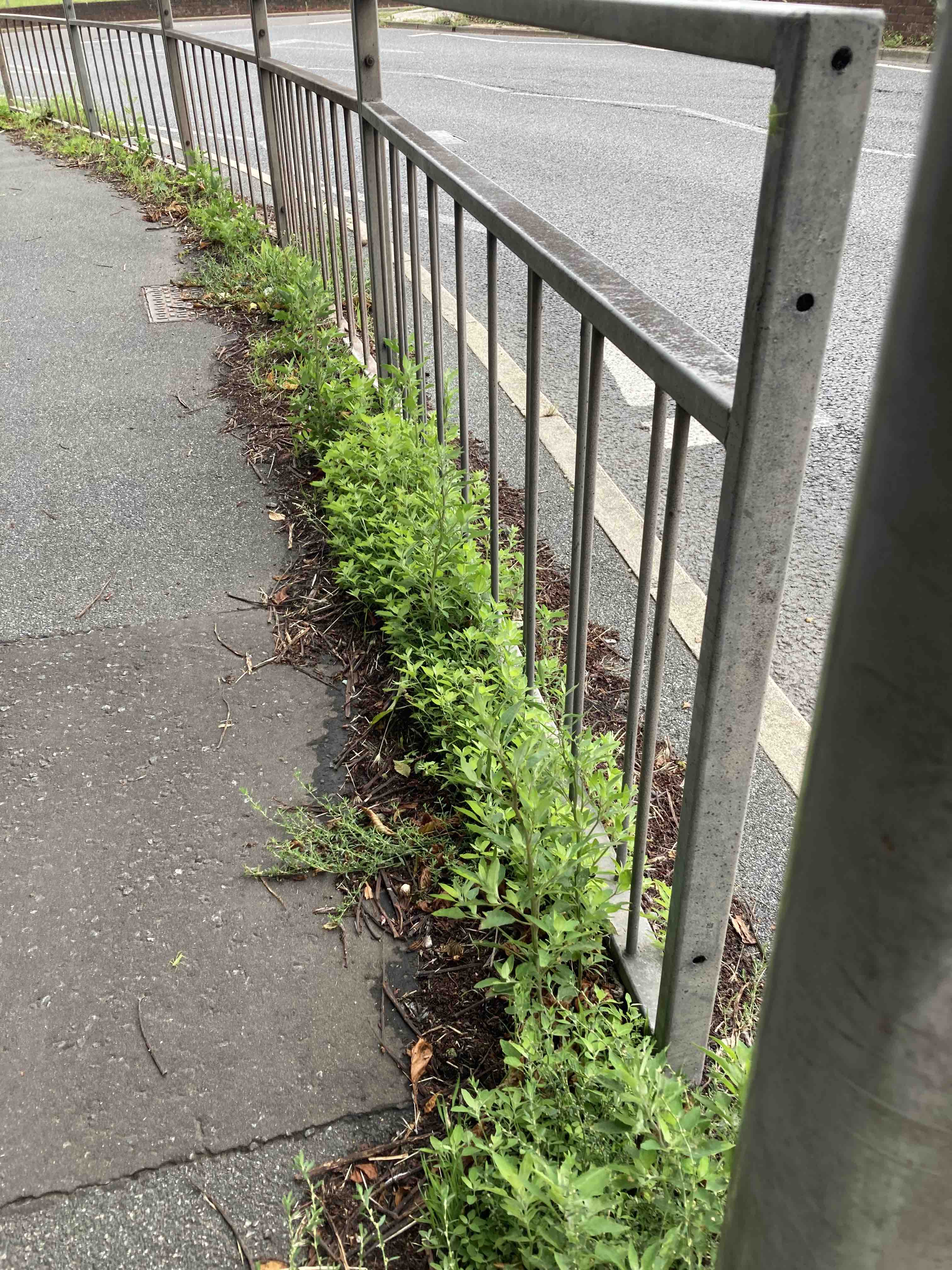
How can we expect people to have any pride in where they live when they are surrounded by this?
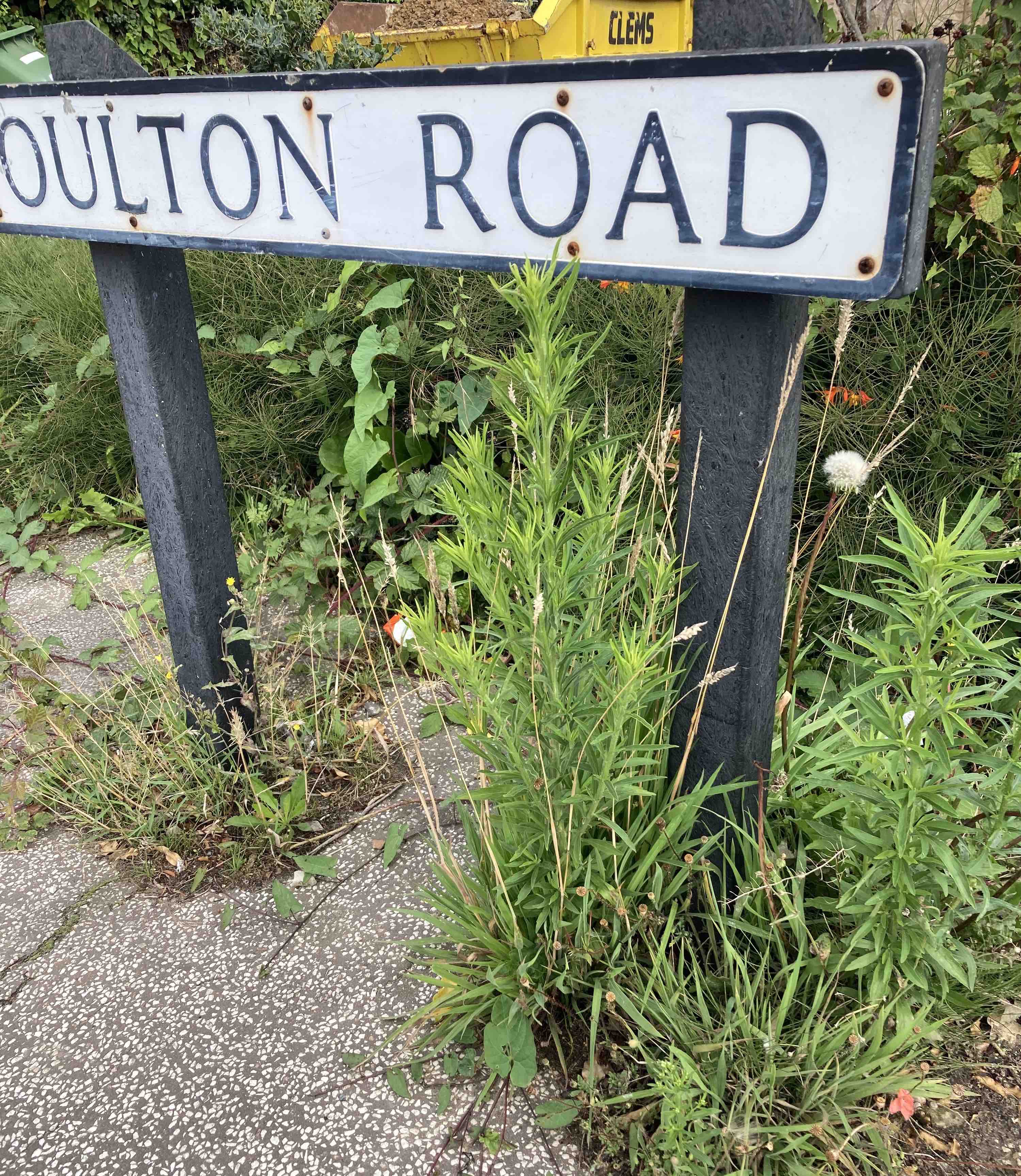
Apart from the fact that most of the weeds by this sign are equisetum which is notably not eaten by much wildlife, though I believe that dinosaurs were rather fond of it, the other common weed is Canadian fleabane which is not native and is singularly unattractive.
We must all make an effort to save the planet, encourage biodiversity and look after each other. But letting our urban environments become unkempt wastelands by doing nothing is not a defensible situation or solution. I despair.
*I write every week in Garden News but have no editorial input


Oh my! I totally get it. I do not have time to explain much about why I get it, but will briefly say that I am in California, where the forests naturally burn. People try to blame it on other people and global warming, but it is quite natural, and actually happens less than it naturally did (because of suppression). At the other end of the state, Los Angeles is in a chaparral or desert climate (depending on who you ask about it). I enjoy planting trees there because it improves the urban setting, but it is SO unnatural! It annoys me that people think that we are bringing more ‘nature’ into the city when what we do is so very unnatural. Well, as I said, I do not want to get carried away here.
It s a very complex situation, mainly because humans get in the way and ‘need’ to live somewhere! It is a good point about forest fires that is rarely made.
Oh, the fire situation is infuriating. The CZU Fire burned around two of my properties (By weirdly avoided the properties). Many of my neighbors lost their homes. Yet, so-called ‘environmentalists’ want to outlaw all forest management, ensuring its maximum combustibility. The forests are more combustible than they naturally are, not only because of suppression of fires, but because the entire region was harvested to rebuild San Francisco and the San Francisco Bay Area after the Great Earthquake and Fire of 1906. Vegetation that regenerated afterward is very congested and much more combustible than the redwoods that were here previously.
Interesting points
I understand that most weedkillers are bad for the planet, and I often wonder why they don’t employ someone with a flame thrower …
I don’t see that there is an easy answer. In an urban area a flame-thrower (or gas weed-wand) might potentially set fire to litter and may be a fire risk on tarmac. In some of these cases the weeds are so established that there is a large amount of dead plant debris that could burn. And is burning gas friendly for the environment? I am not sure that the careful use of a weedkiller with a low environmental impact would be worse. But there are electric weed wands that may be better. But when weeds get to a large size I don’t think they would be effective.
I had the feeling that it wouldn’t be a good idea!
It isn’t hard for most people to keep their bit of pavement looking tidy but the councils need to do the rest. Everywhere is starting to look really shabby where I live
Very true. The trouble is that people seem to think it s OK to just dump rubbish outside their front door. I am sorry your local area is looking shabby.
You’re right…the weedy sidewalks you show are ugly, as are boarded up storefronts. I wonder if the two are related? ie decreasing property tax revenue = decreasing budgets for ‘frivolous’ things like beautification.
I think that money is behind it – or lack of. And it is easy to say that things are being left as they are because it is rewilding or better for the environment. It is always difficult to justify ‘beautification’ when people are using food banks and can’t get a dentist. Lowestoft has more than its fair share of unemployed. But it is also supposed to be a tourist resort. It doesn’t have a lot to appeal to tourists.
Lowestoft is unlikely to win any tourism awards in the near futures, I imagine – not even from the wildlife.
The beach regularly gets awards for its cleanliness and clean sand. But the rest if the place needs work.
I know this whole coast well over many years – poor Lowestoft is suffering from the poverty that populates here where I guess weeds are low down on the list of needs to attend to rather than any nod to the latest trend in wilding.
The latter surely gives the earth a break from all the chemical garden practices that preceded it – not to mention a counter to the expansion of housing developments, paved drives etc as well as those gardeners who treat their gardens like an outdoor swept clean room.
Yes, Lowestoft is in a bad way. I agree with you that we need to give the earth a rest and that paving over soil is too prevalent. But pathways need to be maintained for many reasons. I had to walk from one side of town to another every day I was in Lowestoft and in many places the paths were – impassable. We can’t really dictate how people maintain their gardens but I agree that the ‘makeover’ look with paving and a few tubs with the odd cordyline or plastic plants is not good for wildlife.
Hear, hear.