Little gems
As I mentioned recently, this year has seen me add to my collection of what I would call ‘silly plants’. These are plants that have little decorative use in the garden but that I like, none-the-less, for one reason or another. Among these is Impatiens niamniamensis. I would grow this even if it looked like groundsel just to be able to say the name! Even better, it is commonly known as the Congo cockatoo which appeals to my childish sense of humour: “ooh er missus”.
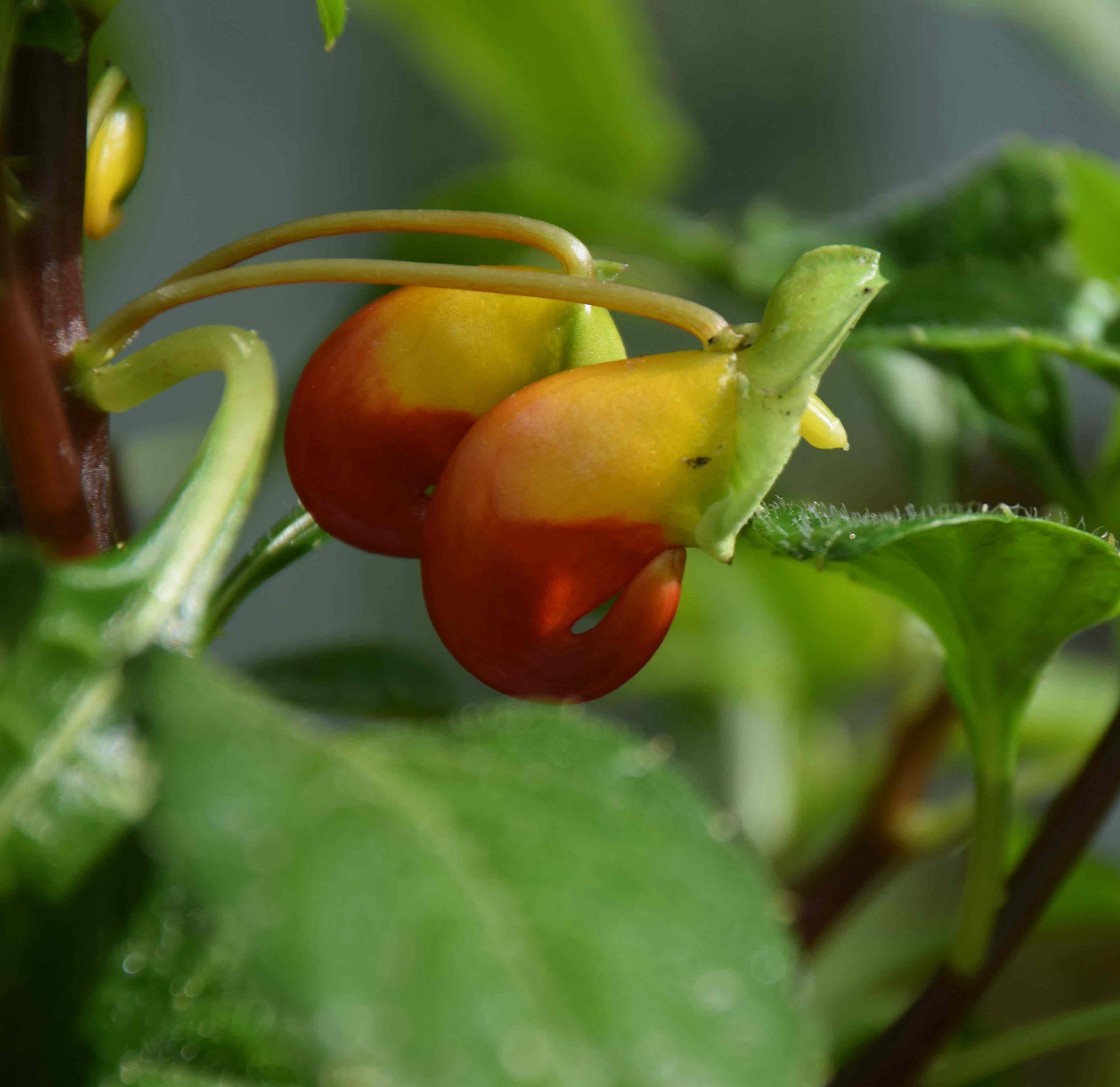
I like all impatiens and would like lots more but I am pleased to have this one. It is indeed native to Tropical Africa and is a succulent plant with rather gaunt, thick, dark stems and rosettes of green leaves at the top of each. The flowers appear just below these and often on the rather bare stems. They can be profuse and their colouring and structure is rather interesting. With care it can flower all summer. There is a variegated form that is a much prettier plant but the flowers are rather overshadowed by the leaves which are delightful.
It is one of those plants that is often passed from one gardener to another rather than bought. It is child’s play to propagate. All you need to do is cut off the shoot tips with about 10-15cm of stem and pop them in a pot or a glass of water. In fact my plant, which arrived in the post from France, had the two shoots snapped off in the packaging and were rather wilted. I put these in a pot of open compost and they rooted. The main plant sent up new shoots and all three are in bloom.
It may be easy to propagate but cultivation is not wholly without problems. Like many ‘soft’ plants it is prone to insects. Mealy bug and aphids will attack it and, more seriously, red spider mites adore it! Happily, my plants are free from such problems at the moment but I am watching daily. This plant likes high humidity and moist compost so misting and watering and feeding will help. It is also rather tender and needs a minimum temperature of 10c in winter to keep it healthy. So my greenhouse will be too cold in winter. One plant will be kept in the ‘propagation area’ and another in the house – where it will be more prone to red spider because of the dry atmosphere. Plants rarely look great by spring but they grow fast once watering and feeding resumes.
Outside in the garden, dahlias have really struggled in a summer when ‘Molluscs ruled the Earth’. I have never known a summer that has been so bad for snails and slugs. They are even climbing the tomato plants and eating the ripe fruits. I did not manage to lift all the dahlias last autumn and some were left in the ground. Amazingly ‘Honka Fragile’ not only survived the winter but also grew and escaped the snails and has been flowering well.

Single dahlias are all the rage at the moment and I have always liked the yellow, fragrant ‘Honka’ and this one is a good one too.
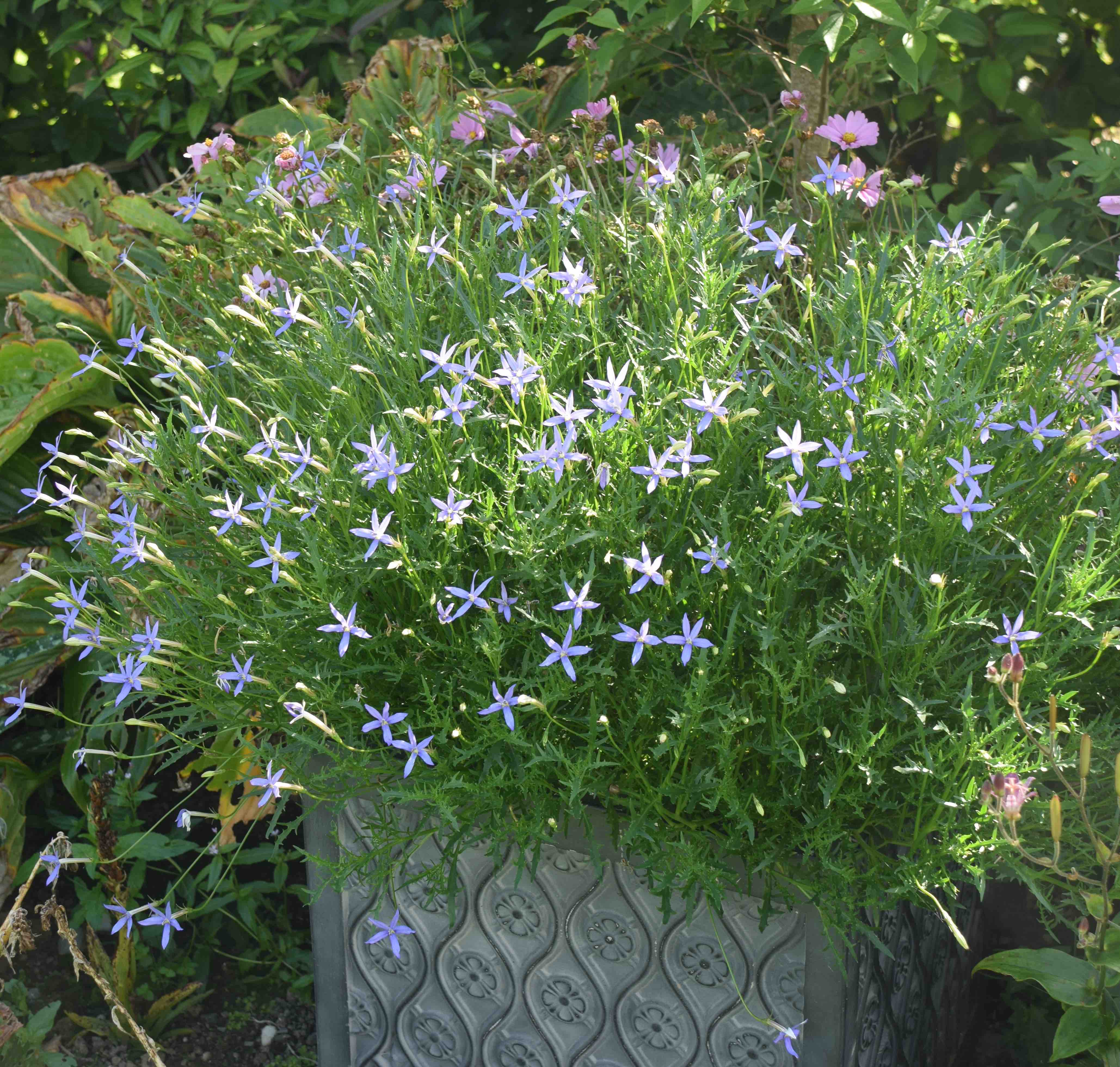
Another plant I am very fond of is isotoma. This Australian (tender) perennial is usually grown as an annual and is related to lobelia but also known as laurentia. Isotoma axillaris is a useful summer plant with starry, soft blue flowers. The seeds and seedlings are tiny and they grow very slowly at first. In fact they were so slow to grow that I almost gave up on them, but I am glad I persevered. Now they are bushy plants about 30cm high and wide and they have been flowering for months with no sign of them stopping. In the pot above the wet summer has ‘done for’ the cosmos at the back but the isotoma is loving it.
What I like about them, apart from how they look, is that they don’t need deadheading to keep them neat. The leaves are small and dark green. It is not really a trailing plant but will flow over the edge of a basket or patio pot. It is a bit of a trial early in its growing stages but is worth the effort.
 The Biking Gardener
I had an east-facing trough of isotoma which came through the winter of 2021/22, but sadly died in last last winter’s cold snap (I’m in Edinburgh). However I now have self sown seedlings popping up, which may or may not survive till next year. Here’s hoping!
that is great news. I have had it self seed before but only in spring. Maybe the wet, cool summer encouraged the seeds to germinate. I hope your seedlings survive.