A summer full of wildlife

I will remember this summer for many reasons. The lack of sunlight has been the most defining feature. Gardeners, like farmers, are always moaning about the weather and, as I have mentioned before, the constant moisture has been good for the growth of many plants, including the newly planted shrubs. It has also suited the roses. Strangely, it has clobbered the cosmos, which have ‘gone over’ more quickly than I expected, despite constant deadheading. In contrast, the zinnias, dedicated lovers of the sun, have performed far better than I dare hoped, though they are all planted in rather ‘droughty’ beds so have certainly not been waterlogged.
An advantage of the installation of the solar panels last summer has been that my thoughts about lack of sunlight has been confirmed with facts and we exported far less electricity in the past two months than usual.
But it is the wildlife that has been the defining feature of the summer. I use the term ‘wildlife’ with a shovelful of irony since we are not supposed to think of the creatures that devour our plants as pests these days. Slugs and snails, in particular, are the dominant ‘wildlife’ in the garden this year and have been munching on a wide range of plants. I try not to use pesticides but do try to protect young plants, to give them a chance of growing and have used ferric phosphate pellets this year. I have to say that I am not sure they have any effect at all. The older kinds, containing metaldehyde, are banned in many European countries and although they are not officially banned in Ireland, they seem to be phased out.
I hate killing anything but it is getting a bit silly this year. I had planned to have a good display of sunflowers this year but it has been pretty useless. Not only did the young plants get decimated but the snails just did not give up. They have been scaling the plants, helped, I am sure, by the wet weather, and some plants have been reduced to skeletons, the flowerheads even being chewed. In the polytunnel they are even eating the ripe tomatoes. They obviously have a sweet tooth (or teeth) because they devoured the small stevia plants, though those that got through the infantile stages, (all two of them) have grown to maturity.
On the plus side, flowers that seem to have been relatively untouched include isotoma, calendulas, alstroemerias, sanguisorba, persicarias and asters (not callistephus, which were reduced to ribbons).
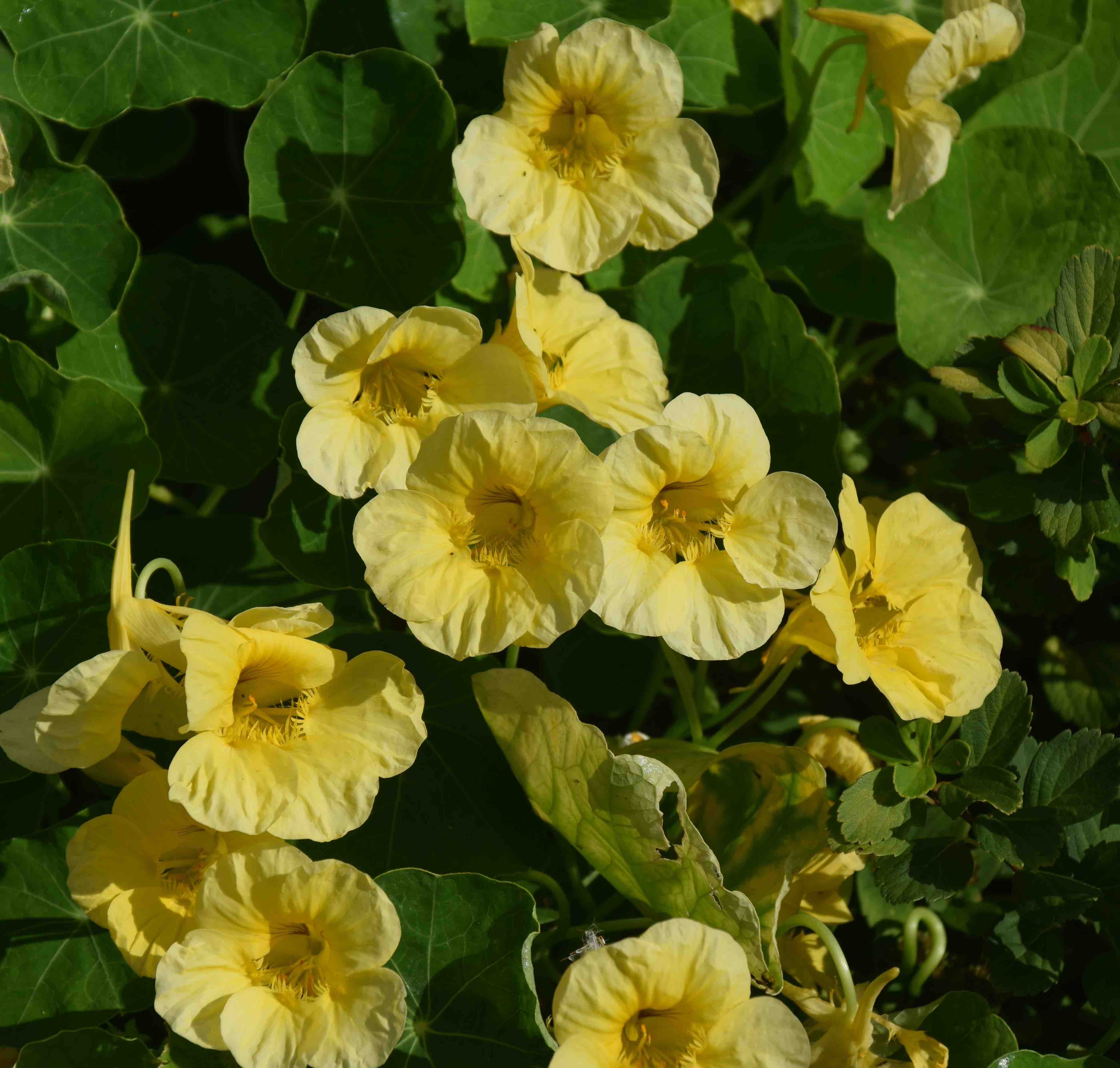
These miserable molluscs also seem to leave the nasturtiums (Tropaeolum majus) alone too but, and you know what is coming next if you have ever grown them, the large white butterfly caterpillars have been devastating. I let these plants seed where they will and pull them up if they are not required so am not too precious about them, even though some are very pretty. I use them as fillers.
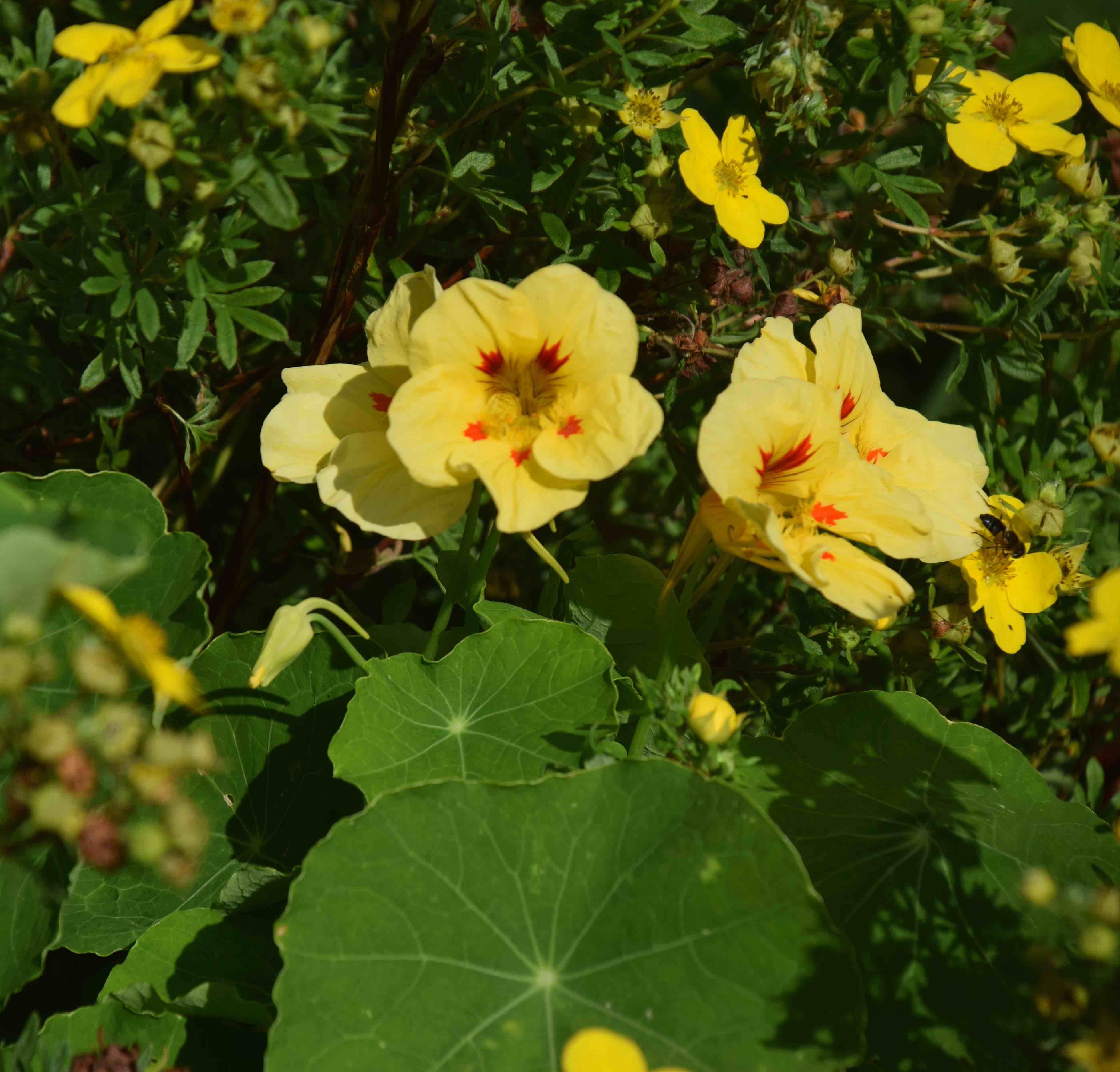
Nasturtiums respond to growing conditions dramatically and with rich soil and plenty of water even compact varieties can become large. I have found they have become huge this year with all the rain. But in other places some are now completely stripped of leaves. In particular, two pots by the house are now just stems and the caterpillars are now climbing the walls to pupate. Even my precious double nasturtiums in the greenhouse were attacked and I am afraid the culprits got short shrift!
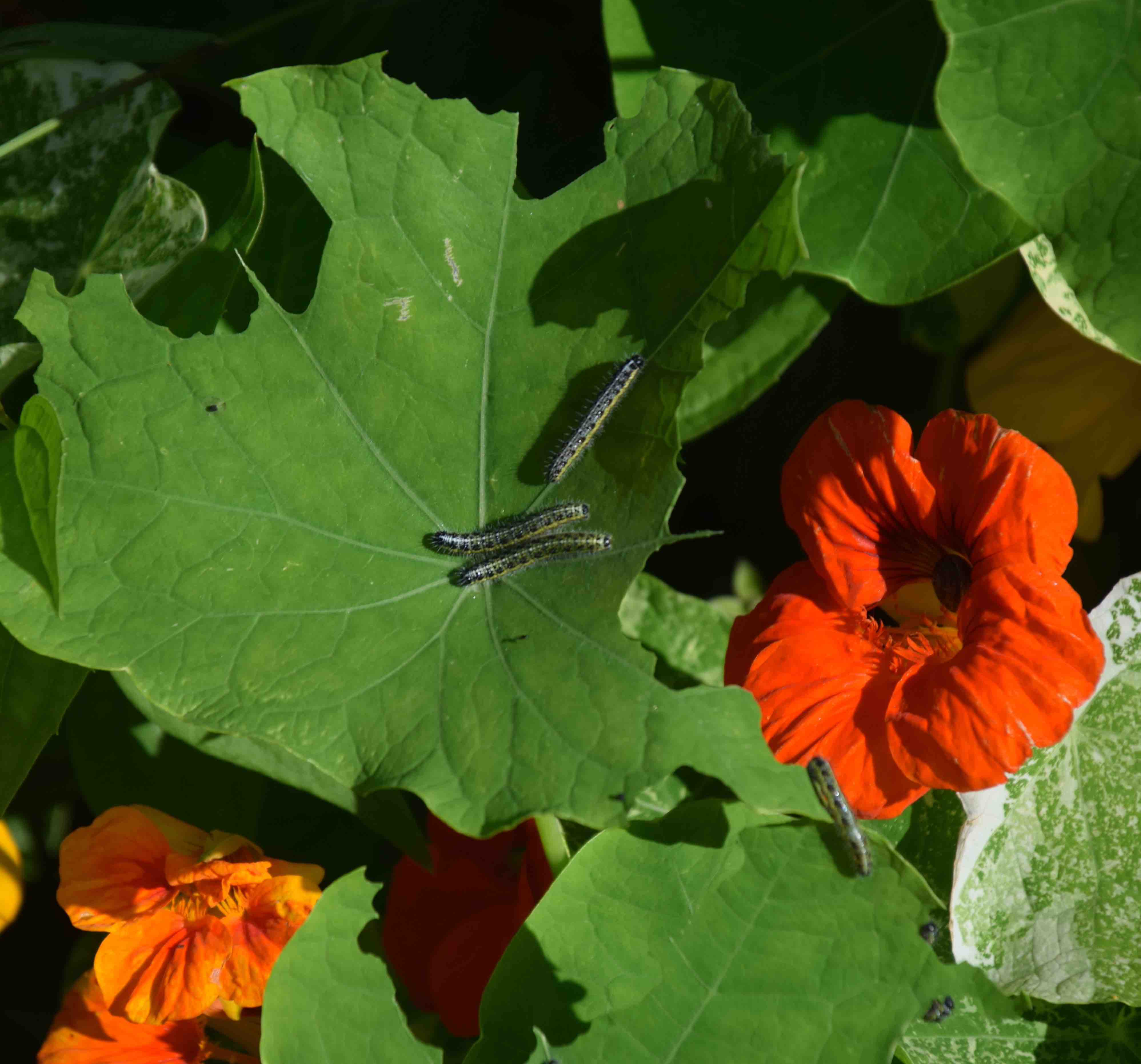
The Large White lays clusters of yellow eggs on the underside of the leaves and the caterpillars feed as a group at first, later wandering off on their own.
These are familiar and expected problems but this year has presented some novel pests including the hemerocallis gall midge I mentioned earlier in the year. Another new one this year has been cherry slug worm. I was wandering past one of the trees and saw this black, slimy ‘thing’ on a leaf and knew I had another pest to tick off the list!
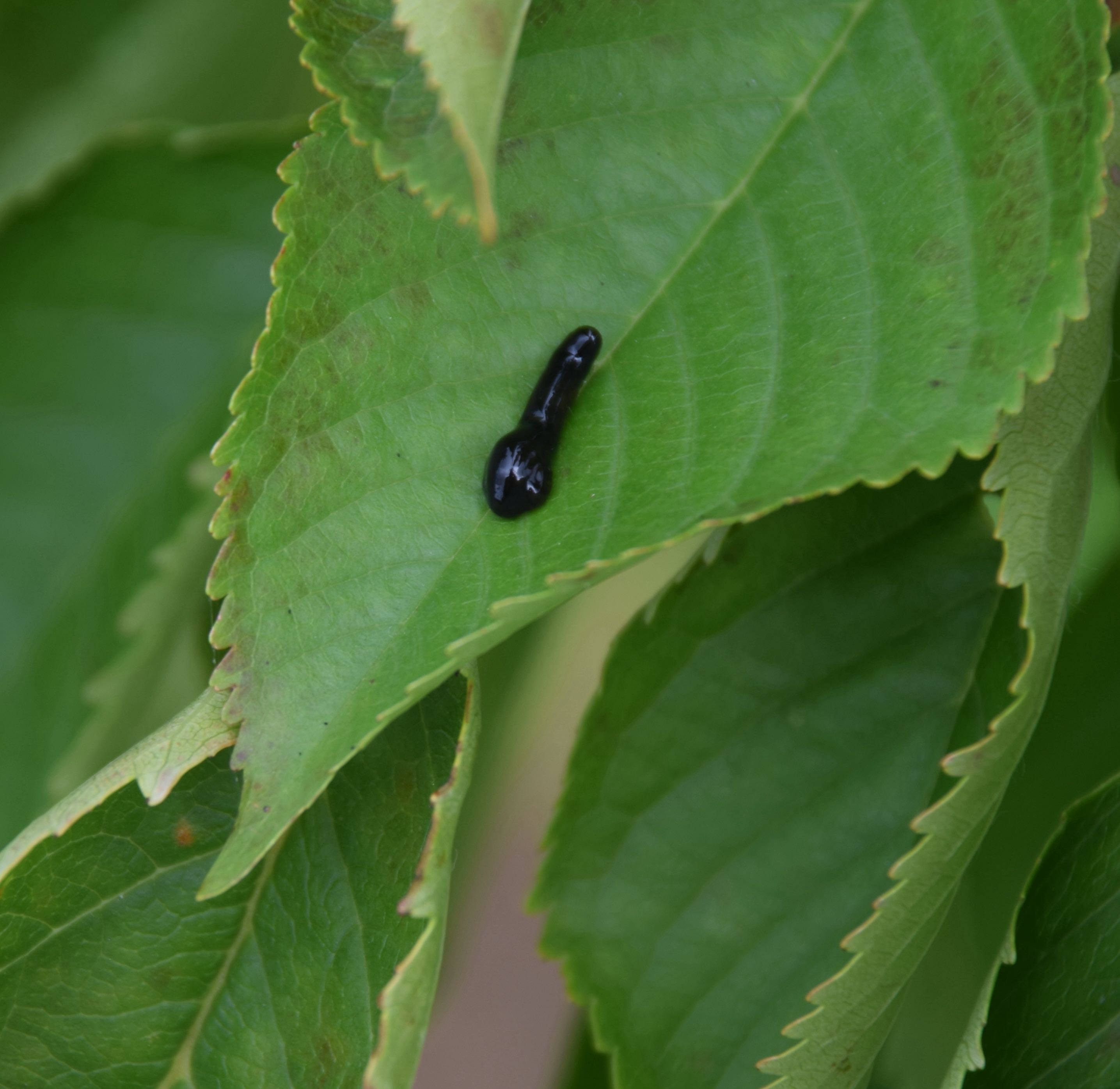
Although these larvae appear to be small black slugs, they are the larvae of a sawfly, commonly called pear and cherry slugworm (Caliroa cerasi). They graze the surface of the leaf leaving brown patches and they can feed on pears and cotoneaster, hawthorn and plum, though I have to say that I have never seen them before. The good news is that they are unlikely to do any harm to the tree and should not affect fruiting. I have to admit that I didn’t give them a chance to prove that though. I scoured the tree and only found three. If they are around in the hedges on hawthorn and sloe, they can stay there. My patience and tolerance has been tested too far this year.
On a more positive note, I have finally sorted the bulbs, lifted from pots, and they are ready to plant. I grow new or ‘special’ daffs and tulips in pots the first year so I can assess them close-up and then plant them out in the garden. I have more new daffs on order but I will get these bulbs in soon – it is never too early to plant daffodils.

 The Biking Gardener
Cosmos, especially, had a dreadful year but slugs etc were not a huge problem here except with one corner of potted hostas.
I am glad you have not had a slug problem. I always think of cosmos as ultra-reliable but they really need pulling up now. I think the autumn clean-up will start early this year.
In previous years we were getting loads of those huge foreign slugs, munching their way through everything. I’m happy to say that there have been none this year. I wonder where they went?