Fear of footprints and ‘fuchsiaphobia’

The past few weeks have been a bit of a trial in the garden. There have been ups, but downs too. Last summer I put four fish in the big pond. They were reputedly ‘canary’ goldfish, being bright yellow rather than orange and I thought they would look good. Of course they promptly disappeared to the bottom of the pond and I rarely saw them. In spring I started to feed them and they got used to me walking up to the pond and it was lovely to see them swimming towards me for food. They were growing well and then, about six weeks ago, I saw a few ‘tiddlers’. And then, a few days later, that increased to a couple of dozen! Now feeding times is great fun with the water ‘boiling’ as the small fish and the larger, adults, rush to get the food.
Of course, things can’t go swimmingly without something going wrong eventually. I went out in the early morning a few weeks ago and found this.

These are the footprints of a heron. I felt so sorry for the fish because no sooner do they associate a shadow by the pond with being fed than a heron arrives and that shadow suddenly means they are going to be food!
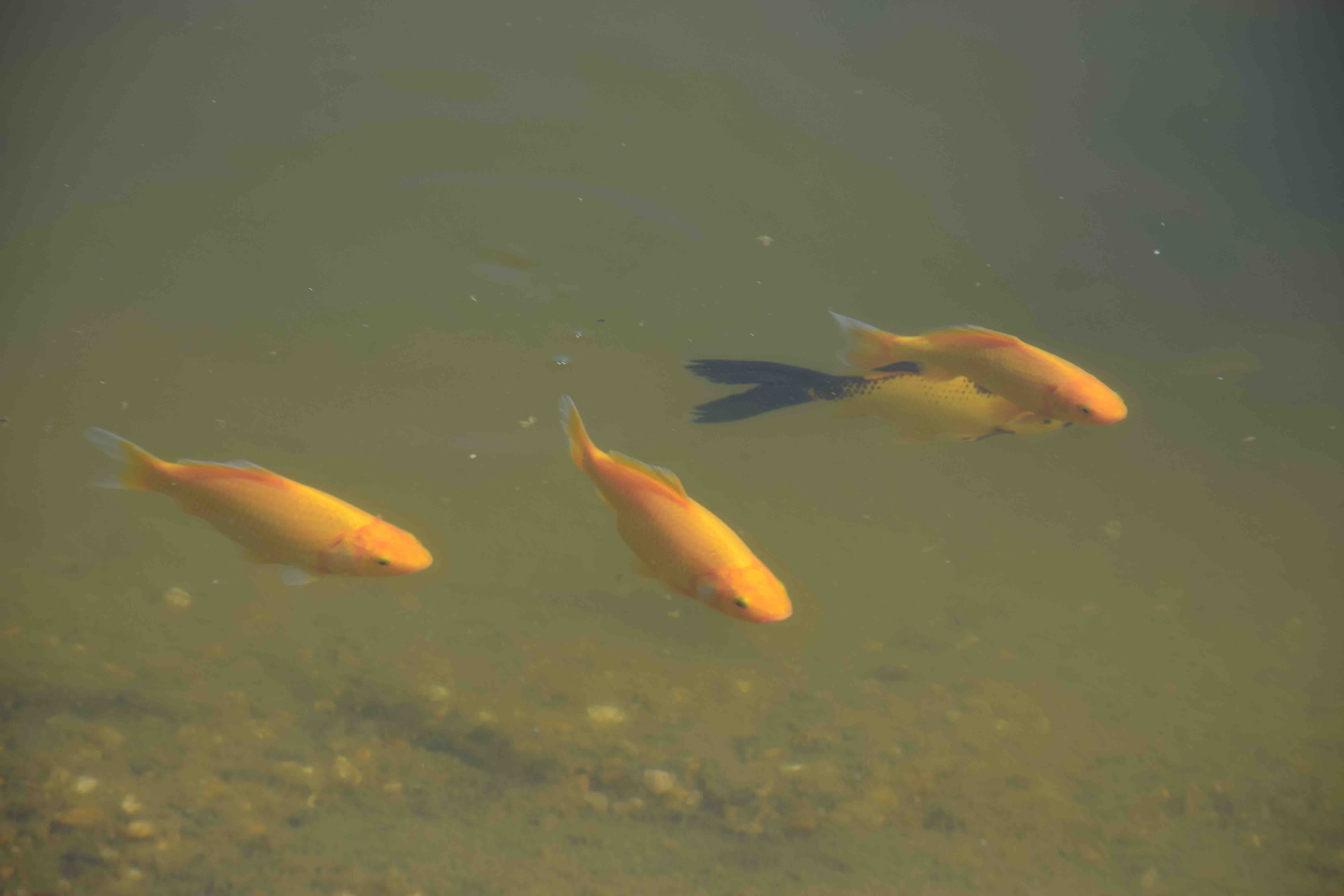
The edges of the pond are steep in places but there are shallow slopes which are there to allow creatures in and out, and that includes herons! The easy answer would be to net the pond but I can’t do that because the swallows swoop over and into the pond to drink and wash and I can’t bear either to see them getting caught in the net nor to discourage them. So, for now, there is a temporary tripwire along the edge, on wooden struts that fall over and ‘bang’ if disturbed. I have noticed that the fish seem more nervous than they were and I now throw the food to the centre of the pond to discourage them coming to the edge where they would be more vulnerable to predation.
Fuchsiaphobia – be very afraid

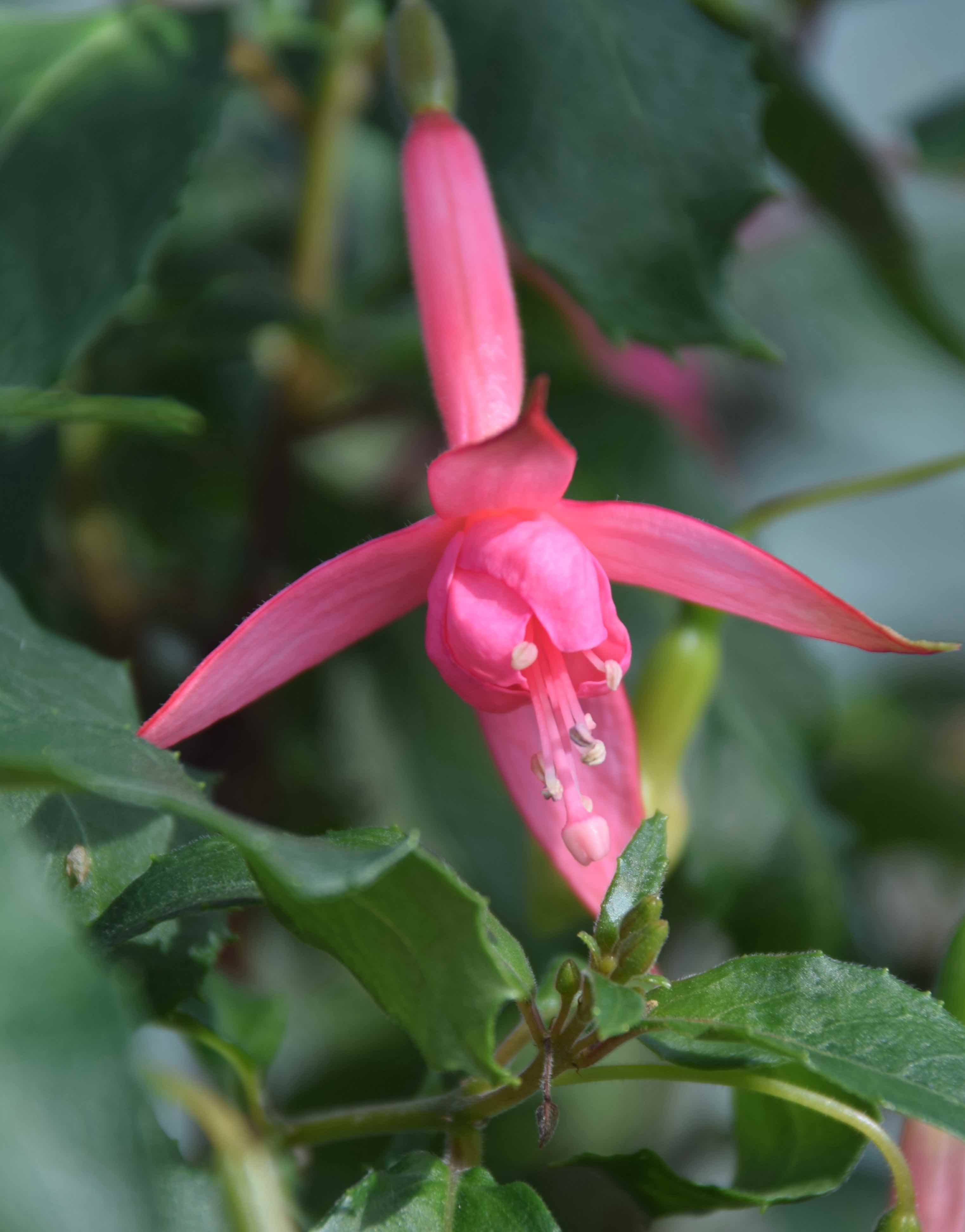
On a completely unrelated issue, I now have some fuchsias. I have a few in the garden, hardy varieties that are easy to please and provide a long season of flowers. But I had no tender kinds. I do have some ‘Checkerboard’ in the garden which is not really hardy but just about manages outside, being cut to ground level in winter but popping up again. I originally grew them as standards but it is so windy here that the idea of having them outside in summer was quickly proved ridiculous and I just planted them in the border to take their chance. Frost the first winter cut the tall stem to the ground but they manage to grow and flower every year.
I was once asked what plant I would like if I could grow just one and, although it was a horrible prospect, I answered ‘fuchsia’. This was a pragmatic decision based on the fact that although fuchsias are easy to grow they can also be trained into a wide range of shapes, providing a challenge, have lovely flowers and, if necessary, an edible crop of berries.
So it may seem odd that it has taken so long to introduce fuchsias into the greenhouse. Well, firstly the greenhouse has only been up three years, so it has not been practical before but there is another reason why I have been reluctant to get some fuchsias.

This year has been an odd one for gardening and I have had more problems with pests and diseases than ever before. The biggest issue has definitely been snails which seem to have made a sustained and relentless attack on the garden. The wasps have been of plague proportions too, eating every ripe fruit they can find including the mulberries which I have never experienced before.
Fuchsias used to be fairly free of troubles but in 2007 fuchsia gall mite reached the British Isles. Technically Aculops fuchsiae, this microscopic pest was only discovered in 1972 in Brazil, home to some fuchsia species. It was soon found in southern California and then in Europe.
It is now well established in the south of England and in Wales and, in my work answering the public’s garden questions I have been struck at how often I get photos asking ‘what is wrong with this fuchsia?’
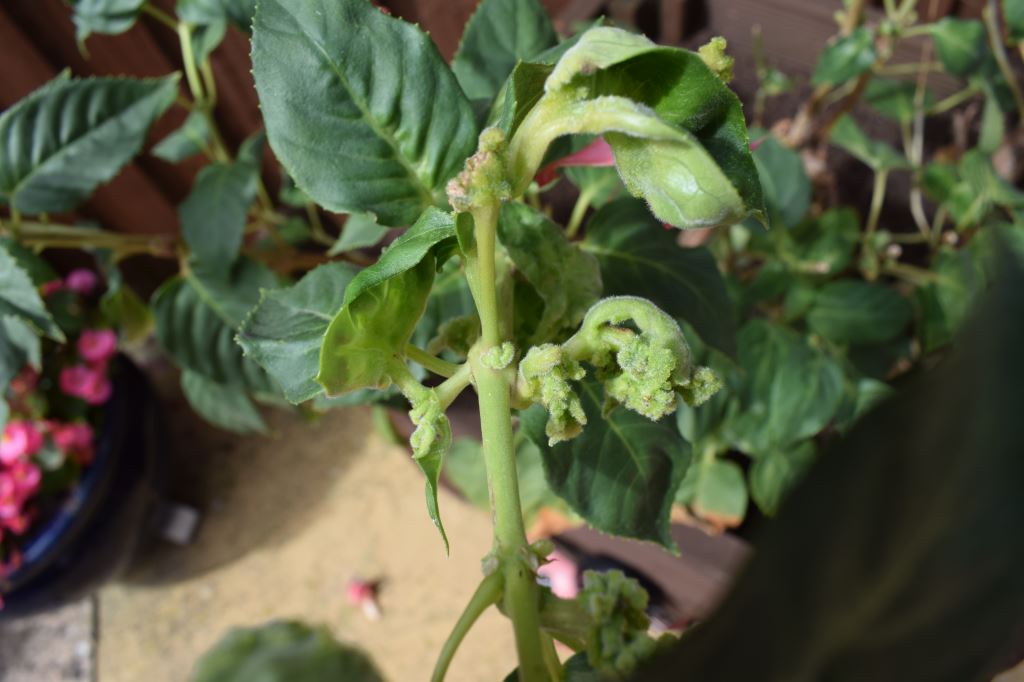
Fuchsia gall mite is definitely on the rise.
As the mites feed on the young shoots they cause swollen galls and distortion of the leaves and flowers. There is no chemical control. The best way to cope with the problem is to prune away all top growth, burn it and hope that new growth from the base is free of the pest. The trouble is that the mites are so small and can be moved from one plant to another on the skin or clothes without even knowing they are there. Not all fuchsias are affected, but most of the common types are.
‘Due to their small size the mites themselves can be difficult to identify, however the symptoms induced on infested fuchsias are diagnostic. The galls develop gradually, starting with a noticeable reddening of the leaves, particularly at the shoot tips, the leaves and flowers becoming grossly thickened and deformed as the infestation develops. Initially galled tissue is yellowish green and has a felt-like appearance but becomes reddened with age. Symptoms of infestation are most strongly expressed at the terminal shoots, and can result in the complete suppression of new growth ‘
From THE ESTABLISHMENT OF FUCHSIA GALL MITE, ACULOPS FUCHSIAE (ACARI: ERIOPHYIDAE) IN ENGLAND, A SERIOUS PEST OF FUCHSIA A. SALISBURY, J. OSTOJA-STARZEWSKI & A. J. HALSTEAD
It is suspected that low temperatures may kill the pest, in NW USA it has struggled to become established when winter temperature reach -6c. I think I will keep my fuchsias as cold as I can in winter but if it drops that low in the greenhouse the fuchsias will die too. And August-rooted cuttings will have to be kept warmer and these are the most likely to be infected anyway.
So I now have a few flowers on my new fuchsias but I go to inspect them every day with dread. I am ready to be ruthless. It really should not be like this!
 The Biking Gardener
Goodness, we can do without another gall mite!
we certainly can!
Touch wood, my fuschias are fine here in the south east of England, but I’ll keep an eye on them now I know of this pest.
As to bumble bees; we have some raspberry canes and a little bumble bee has been working hard all summer pollinating them. When the first crop finished, she disappeared, but there are now flowers for a second crop and she’s back.
Like you, I can’t be certain it’s the same bee 🐝 , of course, but I’ve only ever seen one. She certainly loves the raspberry nectar.
the bees certainly like raspberry flowers. The blooms are not very showy but they must have plenty of nectar or pollen because the bees certainly like them