Here comes the sun…flowers

Well, it was sunny at times yesterday but the rain is back today, making this a wet and miserable July. Some days have felt more like October than July but at least it has kept watering to a minimum, there is no need to top up the pond and, generally, plants in the garden have grown well. And so have the weeds.
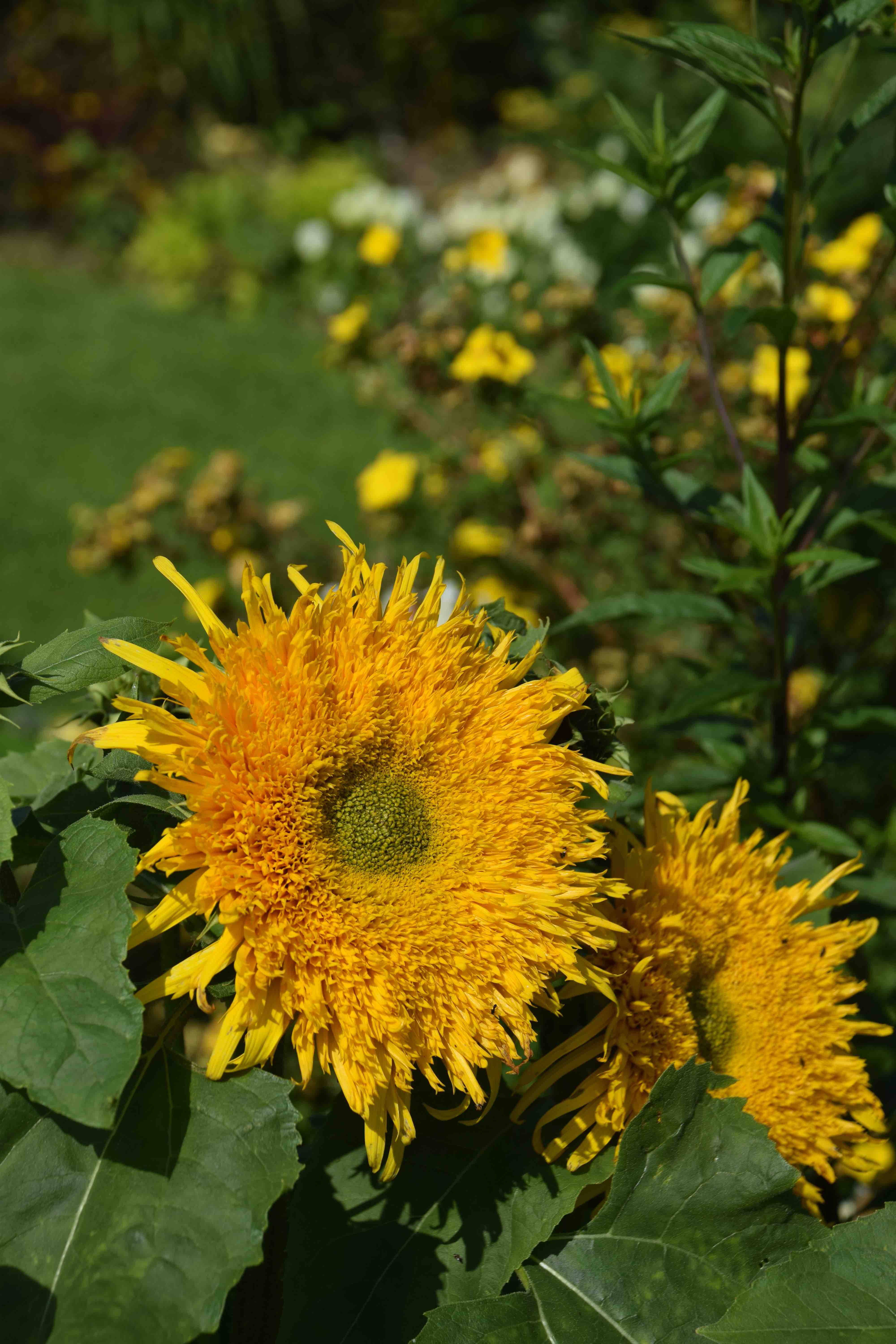
The sunflowers are starting to bloom. Snails in the garden have been a menace and they have been attacking almost everything. It was a struggle to keep the sunflowers alive in the early stages and some are stripped of leaves low down. I grew close to 60 seedlings but less than half have made it to flowering size. After dallying with some dark sunflowers in previous years, I have reverted to ‘Astra Gold’ this year.

While not exceptionally tall I find it is a good sunflower for garden ornament. It is branching, so you get more than one bloom per plant, it grows to about 1.5m so is not difficult to place and the flowers are bright. Most sunflowers with yellow ‘petals’ have dark centres so have limited garden appeal but this one, which is ‘double’ has only ray florets and not the dull disc florets. But unlike most doubles, the outer florets are longer, to create a ragged effect rather than the rather strange pompon effect of others. It makes it showy and distinctive.

Because it is not double in the true sense of the word, it seems to be useful to pollinators and butterflies are attracted to it though I confess that it is not a popular with bees as ‘normal’ sunflowers. But I have plenty of other flowers for them.
Talking of butterflies, the garden has been filled with them on sunny days, the most common being commas, peacocks, small tortoiseshells and red admirals.

I was delighted to see a speckled wood yesterday. This is a species of woodland edges and the larvae feed on grasses. Maybe my patches of long grass has helped it. It is not the most colourful adult but I was happy to find it, resting on a daylily leaf.
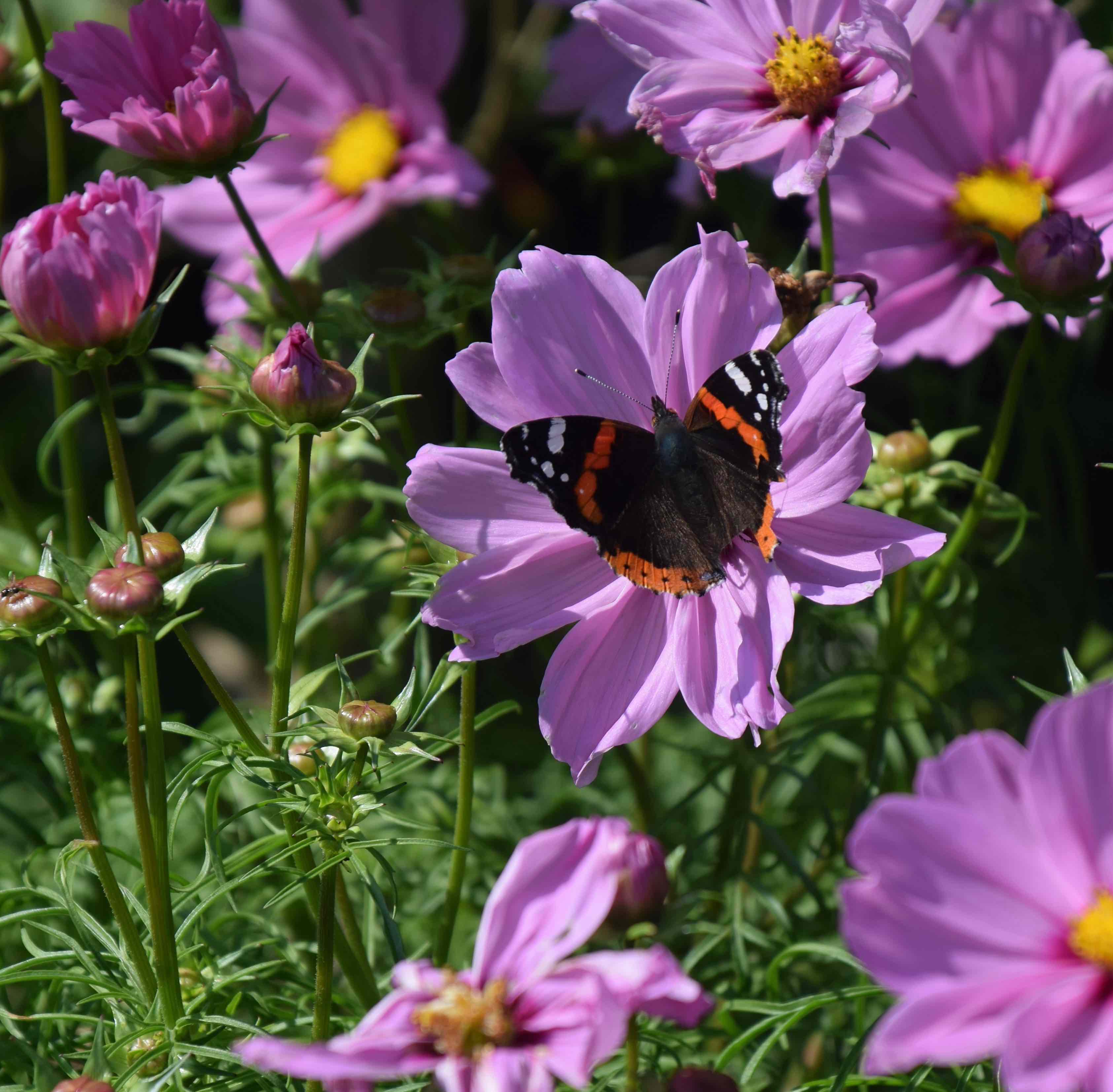
I am always pleased to see Red Admirals because they are so large and bright. They love the cosmos and zinnias but also rotten fruit and the ‘dumped’ peaches attacked by wasps are keeping them happy when they are not visiting flowers. At this time of year the adults are often newly hatched and, like many other butterflies, the larvae feed on nettles. These are abundant in the hedges here but I also allow a small clump in the hedge here to grow for the butterflies – though seedlings elsewhere are removed!

Of course, if you plant for butterflies you can’t be surprised when some less welcome species visit. This is a small white, supping nectar before it lays eggs on my cabbages and nasturtiums. The caterpillars are green, as opposed to black and green and yellow as in the large white. If only the voracious cabbage-eaters had more beautiful adults.
 The Biking Gardener
We were wondering what those sunflowers would look like when open – they are very nice. Rain here also.
On days when we’ve a bit of sun I have noticed too the garden is filled with all sorts of ybutterflies. The more unusual Silver Washed Fritillary I am grateful for. It needs Violets and a convenient tree trunk to reproduce. I have loads of violets all over the place which I planted one when I came here!
That is lovely. I don’t have any violets in the garden, though there are some down the road in the hedgerows. I have not noticed any fritillaries in the garden at all but the common ones are abundant and seem to like a wide variety of flowers, especially the zinnias and cosmos though they also seem to like the comfrey.