Yet more white flowers
I know this is getting a bit tiring but today we have some more white flowers. But at least they are very different to each other, would suit different parts of the garden, and have very different characters.
First is one of my favourite shrubs. It is one I first got to know at Myddelton House where a large specimen, probably planted in the 1920s or earlier, had survived when the garden was neglected in the 60s, 70s and 80s and was still thriving, in very dry, gravelly soil. Now I have a garden to fill, with all the things I like most, it was easy to decide to plant holodiscus, though not as easy to actually find.
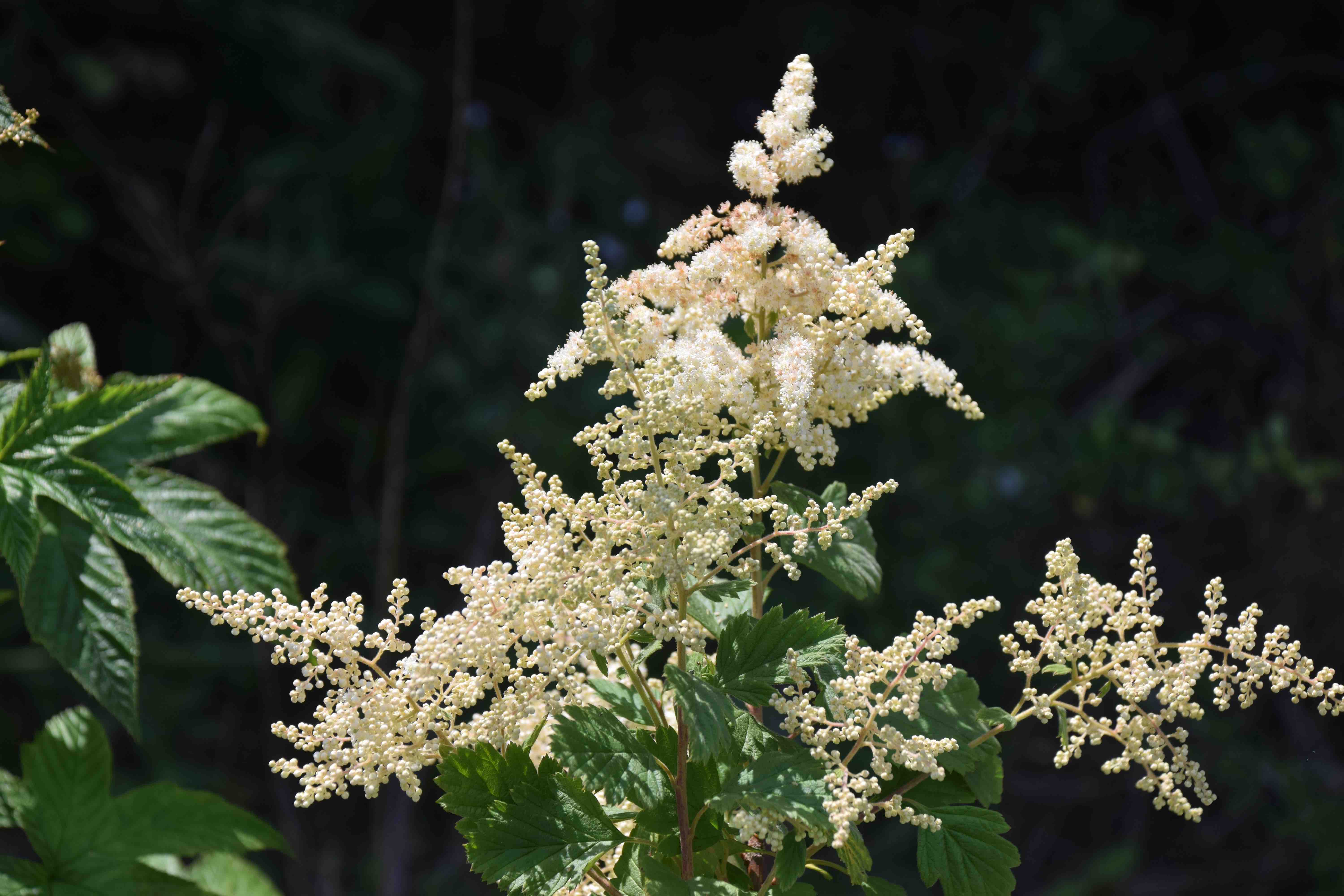
Holodiscus is a small, New World genus rather similar to sorbaria but different in the entire leaves rather than the pinnate leaves of sorbaria. Holodiscus discolor is native to the Pacific west coast from British Columbia to California and Idaho. It is a colonising species, often growing quickly after forest fires and grows in dry and scrubby sites as well as the edge of woods. The leaves are rounded and lobed and it grows to about 4m high and wide at its biggest, though it is usually smaller.
The main reason to grow this is the profuse mass of tiny creamy white flowers in July. These are slightly scented – a bit ‘talcy’ or powdery to my nose. In full bloom it looks spectacular and the mass of flowers, that move in the breeze, probably gave it the name of oceanspray. It is also called arrowwood because the wood is very hard and was used to make – you guessed it – arrows!
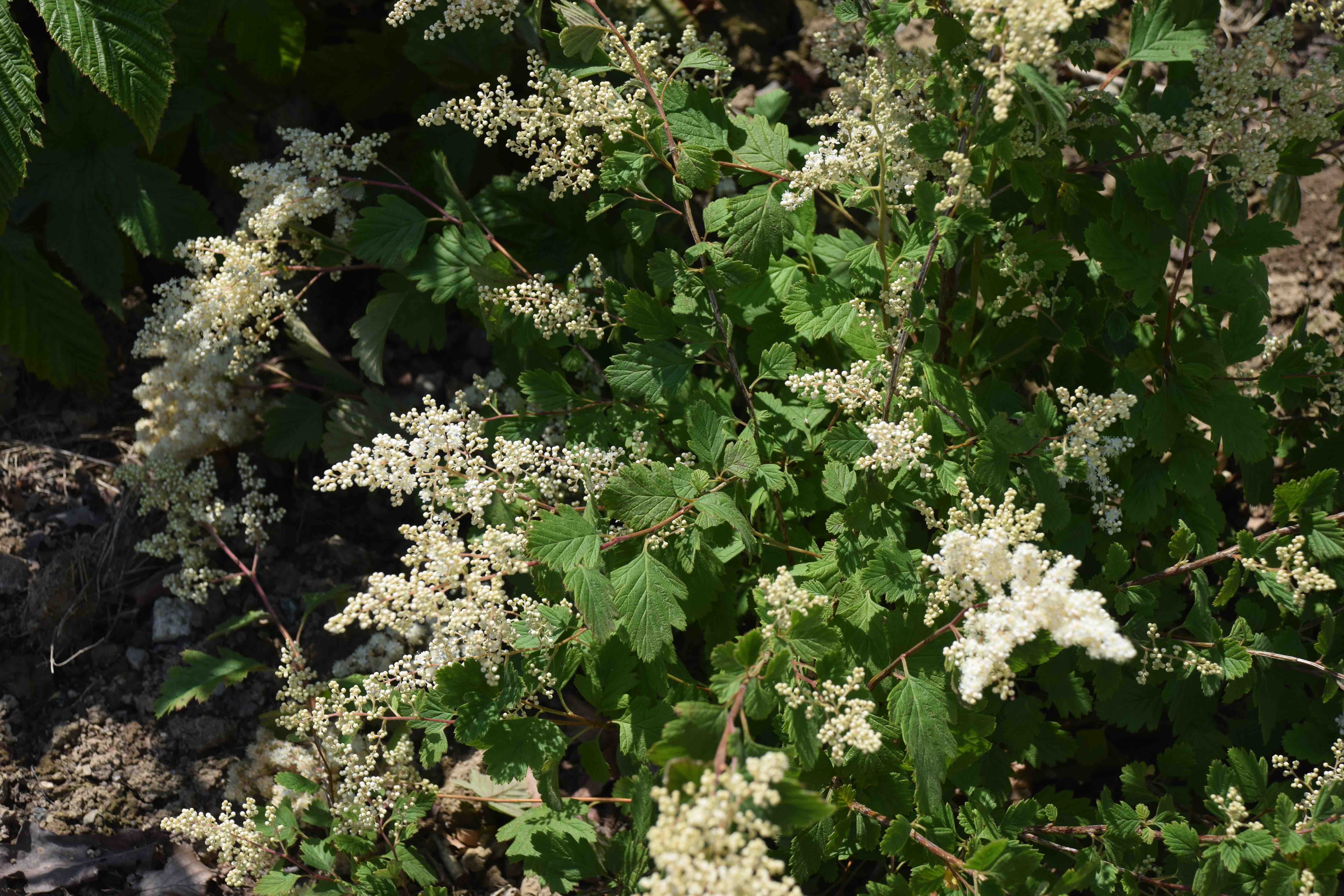
It is rather like a giant, shrubby astilbe or aruncus and I love it. There is a slight problem, and that is that the flowers turn pale brown and persist after flowering but, unusually, I can forgive this. It is easy to grow in most soils, in sun or part shade and it really needs to be better known and to be planted more frequently. When my plant is bigger and I can take some cuttings, I will do my best to rectify this.
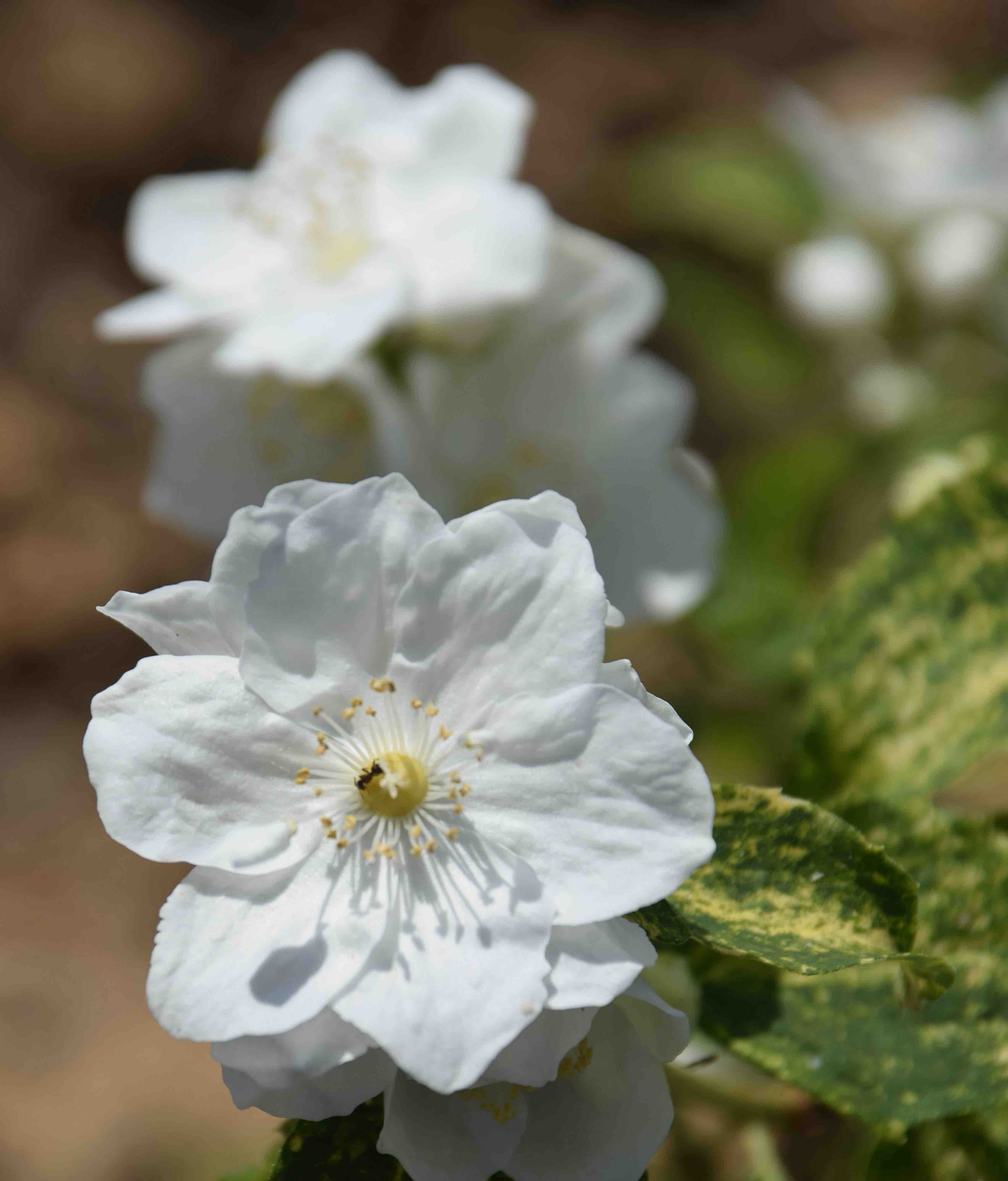
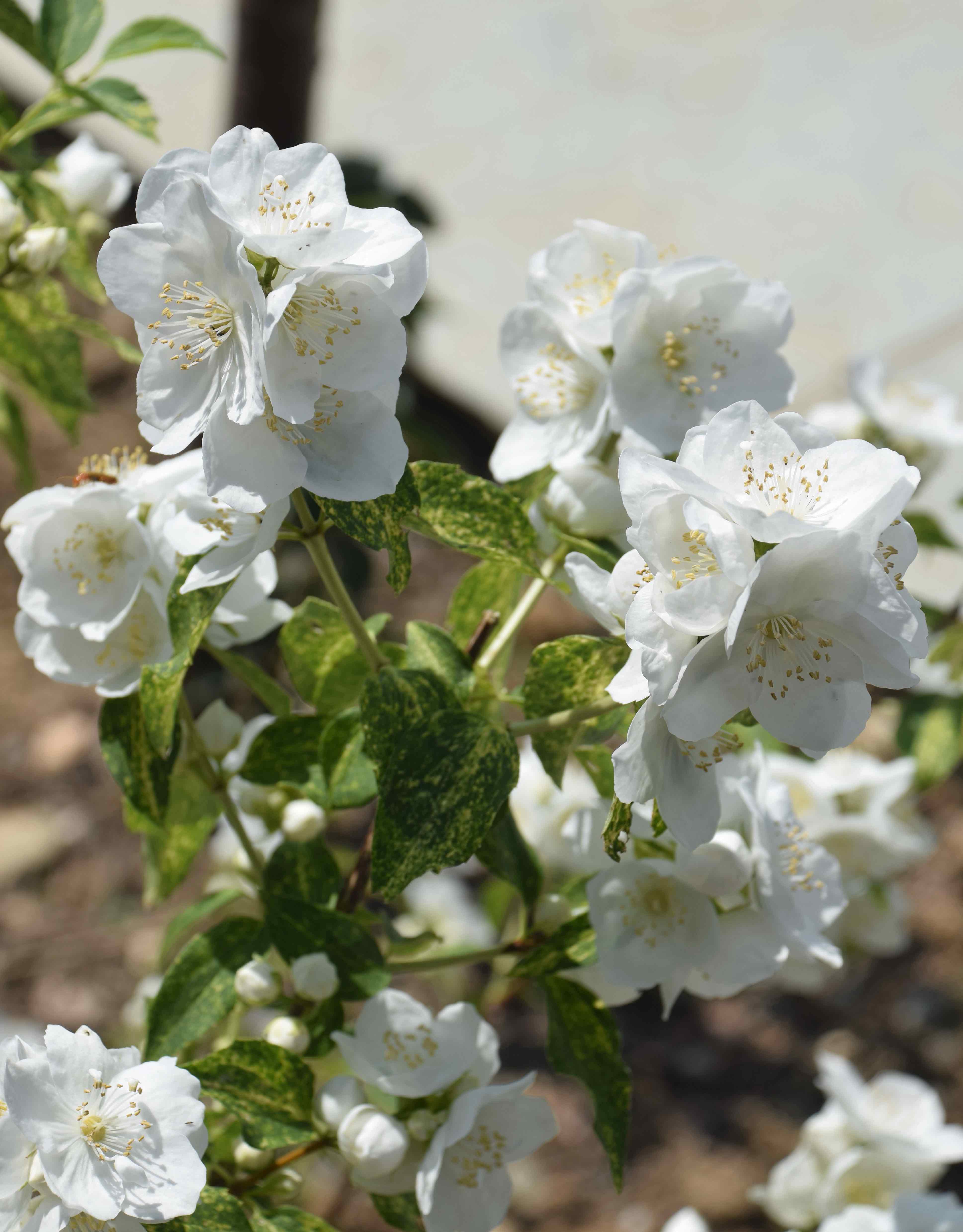
Next, a philadelphus again. I didn’t show all my philadelphus the other week for fear of being repetitive, but ‘Innocence’ is looking so good that it would be churlish to ignore it. This is a rather compact, upright plant with foliage splattered in yellow. It is not in the best taste but interesting. The flowers are fragrant and quite large. My plant is young but is flowering profusely, unlike some of the others.
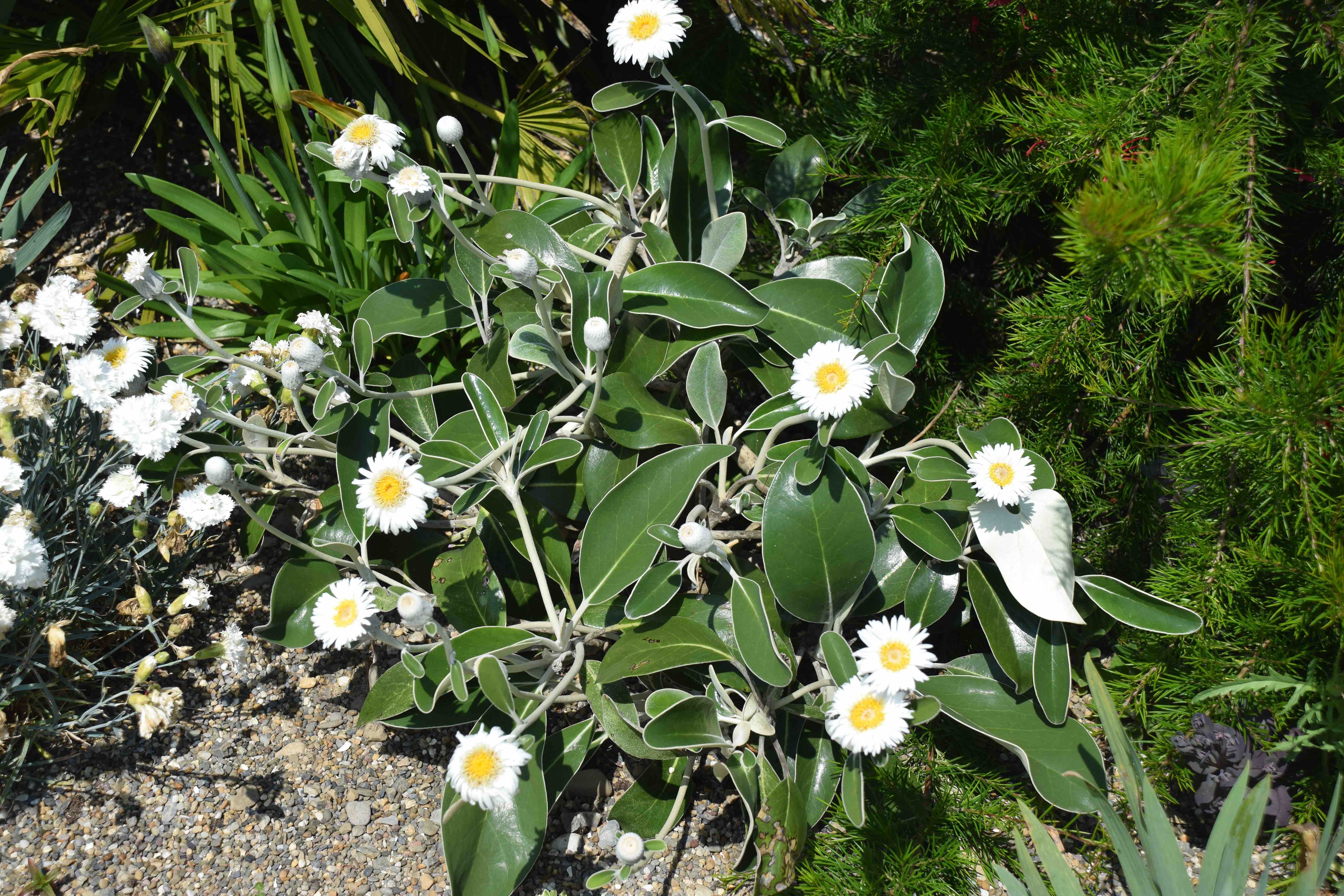
And lastly, Pachystegia insignis, the Marlborough daisy (because it is native to Marlborough County in New Zealand). It is closely related to olearias and has large, lustrous leaves, silvery below, and large, pure white, daisy flowers. I was unsure if this would be hardy and like life here. But it has quadrupled in size and is flowering well. Perhaps it likes the company of the adjacent grevillea and nearby callistemon. I can relax and enjoy, for now.
 The Biking Gardener
I do like white flowers, they are so special…
Like you I love white flowers but hate those go brown and don’t fall off easily, but your Holodiscus is certainly handsome. Is the Pachystegia herbaceous or a sub shrub? Again lovely. I
It is shrubby and related to olearias. I think it is tricky to root which may explain why it is not common. Your diascia gets a mention soon!
Ok, I will look out for that. I’m sure yours can’t be that well advanced yet?? You’re posting so often these days that I don’t always have time and am a week late – and don’t tend to comment so late! My diascas are looking so great I wonder why I don’t have more. I think I’ve given a lot away. Only problem is they are so brittle, most need support of some kind, in my windy garden!
Yes the diascia is brittle. I was not sure how easily they would root but they were no problem. Posts will slow as I have more work to do – and weeding.