Finding the right spot
They key to a good garden is finding the right spot for a plant: not just the spot where it looks its best but also where it will grow well. I posted recently about the territorial designs of Rubus spectabilis ‘Olympic Double’. It had suddenly made a break for, not just the border, but the rest of the garden! It had to be ousted before it became a real nuisance.
This caused me some sadness because, although the plant is rangy and has no great beauty of form, it flowers early in spring, is tough, and the flowers are just gorgeous. The flowers are a bit small for the size of the plant but it has a sort of charm that makes you love it, despite its faults, a bit like Nancy in Oliver Twist.
So I dug out as much of it as I could (the later suckers have now been removed) and much of it was planted outside the garden on the bank by the road where it can’t escape but may be able to fight back against the cars and tractors that are intent to drive up the bank and undermine it – the single-track road is widening by the month as idiots try to pass by driving up my bank – I have contemplated the usual practice of putting down large rocks but that seems a bit mean even to thoughtless drivers.

The rest of it was planted on my side, with some sambucus Black Lace where I let plants do their own a bit and where I let the bracken grow – but not spread – and cow parsley can self seed. The rubus should be able to hold its own and can sucker to its heart’s content.
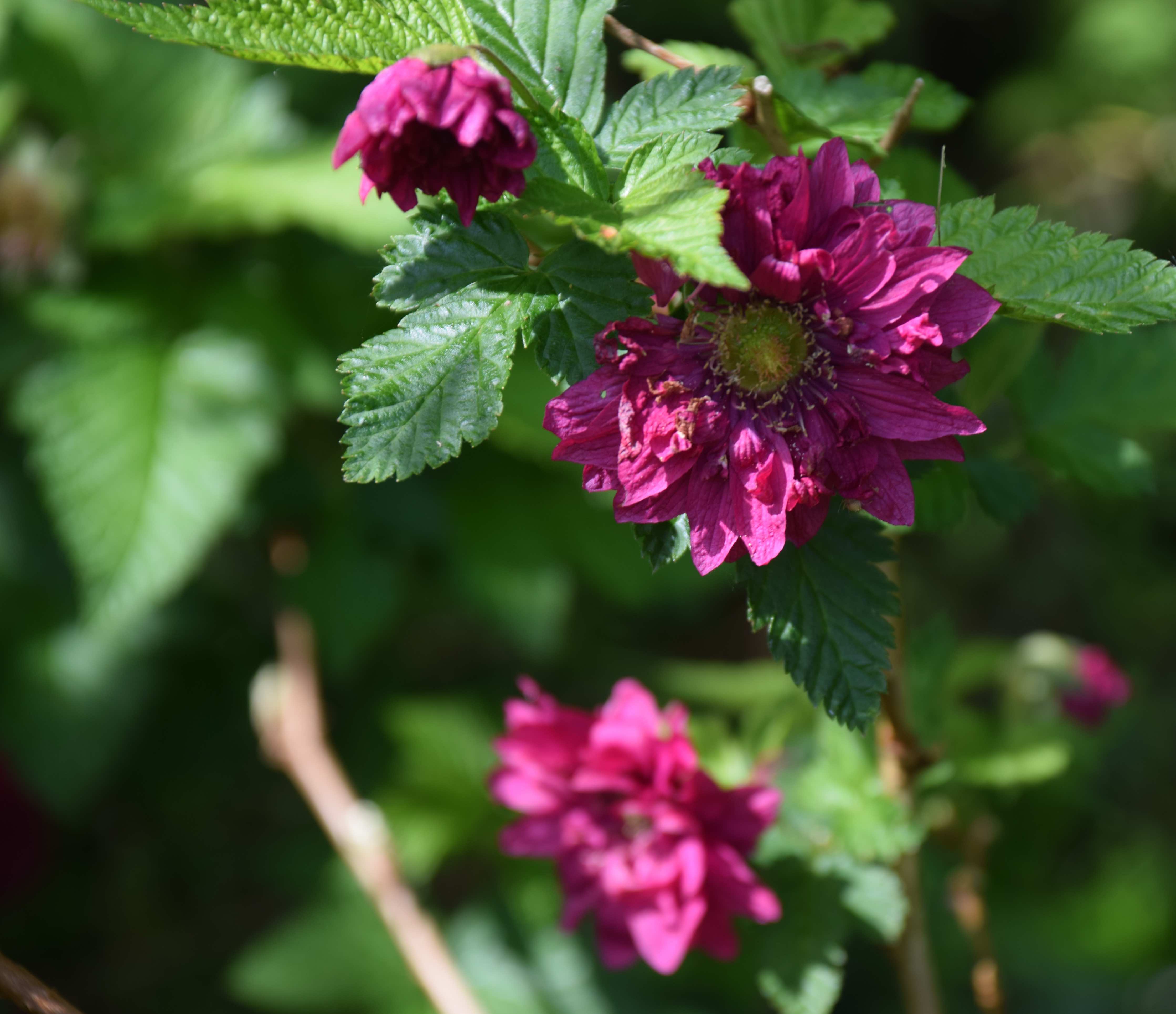
So far, and it is only the first season and the rubus has some catching up to do, But I am delighted with the combination and I hope they all get along in the future.

It just goes to show that there are no bad plants, they are just in the wrong place. *
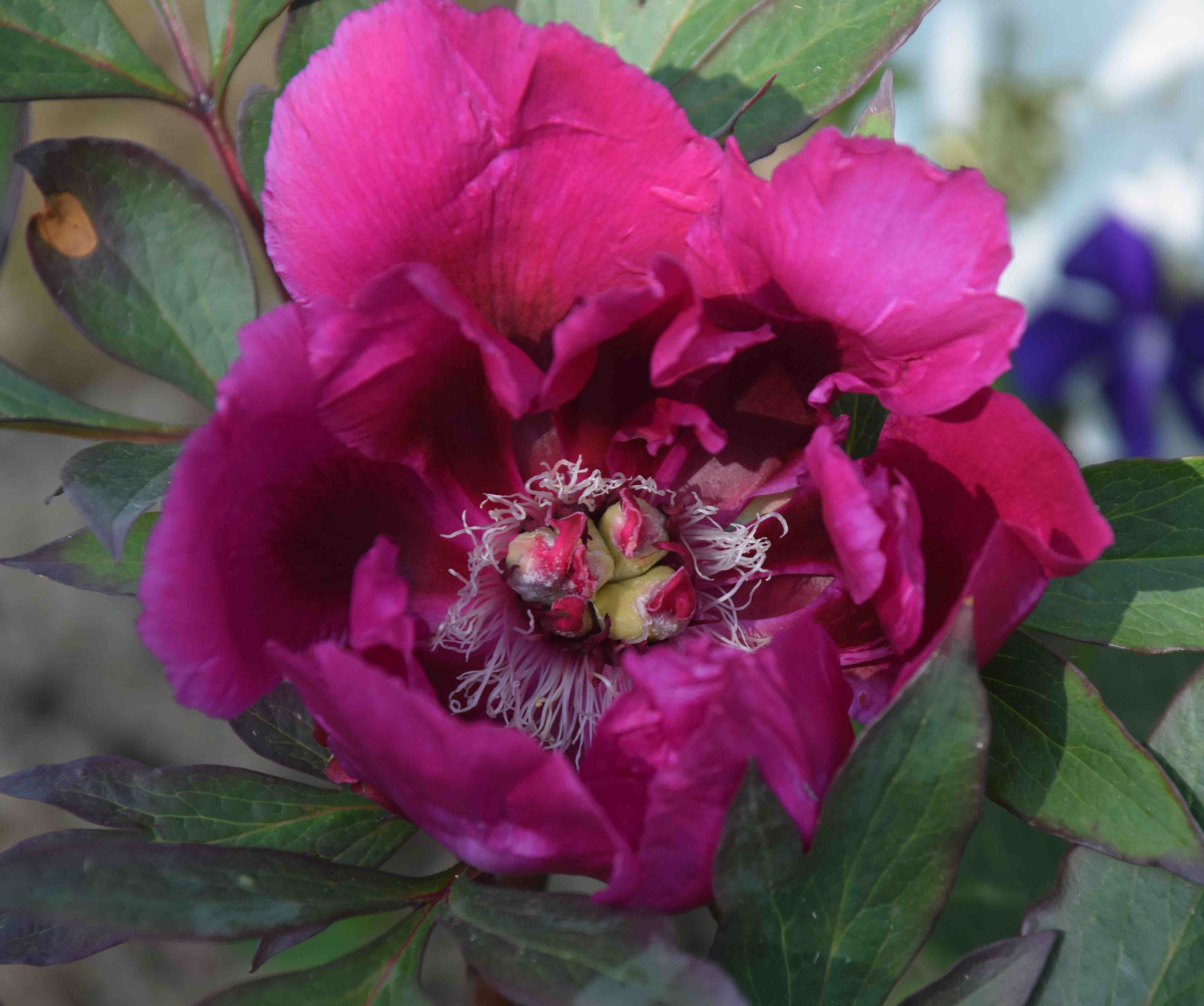
Completely unrelated, but a similar colour, the first flower has opened on a new Itoh peony. ‘Purple Sensation’ has flowered in its first year, after planting as a bare root so I can’t ask for anything more, though I was worried that a couple of shoots died off after producing a couple of leaves. I will cut off the flower as it fades to help the plant bulk up but I can’t resist letting this beautiful flower open. It is too close to the viburnum really but I will carefully shape the overhanging branches to give the peony room and I like the combination.

*I am not totally convinced about that, but its a nice philosophy to have on a sunny day when I have been out planting. Catch me on a cold, wet day and I may change my mind.
 The Biking Gardener
It’s a whole nuther world out there, isn’t it?
‘Black Lace’ European black elderberry has inhabited one of our landscapes for a while. I was none too keen on it when I met it, but have learned to appreciate it. However, it has always been fruitless. I got it ‘Madonna’ as a pollinator, so could get berries next year. Does yours require a pollinator to generate berries?
I have always found Black Lace to set fruit quite well though I must admit that I usually remove most of the flowers to make elderflower cordial. It is difficult to say whether it or others are self fertile because there are several wild elders in the nearby hedges. I did plant two elders specifically for fruit (Polish cvs) and these set well so far. I don’t think a pollinator is essential and Madonna is a nice thing anyway so it can’t do any harm. Black Lace has rapidly become very popular here and is such a useful plant, growing where little else will flourish. I have quite a few elders but I think this is the best all-rounder.
No other European black elderberries live near here, so a pollinator is preferred. Although I do not know if the European black elderberry needs a pollinator, the single ‘Black Lace’ has been fruitless without one. The American black elderberry requires a pollinator, so the European black elderberry might. The native blue elderberry ‘supposedly’ does not need a pollinator, but because it grows wild here, I will never know.