Natural wonders of spring: primroses, celandines and anemones
The British Isles has a natural paucity of wild flowers, thanks to the vegetation-scouring glaciers of the Ice Ages. Perhaps that is why we seem to have more than an average interest in gardening, to make up for this lack of variety. But what we lack in numbers is compensated by the beauty of what managed to spread north from Europe when the ice retreated and before the Channel cut us off from mainland Europe. Three of the best are the glorious celandine, primroses (of which more soon) and wood anemones.

The lesser celandine (as opposed to the greater celandine which is Chelidonium majus and in the poppy family) is in the buttercup family and used to be Ranunculus ficaria but is now Ficaria verna. It is Grán arcáin in Irish. It is surely the most dazzling of all spring flowers and we would all treasure it if it were not so easy to grow. In fact I do treasure it, partly because it has produced dozens of different forms with differences in foliage and flower colour an form that I like to collect and partly because it is such a beauty in its wild form. The green leaves are so glossy they look almost lacquered and the flowers are similarly lustred. After flowering it quickly dies back so there is no sign of it by June. What makes it a problem is the underground parts which form a cluster of tiny tubers. These were thought to resemble haemerrhoids in the old ‘doctrine of signatures’ which supposed that some divine force gave us clues as to the beneficial properties of plants by making them look like the part of the human body they would cure. So lesser celandine is also known as pilewort. The trouble is that when you dig out the plants these clusters of tubers shatter and you can spread the weed far and wide. It is not unusual to end up with a bigger problem than you started with if you try to dig them up. In herbaceous borders or the veg garden it can be a nuisance but under shrubs and where you have nothing else you want to plant I suggest you save time and money and just enjoy this pretty plant.
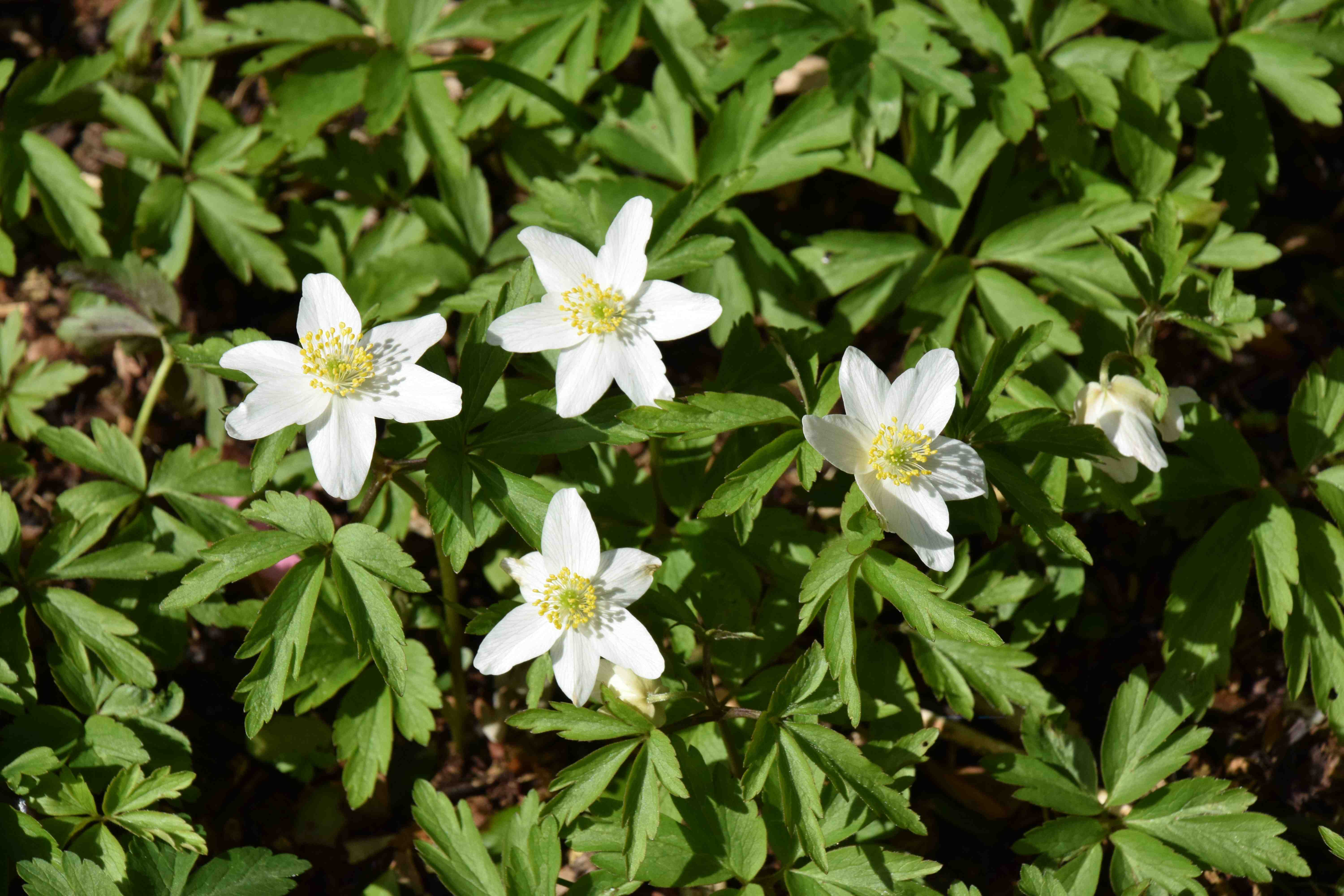
The wood anemone (Anemone nemorosa or Lus na gaoithe in Irish) is a distant relative but a very different plant with pure white, delicate blooms that nod in inclement weather but open to greet the sun on better days. It is a plant of woodland clearings or may even grow in grass if the soil is moist and it spreads widely by its thickened, creeping rhizomes that grow just under the soil surface. It is quite widely available, both as the wild form and selected forms with pink-flushed, blueish and curiously double forms but it is best to either buy plants in growth or buy the rhizomes from a specialist and plant them immediately on receipt because they do not withstand drying out well. Each upright stem grows to about 20cm high with a ruff of three, dissected leaves and in the centre is a solitary, beautiful flower.
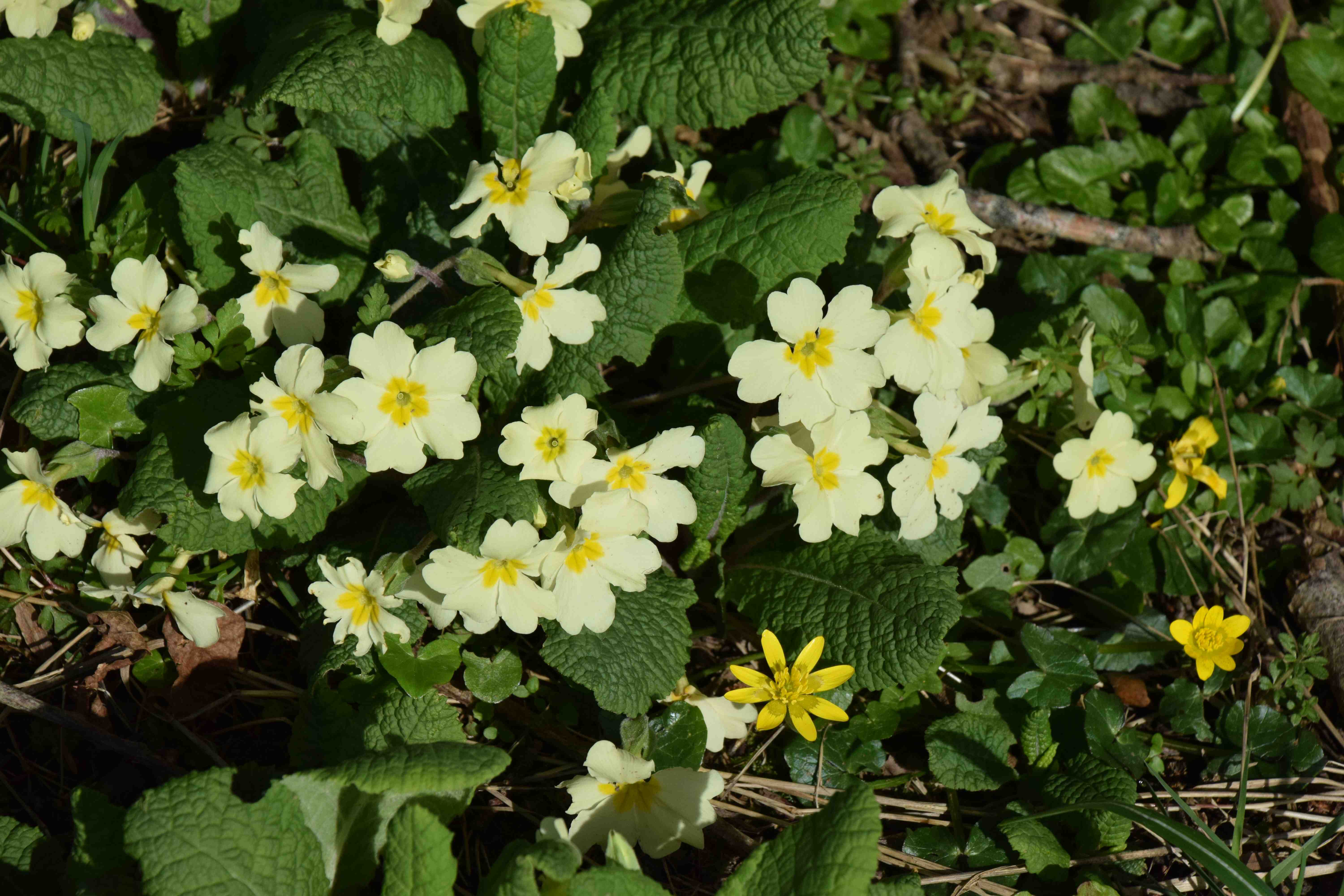
Surely the primrose is our best-loved spring flower. The pale yellow flowers are so delicate and fresh. Although lots has happened to this tough little beauty I would hate to be without the wild form. The name primrose derives from ‘prime = first’ in allusion to the early flowers. More properly Primula vulgaris (vulgaris means common rather than vulgar) it is called Sabhaircín in Irish. I will say a bit more about this and its close relatives in a few days.
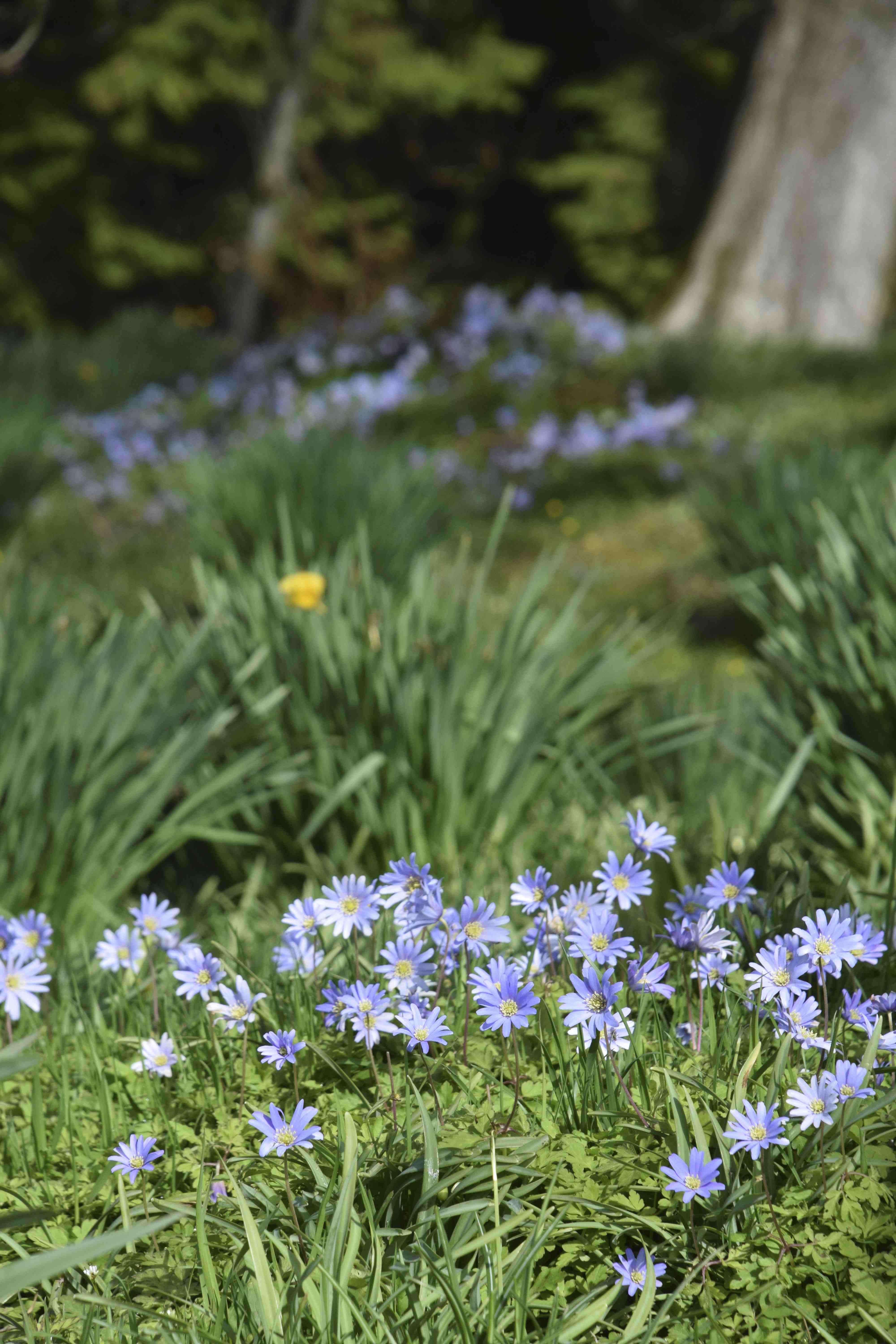
This is a bit of a cheat because it is not native at all but Anemone blanda is a European plant that often settles down well enough to naturalise and it is a gem.
 The Biking Gardener
Great photos–myself, I’m a real fan of the Primula vulgaris! 🙂