Convolvulus scoparius
Convolvulus is best known to gardeners as a genus of horrible weeds which they spend the best part of their lives trying to eradicate. But with more than 100 species in the genus (although the greater bindweed which is often called convolvulus is actually calystegia) there are some good garden plants in the genus. Two worth growing are the annual C. tricolor and the slightly tender perennial C. sabatius with glorious blue flowers.
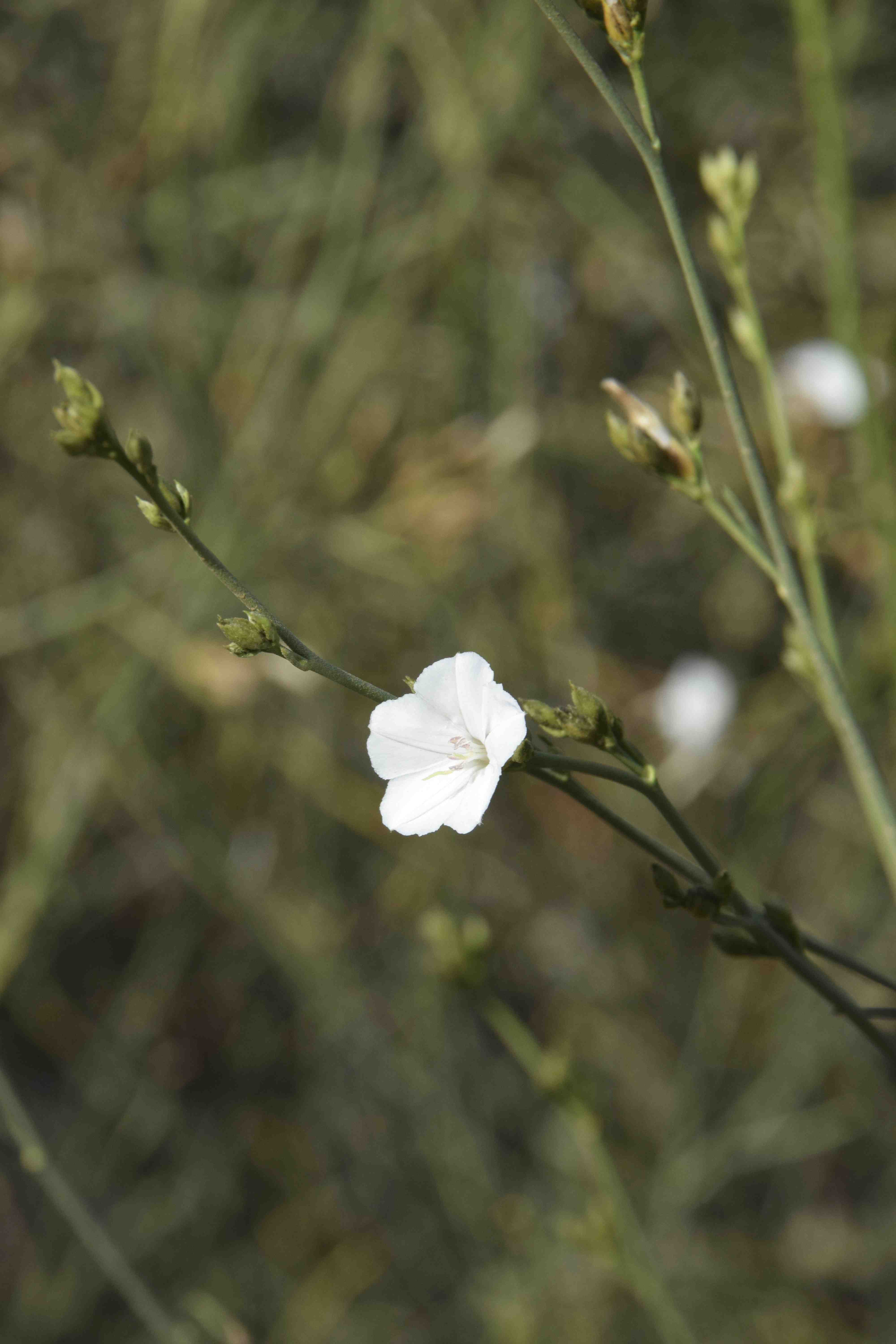
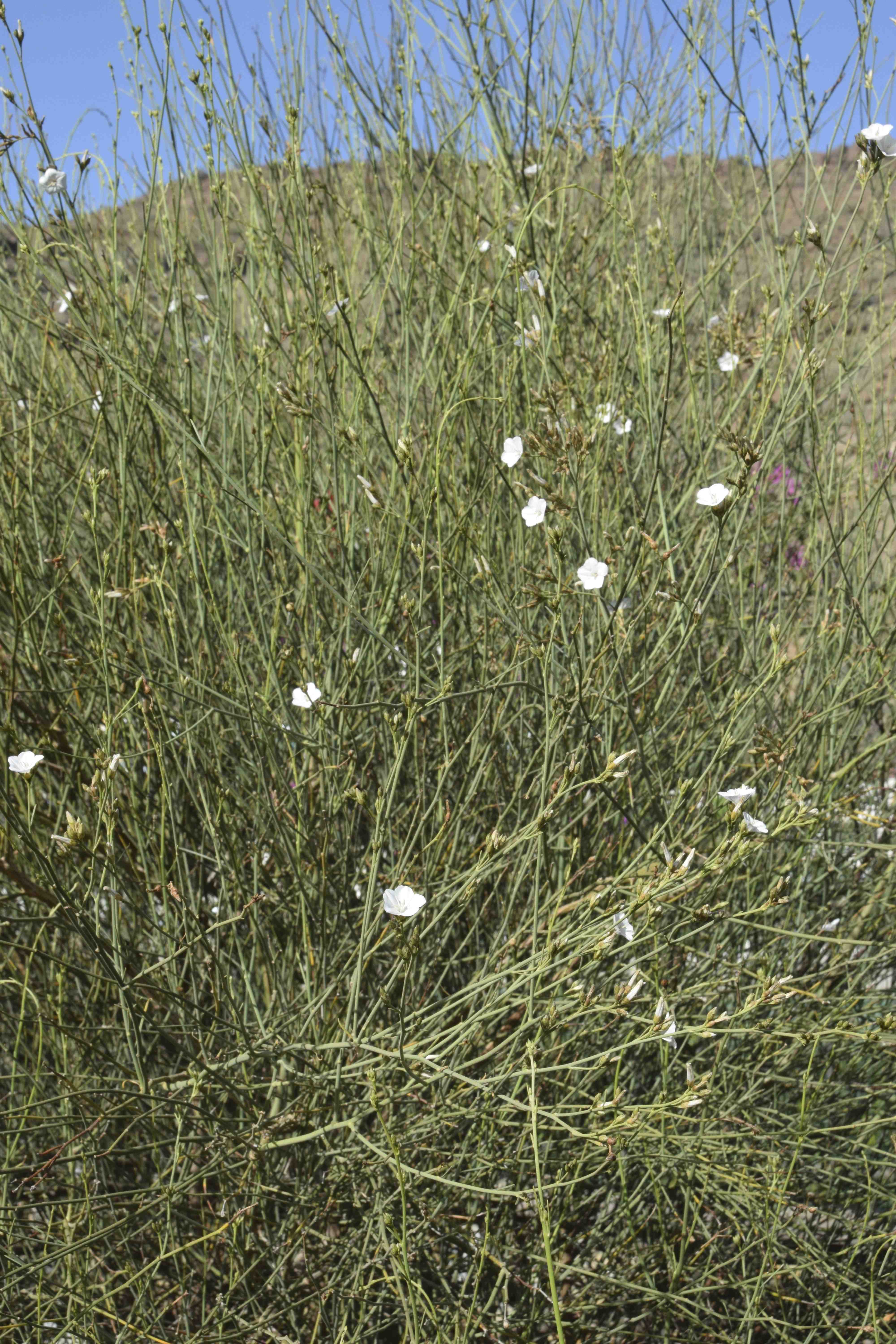
I have seen two species in the Canaries; the showy C. floridus, which is the more showy and beautiful of the pair, and this species, C. scoparius. Convolvulus scoparius seems to be present on most of the islands as far as I can determine and is a rather scruffy shrub to about 1.5m. The leaves are small and narrow and may drop soon after they are produced as the plants I saw seemed leafless but then it is winter and the main bloom season is supposed to be summer. The flowers are small (about 1cm across) but typically saucer-shaped. They are very like C. floridus but in that species they are carried in large clusters at the ends of the branches and the leaves are pale green above and silvery below – like a halfway house between this species and the common garden C. cneorum.
‘Scoparius’ means ‘broom’ as in Cytisus scoparius and this is appropriate for this plant which is basically a bundle of green twiglets. It is not very showy but perhaps is a bit more handsome when in full flower. But it does show how plants adapt to different environments – in this case for extreme heat and drought.
 The Biking Gardener
why are the leaves on my convolvulus cneorum silverbush
going yellow and dropping off
please help
Hello and thanks for dropping by. I do not know where you are gardening so it is difficult to say why your plant is suffering. I would normally say the soil is too wet but although the plant is tolerant of drought once established, a young plant will need watering until the roots get deep in the soil. I suspect the yellowing leaves, if in the centre of the plant, are due to drought.