Coprosmas: shrubs for fruit and foliage
Most garden centres, at this time of year, have some evergreen shrubs for winter pots and baskets and the chances are that there will be some coprosmas. Known as mirror plants and native to the Southern Hemisphere (there are over 50 in New Zealand alone), most of the cultivars found for sale have been bred and selected for their coloured foliage which is often remarkably striking, in really bright colours and so shiny they look as though they have been lacquered. They are hardy in mild climates so in gardens in the UK and Ireland they need to be planted in a place protected from the harshest winter weather. I think they are difficult to fit into the average border simply because they are so shiny and colourful – they stick out like a sore thumb!
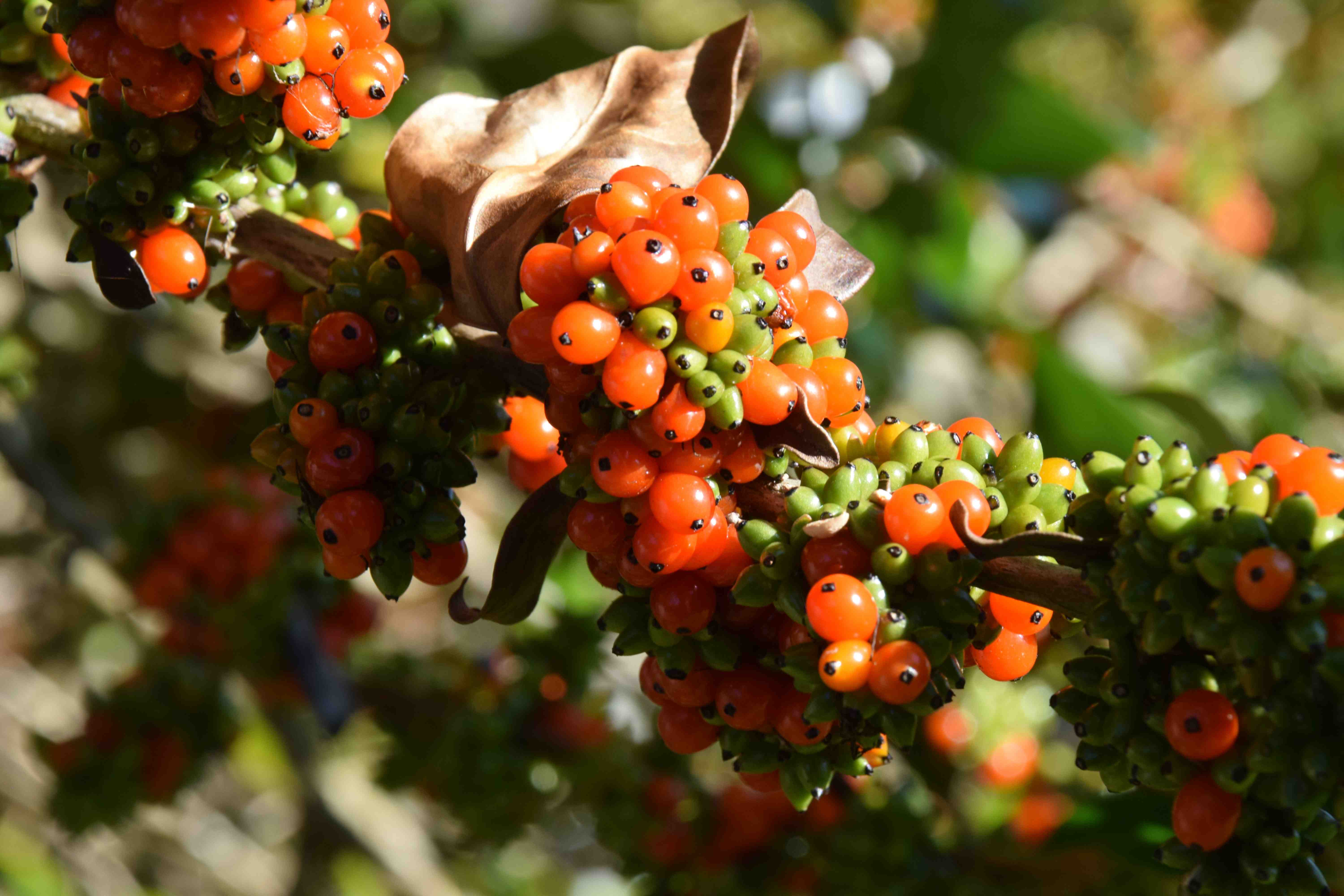
Oddly, the first I ever grew were some seedlings of C. robusta which is a very different plant. Coprosmas are in the family Rubiaceae which is not very important in temperate gardens but best known for being the family that contains coffee. The name ‘coprosma’ means ‘smelling of dung’ and the leaves of some species apparently smell unpleasant. Coprosma robusta is a large, bushy shrub with green, rather ordinary leaves. Like all coprosma, the flowers are dull and have no significant petals but the grey stamens are long and pendulous and while not exactly showy cannot be missed because the whole plant is covered in them (on male plants), almost as though covered in ash or cobwebs. The flowers are not the reason to grow the plant though, but the berries, on female plants, which are ridiculously abundant and although small, are carried in dense clusters and plaster the stems with orange fruit. Plants will grow and fruit better in full sun and will grow to 3m or more but can be lightly pruned to control their size.
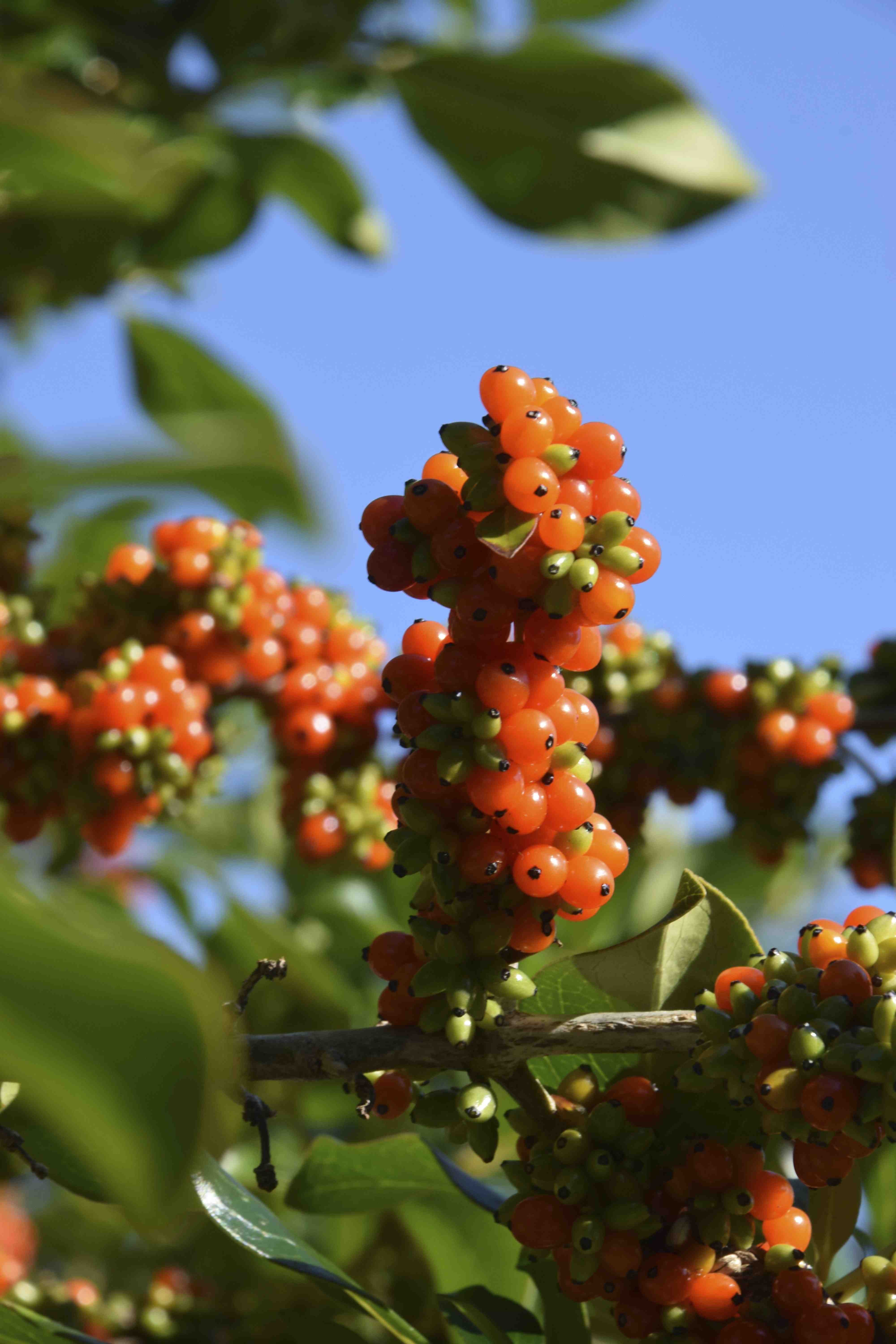
While I am not sure, I would think that this would be a good coastal plant. The glossy foliage should be resistant to salt spray and wind and the relatively mild conditions by the coast should suit it too.
Geoff’s rating
7/10
Garden rating
6/10
 The Biking Gardener
I used to have Coprosma ‘Cappuccino’, died from wind & cold! A friend had C. ‘Variegata’ which struggled.
I have a feeling that these fancy, brightly coloured ones don’t have the constitution of the duller ones. I grew C. robusta in North London where it did well and I got it from Graham Hutchins of County Park Nursery in Essex – quite cold and dry. He did more than anyone else in the UK to introduce and popularise NZ shrubs