A busy Lizzie with attitude: Impatiens tinctoria
I believe it is true that familiarity breeds contempt and though busy Lizzies were useful bedding plants we used them far too freely before downy mildew put a stop to their spread across our gardens. I know many people mourn their passing but there are lots more plants we can grow and I don’t honestly think many of us miss them now. It is a relief in some ways because we may now realise that the genus impatiens contains a lot more interesting things.
The other species that often gets the publish attention is the beautiful I. glandulifera (Himalayan balsam) which is naturalised in many areas and if often the victim of gangs of ‘conservationists’ that hack down the plants, depriving bees of nectar and people of spectacle. It is true that this annual seeds prolifically and the floating seeds will spread the plant downstream, and in some circumstances may swamp smaller, native plants but it is a loveable rogue and not a problem in all parts of the country.
Rather different is I. tinctoria which is a tuberous perennial from Eastern Africa. It has thick, fleshy roots which will survive outside in winter if given a thick, organic mulch and tall, thick, fleshy stems that can reach 2m in height by the end of summer. I have grown this many times and it can be propagated by basal cuttings or dividing the roots in spring. It has always been a prized possession but not all friends I give it to always love it as much as me and they find it coarse and ugly. I admit that the stems are rather gawky and the leaves large and coarse but this is easily forgiven at this time of year when the plants are in full bloom.
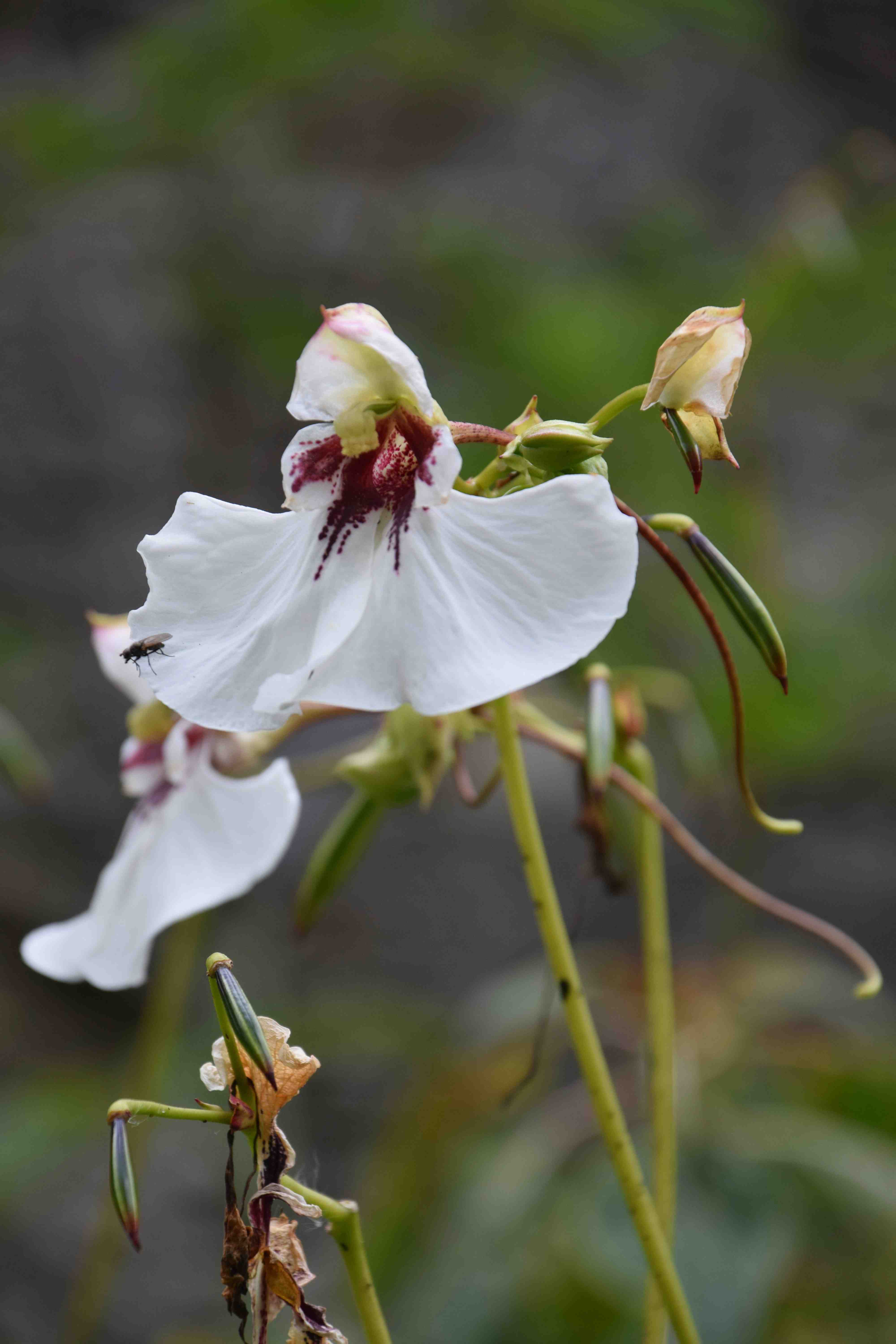
The large blooms are pure white, marked in maroon and are very sweetly fragrant. Once it starts the flowers keep on coming until the first frost cuts the plant to the ground and you have to wait another 9 months for a repeat performance.
Geoff’s rating 8/10
Garden rating 6/10
 The Biking Gardener
Another fascinating specimen! Where do you keep finding them? 😉
Thank you! Well I am just a sucker for plants, especially if they are unusual. More to come, I am glad to say 🙂