Baby blue: Tweedia caerulea
Like most gardeners I am a bit starstruck by blue flowers and since it has been several years since I grew tweedia (aka. oxypetalum) it has made its sinuous way into the garden this year. Named after James Tweedie, of the Royal Botanic Gardens, Edinburgh who collected this plant and many others on trips to South America in the mid 19th century, it is native to Brazil and Uruguay and fairly easy to grow from seed.
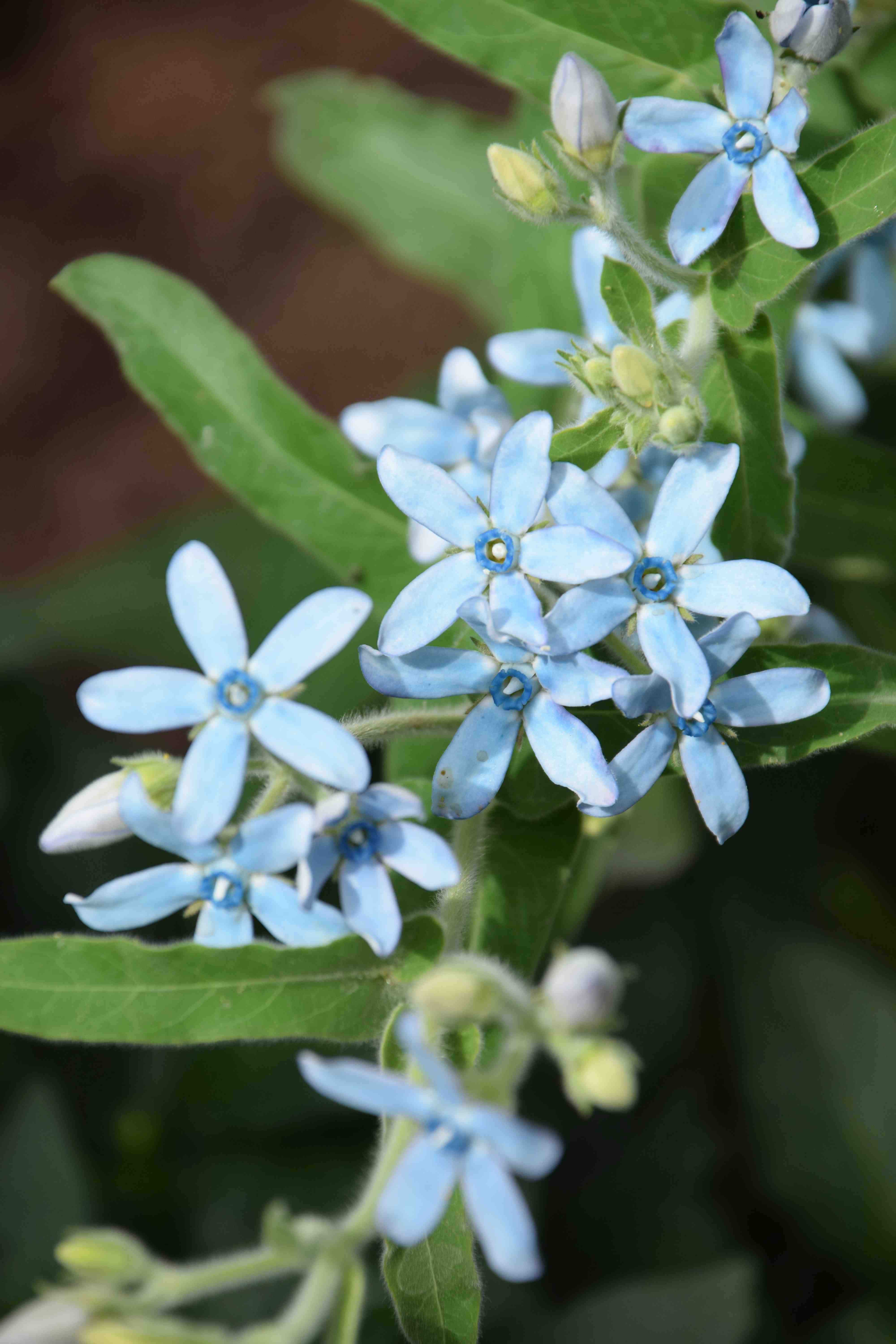
My plants were sown in March and the flat brown seeds soon germinate and were transplanted into cell trays and then planted out between the tomatoes and chillies in the greenhouse in May. Given exactly the same treatment they have grown well and are now flowering freely at about 30cm high.

Although usually described as a climber or twiner it really is the most pathetic climber you will ever come across and always needs help to stay upright. The stems are too heavy to support themselves but they never show me any inclination to wrap themselves around anything so they have to be tied to split canes or you can let them lean against something butcher. Although plants can get to 1m high eventually (apparently) and they are perennial, I have only ever grown this as an annual and I am happy to continue doing so. Being in apocynaceae the plants readily produce long, greyish pods with plenty of seeds so you won’t have to buy a packet every year.
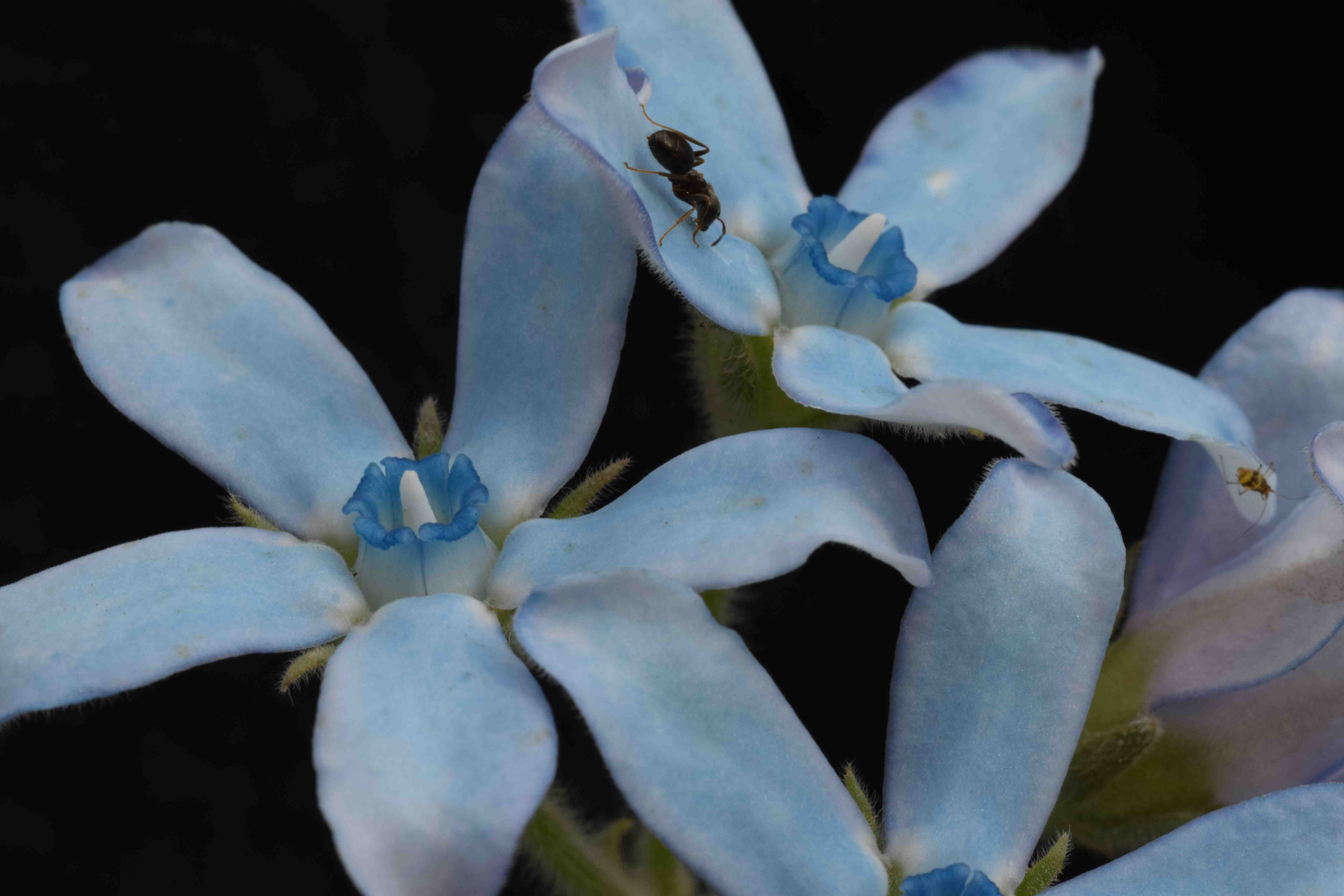
The plants themselves are willowy, with pairs of arrow-head shaped leaves and the whole plant is softly grey. The sap is milky and I guess mildly irritant but that doesn’t stop insects liking the taste of this and its relatives and apart from the ant, which was presumably after nectar, I noticed an aphid on the blooms too. In fact pests (or insects) are a feature of plants in this family – such as monarch butterflies on milkweeds. The soft blue flowers are about 1cm across and are carried in clusters of 3-5 on short stalks off the main stem. They sometimes develop a purplish tone as they age (which I dislike) but so far mine haven’t (which I am pleased about).
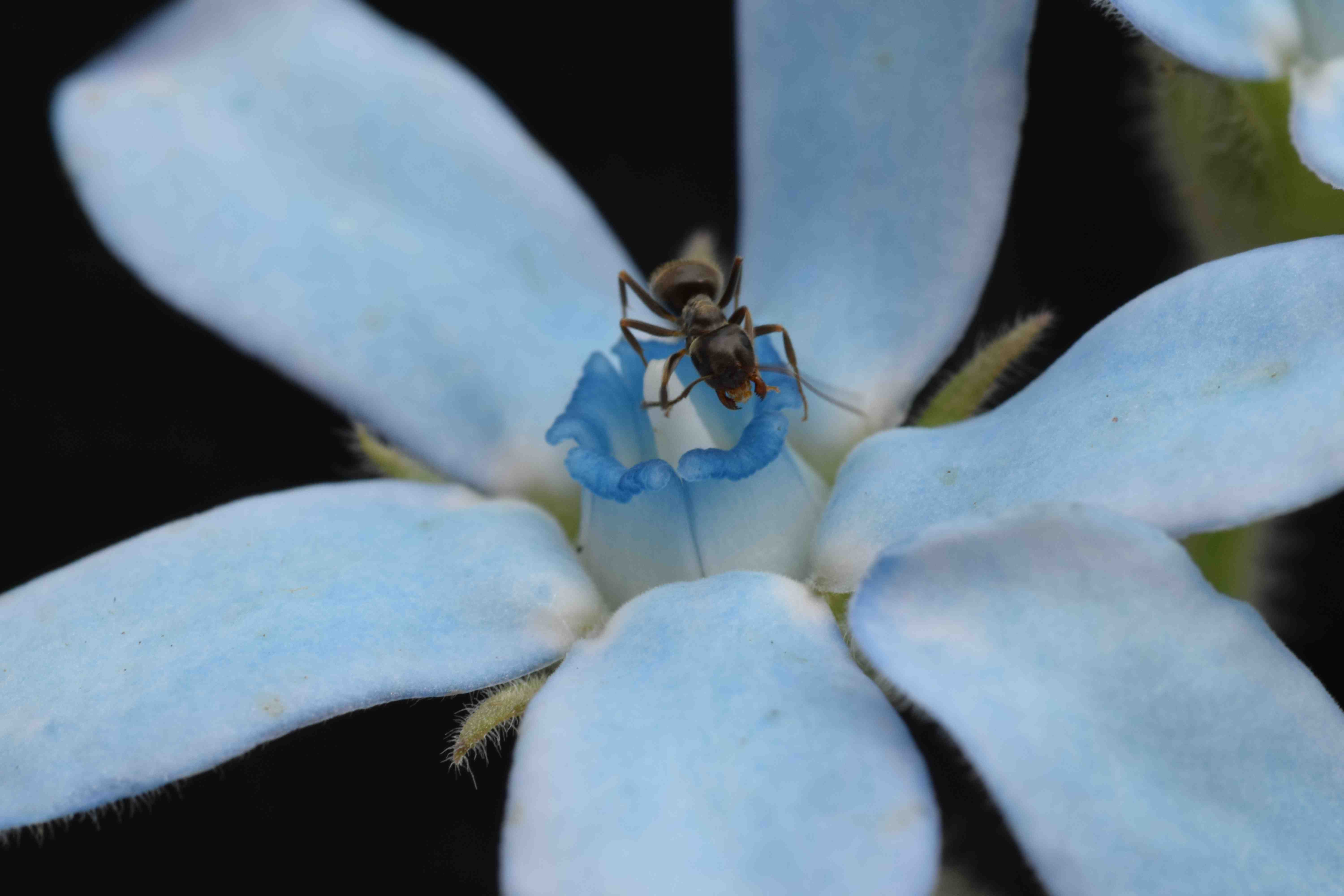
Tweedia can take all the heat you can throw at it, which is why all my plants were kept in the greenhouse this year. If you want to keep plants for another year they just need protecting from frost in winter and do not need excessive temperatures. As for companions, I think a pale yellow argyranthemum would be nice, and would support the tweedia. I must try that next year.
Geoff’s rating 7/10
Garden rating 6/10
 The Biking Gardener
I used to grow this but I’d forgotten all about it. I must try again, the flowers are such an amazing colour.
Really nice…first saw this at Sissinghurst…my wish list is growing daily thanks to you….keep it up…
love the close up shots ….makes you take more notice….. 🙂
OK 🙂 more close ups to come.
What a beautiful shade of blue!
I like the soft blue color, very nice.
Very charming blue flowers! I’ll check out where I can get seeds of Tweedia in Spain. Will be a tough search, again!
Nice blog btw!
Finally flowering! And yes – it’s blue! And I like it. If I get seeds, I’ll try to combine it with Andryala pinnatifida.
The yellow and blue would look lovely! Well done 🙂